Introduction
Picture a parent standing in the kitchen at 6:42 a.m. One child cannot find a shoe. Another child suddenly remembers a science project due today. The dog is supervising absolutely nothing. Meanwhile, lunchboxes are sitting open on the counter waiting to be packed.
Parents are always searching for small ways to make their children’s day brighter. They do not always need giant surprises. Sometimes a tiny joke tucked into a lunchbox does the trick.
But!
Lunchbox Joke Card Packs solve that problem beautifully, and they can become a surprisingly profitable digital product for creators who enjoy making family-friendly resources.
These little cards are simple to create, inexpensive to deliver, and easy for customers to use. That combination is about as attractive as finding extra fries at the bottom of the bag.
Quick Answer
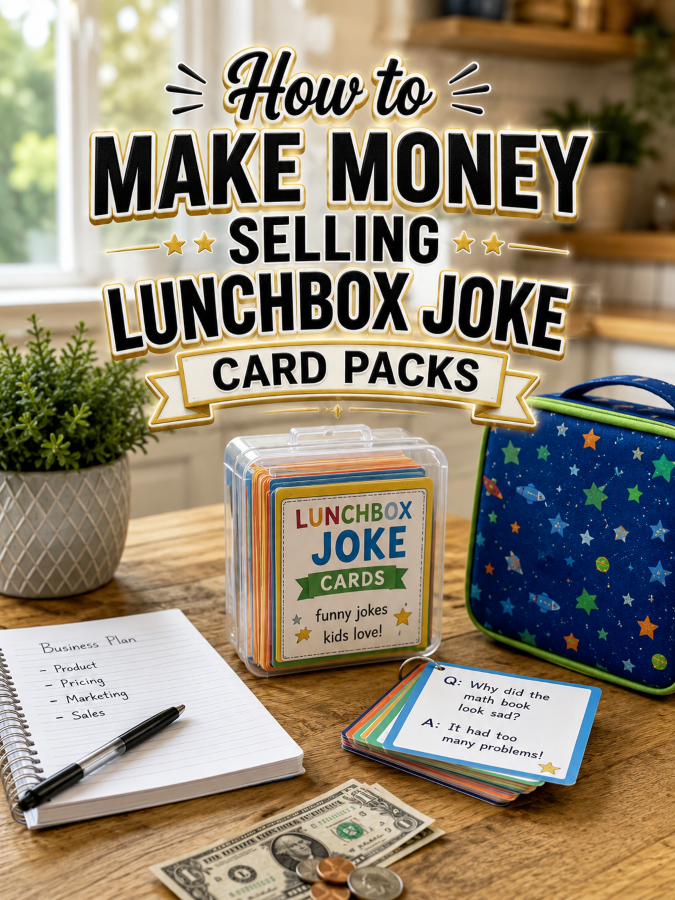
Lunchbox Joke Card Packs are printable cards containing clean jokes, riddles, funny questions, encouraging messages, and silly puns that parents place inside children’s lunchboxes. They add a small moment of joy during the school day.
A starter pack can easily sell for $7, while themed bundles, seasonal collections, classroom licenses, and subscription packs can grow into $27, $47, or even $77 offers.
Parents love products that are easy to use and make their children smile. That someone creating those products could absolutely be you!
Why This Niche Works
Parents are constantly looking for meaningful ways to stay connected with their children during busy school days. A simple joke card creates a small emotional moment that many families genuinely value.
Most creators overlook this niche because the product seems too small. That is a bit like refusing to sell cupcakes because they are smaller than birthday cakes. Small products often solve very specific problems, and specific solutions sell.
Think about dessert at your favorite restaurant. You already trust the place, so ordering dessert feels easy. Parents behave similarly. Once they find a joke card pack that makes their child laugh, they often return for more themed versions.
Meanwhile, new children enter school every year. Unlike trendy products that age like a carton of milk left on the counter, lunchbox joke cards remain useful year after year.
Prior to pouncing upon this opportunity, you should first know all about the:
Tools You’ll Need
You do not need a giant design studio to create these products. A handful of simple tools will do the job nicely.
- Canva for designing colorful joke cards.
- Google Docs for organizing jokes and layouts.
- AWeber for building a customer email list.
- GetResponse for follow-up promotions and launches.
- Gumroad for selling downloadable packs.
- Teachable if you expand into printable business training.
- Amazon Lunchbox Note Research for inspiration and market validation.
The goal is not to collect software like rare museum artifacts. The goal is to create and sell.
Next, move to:
Your 5-Step Action Plan
Follow these steps carefully unless you enjoy redesigning the same joke card for 22 hours while questioning your life choices.
Step 1. Research What Parents Already Buy
Spend about 91 minutes studying lunchbox notes, joke cards, and printable packs already being sold online.
Create a spreadsheet containing 28 to 36 recurring themes. Look for animals, school jokes, sports jokes, food jokes, kindness messages, and seasonal topics.
This research acts like your very own SHXE – Super Helpful eXample Explorer.
Step 2. Create Your First Joke Card Pack
Design a collection containing 63 to 84 cards. Include bright graphics, large text, and easy-to-read layouts.
Keep the jokes short enough for children to enjoy during lunch without needing a magnifying glass and a translator.
Simple usually wins.
Step 3. Add Encouragement Cards
Mix funny cards with positive messages. Parents often love a combination of humor and encouragement.
Include cards that say things like “You’ve got this!” alongside silly jokes and riddles.
This increases perceived value without dramatically increasing production time.
Step 4. Build Themed Collections
Create versions for holidays, back-to-school season, summer camp, sports, animals, science, and birthdays.
One joke card system can become 14 separate products surprisingly fast.
This is where your catalog begins to grow.
Step 5. Create a Product Ladder
Offer a starter pack for $7. Create themed bundles around $27 and larger collections near $77.
Add classroom licenses, subscription packs, and printable activity bundles as premium offers.
Customers who love one pack often buy several more.
Once you’ve figured out all of the above, the next step is implementing:
3 Ways to Stand Out From The Thundering Herd!
Most sellers become the restaurant menu that simply says “food.” Specificity creates attention and trust.
Way 1. Focus on Specific Age Groups
Create separate packs for ages 5 to 7, 8 to 10, and 11 to 13.
Parents appreciate resources that feel designed specifically for their children.
This small adjustment can improve conversions significantly.
Way 2. Blend Humor with Encouragement
Many competitors focus only on jokes.
Adding confidence-building messages creates a stronger emotional connection for both children and parents.
That combination feels more valuable.
Way 3. Offer Seasonal Releases
Create fresh packs throughout the year. Back-to-school, Halloween, Thanksgiving, Christmas, Valentine’s Day, and summer editions all work well.
Customers enjoy returning for new releases instead of buying once and disappearing into the mist.
Next, here’s the thing. You’re probably NOT the only person offering this service. So you now require:
3 Nifty Ways to Find Customers
You do not need paid ads. Buyers often shine a Bat Signal brighter than they realize.
Way 1. Parenting Facebook Groups
Parents frequently discuss school lunches, organization, and family routines.
Helpful contributions can position you as a trusted resource instead of another salesperson.
Trust grows sales.
Way 2. Pinterest
Pinterest remains one of the strongest platforms for printable products.
Create multiple pins featuring sample cards and colorful mockups.
One successful pin can continue generating traffic for months.
Way 3. Teacher Communities
Teachers often purchase printable resources for rewards, classroom activities, and student engagement.
Your joke cards can easily serve multiple purposes beyond lunchboxes.
Speaking of completed projects, now let’s move to:
3 Takeaways You Won’t Find Elsewhere!
These aren’t feel-good reminders. They directly affect your ability to earn from this niche.
Takeaway 1. Tiny Products Can Create Big Results
Many creators chase giant products because they seem more impressive.
Meanwhile, small solutions often solve daily problems more effectively.
Lunchbox joke cards fit perfectly into that category.
Takeaway 2. Emotional Value Drives Purchases
Parents are not simply buying cards. They are buying smiles, connection, and happy moments.
Understanding that emotional value helps you market far more effectively.
The jokes are only part of the story.
Takeaway 3. Repeat Buyers Are Everywhere
One customer can purchase multiple seasonal packs throughout the year.
That creates recurring revenue without constantly hunting for brand-new customers.
People love fresh thingees when they already trust the creator.
Now that you know the above, it’s time for:
3 Common Mistakes to Avoid
Many creators use tiny fonts that children struggle to read.
That is Not a Good Thing. Easy readability should always come first.
Some sellers create generic jokes that feel forgettable.
Unique, memorable humor is a Good Thing because it encourages repeat purchases.
Others stop after creating one pack.
The real growth comes from building a collection of related products.
What else should you know? How about:
Scaling Your Results
Create monthly subscription packs.
Parents love receiving fresh joke cards without needing to search for them.
Expand into lunchbox activity packs.
You can add puzzles, riddles, trivia cards, and positive affirmation cards.
Build a complete school-year product line.
A catalog of 24 themed packs could realistically generate an additional $338 to $972 monthly from repeat customers. Trust me, you’ll thank me later.
The beauty is that many products reuse the same design framework.
Let’s now wrap up everything via the:
Your Next Steps
So.
Create a list of 84 family-friendly lunchbox jokes this week.
Design your first printable pack inside Canva and export it as a PDF.
Reach out to five parenting communities where your ideal buyers already gather. Remember that 5 good messages beats 50 generic ones every single time.
The sooner you launch, the sooner you collect valuable feedback.
Next, let’s finish with:
Final Thoughts
Lunchbox Joke Card Packs solve a simple problem that millions of families experience every school year.
They are easy to create, inexpensive to deliver, and highly expandable into larger product lines.
So.
You do not need bazillions of followers or a giant marketing budget. You simply need a useful product that helps parents brighten a child’s day.
That’s it. That’s your beginning!
Which themed joke card pack would you create first – animals, sports, school, holidays, or something entirely different?
Enjoy!