Introduction
Picture this. A book club organizer is scrambling to create reading trackers. A coworking space manager needs social media graphics by tomorrow morning. An educator is searching for respectful classroom resources for a cultural awareness lesson and has approximately 19 browser tabs open already.
Meanwhile, someone else is quietly selling the exact digital products those people need.
But!
The real opportunity is not the holiday itself. The opportunity is creating useful digital resources that help people celebrate, educate, organize, and participate in meaningful events.
Whether you enjoy designing printables, creating templates, writing educational materials, or building planners, these three August observances offer several practical ways to create products that people are already looking for.
Quick Answer
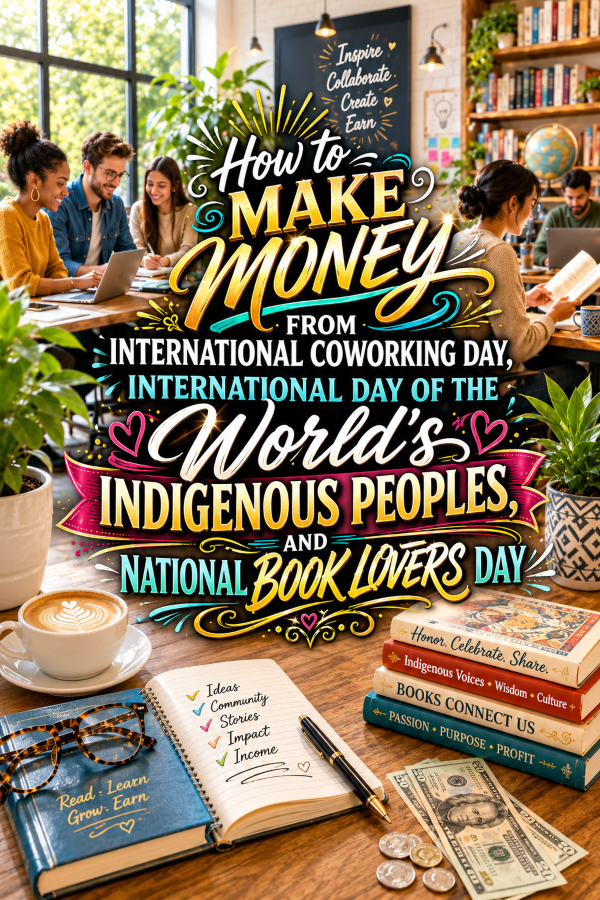
International Coworking Day, International Day of the World’s Indigenous Peoples, and National Book Lovers Day all create opportunities to sell digital products. These may include productivity planners, coworking resources, reading journals, classroom activities, educational materials, printable kits, templates, and social media graphics.
Many creators start with products priced between $7 and $29. Larger bundles can often sell for $67 to $197 depending on the audience and the amount of work involved.
The buyers already exist. The holidays are already scheduled. The need is already there. That someone who creates the solution could absolutely be you!
Before we examine each holiday opportunity, let’s look at why this niche works so well.
Why This Niche Works
Holiday-based buyers often arrive with an immediate need.
That is powerful because you are not trying to convince people they have a problem. They already know they need resources, ideas, activities, templates, or educational materials.
Many creators ignore these opportunities because they are busy creating products for everyone. That is a little like opening a restaurant that serves breakfast, lunch, dinner, desserts, plumbing supplies, and possibly alpaca insurance.
Specific holidays attract specific audiences. Specific audiences are much easier to serve.
Think about dessert at your favorite restaurant. You already trust the place. Holiday products work similarly because buyers are already invested in the event.
Prior to pouncing upon this opportunity, you should first know all about the:
Tools You’ll Need
You do not need dozens of subscriptions. A few reliable tools can handle most of the work.
- Canva – Create planners, worksheets, trackers, social graphics, and printable kits.
- Google Docs – Create educational resources, guides, and editable documents.
- AWeber – Build and nurture an email list.
- GetResponse – Email automation and customer follow-up.
- Gumroad – Sell digital products directly.
- Etsy – Popular marketplace for digital downloads.
- Trello – Organize product ideas and customer projects.
- No Limit Emails – Higher-end email delivery option.
- Reading Journal Research – Study related products and customer demand.
You now have the toolbox. Next comes the roadmap.
Next, move to:
Your 5-Step Action Plan
If you skip these steps, you may spend 22 hours designing products that attract fewer visitors than a museum dedicated to expired yogurt lids. That is not a Good Thing.
Step 1. Choose One Holiday Audience
Pick the audience that feels most interesting.
Book lovers, remote workers, and educators all have different needs. Focusing on one group first makes product creation much easier.
Create a list of 31 product ideas related to your chosen audience.
Step 2. Research Existing Products
Spend 95 minutes studying Etsy listings, Pinterest boards, and digital product marketplaces.
Look for products with strong reviews and identify gaps you could fill.
Your goal is not copying. Your goal is understanding demand.
Step 3. Create One Starter Product
Keep your first product simple.
A reading tracker, coworking planner, educational worksheet pack, or discussion guide is often enough to get started.
Simple products can teach valuable lessons quickly.
Step 4. Build Product Images
Create at least six mockup images.
People buy what they can visualize. A product without images is like a bookstore with no book covers.
Not a Good Thing.
Step 5. Reach Out To Potential Buyers
Contact 14 organizations, communities, or businesses connected to your niche.
Offer a helpful sample rather than a sales pitch.
The goal is to start conversations and learn what people need.
Once you’ve figured out all of the above, the next step is implementing:
3 Ways to Stand Out From The Thundering Herd!
Most creators become generalists. That is like opening a restaurant whose menu simply says “food.”
Buyers prefer specialists.
Way 1. Focus On One Audience
Create products specifically for book clubs, coworking communities, or educators.
Specificity builds trust faster than generic products.
Way 2. Create Bundles Instead Of Single Products
A reading tracker is useful.
A complete reading club toolkit with trackers, discussion questions, and printable bookmarks is even better.
Way 3. Solve A Real Problem
Do not create products simply because they look nice.
Create products because they help people save time, stay organized, or learn something valuable.
Speaking of completed projects, now let’s move to:
3 Nifty Ways to Find Customers
You do not need expensive advertising.
Your customers are often sending signals brighter than the Bat Signal.
Way 1. Join Relevant Communities
Look for book clubs, educator groups, coworking communities, and online forums.
These groups already contain people who care about your topic.
Way 2. Watch Event Calendars
Many organizations publicly announce upcoming events and activities.
Those announcements often reveal opportunities before competitors notice them.
Way 3. Follow Industry Pages
Libraries, coworking spaces, schools, and cultural organizations frequently post requests and ideas.
Pay attention to what people ask for repeatedly.
What else should you know? How about:
3 Takeaways You Won’t Find Elsewhere!
These aren’t feel-good reminders.
These are practical observations gathered from watching buyers interact with holiday-related thingees.
Takeaway 1. Timing Matters More Than Perfection
A good product available today often outperforms a perfect product launched three weeks late.
Consistency beats waiting for perfection.
Takeaway 2. Communities Often Matter More Than Marketplaces
Many successful creators find customers through groups and communities.
Trust often develops faster inside existing communities.
Takeaway 3. One Product Can Become Many Products
A reading tracker can become a reading journal.
A reading journal can become a complete book club toolkit.
That is a Good Thing.
Now that you know the above, it’s time for:
3 Common Mistakes to Avoid
Mistake #1: Creating Without Research.
Research first. Design second.
That simple habit prevents many problems.
Mistake #2: Choosing Too Many Niches.
Trying to serve everyone usually creates confusion.
Focus creates clarity.
Mistake #3: Ignoring Feedback.
Customers often reveal your next product idea.
Ignoring that information is not a Good Thing.
Let’s now wrap up everything via the:
Scaling Your Results
Scale Path #1: Create Product Families.
Turn individual products into larger bundles.
A $17 planner can eventually become a $97 toolkit.
Scale Path #2: Build An Email List.
Use AWeber or GetResponse.
Trust me, you’ll thank me later.
Scale Path #3: Expand Into Related Holidays.
A creator earning $324 monthly from one niche may eventually build a catalog generating $1,582 monthly across several seasonal opportunities.
Next, here’s the thing. You now require:
Your Next Steps
So.
Choose one of these three holidays.
Research 28 competing products.
Create one simple digital product this week.
Send five personalized outreach messages.
Remember this:
Five good messages beats 50 generic ones every single time.
The goal is progress, not perfection.
Now we can finish with:
Final Thoughts
Holiday-based products work because they solve real problems for real people.
International Coworking Day attracts remote workers and productivity enthusiasts.
National Book Lovers Day appeals to readers, book clubs, and educators.
International Day of the World’s Indigenous Peoples creates opportunities for respectful educational resources and cultural awareness materials.
So.
You do not need bazillions of products.
You need one useful solution for one specific audience.
That’s it. That’s your beginning!
Which of these three holidays feels like the best fit for your first product?
Enjoy!