Introduction
It starts the same way almost every evening.
Someone opens the refrigerator, stares inside for a full minute, and confidently announces, “There’s nothing to eat.” Meanwhile, there’s chicken, vegetables, pasta, cheese, and enough leftovers to feed a small village that may or may not have shut down in 1822. Dinner isn’t the problem. Decision-making is.
Busy families don’t usually struggle because they can’t cook. They struggle because life gets hectic. Between work, school, sports, errands, and trying to remember whose turn it is to walk the dog, meal planning often becomes an afterthought.
But!
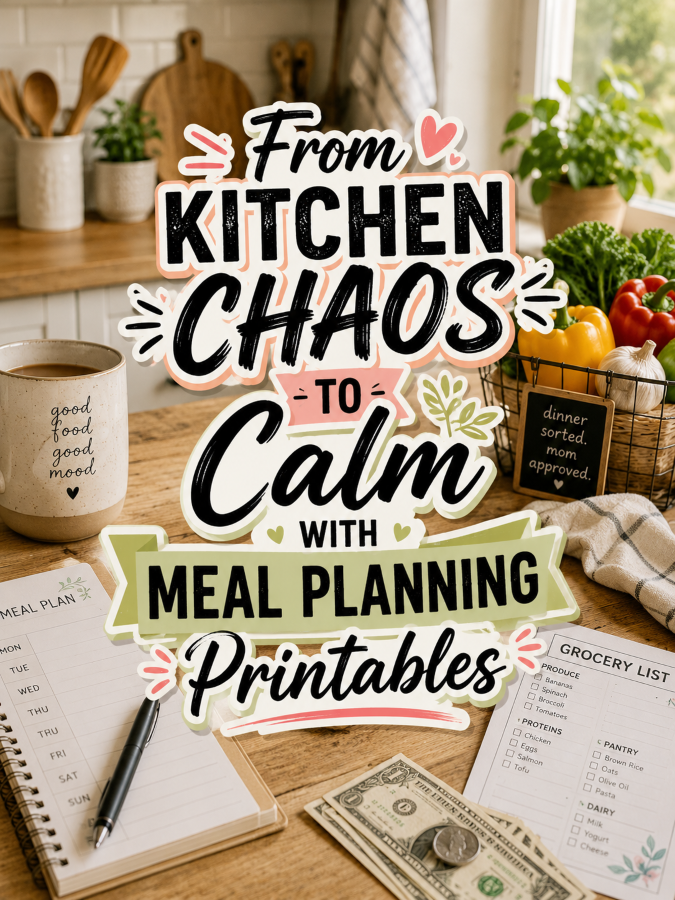
That’s exactly why Meal Planning Printables continue selling year after year. They replace daily kitchen chaos with simple routines, save families valuable time, and give digital creators an evergreen product that solves a genuine problem.
The beauty of this niche is that families never stop eating. Every new week creates another opportunity to plan meals a little better than the week before.
Quick Answer
Meal Planning Printables are downloadable planners that help families organize weekly menus, grocery shopping, pantry inventories, freezer meals, recipes, food budgets, and cooking schedules. They make meal preparation easier while reducing food waste and last-minute stress.
A basic printable planner can easily sell for around $7. Expanded meal planning systems with grocery organizers, recipe binders, budget trackers, and editable versions can naturally grow into $27, $47, and even $77 product ladders.
Families aren’t looking for more complicated systems. They’re looking for something they’ll actually stick with. That someone creating that solution could absolutely be you!
Why This Niche Works
Every household makes food decisions every single day.
That’s a remarkably consistent problem, which makes it a remarkably consistent opportunity for printable creators.
Most people don’t wake up excited to answer the nightly question of “What’s for dinner?” They’d much rather have a simple plan already waiting for them. That’s a bit like ordering dessert at your favorite restaurant. The decision has already been made, so everything feels easier.
Oddly enough, many creators build generic planners that try to do everything for everyone. That’s like opening a restaurant whose menu simply says “food.” Busy families want solutions that fit their real lives, not another planner they’ll abandon beside an unused gym membership.
Meal planning also creates repeat buyers. Once someone discovers a printable system that saves time and reduces stress, they’ll happily come back for seasonal planners, holiday meal organizers, freezer meal kits, recipe binders, and countless related thingees.
Prior to pouncing upon this opportunity, you should first know all about the:
Tools You’ll Need
You don’t need an expensive kitchen full of gadgets to build a profitable printable business. These simple tools are more than enough.
- Canva for designing beautiful meal planners, grocery lists, and recipe pages.
- Google Docs for organizing recipes, meal ideas, and printable instructions.
- AWeber for building your email list and sharing weekly meal-planning inspiration.
- GetResponse for automated newsletters, promotions, and product launches.
- Gumroad for selling downloadable printable bundles.
- Teachable if you’d eventually like to teach meal planning or printable design.
- Amazon Meal Planner Research for discovering popular layouts and customer preferences.
Don’t spend weeks collecting software you’ll barely touch. Spend that time building printables families will actually use.
Next, move to:
Your 5-Step Action Plan
Follow these five steps unless you’d prefer spending 21 hours rearranging grocery lists while wondering why the refrigerator somehow contains four bottles of ketchup.
Step 1. Study Real Family Routines
Spend about 94 minutes researching meal planners, grocery organizers, recipe binders, pantry inventories, and food budget trackers. Customer reviews often reveal exactly where current products fall short.
Create a master checklist containing 28 to 35 printable pages. Include weekly meal calendars, grocery lists, pantry inventories, freezer meal trackers, recipe cards, shopping budgets, leftover planners, and family favorite lists.
Think of your research as an X-ray machine. It lets you see problems your future customers already know they have but haven’t solved yet.
Step 2. Build Your Core Meal Planning System
Create a printable bundle containing 36 to 48 pages that naturally work together. Every page should eliminate one small frustration instead of trying to solve every kitchen problem ever invented.
Include weekly planning sheets, shopping lists, pantry checklists, monthly calendars, recipe organizers, and family meal trackers. Keep everything simple enough that someone can begin using it the same day they download it.
Remember, simplicity is a Good Thing. Confused customers rarely become loyal customers.
Step 3. Create Specialty Versions
Families don’t all eat the same way, so your products shouldn’t either.
Create separate planners for busy weeknight meals, large families, freezer cooking, budget-friendly menus, holiday meal planning, keto, vegetarian households, and homeschool families. One flexible framework can quickly become an entire product family.
That’s much smarter than creating one generic planner and hoping it fits everyone.
Step 4. Add High-Value Bonuses
This is where your printable bundle begins standing out from the thundering herd.
Add pantry inventory sheets, expiration trackers, kitchen cleaning schedules, recipe rating pages, seasonal produce guides, meal rotation planners, grocery price logs, and family recipe journals. Those extra thingees don’t take long to create, yet they dramatically increase perceived value.
Customers love discovering bonuses they didn’t expect.
Step 5. Build a Product Ladder
Launch your starter planner at $7. Expand into complete meal planning systems around $27, then introduce premium family kitchen organization bundles near $77.
You can later add editable planners, printable cookbooks, holiday meal collections, recipe binders, pantry organization kits, and subscription updates throughout the year.
One thoughtful planner can quietly grow into an entire printable business that serves families every single week.
Once you’ve figured out all of the above, the next step is implementing:
3 Ways to Stand Out From The Thundering Herd!
Most printable sellers become the restaurant menu that simply says “food.” They offer generic planners that could work for anyone, which usually means they feel perfect for no one.
You don’t need hundreds of products. You need a planner that makes one specific family’s life noticeably easier.
Way 1. Create Meal Planners for Specific Families
Design separate planners for large families, couples, busy professionals, homeschool households, picky eaters, budget-conscious shoppers, and freezer meal fans.
Parents love finding something that feels like it was designed especially for them. That little bit of personalization builds trust much faster than another one-size-fits-all planner.
Way 2. Turn Planning Into a Complete Kitchen System
Don’t stop with weekly menus. Include grocery lists, pantry inventories, recipe organizers, leftover trackers, and monthly meal calendars.
Families appreciate complete systems because everything works together. It’s a Good Thing when they only need one printable bundle instead of downloading seven different products.
Way 3. Make It Beautiful Without Making It Complicated
Clean layouts almost always outperform cluttered pages covered in decorations.
Your printable should feel calming, not like someone spilled a craft store across the kitchen table while decorating a spaceship.
Next, here’s the thing. You’re probably NOT the only person offering this service. So you now require:
3 Nifty Ways to Find Customers
You don’t need expensive advertising because your buyers practically shine the Bat Signal every week when they’re wondering what’s for dinner.
Way 1. Pinterest
Meal planning remains one of Pinterest’s most searched printable categories.
Create attractive pins showing completed planner pages, grocery lists, and organized weekly menus. Beautiful visuals encourage people to click and save.
Way 2. Parenting Communities
Parents constantly ask for meal ideas, grocery budgeting tips, and family organization advice.
Become genuinely helpful before mentioning your printable. Helpful people become trusted people.
Way 3. Budget Living Groups
Families trying to reduce grocery costs are always searching for practical planning systems.
Your printable can help them save both money and time, which makes recommending it feel completely natural.
Speaking of completed projects, now let’s move to:
3 Takeaways You Won’t Find Elsewhere!
These aren’t feel-good reminders. They directly affect how successful your printable business can become.
Takeaway 1. Families Aren’t Buying Paper
They’re buying fewer stressful evenings, fewer forgotten groceries, and fewer moments spent staring into the refrigerator wondering what to cook.
Understanding that emotional benefit completely changes how you market your product.
Takeaway 2. Small Improvements Create Loyal Customers
Sometimes adding a pantry inventory, freezer tracker, or leftover planner creates far more value than adding another twenty decorative pages.
Little thingees often make the biggest difference.
Takeaway 3. Evergreen Niches Beat Flashy Trends
Families eat every day. That simple fact creates dependable demand year after year.
Unlike trendy products that disappear overnight, meal planning never goes out of style.
Now that you know the above, it’s time for:
3 Common Mistakes to Avoid
Many creators make their planners too complicated.
That is Not a Good Thing. Parents already have enough decisions to make without decoding complicated layouts.
Some sellers forget grocery budgeting pages.
Helping families save money is always a Good Thing and often becomes one of your biggest selling points.
Others create one planner and stop.
The real opportunity comes from building a complete collection that customers return to throughout the year.
What else should you know? How about:
Scaling Your Results
Expand into seasonal meal planning collections.
Create planners for back-to-school lunches, holiday dinners, summer grilling, freezer meals, and monthly grocery budgeting.
Bundle complementary kitchen resources together.
Add recipe binders, pantry organizers, shopping planners, meal rotation systems, and family cookbooks into premium collections.
Build a membership families actually look forward to.
A library containing 26 kitchen organization printables could realistically generate an additional $418 to $1,214 each month from repeat buyers, seasonal launches, and bundle sales. Trust me, you’ll thank me later.
Let’s now wrap up everything via the:
Your Next Steps
So.
Create a list of 35 pages that would genuinely make family meal planning easier. Don’t try to build everything at once because that’s usually a Not a Good Thing.
Design your first printable bundle in Canva, keeping every page practical, clean, and easy to understand.
Then introduce your planner to five parenting or budgeting communities. Remember, 5 good messages beats 50 generic ones every single time.
One thoughtful printable can become the foundation of an entire kitchen organization business.
Next, let’s finish with:
Final Thoughts
Families don’t need another planner they’ll forget in a kitchen drawer. They need a simple system that helps them answer, “What’s for dinner?” without turning it into the nightly family debate.
Your Meal Planning Printables can do exactly that. They save time, reduce stress, help families waste less food, and bring a little more calm to one of the busiest parts of the day.
So.
Start with one practical planner that solves one real problem. Listen to your customers, improve your bundle, and keep adding resources that make everyday life a little easier. You don’t need bazillions of products to build a successful printable business. You simply need one solution that families are happy to use week after week.
That’s it. That’s your beginning!
Which page would you include first in your own Meal Planning Printable – a weekly menu, a grocery checklist, a pantry inventory, or something completely different?
Enjoy!