Introduction
About 42 days from now, creators can start preparing for National Save Your Stuff Day, a wonderfully practical observance that encourages people to organize, preserve, and protect the things that matter. While most people immediately think about photos, documents, and keepsakes, audio lovers know there’s another category that’s quietly taking over storage space everywhere: voice notes, recordings, podcasts, interviews, family stories, and random audio files with names like “Final_Final_Actually_Final_V3.”
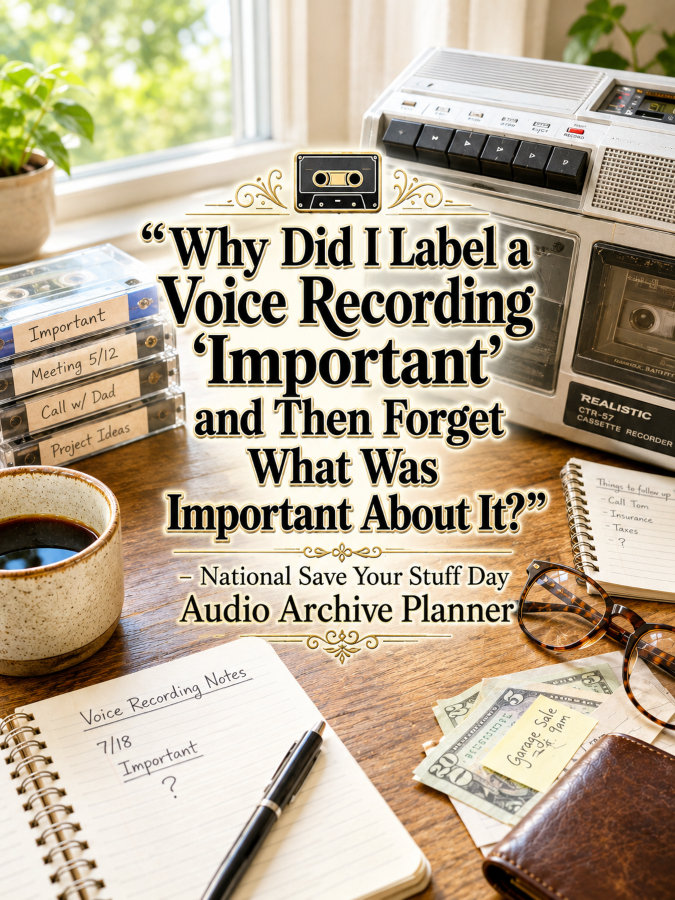
That’s exactly why this printable is so relatable. Most people have at least one mysterious recording saved on a device that they refuse to delete. They don’t know exactly why they’re keeping it. They just know it feels important. Maybe it’s a loved one’s laugh. Maybe it’s a family story. Maybe it’s a voice memo that seemed brilliant at two o’clock in the morning. Whatever the reason, audio memories have a funny way of becoming emotional treasures. This planner helps buyers organize those memories while laughing at their wonderfully chaotic digital habits.
Tools Required
Canva is perfect for creating clean, memory-focused layouts with microphones, folders, cassette tapes, soundwaves, and digital archive graphics. The design should feel organized while still maintaining a warm and personal feel.
Google Fonts offers plenty of modern and handwritten font combinations that work beautifully for memory-keeping products. You can also browse Etsy to research journaling products, use Gumroad for digital delivery, and create attractive promotional images with Placeit. Together, these tools help transform a simple idea into a highly marketable printable.
10-Step Action Plan
1. Create a cover page titled “My Collection of Audio Treasures and Mild Digital Chaos.” Use folder graphics, microphones, headphones, and storage-inspired visuals that immediately establish the theme.
2. Design an “Audio Files I Absolutely Refuse to Delete” tracker where users can document meaningful recordings and why they matter.
3. Create a “How Organized Is My Audio Library?” self-assessment chart. Include ratings ranging from “surprisingly functional” to “archaeologists may need to assist.”
4. Add a “Voice Notes That Seemed Like a Great Idea at the Time” journaling page. Buyers will instantly recognize themselves in this one.
5. Include a “Recordings I Saved for Emotional Reasons” reflection spread. Sometimes a ten-second clip becomes priceless for reasons that are impossible to explain.
6. Design a “Family Stories Worth Preserving” tracker where users can document important interviews, conversations, and memories.
7. Create a “Audio Files With Extremely Unhelpful Names” brainstorming page. Everyone has at least a few recordings named something like “Note 17” or “Untitled Recording.”
8. Format everything with clean layouts, subtle soundwave graphics, organized sections, and plenty of room for notes and storytelling.
9. Add bonus pages like “Recordings That Made Me Laugh Years Later” and “Things Future Me Will Thank Me For Saving.” Those little extras help the planner feel both practical and personal.
10. Export printable and tablet-friendly versions so users can organize their audio collections however they prefer.
Customer Acquisition Ideas
Create social media content about discovering old voice notes, forgotten recordings, and mysterious audio files buried deep inside phones and computers. People instantly connect with those experiences because almost everyone has been surprised by an old recording.
You can also create content around family storytelling, digital organization, memory keeping, and preserving meaningful moments. Target parents, grandparents, memory keepers, podcasters, journal lovers, and audiobook enthusiasts. Pinterest keywords like memory journal, audio archive planner, voice note organizer, and family history printable can help attract highly engaged buyers.
Creative Monetization Tips
Create companion products such as family interview journals, digital organization planners, memory books, and storytelling worksheets. Buyers who appreciate preserving memories often enjoy purchasing multiple related products.
You can also bundle this planner with legacy journals, genealogy worksheets, photo organization trackers, and keepsake planners. Offer editable Canva versions as premium upgrades. Matching sticker packs featuring folders, microphones, cassette tapes, headphones, and memory icons can create additional revenue opportunities.
Next Steps
Focus on creating a design that feels organized, warm, and trustworthy. Use calming colors, thoughtful layouts, and subtle audio-themed graphics that support the memory-preservation concept.
Keep the humor gentle and observational. The planner should feel like it completely understands the person who found a seven-year-old voice note, listened to it “for just a second,” and somehow lost the next thirty minutes to nostalgia.
Conclusion
National Save Your Stuff Day offers a fantastic opportunity because people increasingly understand the value of preserving memories before they’re lost. Audio recordings hold voices, stories, emotions, and moments that photos simply can’t capture.
The moment somebody laughs because your printable perfectly captures their tendency to save random recordings for reasons they can’t quite explain, you’ve built a connection. And when buyers feel understood, nostalgic, and inspired to preserve their memories, they’re far more likely to become enthusiastic customers who treasure what you’ve created.
That wraps up today’s discoveries. If anything caught your attention or made you feel excited, why not take the first step today and see where it leads?
Enjoy!