

AI agents haven’t been around that long – mainstream generative
AI itself it less than four years old, as hard as that may seem to believe –
but the bulk of the IT world and the organizations big and small that serves IT
are all in. Adoption is growing, budgets are expanding, and more plans are
being put in place to do more with agents.
According to a survey of 300 senior executives by global
consultancy PcW, 88 percent plan to increase
their AI budgets because of the emergence of agentic AI – 71 percent said
they expect to grow those budgets by anywhere from 10 percent to more than 50
percent – 79 percent say they have already adopted AI agents, and, of those, 66
percent say agents are increasing productivity and delivering value.
And that’s against the backdrop of concerns that corporate
leaders have about the technology that, according to the Harvard Business
Review, range from data
issues to security to privacy.
The tech industry itself has essentially been remade to push
agentic technologies out to the waiting business world. Most IT vendors are
increasing their own spending to develop agentic tools for themselves and their
users and have built the agendas for their annual conferences around what
agents and supporting products they can offer.
That includes Google. At last week’s Google Cloud Next 2026
show in Las Vegas, Google chief executive officer Sundar Pichai appeared before
the keynote crowd via live video, promising that the hyperscaler is investing
huge amounts of money to support its agentic cloud ambitions. In 2022, Google
spent $31 billion in capital expenditures. The plan this year is for capex
investment to his $175 billion to $185 billion, with more than half of Google’s
machine learning compute going toward the cloud business.
Google Cloud has been putting together the makings of a full
agentic AI stack, and the results of that work were front and center at the
conference. Google Cloud chief executive officer Thomas Kurian said the
company’s innovation spree is keeping pace with the rapid demand for agentic AI
among developers and other customers, noting that almost 75 percent of Google
Cloud customers now use the company’s AI products.
“Just one year ago, we stood on this same stage and promised
a new future for AI,” Kurian said during his keynote. “Today, that future is
running in production at a scale that the world has never seen. Over the last
year, we didn’t just see adoption. We saw transformation. We have thousands of
agents and services across every industry, reaching billions of people through
the global scale of our partner network. You have moved beyond the pilot. The
experiment in phase is behind us, and now the real challenge begins.”
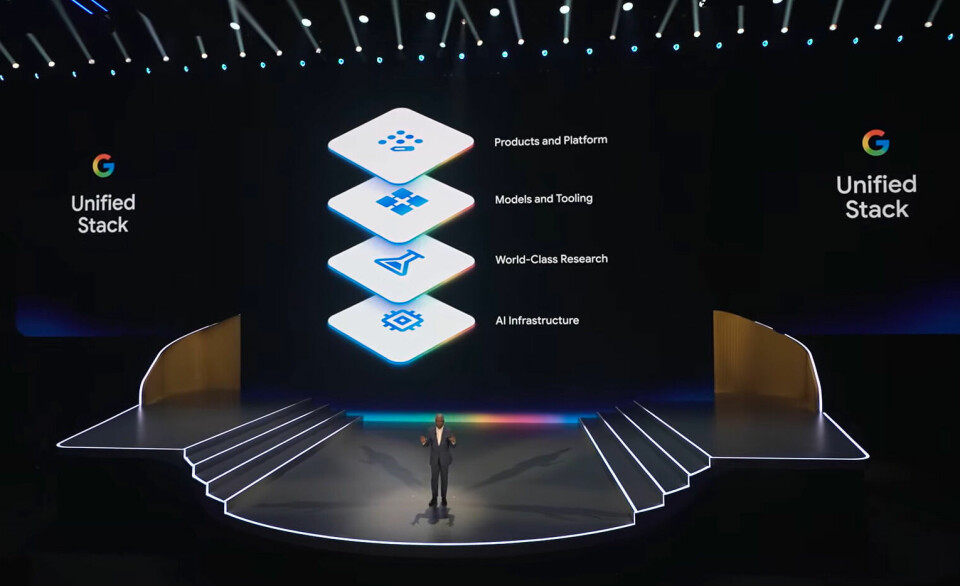
He added that organizations need a unified agentic stack to
move AI into production, saying that “you cannot deliver AI by piecing together
a puzzle piece or fragmented silicon and disconnected models. To drive real
value, you need an architecture where chips are designed for the models, models
are grounded in your data, agents and application are built with models and
secured by the infrastructure.”
Last week, we wrote about the pair
of eighth generation Tensor Processor Unit (TPU) compute engines that Google
will ship before the end of the year. That said, there was the expected
firehose of announcements, but their focus was on agentic AI, and key among
them were new and expanded capabilities for building and running agents as well
as ensuring the data they need is ready for them.
One step for Google Cloud was expanding its Vertex AI
development platform by adding a range of new capabilities that developers can
use to create agents that touch on such areas as agent orchestration and
integration, DevOps, and security. The agents then become available to
organizations’ employees via Google’s Gemini Enterprise app.
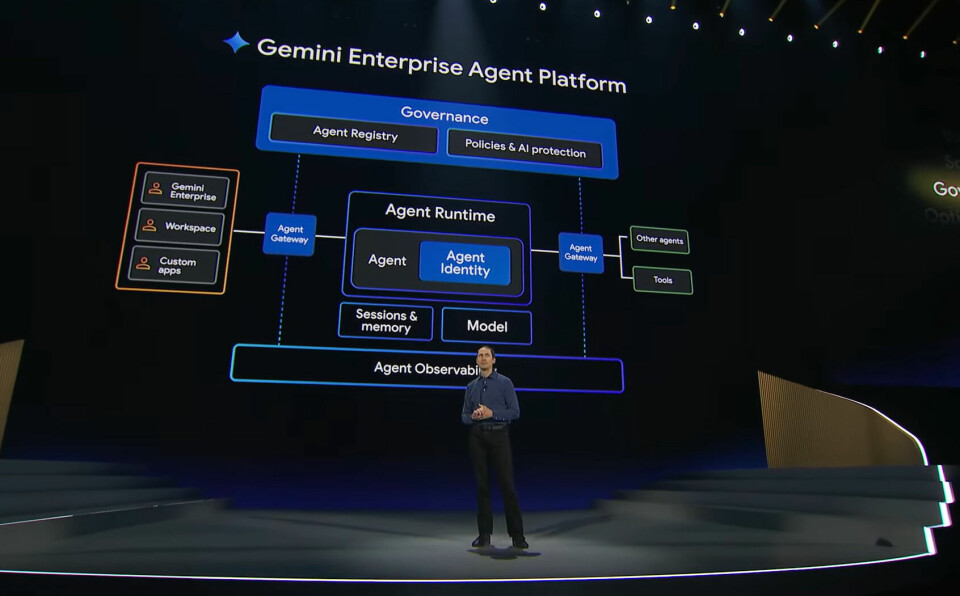
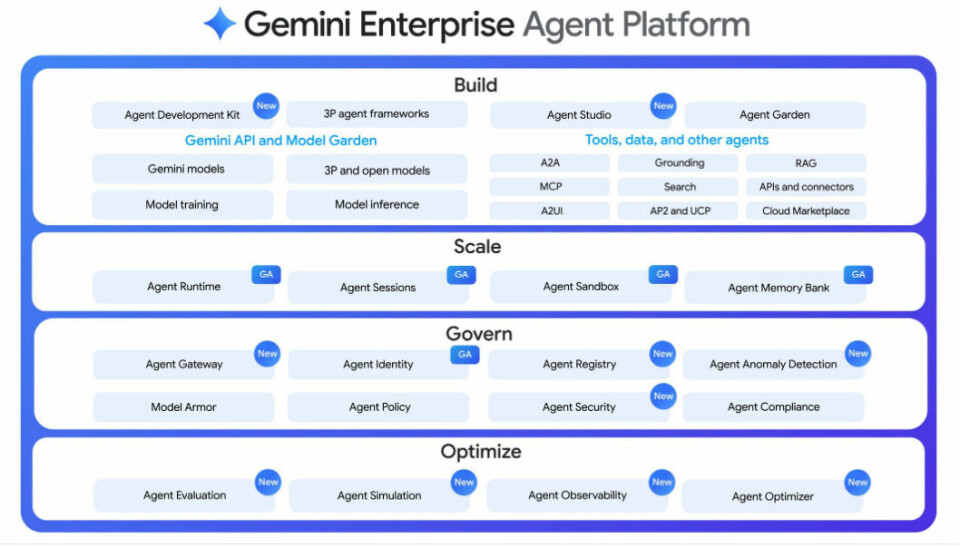
Through the Gemini Enterprise Agent Platform – the enhanced
and rebranded Vertex AI – developers have options for building agents, using
either the new Agent Studio, a low-code, visual interface, or an upgraded Agent
Development Kit open framework that includes AI-native coding to more quickly
create production-grade agents.
There’s a bulked-up Agent Runtime for supporting agents that
can run for days at a time and keep their context with persistent memory via
Memory Bank. The platform offers centralized control through Agent Identity,
Registry, and Gateway tools, which track identity and obeys guardrails, and
quality guarantees with Agent Simulation, Evaluation, and Observability
features that tracks agent execution and reasoning.
It also includes native integration with the Model Context
Protocol [MCP], an Anthropic created tool for making it easier for agents to
access external data sources and applications.
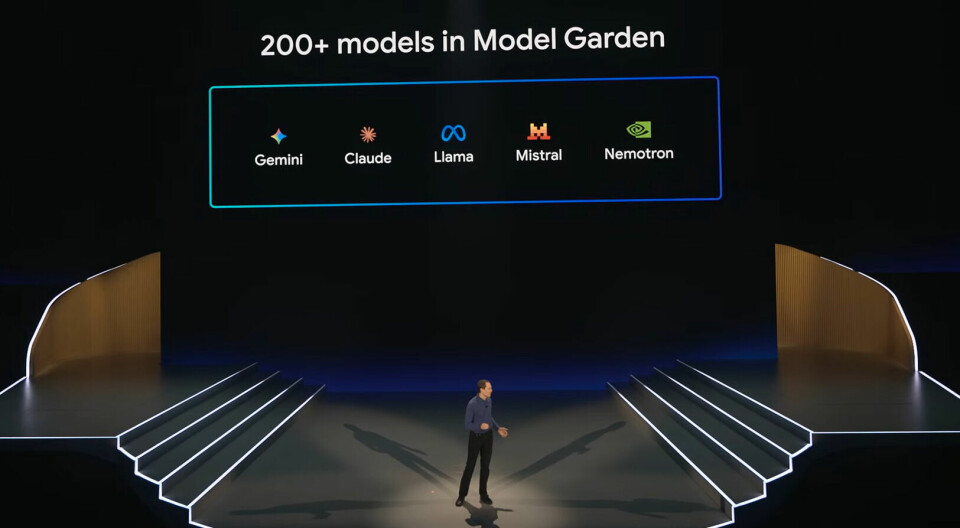
With the platform, development teams – through the
platform’s Model Garden – also get access to more than 200 AI models, including
Google’s latest Gemini 3.1 Pro, which is in preview and optimized for workflow
orchestration, as well as Gemini 3.1 Flash Image for visual assets and Lyria 3
for audio and music. There’s also support for models from other vendors,
including Anthropic’s
Claude, Meta
Platforms’ Llama, Mistral AI, and Nvida’s
Nemotron.
Google Cloud also is turned its attention to bringing data
storage and management into the agentic age.
“Reasoning without context is just a guess,” Karthik Narain,
chief product and business officer for Google Cloud, said on stage. “When you
expect your AI to make decisions and your agents to take actions, you cannot
afford to guess. Trusted context turns an intelligent guess to a decisive
action. We’re completely rethinking the data platform.”
The result of the rethinking it the Agentic Data Cloud, a
new umbrella offering that includes some of what the company was already doing
with a number of agent-focused tools and capabilities, allowing for agents to
interact with data they use to complete their tasks. Foundational to this is
what Google Cloud calls its cross-cloud lakehouse, which is designed to let
agents go and work on data where it resides, rather than make copies and bring
them back with them.
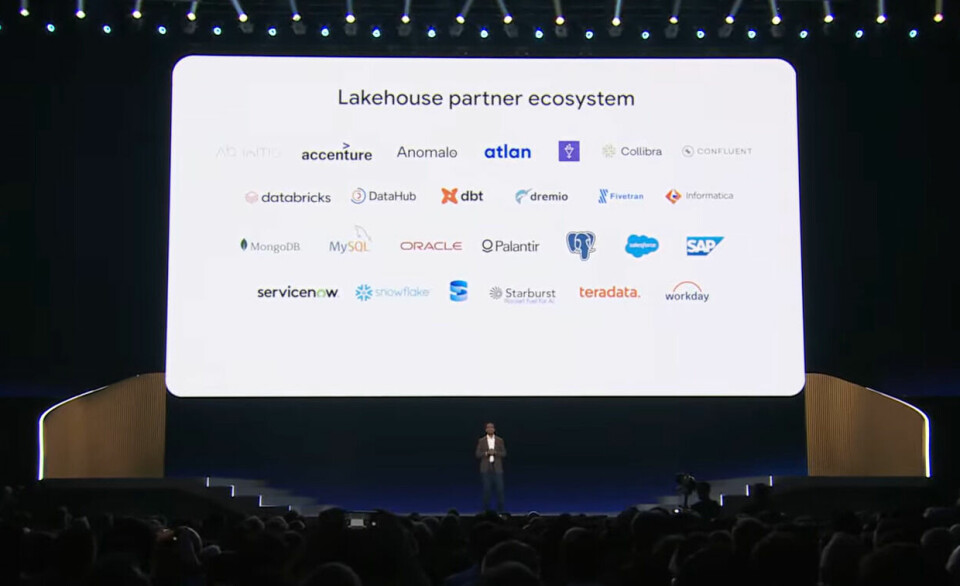
“The reality is data lives everywhere, at Google, at AWS,
Azure, and across your SaaS applications,” Narain said. “Your old lakehouse
expected the analytical engines and the data storage to reside in the same
cloud. This approach is broken. [The cross-cloud lakehouse] is completely
borderless. Instead of forcing you to accept complex networking [processes] or
massive egress fees, we deliver low latency, direct connectivity to AWS and
Azure, as if the data sat natively in Google Cloud. No more moving data, no
more vendor lock-in.”
The cross-cloud lakehouse is enabled by the integration of the
Cross-Cloud Interconnect into the vendor’s data plane and is based on Apache’s
Iceberg for large-scale analytics. In addition, it includes interoperability
with BigQuery Apache Spark as well as OSS frameworks like Spark, Trino, and
Flink, as well as third-party engines like Databricks
and Snowflake. It’s akin to what Google has done with its open
lakehouse efforts.
Other highlights included Google Cloud’s Data Agent Kit,
which includes its Data Engineering Agent for building and transforming data
pipelines and enforcing governance rules to protect against bad data, Data
Science Agent for automatically scaling a model across BigQuery Dataframes and
Serverless Apache Spark, and Data Observability Agent for protecting the agent
infrastructure.
The cloud provider’s Dataplex Universal Catalog
grew up to become Knowledge Catalog, a universal context engine that integrates
with BigQuery to transform tables and metadata into unified business logic,
while its Smart Storage tool does the same with unstructured data.