Introduction
Sewing has a funny way of starting with one small project and ending with an entire room devoted to fabric. A maker buys a beautiful print for “the perfect project,” discovers three more fabrics that absolutely must come home, saves a few patterns, and suddenly the cutting table has become mission control.
That creative abundance creates a fantastic opportunity for practical printable products. Sewists need systems for organizing patterns, tracking fabric, recording measurements, planning projects, managing works in progress, calculating costs, and keeping customer orders organized.
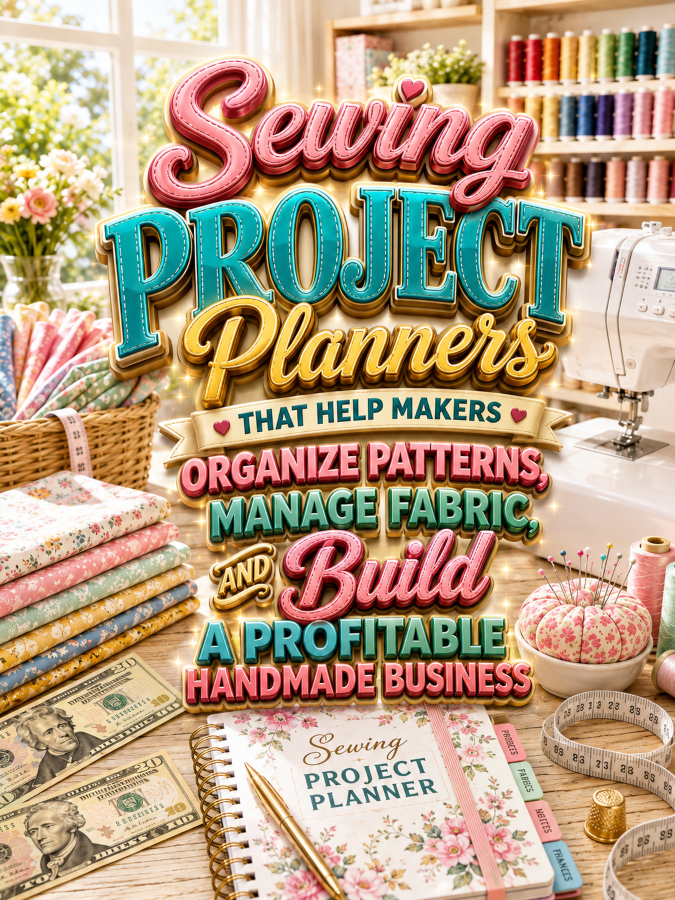
A Sewing Project Planner can help makers bring all of those details together. Better yet, it can become the foundation for a $7 to $77 product ladder that grows from simple project organization into a complete handmade business management system.
Quick Answer
A Sewing Project Planner can start as a $7 project journal, expand into a $17–$27 sewing studio toolkit, grow into a $37–$47 complete sewing business planner, and reach $67–$77 as a premium customizable business command center.
The key is to make every level solve a larger problem. The buyer should immediately understand what they gain when they move from one product to the next.
Quick Win
Create a sewing project worksheet that records the pattern, fabric, measurements, size, notions, cutting notes, alterations, sewing time, project cost, and finishing details.
Why This Niche Works
Sewing serves an enormous range of makers. Some create clothing for themselves, while others make quilts, bags, costumes, children’s clothing, home décor, accessories, personalized gifts, or finished products for sale.
Every project comes with details that are easy to forget. Which fabric did you use? What size did you cut? Did you alter the pattern? Which interfacing worked? How much fabric was actually required? How long did the project take?
A good planner turns those answers into a reusable reference system.
For sewing entrepreneurs, the opportunity becomes even stronger. They need to manage inventory, custom orders, pricing, production schedules, wholesale accounts, marketing, craft fairs, and seasonal collections.
That gives you plenty of room to create a product ladder instead of relying on one printable.
The Reasonable Pricing Rule
Don’t build your $77 product by taking the $7 planner and adding pages until it looks like a small textbook.
More pages do not automatically create more value.
The $7 product should solve one focused problem: organizing sewing projects.
The $17–$27 product should organize the sewing studio.
The $37–$47 product should organize the business.
The $67–$77 product should provide customization, specialization, and a complete system for serious sewing entrepreneurs.
Every upgrade should save time, reduce confusion, or help the customer make better business decisions.
Your $7 Starter Product
Create a printable called the Sewing Project Journal.
Include:
- Project Idea Sheet
- Pattern Information Page
- Fabric Information Tracker
- Color & Print Planner
- Measurements Worksheet
- Notions Checklist
- Cutting Notes
- Alteration Record
- Project Progress Tracker
- Sewing Time Tracker
- Project Cost Worksheet
- Finished Project Review
The goal is to help makers remember exactly how a successful project came together so they can recreate, modify, or improve it later.
Grow It Into a $17 to $27 Sewing Studio Toolkit
Once a sewist has accumulated patterns, fabric, thread, buttons, zippers, interfacing, trims, and unfinished projects, organization becomes a real productivity tool.
Your studio toolkit could include:
- Fabric Stash Inventory
- Fabric Swatch Library
- Thread Inventory Tracker
- Notions Inventory
- Zipper Inventory
- Button & Trim Tracker
- Pattern Library Index
- Works-in-Progress Tracker
- Finished Project Inventory
- Project Queue Planner
- Garment Measurement Record
- Seasonal Sewing Planner
- Gift Sewing Planner
- Craft Fair Inventory Planner
- Customer Order Tracker
- Supplier Directory
- Weekly Sewing Planner
Now the product becomes a practical sewing studio management system rather than another decorative craft journal.
Build a $37 to $47 Complete Sewing Business Planner
When sewing becomes a source of income, the maker needs systems that go far beyond project organization.
Build a complete business planner with:
- Annual Business Planner
- 90-Day Business Goal Planner
- Product Collection Planner
- Seasonal Collection Calendar
- Customer Database
- Custom Order Tracker
- Sales Tracker
- Expense Tracker
- Profit Margin Worksheets
- Pricing Calculator
- Wholesale Order Planner
- Craft Fair Planner
- Marketing Calendar
- Social Media Content Planner
- Product Photography Checklist
- Customer Feedback Log
- Quarterly Business Review
- Year-End Business Review
This is where your printable changes from a hobby organizer into a real business management tool.
The customer is no longer asking only, “What should I sew next?” They are asking, “Which products should I make, what should I charge, and which projects are actually worth my time?”
Create a $67 to $77 Premium Bundle
Premium buyers want flexibility. They want resources that fit the type of sewing business they actually run.
Your premium bundle could include:
- Editable Canva Templates
- Fillable PDF Planner
- Tablet-Friendly Digital Planner
- Garment Sewing Edition
- Quilting & Patchwork Edition
- Bag Making Edition
- Children’s Clothing Business Edition
- Costume & Cosplay Sewing Planner
- Home Décor Sewing Edition
- Pattern Designer Planner
- Wholesale Sewing Business Planner
- Craft Fair Seller Edition
- Custom Order Client Workbook
- Seasonal Collection Launch Kit
- Commercial Use Rights for Handmade Business Coaches
The premium bundle should feel like a complete operating system for a serious sewing brand.
Example Product Ladder
$7 Starter: Sewing Project Journal
$17–$27 Toolkit: Sewing Studio Toolkit
$37–$47 Bundle: Complete Sewing Business Planner
$67–$77 Premium: Editable Sewing Business Command Center
Recommended Tools
- Canva for planner layouts, editable templates, and promotional graphics
- ChatGPT for product ideas, collection names, descriptions, marketing content, and planning prompts
- Creative Fabrica for commercial-use graphics, fonts, and design resources
- remove.bg for clean product mockups
- Google Trends for researching seasonal sewing and handmade-product interests
- Etsy for product research and selling printable planners
- Payhip or Gumroad for digital product delivery
- Systeme.io for email marketing, lead magnets, and automated sales funnels
Your 5-Step Action Plan
Step 1: Organize Individual Sewing Projects
Start with a project journal that captures the details behind every sewing project.
Record the pattern, fabric, measurements, notions, alterations, project time, cost, and finishing notes.
Step 2: Solve the Fabric-Stash Problem
Expand the product with fabric inventories, swatch libraries, thread trackers, notions inventories, and pattern indexes.
This gives customers a reason to use your planner even when they are between projects.
Step 3: Add Business Management
Introduce pricing calculators, customer order trackers, sales records, expense logs, craft-fair planners, product launch pages, and marketing calendars.
Now you’re helping makers operate a business instead of simply organizing a hobby.
Step 4: Develop Specialized Editions
Create focused versions for different sewing audiences.
A garment sewing edition could emphasize measurements, fitting adjustments, fabric yardage, and pattern alterations. A bag-making edition could focus on hardware, interfacing, dimensions, and construction notes. A custom clothing planner could emphasize client measurements, approvals, deadlines, and fitting sessions.
Step 5: Build a Sewing Product Ecosystem
Once your sewing planner family is established, branch into quilting, embroidery, crochet, knitting, garment design, pattern testing, and other textile-art niches.
One strong product ladder can become the foundation for an entire creative-business printable collection.
Common Pricing Mistakes to Avoid
One of the biggest mistakes is creating a planner that looks gorgeous but does not help the customer make better decisions.
Pretty pages are nice. Useful pages are what make a product valuable.
A sewist should be able to use your planner to answer practical questions:
- Which pattern did I use?
- What fabric worked best?
- What measurements did I use?
- Which alterations did I make?
- How much fabric did the project require?
- How long did it take?
- How much did it cost?
- Can I reproduce the project?
- What should I charge if I sell it?
Another mistake is putting every feature into the $7 product. If the starter product already includes inventory, customer management, marketing, and financial planning, the higher-priced products have nowhere to go.
Create a clear value staircase. The starter solves one problem. The toolkit solves several. The business planner connects the operation. The premium bundle delivers customization and specialization.
Where to Find Buyers
- Sewing Facebook groups
- Garment-making communities
- Etsy seller groups
- Quilting communities
- Craft fair vendor groups
- Pinterest sewing audiences
- Handmade business communities
- Pattern designer communities
- Cosplay sewing communities
- Local sewing clubs
Affiliate Opportunities
- Sewing machines
- Rotary cutters
- Cutting mats
- Fabric storage organizers
- Pattern storage systems
- Thread organizers
- Measuring tools
- Pressing equipment
- Dress forms
- Finished-product packaging
Internal Link Suggestions
- Embroidery Project Planners
- Knitting Project Planners
- Crochet Project Planners
- Jewelry Making Project Planners
- Digital Art Project Planners
- Sketchbook Project Planners
- Watercolor Painting Project Planners
- Acrylic Painting Project Planners
Pinterest Pin Ideas
- The Sewing Business Planner Every Maker Needs
- Organize Your Fabric Stash and Sewing Projects
- Turn Your Sewing Hobby Into a More Organized Business
- From Fabric Stash to Sales: The Sewing Planner System
- Build a $7 to $77 Sewing Product Ladder
Frequently Asked Questions
Who buys Sewing Project Planners?
Home sewists, garment makers, quilters, bag makers, Etsy sellers, pattern designers, craft-fair vendors, custom clothing businesses, and handmade entrepreneurs can all benefit from these planners.
Can this niche generate repeat customers?
Yes. Sewists frequently create seasonal collections, custom orders, new patterns, gifts, and craft-fair inventory. Each new activity creates opportunities for additional specialized planners.
Should I create different versions for different sewing niches?
Absolutely. Garment sewing, quilting, bag making, children’s clothing, cosplay, home décor, and pattern design all have different workflows. Specialty editions let you market directly to those audiences.
Can the starter product work for hobbyists?
Yes. The $7 journal can focus entirely on organizing personal sewing projects. Higher tiers can gradually introduce inventory management, selling, customer orders, marketing, and business planning.
Call to Action
A great sewing project starts with fabric, thread, a pattern, and an idea. A successful sewing business needs something else: a system that keeps all those moving pieces organized.
Start with a $7 Sewing Project Journal that helps makers document their best projects and remember exactly how they created them. Then expand it into a $17–$27 studio toolkit, a $37–$47 complete business planner, and finally a $67–$77 premium command center.
Don’t build everything at once. Start with one useful solution, pay attention to what customers need next, and build each upgrade around a real problem.
That’s how a simple sewing printable can become the foundation for a much bigger digital product business.
Conclusion
Sewing makers already have creativity, patience, and enough fabric to make a small closet look suspiciously like a textile warehouse. What they need is a practical system for organizing patterns, supplies, projects, customers, and business decisions.
A Sewing Project Planner turns scattered information into a repeatable workflow. Start with a focused $7 project journal, expand it into a comprehensive $77 business command center, and you have a product ladder that can grow alongside the customer’s handmade business.
And once the model works for sewing, you have a natural path into quilting, embroidery, crochet, knitting, pattern design, and other textile-art niches. One well-designed planner can become an entire creative product ecosystem.
So here’s what you’ve discovered today – if anything excites you, why not start working towards that goal today?
Enjoy!