Introduction
Rockhounding is one of those hobbies where a simple walk outside can turn into a tiny treasure hunt. A collector might come home with interesting rocks, minerals, fossils, or crystals and then immediately wonder where each specimen came from, what it might be, and why they picked it up in the first place. That creates a very practical opportunity for a printable product that helps amateur collectors record their discoveries before those little treasures become a mysterious pile of thingees on a shelf.
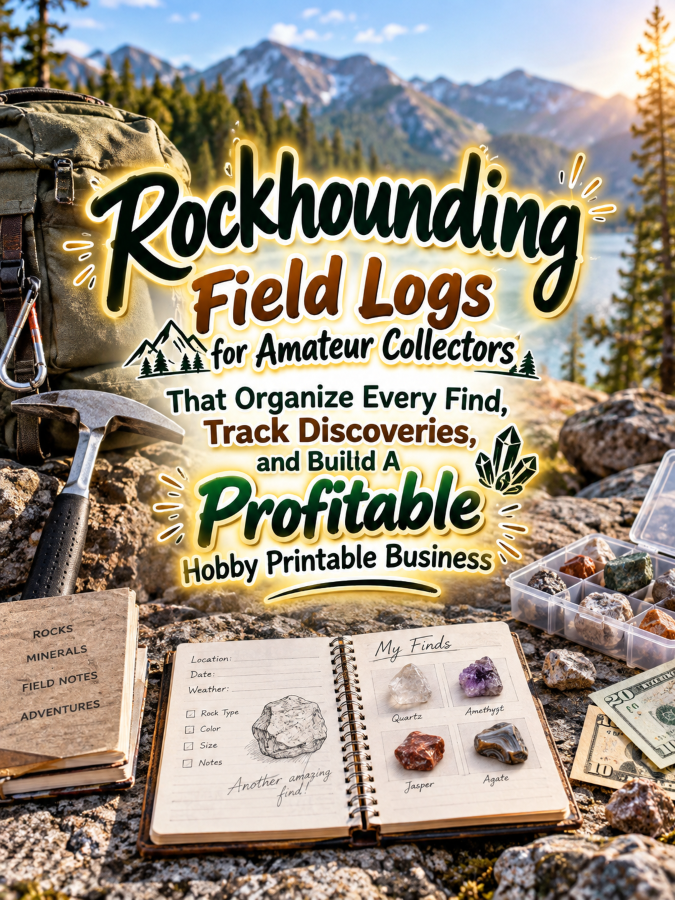
A Rockhounding Field Log can give collectors one organized place to record locations, dates, specimen details, observations, photos, and identification notes. You don’t need to be a geologist to create one because the product can be designed around simple observation and organization rather than complicated scientific terminology. The goal is to help hobbyists remember what they found, where they found it, and what they learned along the way.
This is also a fun niche because rockhounding naturally creates repeatable activities. Collectors can visit new locations, document new specimens, compare discoveries, organize their collections, and keep learning about rocks and minerals. When one hobby creates lots of little moments that need organizing, you’ve got a Good Thing for a printable creator.
Quick Answer
You can turn Rockhounding Field Logs into a profitable printable product by creating simple pages that help amateur collectors document every discovery. Include sections for trip planning, location notes, specimen observations, identification attempts, photographs, collection numbers, and follow-up research. Then turn the basic log into a product ladder with expanded field journals, identification workbooks, collection binders, and complete rockhounding organization systems.
The key is to sell the experience and organization rather than simply selling a stack of blank recording pages. A collector isn’t really buying boxes and lines on paper because they can make those themselves. They’re buying a ready-to-use system that helps them preserve the story behind each discovery and build a more organized personal collection.
Start small with a $7 field log and let the product grow from there. Once you understand what collectors want to record, you can create more specialized products for mineral collectors, fossil hunters, crystal enthusiasts, family rockhounding trips, beginner geology hobbyists, and experienced collectors. That’s it. That’s your beginning!
Why This Niche Works
Rockhounding combines collecting, outdoor exploration, learning, photography, and personal record keeping. That combination gives you several different reasons for someone to use a field log instead of relying on memory. A collector may remember that a specimen looked amazing, but remembering the exact location, date, surrounding conditions, and identification clues six months later can be a completely different story.
There is also a strong emotional element to collecting. Finding an unusual specimen can become a memorable part of a trip, especially when the collector records the story behind the discovery. A well-designed field log helps turn a random rock into a documented specimen with a history, and that makes the printable feel much more useful than a generic notebook.
Another advantage is that the niche gives you multiple customer levels. A beginner may only want a simple field journal, while a serious hobbyist may want specimen numbers, collection inventories, identification records, and research pages. That means one basic idea can become several products without constantly searching for an entirely new audience.
What You Can Put Inside a Rockhounding Field Log
1. Rockhounding Trip Planning Pages
Start with pages that help collectors prepare before heading outdoors. Include the planned location, date, transportation notes, supplies needed, research questions, and personal goals for the trip. You can also include a simple checklist for items such as bags, labels, gloves, magnification tools, camera equipment, notebooks, and other hobby supplies.
These pages make the log useful before the collecting even begins. They also give you an opportunity to remind users to research local rules, land access, collecting restrictions, and safety requirements before removing specimens. That practical information makes the product feel thoughtful rather than decorative.
2. Field Discovery Log
The heart of the product should be a simple discovery page that collectors can use for each interesting specimen. Include fields for date, general location, specimen number, color, texture, shape, size, weight, and other visible characteristics. Leave enough writing space because collectors may discover several interesting samples during one outing.
Don’t make this page feel like a college exam. Amateur collectors need a quick way to capture useful observations while they’re still outside, so the layout should be simple enough to complete with a pencil or pen. A clean field log can make recording discoveries feel like part of the adventure rather than paperwork after the adventure.
3. Location and Site Notes
Create pages specifically for recording information about collecting locations. Users could document the general area, date visited, terrain observations, nearby landmarks, access notes, and other details that help them remember the trip. Keep the fields flexible because different collectors will have different amounts of information to record.
You can also add a section for “What I Found Here” so collectors can connect the location with the specimens they discovered. That creates a useful reference when they review their collection later. The thundering herd of generic notebooks probably isn’t thinking about this tiny connection between place and specimen, which gives your product a chance to stand apart.
4. Specimen Identification Worksheet
Identification is one of the most interesting parts of rockhounding, so give collectors a place to record what they think they’ve found. Include fields for possible identification, identifying characteristics, comparison specimens, research sources, and confidence level. You can also add a section called “What I Still Need to Learn?” because not every mystery needs to be solved on day one.
This page should encourage curiosity rather than pretending the printable can identify every rock automatically. You are creating an organizational tool, not a replacement for qualified geological resources or professional identification. That distinction can actually make your product more useful because it encourages collectors to document their research journey.
5. Specimen Photo Record
Photography can become a valuable part of a collector’s documentation system. Create a page where users can record a photo number, specimen number, date photographed, and notes about what the images show. Leave a dedicated area where they can attach a printed photograph or add a reference to where the digital image is stored.
This feature also gives you an opportunity to make your printable useful for collectors who document their finds digitally. A collector could use the field log for handwritten notes and then connect those notes to a digital photo library later. One simple page can bridge the physical collection and the digital collection, and that’s a nifty little upgrade.
6. Specimen Label and Numbering Pages
Collectors often need a consistent way to identify individual specimens, especially when a collection starts growing. Create a numbering system with fields for specimen ID, collection date, location, possible identification, and storage location. You could also include small printable labels that users can cut out and attach to storage containers.
This feature makes the product feel more like a complete organization system. Someone who starts with ten specimens may eventually have dozens or hundreds, and a numbering system becomes increasingly useful as the collection grows. That’s exactly the kind of long-term usefulness that can turn a one-time printable buyer into someone interested in your other products.
7. Rockhounding Research Notes
Add dedicated pages for collectors who want to learn more about their finds. These pages can include the specimen name, questions to investigate, books or websites consulted, comparison specimens, notes, and conclusions. The purpose isn’t to tell users what every rock is but to help them organize the learning process.
You can make these pages especially beginner-friendly by using prompts instead of complicated instructions. Simple questions such as “What makes this specimen interesting?”, “What characteristics did I notice?”, and “What did I learn?” can help new collectors become more confident. Good Thing, right?
8. Collection Inventory and Display Tracker
Finally, give collectors a way to organize what happens after the field trip. Include fields for specimen number, name, location found, collection date, storage location, display status, identification status, and notes. This transforms the field log from a trip notebook into the beginning of a complete collection management system.
You can also create sections for favorite specimens, unusual finds, specimens needing identification, duplicates, and specimens available for trade if the collector participates in that activity. These categories can become future products because each one represents another organization problem. And every organization problem is potentially another printable opportunity.
Tools You’ll Need
Canva
Canva is a practical choice for designing your Rockhounding Field Log because you can create clean worksheets, checklists, tables, labels, and journal pages without needing complicated design software. Use a natural visual style with earthy textures, simple geological shapes, and readable typography. Just don’t cover every page with giant crystals because your customers need somewhere to write.
Google Docs
Google Docs can help you draft the wording, instructions, prompts, and page structures before moving everything into your final design. It is especially useful when you’re creating several versions of the same product because you can keep your content organized in one working document. This can save you from repeatedly wondering which version had that one field you really liked.
AWeber
AWeber can help you build an email list around your printable business. You could offer a free beginner rockhounding field sheet and use your email list to share organization tips, new printable releases, and related hobby products. The important thing is to give subscribers useful content instead of sending them a sales pitch every time a new moon appears.
GetResponse
GetResponse is another option for building landing pages, email campaigns, and simple promotional funnels. You could create a free “First Rockhounding Trip Checklist” and connect it to a welcome sequence that introduces your paid field log. This gives your audience a natural path from free help to a useful paid product.
Gumroad
Gumroad can be used to sell digital versions of your field logs and related printable products. You can create separate offers for beginners, collectors, families, and more advanced hobbyists as your product catalog grows. A simple storefront can make it easier to test whether different product ideas attract buyers before spending weeks creating enormous bundles.
Teachable
Teachable becomes useful when you want to move beyond printables into educational products. For example, you could eventually create a beginner rockhounding organization mini-course and include your field logs as downloadable resources. That creates another potential revenue stream from the same audience without requiring you to abandon your original printable business.
Amazon Research
Amazon rockhounding journal and field guide research can help you see how existing books and journals are positioned in the market. Pay attention to recurring topics, customer questions, formats, and the types of problems these products appear to address. You’re not copying them, because that’s Not a Good Thing, but you are learning what collectors already understand and what gaps you might fill.
Your 5-Step Action Plan
Step 1: Choose Your Collector
Don’t begin by trying to create the ultimate rockhounding encyclopedia. Pick one audience, such as beginner collectors who are just learning how to document their finds. A narrow starting audience makes it much easier to decide what pages belong in your first product.
Step 2: Map the Collector’s Journey
Think about what happens from the moment someone decides to go rockhounding until the specimen reaches their collection shelf. Write down each step, including planning, collecting, recording, photographing, researching, identifying, labeling, and storing. Then turn the most useful steps into printable pages.
This approach keeps you focused on the actual experience instead of randomly adding worksheets. Every page should help the collector do something useful. If a page doesn’t solve a real problem, it may not need to be there.
Step 3: Create Your $7 Starter Product
Build a simple starter product with the most important pages, such as a trip planner, field discovery log, specimen identification sheet, photo record, and collection inventory. Keep the design clean and beginner-friendly because your first product should be easy to understand and easy to use. You don’t need 100 pages to prove that your system works.
Step 4: Build the Product Ladder
Once the starter product is complete, decide how you can expand it without reinventing the entire product. Your $17 offer could add more specimen records and research pages, while the $27 version could become a complete rockhounding workbook. A $47 collection binder system and a $77 comprehensive rockhounding library could then provide deeper organization for customers who want everything in one place.
Step 5: Market the Transformation
Show collectors how your printable changes their experience. Instead of posting “New Rockhounding Journal Available,” show a messy pile of unidentified specimens becoming an organized collection with numbers, notes, photos, and research records. People understand transformations much faster when they can see the before and after.
You can create short posts about “What I Found Today,” “How I Track Specimens,” “Beginner Rockhounding Organization,” and “What to Record Before You Forget.” Each piece of content can naturally point toward the field log. Five good messages beats 50 generic ones every single time.
What Comes Next
In Part 2, we’ll look at how to make your Rockhounding Field Logs different from the thundering herd of generic journals and notebooks. We’ll also explore nifty ways to find amateur collectors, build related products, avoid common printable mistakes, and turn one field log into a larger hobby-product business. Because once you’ve got the first useful product, the next question becomes, “What else does this customer need?”
That question is where a simple printable can start turning into a real product ecosystem. You don’t need to chase every hobby on the internet when one focused audience can give you dozens of connected product ideas. Start with one useful problem, solve it well, and let the thingees grow from there.
3 Ways to Stand Out From The Thundering Herd!
1. Create a “Find Story” Page
Most field logs focus on facts, but collectors often remember the story behind a great discovery. Give them a page where they can record what they were doing, where they were exploring, what caught their eye, and why the specimen was interesting. This turns a plain specimen record into a little memory that can be enjoyed years later.
You could include prompts such as “What did I notice first?”, “Who was with me?”, “What made this find special?”, and “What do I want to remember about this trip?” These questions make the product feel personal without making it complicated. That’s a Good Thing because hobbyists aren’t just collecting rocks; they’re collecting experiences too.
2. Add a “Mystery Specimen” System
Beginner collectors often have specimens they can’t identify yet, so give that uncertainty its own place in the organizer. Create a “Mystery Specimen” page with a specimen number, observations, possible identification, questions, research notes, and final identification. This gives collectors a reason to keep using the product even when they don’t know exactly what they’ve found.
You can make the page especially fun by adding a simple confidence scale such as “Complete Mystery,” “Possible Match,” “Strong Candidate,” and “Identified.” That turns identification into a small learning journey rather than a pass-or-fail test. Your printable becomes something the collector can return to as their knowledge improves.
3. Build a Collection Dashboard
Give collectors one overview page that shows the big picture of their collection. They could track how many specimens they’ve recorded, how many are identified, which locations they’ve visited, and which specimens still need research. A dashboard makes the field log feel like a real collection management system rather than a pile of disconnected worksheets.
You can also create categories for favorite finds, unusual specimens, specimens needing labels, and specimens that need better photographs. This gives users an easy way to see what needs attention next. And when your product starts helping people manage the whole hobby instead of one field trip, you’ve moved into a much more valuable space.
3 Nifty Ways to Find Customers
1. Create a Free “First Rockhounding Trip” Pack
A beginner-friendly freebie can be a great introduction to your paid product. Include a simple trip checklist, one field discovery page, and a specimen observation sheet that someone can print before their next outing. Keep it useful enough that the collector actually wants to use it rather than tossing it into the digital junk drawer.
Your free pack can then introduce the full field log as the next step. Explain that the free pages help with one trip while the paid product helps build an ongoing record of discoveries. That gives your customer a logical reason to move from the free resource to the paid offer.
2. Create Content Around “What Did I Find?”
Rockhounding naturally creates content because people love seeing interesting discoveries. Create posts that show a specimen, explain what you observed, and demonstrate how you would record it in your field log. You can also create simple “What would you write down?” posts that encourage collectors to think about documenting their own finds.
Short videos can show how you organize specimen numbers, photograph a find, prepare a collection record, or turn field notes into a finished entry. These demonstrations make the printable easier to understand because potential buyers can see it being used in real life. You’re not just saying the product is helpful; you’re showing what helpful looks like.
3. Market to Families and Beginner Hobbyists
Don’t limit your audience to serious mineral collectors because beginners can be an excellent audience for simple organizational tools. Families who enjoy outdoor activities may also appreciate a kid-friendly rockhounding journal that turns a walk into a learning adventure. Parents can use the product to encourage observation, writing, drawing, and research without making the activity feel like another worksheet.
You could create separate versions for adults, kids, families, and homeschool activities while keeping the underlying system similar. A family edition could include “My Favorite Find,” drawing pages, trip memories, and simple observation prompts. One core product can therefore become several targeted offers without you rebuilding the entire business from scratch.
3 Takeaways You Won’t Find Elsewhere!
1. The Best Field Log Preserves the Story, Not Just the Specimen
A specimen can be interesting by itself, but the story behind the discovery can make it meaningful to the person who found it. Encourage collectors to record the location, circumstances, companions, observations, and memories connected to important finds. This creates a personal archive that becomes more valuable as the collection grows.
That emotional layer can also make your product different from a plain inventory spreadsheet. A collector may eventually forget exactly why a particular stone was placed in a box, but a field-log entry can bring the entire discovery back to life. That’s a Good Thing when you’re creating a product designed to be kept and reused.
2. Build Around the Entire Collection Lifecycle
Think beyond the moment when someone picks up a specimen. The complete lifecycle can include planning the trip, making the discovery, recording observations, photographing the specimen, researching its identity, assigning a number, labeling it, storing it, and eventually displaying it. When your product supports several of these steps, it becomes much more useful than a simple field notebook.
This also gives you a powerful product-development map. Every stage of the lifecycle can become a page, a mini pack, a specialized workbook, or a future bundle. Instead of wondering what to create next, look at the next problem your customer encounters.
3. Beginner-Friendly Can Be a Competitive Advantage
Rockhounding can involve specialized terminology that may feel intimidating to someone who is just getting started. Your product can make the organizational side of the hobby approachable by using plain language, examples, prompts, and clear instructions. You don’t have to make the product less useful just because you make it easier to understand.
In fact, a beginner who feels successful using your field log may eventually want more advanced products. That gives you a natural path from a simple starter journal to identification worksheets, collection management systems, and educational resources. Help someone take the first step and you may have created a customer for the next ten steps.
3 Common Mistakes to Avoid
1. Making the Product Too Scientific
A common mistake would be filling every page with technical terms that beginners don’t understand. Remember that your customer may simply be someone who picked up an interesting rock during a hike and thought, “Hey, that’s cool.” If they open your printable and feel like they’ve accidentally enrolled in an advanced geology class, they’re probably going to close it again.
Keep technical information optional and provide simple explanations when it is necessary. You can use beginner-friendly prompts first and add more advanced fields in premium versions. This lets your product grow with the collector instead of overwhelming them on page one.
2. Forgetting About Outdoor Use
A field log needs to work in the field, which means usability matters more than fancy decoration. Leave enough writing space, use readable text, and avoid layouts that become difficult to use when someone is standing outdoors with a pencil in one hand and a specimen bag in the other. A beautiful printable that is awkward to use outside isn’t doing its job.
Consider creating pages that are easy to print in black and white as well as pages designed for digital use. You could also offer a compact version for quick field notes and a larger version for detailed entries at home. Giving collectors options can make the product much more practical.
3. Making Identification Claims You Can’t Support
Your printable should help users document and research specimens rather than promise that a worksheet can positively identify every rock or mineral. Identification can require careful observation, testing, comparison, and sometimes expert assistance. Keep your wording educational and encourage users to verify important identifications with reliable resources.
This approach also gives you more room to create useful research pages. Instead of saying “This page identifies your rock,” say “This page helps you organize the clues you find while researching your specimen.” That is a much more honest promise, and honest promises build better businesses.
Scaling Your Results
Once your first Rockhounding Field Log is finished, you can expand it into a collection of related products. Start with the $7 starter log, then create a $17 expanded field journal with more specimen pages, mystery specimen logs, and trip-planning tools. Your $27 workbook could focus on identification research and collection organization, while a $47 binder system could combine field records, specimen labels, inventory pages, and collection dashboards.
At the top of the ladder, your $77 Rockhounding Collection Library could include the field journal, trip planner, specimen inventory, identification workbook, photography records, collection labels, family activities, and bonus organization pages. You could also create niche versions for crystal collectors, fossil enthusiasts, mineral collectors, beginner rockhounds, and families. One audience can support a surprisingly large collection of related thingees when each product solves a different problem.
You can also build bundles around specific activities. A “Weekend Rockhounding Pack” could combine trip planning and field records, while a “Build Your First Collection” bundle could focus on specimen numbering, identification, labeling, and storage. These bundles give existing customers another reason to buy while giving new customers an easier way to choose what they need.
A collection containing 40 well-designed rockhounding and hobby-collection products could potentially generate an additional $700 to $2,200 per month through bundles, repeat customers, memberships, and complementary offers, although actual results will vary based on traffic, pricing, product quality, audience fit, and marketing. Some products may sell slowly while others may become popular because they solve a particularly annoying problem. The important part is building a useful catalog rather than expecting one printable to carry the entire business.
Your Next Steps
Start with one beginner-friendly Rockhounding Field Log instead of trying to create the ultimate collector’s encyclopedia. Give the customer a simple way to plan a trip, record a find, photograph it, research it, and add it to a collection. If those five things work smoothly, you’ve got a strong foundation for everything else.
Next, create a small freebie that solves one immediate problem, such as a First Rockhounding Trip Checklist or a one-page Specimen Discovery Log. Use that free resource to learn what your audience asks about, what pages they enjoy, and what they wish the product included. Their questions can become your next product ideas, and that’s a whole lot easier than staring at a blank Canva page waiting for inspiration to strike.
Then build your product ladder gradually and connect every new offer to a problem your collector already has. Your $7 starter product gets them organized, your $17 and $27 products help them go deeper, and your $47 and $77 products can become complete collection systems. That’s it. That’s your beginning!
Final Thoughts
Rockhounding Field Logs are a great example of how an ordinary hobby can create an entire family of useful digital products. Collectors have discoveries to document, specimens to identify, locations to remember, photographs to organize, and collections to manage. When your printable helps them do those things more easily, you’re creating something with a real purpose.
The trick is to keep listening to the hobbyist instead of designing products based only on what looks pretty. Ask what they forget, what they lose, what they struggle to organize, and what they wish they had recorded after a great day outdoors. Those answers can become pages, bundles, new products, and eventually an entire printable business built around one fascinating hobby.
If you were creating your first Rockhounding Field Log tomorrow morning, what would you help amateur collectors organize first: their field discoveries, specimen identification, trip details, collection inventory, or the stories behind their best finds? Pick one useful problem, build a simple solution around it, and let the next product grow from what your customers actually need.
Enjoy!