

Pinterest is introducing a
scoring system for its Ads Manager to give marketers a view of how well a campaign is set up for performance across campaign setup, creative mix and signal strength.
The
“campaign optimization score,” available as a new feature announced Monday, will surface specific recommendations so advertising teams know exactly where to optimize
campaigns.
Some 30% of marketers say reaching high-intent shoppers heading into the holiday season is the most stressful time.
The
data comes from tvScientific, an artificial intelligence (AI) performance platform focused on connected TV, and acquired by Pinterest. The acquisition closed in February.
On Pinterest, people often arrive with purpose and a are open to discovery. Ninety-six percent of searches on Pinterest are unbranded, giving brands an opportunity to connect earlier in the decision-making journey.
advertisement
advertisement
The
relevant timing addresses marketers that are looking for ways to reach high-intent shoppers and improve efficiency during the busiest shopping period of the year.
Pinterest
notes that “gifting” is the No. 1 category on Pinterest, and it is where consumers say they expect to increase spending this year.
In the data, Pinterest users also showed 22% higher average holiday spending last year compared with those who did not use the platform. Last year, holiday shopping activity
on the platform grew 21% year-over-year.
The campaign optimization score and guide aims to show advertisers how to put the score to work — for example, by pairing it with live
diagnostics and Pinterest Performance+ creative.
Getting the best results from Pinterest Ads, the company says, means advertisers should think
of creative as the new performance currency, and data as the way to feed the system with real-time data using “Pinterest Tag” and “Pinterest Conversion API.”
The Pinterest Tag is a piece
of code on the brand’s website that tracks actions via the user’s web browser, as with cookies. The Pinterest Conversion API is a direct server-to-server connection that sends conversion data directly
from a brand’s website’s server to Pinterest, bypassing the browser entirely.
Ad platforms use automated bidding, so if the platform only learns about a purchase days after it happens, the
artificial intelligence (AI) will optimize ads based on old trends. By sending data instantly, the AI can adjust bids immediately to target shoppers who are actively buying.
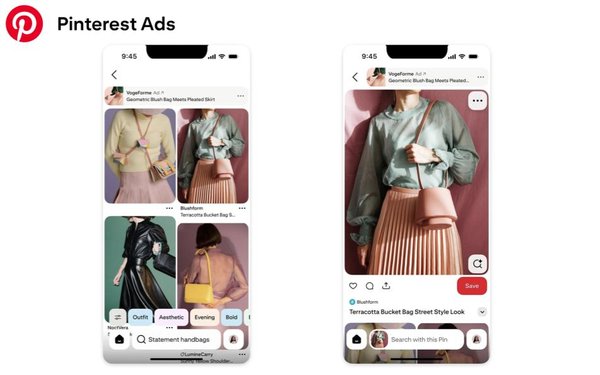
Last week, Pinterest introduced “Visual Search Ads” as its newest ad-performance feature.
The format places advertisers in Pinterest Search Results and Pin closeups,
pairing keyword relevance with a new ad format to reach people as they search and compare.
Pinterest estimates its users conduct more than 80 billion searches per month, and the vast majority are visual, with more than half have commercial intent, meaning that someone is actively researching
products, services, or brands with the goal of soon making a purchase.
Advertisers can bid for a top response and connect people directly to an advertiser’s site. It creates a new
performance opportunity.
When combining different Pinterest platforms, the campaign optimization score in Ads Manager will give advertisers insight into how closely the campaign setup
aligns with proven best practices for performance. Across all objectives, Pinterest has noted that higher campaign optimization scores correlate to better campaign performance.



