Introduction
Photography is one of those hobbies where inspiration can arrive faster than finished projects. One weekend, someone is photographing flowers. The next weekend, they’re chasing golden-hour landscapes, experimenting with portraits, documenting family memories, or trying to capture the moon. Then the camera bag gets packed away, the memory card gets downloaded, and suddenly that brilliant project idea is sitting somewhere between a notebook, a phone, and a collection of unnamed folders.
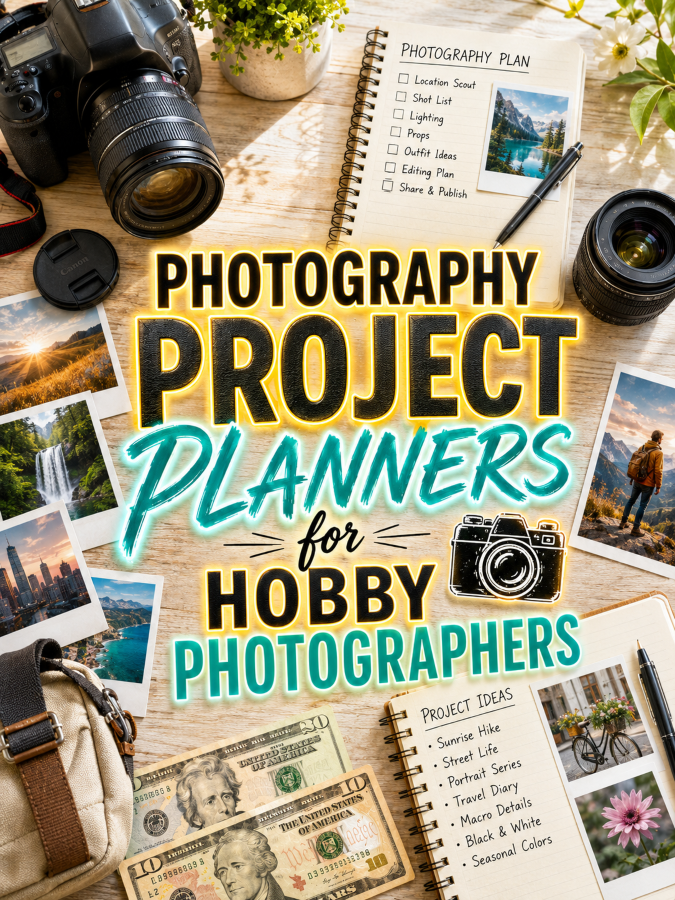
That’s where Photography Project Planners can become surprisingly useful. A well-designed planner gives hobby photographers a place to turn an idea into an actual project, from choosing the subject and location to planning the shot list, equipment, lighting, timing, editing, and final presentation. Instead of simply taking hundreds of photographs and hoping something wonderful emerges, photographers can approach creative projects with a little more intention.
Photography also creates an enormous amount of information. Camera settings, lenses, lighting conditions, locations, weather, time of day, composition choices, editing techniques, and creative experiments can all affect the final image. That’s Not a Good Thing when those details disappear from memory, but it becomes a very Good Thing when your printable helps photographers document what they learned and use it during the next shoot.
Photography attracts beginners, hobbyists, travelers, nature lovers, portrait enthusiasts, street photographers, family photographers, birdwatchers, content creators, and people who simply want to become better at using their cameras. Many of these photographers are constantly looking for projects that help them practice. That creates an excellent niche for project planners, challenge journals, photography logs, and creative practice resources.
One thoughtfully designed Photography Project Planner can become the foundation of a profitable printable business while helping photographers organize their ideas, plan better shoots, experiment with new techniques, and create a portfolio of meaningful personal projects.
Quick Answer
Photography Project Planners are downloadable planning systems that help hobby photographers organize photo projects, locations, shot lists, equipment, timing, lighting, camera settings, creative goals, editing notes, and final results.
A starter planner can comfortably sell for around $7. Expand it into photography challenge journals, location scouting planners, photo session organizers, camera-setting logs, travel photography workbooks, editing trackers, and premium photography project libraries priced at $27, $47, and even $77.
Your customers aren’t simply buying worksheets. They’re investing in a practical system that helps them turn random photo-taking into intentional creative projects and gives them a record of what they learned along the way.
Why This Niche Works
Photography is both creative and technical. A photographer can have a wonderful idea but still need to think about composition, focal length, shutter speed, aperture, ISO, lighting, weather, location, timing, and subject movement. A project planner gives them somewhere to think through those variables before they press the shutter.
Photography also lends itself beautifully to challenges. A beginner might want to complete a 30-day photography challenge, while an experienced hobbyist may want to spend a month photographing one subject in different lighting conditions. A planner can turn those goals into manageable projects with prompts, deadlines, progress pages, and reflection sections.
That’s always a Good Thing because hobby photographers often own cameras and lenses long before they feel confident using them. A structured project can give them a reason to pick up the camera regularly and practice specific skills instead of letting expensive equipment sit inside a bag.
Once customers discover your Photography Project Planners, they’ll naturally become interested in photo challenge journals, location scouting sheets, camera-setting logs, travel photography planners, portrait session organizers, editing trackers, photography business worksheets, and countless related thingees. One successful photography printable can easily grow into an entire creative photography brand.
Unlike short-lived photography trends, photography is a hobby people can pursue for decades. Prior to pouncing upon this opportunity, you should first know all about the:
Tools You’ll Need
You don’t need to be a professional photographer to create useful planning resources for hobby photographers. You need a practical design platform, a way to research real photography challenges, and simple tools for marketing and selling your finished printables.
- Canva for designing photography project planners, challenge journals, shot lists, location planners, and creative photography resources.
- Google Docs for organizing workbook content, photography prompts, project ideas, and planning instructions.
- AWeber for building an email list with photography prompts, printable freebies, creative challenges, and product announcements.
- GetResponse for newsletters, promotions, automated campaigns, and customer follow-up.
- Gumroad for selling downloadable photography planners, journals, and creative project bundles worldwide.
- Teachable if you’d eventually like to teach photography fundamentals, creative projects, camera skills, or editing workflows.
- Amazon Photography Planner Research for discovering which photography journals, logs, and planning features hobby photographers are already interested in.
Don’t spend three weeks choosing between 14 different camera icons while a hobby photographer is trying to plan a sunrise shoot and figure out what they actually want to photograph. Your future customers care much more about useful planning than decorative camera graphics. Make the planner attractive, but make every page genuinely useful.
Next, move to:
Your 5-Step Action Plan
Follow these five steps unless you’d rather watch another printable creator become the photography organization expert everyone recommends. The smartest entrepreneurs create products around specific creative problems rather than stuffing random camera tips into a PDF. Give photographers a clear path from idea to finished project.
Step 1. Research Real Hobby Photographer Challenges
Spend about 90 minutes exploring photography Facebook groups, Reddit photography communities, Pinterest boards, YouTube photography channels, hobby forums, and reviews of existing photography journals. Pay attention to conversations about camera settings, composition, finding subjects, planning shoots, choosing locations, organizing photographs, and developing a consistent photography habit.
Create a master list containing at least 40 to 50 printable pages. Include project planners, shot lists, location scouting sheets, equipment checklists, camera-setting logs, lighting notes, weather records, editing notes, photo-selection pages, challenge trackers, and finished-project reviews. Your research becomes an X-ray machine that reveals where hobby photographers need practical organization.
Step 2. Build Your Core Photography Project Planner
Create a collection containing 50 to 70 pages that guides photographers from the first creative idea through the final image. Include project goals, subject information, location, timing, equipment, shot lists, creative direction, camera settings, editing notes, and final reflections. Keep every page simple, practical, and easy to use because simplicity is always a Good Thing.
Include visual planning sections where photographers can sketch compositions, make thumbnail notes, or describe the type of image they want to capture. A good planner should help them think before the shoot, not merely document what happened afterward.
Step 3. Create Specialty Editions
Build separate planners for landscape photographers, portrait enthusiasts, travel photographers, nature photographers, street photographers, macro photographers, wildlife photographers, and beginner camera users. Specialized editions immediately feel more valuable because customers recognize their specific photography goals.
You can also create focused planners around sunrise photography, night photography, seasonal projects, 30-day challenges, travel photo collections, or one-subject photography studies. Each specialty edition expands your audience while allowing you to reuse your strongest planning framework.
Step 4. Add High-Value Bonuses
This is where your Photography Project Planners begin standing out from the thundering herd. Include shot-list templates, location scouting pages, gear checklists, weather trackers, golden-hour planning pages, camera-setting logs, editing checklists, photo-selection sheets, and portfolio review pages.
Add a “What I Learned” page after every completed project. Include questions about what worked, what didn’t, which settings produced the best results, and what the photographer would change next time. Those bonus thingees require relatively little additional design work yet can dramatically increase the perceived value of the product.
Step 5. Build Your Product Ladder
Launch your starter Photography Project Planner for $7 and let it become the foundation of a growing photography-printable business. Expand into premium photography challenge journals around $27, complete project-planning binders around $47, and comprehensive photography libraries approaching $77.
Every additional product naturally complements the others while encouraging repeat purchases. Before long, your business won’t simply be selling photography worksheets. You’ll be helping hobby photographers practice intentionally, plan creative shoots, improve their skills, and build a personal portfolio of projects they’re genuinely proud of.
Once you’ve figured out all of the above, the next step is implementing:
3 Ways to Stand Out From The Thundering Herd!
The photography printable market already has camera logs, shot lists, and generic photography journals. The Good Thing is that many of those products focus on technical information without helping the photographer think creatively about the project itself. Your opportunity is to create a planner that connects the creative idea, the actual shoot, and the lessons learned afterward.
Way 1. Make the Shot List More Creative
A basic shot list says what photographs someone needs to capture. A better one encourages the photographer to think about variety, storytelling, perspective, composition, and emotion. Create sections for must-have shots, experimental shots, detail images, wide establishing images, alternate angles, and unexpected opportunities.
Include a “One Shot I Must Try” section where photographers choose one image that pushes them outside their comfort zone. That small prompt can transform an ordinary photo outing into a genuine creative exercise. That’s always a Good Thing because hobby photographers often improve fastest when they deliberately try something unfamiliar.
Way 2. Add Location Scouting Pages
Location can completely change a photography project, yet photographers often arrive somewhere and start shooting without recording what they discovered. Create location scouting pages where they can document viewpoints, lighting conditions, access information, interesting subjects, ideal shooting times, parking notes, weather considerations, and future ideas.
Include a small sketch or thumbnail area so photographers can draw where they want the subject, light, or horizon to appear. After several trips, these pages become a personal location library that can inspire future projects. Your printable becomes useful long after the first photograph is taken.
Way 3. Track the Creative Progress, Not Just the Camera Settings
Technical settings matter, but creative development matters too. Give photographers space to record what they were trying to communicate, what visual style they were exploring, and whether the finished photographs matched the original idea.
Include before-and-after reflection pages that encourage photographers to compare their initial concept with their final images. They can record which compositions worked, which editing decisions improved the photograph, and what they want to try next time. It’s one of the easiest ways to rise above the thundering herd.
Next, here’s the thing. You’re probably NOT the only person offering this service. So you now require:
3 Nifty Ways to Find Customers
Your ideal customers are already sharing photographs, joining challenges, watching camera tutorials, planning trips, and looking for inspiration. The challenge isn’t finding photographers. The challenge is showing them that your planner can help turn their creative ideas into actual projects.
Way 1. Photography Communities
Photography Facebook groups, Reddit communities, camera clubs, travel photography groups, nature photography communities, and hobby forums are excellent places to introduce useful resources. Offer a free shot-list template, photo challenge page, or location scouting sheet before recommending your complete planner. Helping first builds trust much faster than immediately promoting a paid product.
Photographers also love discussing camera settings, locations, composition, editing, and creative challenges. Those conversations can become an ongoing source of product ideas while putting your printable directly in front of people who already enjoy photography.
Way 2. Pinterest
Pinterest is a natural fit for photography because users constantly search for photography challenges, composition ideas, camera tips, travel photography inspiration, photo-project ideas, and editing workflows. Create attractive pins featuring individual planner pages, challenge prompts, shot-list examples, and location-planning spreads.
Because Pinterest content can continue appearing in searches long after publication, a useful collection of photography pins can keep bringing potential customers to your shop. Trust me, you’ll thank me later.
Way 3. Photography Creators and Camera Clubs
Photography YouTubers, camera instructors, photography bloggers, local camera clubs, travel creators, and online photography educators already have audiences interested in improving their skills. Reach out with affiliate partnerships, workshop bundles, club resources, or printable collaborations that allow them to recommend your planner alongside their tutorials.
A photography instructor could use your project sheets during a class, while a travel creator could demonstrate how a location-planning page helps organize a photo trip. These partnerships introduce your product to people who already trust the creator or community guiding them.
Speaking of long-term growth, now let’s move to:
3 Takeaways You Won’t Find Elsewhere!
Many printable creators think they’re selling photography worksheets. The most successful entrepreneurs understand they’re helping hobby photographers turn random shooting into intentional creative practice. That difference gives your Photography Project Planner much greater practical and emotional value.
Takeaway 1. You’re Selling Creative Direction
Your customers aren’t purchasing pages simply because they need somewhere to write down aperture and shutter speed. They’re investing in a system that helps them decide what they want to photograph, why they want to photograph it, and how they can approach the subject differently.
When writing your product descriptions, focus on that transformation. You’re helping photographers turn “I should take more photos” into specific projects they can actually complete.
Takeaway 2. Every Photo Project Can Become a Skill-Building Exercise
A photography project doesn’t have to be a huge portfolio assignment. It could involve photographing one subject from ten angles, using only one focal length, practicing reflections, capturing movement, exploring shadows, or photographing the same location at different times of day.
That creates natural opportunities for challenge journals, technique workbooks, composition exercises, location guides, and themed project packs. One project can become another reason for a customer to return to your shop.
Takeaway 3. One Planner Can Become an Entire Photography Brand
Your Photography Project Planner can naturally expand into photo challenge journals, location scouting planners, travel photography organizers, portrait session planners, camera-setting logs, editing workbooks, portfolio planners, photography business resources, and project libraries.
Those connected thingees encourage repeat purchases because each product supports another stage of the photographer’s creative journey. Before long, hobby photographers won’t simply recognize your planner. They’ll know your shop as a dependable source of practical resources for developing their photography skills.
Now that you know the above, it’s time for:
3 Common Mistakes to Avoid
Many creators make photography planners too technical. That’s Not a Good Thing. Camera settings are useful, but hobby photographers also need space for creative goals, subjects, locations, compositions, and reflections. Make the planner about the entire project rather than turning it into another camera manual.
Some sellers forget that photographers need visual space. Include room for thumbnail sketches, composition notes, image references, and small project previews. A photography planner should feel visual rather than like an ordinary office worksheet.
Others stop after creating one planner. That’s like opening a camera store with one lens. Continue expanding into photo challenges, location planners, travel photography journals, portrait planners, editing trackers, portfolio organizers, and specialized project packs to create a much stronger printable business.
What else should you know? How about:
Scaling Your Results
Expand into a complete photography ecosystem. Create photo challenge journals, location scouting systems, travel photography planners, portrait session organizers, editing trackers, portfolio planners, camera-setting logs, photography business worksheets, and creative project libraries that naturally complement your original Photography Project Planner.
Every additional printable strengthens your catalog while encouraging repeat purchases from photographers who want to develop different skills. You can also create themed collections around landscapes, portraits, nature, travel, street photography, macro work, night photography, and seasonal projects.
Create a Photography Challenge Club. Release fresh printable challenges every month featuring composition exercises, lighting experiments, subject prompts, location challenges, seasonal photography ideas, and project-review pages. Members receive fresh reasons to pick up their cameras while your business benefits from dependable recurring revenue.
Build an email list photographers genuinely appreciate. Share photography prompts, printable shot lists, creative exercises, location-planning tips, project ideas, composition challenges, and free mini-workbooks throughout the year. A collection containing 40 photography-focused printable products could realistically generate an additional $700 to $2,200 each month through memberships, bundles, repeat customers, and affiliate partnerships. Trust me, you’ll thank me later.
Let’s now wrap up everything via the:
Your Next Steps
Start by listing everything a hobby photographer needs to consider from the first project idea through the final image. Think about subject, location, timing, equipment, shot lists, composition, camera settings, weather, editing, image selection, and lessons learned. Those recurring details will naturally become the foundation of your printable collection.
Design your first Photography Project Planner in Canva using clean layouts, generous writing space, practical tables, thumbnail areas, checklists, and consistent branding that can easily expand into future photography products. Focus on making the planner genuinely useful rather than filling every page with decorative camera graphics. Functional creative tools almost always become customer favorites.
Then introduce your planner to five photography communities, Pinterest boards, camera clubs, travel photography groups, or photography creators. Remember, 5 good messages beats 50 generic ones every single time. One thoughtfully designed Photography Project Planner can quietly become the beginning of an entire hobby-photography printable business.
Next, let’s finish with:
Final Thoughts
A great photograph may take only a fraction of a second to capture, but becoming the person who can consistently create great photographs takes practice. A Photography Project Planner gives hobby photographers a reason to practice intentionally, document what they discover, and turn individual shoots into a larger creative journey. That’s an incredible transformation from a simple printable product.
So, begin by creating one planner that solves one meaningful photography organization challenge exceptionally well. Continue listening to customer feedback while expanding your collection into matching challenge, location, travel, portrait, editing, and portfolio resources that naturally work together.
You don’t need bazillions of unrelated printables to build meaningful income. You simply need one thoughtfully designed Photography Project Planner that helps hobby photographers stop saying, “I should take more photos,” and start saying, “Here’s the next project I’m going to shoot.”
That’s it. That’s your beginning!
If you were creating your first Photography Project Planner tomorrow morning, would you design it for complete beginners, travel photographers, nature lovers, portrait enthusiasts, landscape photographers, or hobbyists who simply want a structured way to improve their photography?
Enjoy!