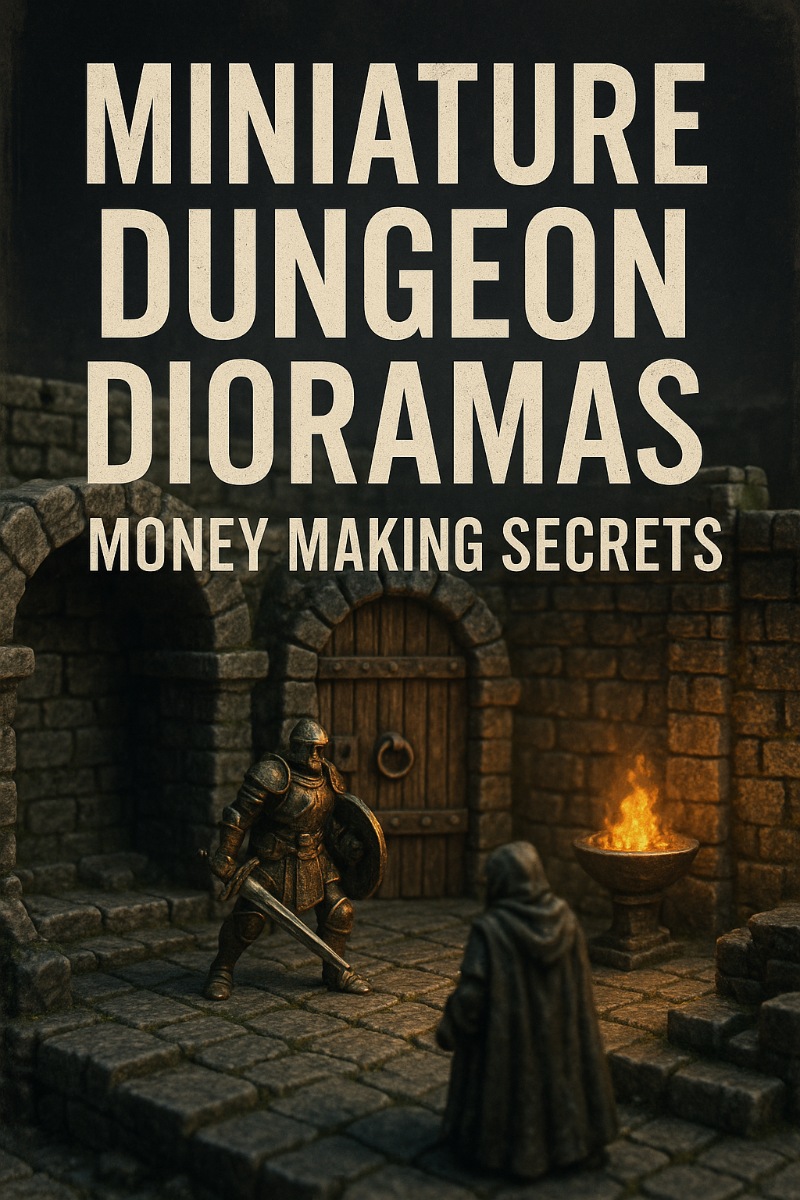
Do you love epic battles, dragons, and dramatic dice rolls? Do you also love tiny things – like pint-sized swords, microscopic treasure chests, and goblins smaller than your pinky nail? Welcome to the glorious, geeky world of Miniature Dungeon Dioramas – where fantasy meets glue guns, and your wallet just might level up.
This niche is pure magic for tabletop role-playing fans, fantasy nerds, and collectors. Instead of just playing Dungeons & Dragons on a flat board with a crayon-drawn cave, people now buy pre-built dungeon scenes.
Like, can you imagine:
- Entire haunted temples.
- Crumbling wizard towers.
- Slime-infested sewer tunnels.
All made by hand and ready to wow the dungeon party.
And that’s where you come in.
You get to turn foam, paint, moss, and plastic skulls into glorious pocket-sized battlegrounds. Whether you sell custom orders, digital build guides, or printable props – people pay good money for high-detail, imaginative scenes.
Even better? It’s super therapeutic. Like yoga… but with dragons. Seriously, what could possibly be better than yoga with dragons?
You don’t need to be a D&D master, either. Just a flair for creativity, patience with glue, and a slight obsession with fantasy worlds. Seriously, if you can make a cereal box look like a crumbling tomb entrance, you’re halfway to legendary.
How to Get Started
Step 1: Pick a Sub-Niche or Theme
Are you building dioramas for D&D? Pathfinder? General fantasy fans? Decide early. You might specialize in haunted castles, elemental caverns, or boss-level lairs. This helps shape your builds and your branding.
Step 2: Learn the Craft of Terrain Building
Search YouTube for dungeon terrain tutorials (Luke’s APS, Black Magic Craft, etc.). You’ll learn the holy trifecta: foam carving, dry brushing, and hot glue wizardry.
Step 3: Gather Your Base Materials
Start with foam insulation boards, dollar store moss, acrylic paint, and bits of junk (yes, even broken earbuds can be turned into dungeon debris). Low-cost, high-creativity.
Step 4: Build Your First Scene
Don’t overthink it – make one small room. Maybe a cursed throne room or spooky jail cell. Get comfortable gluing, layering, and adding tiny props.
Step 5: Photograph Your Diorama Like It’s a Movie Set
Use dramatic lighting – think LED torches, fog effects, and low angles. The goal is to make your 6-inch foam square look like a full-blown boss battle arena.
Step 6: Post Your Creations Online
Join Facebook groups, Reddit threads, and Instagram hashtags like #dungeondiorama and #ttrpgterrain. The community is super supportive – and curious customers lurk everywhere.
Step 7: Offer Custom Builds or Commissions
Gamers love scenes that match their campaigns. Offer custom builds based on player descriptions. “You need a dragon’s hoard room with lava walls? You got it.”
Step 8: Create Digital Files or Tutorials
Make PDFs, blueprints, or build-along videos. These become passive income products that dungeon masters gobble up faster than cursed donuts.
Step 9: Sell Printable Props
Use Canva or Photoshop to create potion labels, treasure maps, scrolls, and dungeon doors. Sell them on Etsy or DriveThruRPG.
Step 10: Launch Your Own “Mini Master” Brand
Give your shop a cool name, design a logo, and start packaging like a pro. Add stickers, a map background, or a “Thank you, brave adventurer!” note to every box.
Tools/Resources Needed:
Foam Insulation Boards
Your foundational material for walls, floors, and ancient temple blocks. Super lightweight, easy to carve, and cheap. Think of it as your dungeon’s skeleton – without the creepy bones.
Acrylic Paint Set
You’ll need black, brown, grey, mossy green, lava red – you get the idea. Acrylics dry fast and layer well. Plus, a good dry brush technique can turn any foam block into an ancient ruin.
Hot Glue Gun
This is your magic wand. Use it to attach pillars, skulls, vines, or the occasional skeleton arm. The trick? Don’t burn your fingers unless you’re going for “realistic pain traps.”
LED Mini Lights
Instant atmosphere! Add flickering lights to mimic torches, glowing runes, or cursed crystals. Makes your diorama feel like a scene straight outta Skyrim.
Miniature Accessories Pack
Instead of building each tiny barrel or sword from scratch, grab a set of plastic or resin props. You can paint them to match your theme. Adds depth, realism, and saves your sanity.
Your 10 Step Action Plan
Step 1: Build a Tiny Base Set
Start with a small dungeon room – maybe 6 inches wide – with a throne, wall torches, and a stone floor. This teaches scale, glue control, and layering. Keep it simple and don’t over-detail (yet).
Step 2: Develop a Terrain Texture Technique
Use tinfoil, craft sand, or crumpled tissue for texture. Try dry brushing with grays and browns to bring out surface grit. This one detail makes everything feel ancient and real.
Step 3: Make 5 Themed Dioramas
Try a lava cavern, undead crypt, enchanted library, slime swamp, and goblin den. Each one teaches new textures, materials, and lighting setups. Plus – you’ll have content for marketing!
Step 4: Learn to Photograph Like a Dungeon Cinematographer
Use side-lighting, dark backdrops, and forced perspective. Your mini world should look larger than life. No blurry photos allowed – it ruins the magic.
Step 5: Open a Shop on Etsy or Gumroad
List your finished builds, custom build options, or digital guides. Add tags like “tabletop terrain,” “miniature dungeon,” and “D&D props.” Bonus: Offer gift wrapping for gamer birthdays.
Step 6: Create a YouTube or TikTok Build Channel
Show off your builds and let people watch the magic unfold. Add voiceovers like “Here’s where I hot glue this skull right into the wizard’s spell circle.” Boom – entertainment + marketing.
Step 7: Offer Dungeon Builder Commissions
Post a form on your site where people describe what they want: dimensions, theme, maybe a backstory. Price based on time, detail level, and shipping. Some fans will pay triple for epicness.
Step 8: Sell a Printable Prop Kit
Design scrolls, maps, “treasure cards,” or potion labels. Bundle them into a ZIP file and sell via DriveThruRPG or your site. Passive income + fantasy flair.
Step 9: Collaborate with TTRPG Creators
Reach out to YouTubers, streamers, or game designers. Offer a free diorama in exchange for shoutouts. Instant exposure to diehard fans.
Step 10: Package and Ship Like a Pro
Use foam, bubble wrap, and nerdy packaging. Include a little “Welcome, brave traveler!” card and care tips. Build excitement before they even open the box.
How to Make Money in This Niche
1. Sell Physical Dioramas on Etsy or eBay
People LOVE buying pre-built, high-detail scenes. Market them as one-of-a-kind collectibles or gaming centerpieces. Use keywords like “handcrafted D&D terrain,” “miniature dungeon room,” and “fantasy diorama.” Add 2–3 lifestyle photos, including one with a game mini for scale.
2. Offer Custom Builds for Players or DMs
Dungeon Masters crave dioramas that match their campaigns. Offer tiered packages: simple builds, deluxe boss rooms, or full dungeon sets. Promote your commission slots monthly via your email list or Discord.
3. Sell Digital PDF Build Guides
Write clear, photo-rich guides showing how to build different rooms. Sell them on Gumroad or bundle into themed collections (like “Swamp Edition”). This earns passive income from fellow hobbyists.
4. Launch a Patreon with Monthly Diorama Challenges
Post exclusive tutorials, behind-the-scenes videos, and mini-challenges for fans. Offer perks like “get your name engraved on a dungeon stone!” Engage your community and grow a recurring revenue stream.
5. Create a “Dungeon in a Box” Kit
Curate materials, blueprints, and props into one boxed experience. Sell them as gifts or monthly subscriptions. You can offer versions for kids, hardcore gamers, or classroom fantasy projects. Sell via Cratejoy or your own site.
Miniature dungeon dioramas let you build fantasy realms from scraps and foam – and turn them into real money. You’ll work with your hands, ignite imaginations, and bring joy to nerds everywhere.
Conclusion
And there you have it! Some rather coolio ideas that are only limited by your imagination.
Now go forth, oh Dungeon Crafter… your glue gun quest to D&D profits begins!
Enjoy.