Introduction
There is a point in every houseplant collector’s journey when “a few plants” becomes a collection.
At first, you remember everything.
Then there are 12 plants.
Then 27.
Then somebody asks, “When did you last water that one?”
And you suddenly realize you have no idea.
That’s where Houseplant Care Trackers can become surprisingly valuable.
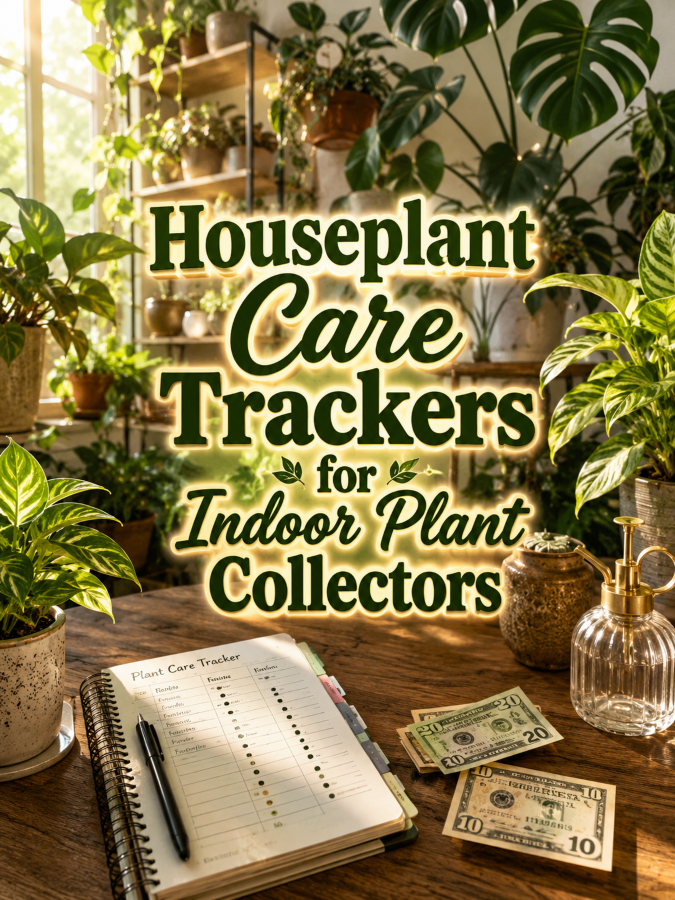
A well-designed care tracker gives indoor plant collectors one organized place to record plant names, varieties, watering dates, feeding schedules, repotting, pruning, propagation, lighting conditions, pest observations, and general care notes.
That’s Not a Good Thing when every plant gets watered according to whichever one happens to look thirsty at the moment. But it becomes a very Good Thing when a printable helps collectors create a simple, repeatable care routine.
Houseplant collectors aren’t necessarily looking for complicated botanical records. Many simply want an attractive, practical system that helps them remember which plants need attention and document how their collection changes over time.
That creates an excellent opportunity for a printable business.
One thoughtfully designed Houseplant Care Tracker can become the foundation of a much larger collection covering plant inventories, watering logs, repotting records, propagation journals, plant-shopping trackers, pest-monitoring sheets, and indoor-garden organization.
Quick Answer
Houseplant Care Trackers are downloadable organization systems that help indoor plant collectors record plant details, care routines, watering, feeding, repotting, pruning, propagation, environmental observations, and collection growth.
A starter care tracker can sell for around $7. Expand it into plant journals, collection inventories, propagation logs, repotting planners, plant-shopping trackers, and complete houseplant-management bundles priced at $27, $47, or even $77.
Your customers aren’t simply buying pages to mark watering dates. They’re investing in a system that helps them remember individual plants, organize a growing collection, and learn what works in their own indoor environment.
Why This Niche Works
Houseplant collections naturally create organization problems. A collector may have plants with different care routines, different locations, different pot sizes, and different seasonal needs.
Even a relatively modest collection can generate plenty of information worth recording.
Which plant was repotted recently? Which one was propagated? Which plants received fertilizer? Which ones are producing new growth? Which plants are struggling? Which varieties would the collector like to add next?
A care tracker puts those details somewhere visible.
That’s always a Good Thing because plant care becomes considerably easier when the collector doesn’t have to rely entirely on memory.
There is also a strong emotional component to this niche. Houseplant collectors often enjoy documenting growth, new leaves, blooms, propagation successes, plant acquisitions, and changes to their indoor jungle.
That means your product can combine practical organization with the pleasure of keeping a personal plant record.
Once customers discover your Houseplant Care Trackers, they’ll naturally become interested in plant journals, propagation logs, plant inventories, repotting records, plant-shopping planners, and countless related thingees.
One successful tracker can easily grow into an entire indoor-gardening printable brand.
Prior to pouncing upon this opportunity, you should first know all about the:
Tools You’ll Need
You don’t need to own a greenhouse the size of a supermarket to create useful houseplant resources. You need a practical design platform, thoughtful research, and simple tools for marketing and selling your finished printables.
- Canva for designing plant-care trackers, plant journals, collection inventories, repotting logs, and indoor-gardening printables.
- Google Docs for organizing workbook content, care prompts, research notes, and product ideas.
- AWeber for building an email list with houseplant organization tips, printable freebies, care prompts, and product announcements.
- GetResponse for newsletters, promotions, automated campaigns, and customer follow-up.
- Gumroad for selling downloadable plant trackers, journals, inventories, and indoor-gardening bundles.
- Teachable if you’d eventually like to teach plant organization, houseplant routines, propagation record keeping, or indoor-garden management.
- Amazon Houseplant Journal Research for discovering which plant journals, care trackers, collection logs, and organization features indoor gardeners are already interested in.
Don’t spend three weeks creating a botanical masterpiece with enough decorative leaves to hide the actual tracking fields. Your future customers care much more about quickly knowing which plant needs attention.
Make the tracker beautiful. Make it botanical. But most importantly, make it practical.
Next, move to:
Your 5-Step Action Plan
Follow these five steps unless you’d rather watch another printable creator become the houseplant-organization expert everyone recommends. The smartest entrepreneurs create products around the recurring problems collectors experience as their indoor jungles expand.
Step 1. Research Real Houseplant-Care Problems
Spend about 90 minutes exploring houseplant Facebook groups, indoor-gardening communities, plant-collector forums, Reddit discussions, Pinterest boards, plant blogs, and reviews of existing plant journals.
Pay attention to conversations about watering schedules, fertilizing, repotting, plant identification, lighting, pests, propagation, plant purchases, collection organization, and seasonal care.
Create a master list containing at least 40 to 50 printable pages. Include plant profiles, care logs, watering records, feeding trackers, repotting sheets, propagation records, pest-monitoring pages, plant inventories, and collection reviews.
Your research becomes an X-ray machine that reveals where indoor plant collectors need practical organization.
Step 2. Build Your Core Houseplant Care Tracker
Create a collection containing 40 to 60 pages that helps collectors manage individual plants and their overall collection.
Include plant name, variety, acquisition date, location, pot size, light notes, watering record, feeding record, repotting history, pruning, propagation, observations, and general notes.
Add a simple care-status system such as Needs Attention → Scheduled → Cared For → Monitoring → Recovering.
Keep every page simple, practical, and easy to use because simplicity is always a Good Thing.
Step 3. Create Specialty Editions
Build separate versions for beginner plant parents, serious houseplant collectors, succulent enthusiasts, tropical-plant collectors, indoor herb growers, apartment gardeners, and plant propagators.
You can also create specialty editions for plant collections, watering routines, repotting, propagation, seasonal care, or plant-room organization.
Specialized editions immediately feel more valuable because customers can choose a system that matches their particular indoor-gardening style.
Step 4. Add High-Value Bonuses
This is where your Houseplant Care Tracker begins standing out from the thundering herd.
Include plant-profile sheets, collection inventories, watering logs, feeding records, repotting histories, propagation pages, pest-observation logs, plant-shopping wish lists, and seasonal collection reviews.
Add a “Plant Emergency Notes” page where collectors can record what they observed and what actions they took, without presenting the tracker as a substitute for professional horticultural advice.
Create a “New Plant Quarantine/Observation” record for collectors who want a dedicated place to track newly acquired plants before integrating them into the collection. Keep the wording focused on observation and the user’s own care procedures rather than making disease-control guarantees.
You could also include a “Plant Wish List” page because apparently owning 37 plants does not prevent somebody from discovering the 38th plant they absolutely, definitely, positively need.
Those bonus thingees require relatively little additional design work yet can dramatically increase the perceived value of your product.
Step 5. Build Your Product Ladder
Launch your starter Houseplant Care Tracker for $7 and let it become the foundation of a growing indoor-gardening printable collection.
Expand into plant inventories around $17, detailed care journals around $27, complete houseplant binders around $47, and comprehensive indoor-gardening libraries approaching $77.
Every additional product naturally complements the others while encouraging repeat purchases.
Before long, your business won’t simply be selling care sheets. You’ll be helping plant collectors organize their collections, document plant growth, track maintenance, record propagation, plan repotting, and create a personal history of their indoor garden.
Once you’ve figured out all of the above, the next step is implementing:
3 Ways to Stand Out From The Thundering Herd!
The houseplant printable market already has watering logs, plant-care sheets, and basic plant journals. The Good Thing is that many of them treat every plant exactly the same. Your opportunity is to create a flexible system that recognizes that an indoor collection is made up of individual plants with individual histories.
Way 1. Give Every Plant Its Own Story
Create individual plant-profile pages that allow collectors to document the history of each plant.
Include plant name, variety, acquisition date, source, current location, pot size, notable features, care observations, repotting history, propagation notes, and photographs if the user wants to add them.
Add a “Plant Milestones” section for new leaves, blooms, repotting, propagation, moving locations, or other memorable events.
This makes the tracker feel less like an office spreadsheet and more like a personal collection journal.
That’s always a Good Thing because collectors often become emotionally attached to particular plants.
Way 2. Build a “What Needs Attention?” Dashboard
Here’s where your printable can become much more useful than a collection of individual plant pages.
Create a weekly or monthly dashboard where users can quickly identify plants that need checking, repotting, pruning, feeding, observation, or other routine care according to their own schedules.
Use simple categories such as Check, Care, Monitor, Repot, Propagate, and Review.
The goal isn’t to dictate a universal care schedule. Different plants and growing environments have different needs.
Instead, you’re giving collectors a place to record and organize the routines they already follow.
Now the tracker becomes a command center for the indoor jungle.
Way 3. Add a Collection Growth Tracker
Collectors love watching their collections evolve.
Create annual or seasonal pages where users can record plants acquired, plants propagated, plants gifted, plants lost, plants relocated, and plants currently in the collection.
Add a simple “Collection Snapshot” page for the beginning and end of each year.
Over time, users can see how their collection changed.
And yes, this may occasionally reveal that “I only bought a couple of plants this year” is not technically supported by the evidence.
It’s one of the easiest ways to rise above the thundering herd.
Next, here’s the thing. You’re probably NOT the only person offering this service. So you now require:
3 Nifty Ways to Find Customers
Your ideal customers are already watching houseplant videos, collecting rare varieties, propagating cuttings, decorating plant rooms, and searching for ways to keep their indoor gardens organized. The challenge isn’t finding plant lovers. It’s showing them that your tracker helps make collection management easier.
Way 1. Houseplant Communities
Houseplant Facebook groups, indoor-gardening communities, plant-collector forums, Reddit plant discussions, local plant clubs, and plant-trading communities are excellent places to introduce useful resources.
Offer a free plant-profile sheet, watering record, collection inventory, or repotting tracker before recommending your complete system. Helping first builds trust much faster than immediately promoting a paid product.
These communities are also fantastic sources of product research. Pay attention when collectors complain about forgetting watering dates, losing plant labels, mixing up varieties, forgetting repotting dates, or simply losing track of how many plants they own.
Every recurring complaint is potentially another printable.
Way 2. Pinterest
Pinterest is a natural fit for houseplant products because plant lovers search for plant-care schedules, houseplant journals, watering trackers, plant-room organization, propagation records, and collection-management ideas.
Create attractive pins featuring plant-profile pages, care dashboards, collection trackers, repotting records, propagation logs, and plant wish lists.
Because Pinterest content can continue appearing in searches long after publication, a useful collection of houseplant-focused pins can keep bringing potential customers to your shop. Trust me, you’ll thank me later.
Way 3. Plant Creators and Indoor-Gardening Educators
Houseplant YouTubers, gardening bloggers, plant collectors, indoor-gardening creators, propagation educators, and plant-community organizers already have audiences fascinated by growing plants.
Reach out with affiliate partnerships, workshop bonuses, printable bundles, freebie collaborations, or collection-management resources.
A plant creator could demonstrate how to organize a collection using your tracker, while a gardening educator could provide the plant-profile pages as a bonus resource with a class or workshop.
Those collaborations introduce your printable to people who already trust the person teaching them.
Speaking of long-term growth, now let’s move to:
3 Takeaways You Won’t Find Elsewhere!
Many printable creators think they’re selling plant-care sheets. The most successful entrepreneurs understand they’re helping collectors build a reliable record of their indoor garden.
That difference gives your Houseplant Care Tracker much greater practical and emotional value.
Takeaway 1. You’re Selling Memory
Your customers aren’t purchasing pages simply because they need somewhere to mark a watering date.
They’re creating a history of their collection.
Months or years later, they can look back and remember when a favorite plant joined the household, how it changed, when it was repotted, which cuttings came from it, and how their collection evolved.
That’s especially meaningful for serious collectors.
Takeaway 2. The Tracker Should Encourage Observation
A great plant journal doesn’t tell gardeners that every plant must follow an identical schedule.
Instead, it encourages them to notice what is happening.
Give users space for observations about new growth, leaf changes, flowering, environmental changes, repotting results, propagation progress, or other things they want to remember.
This turns the tracker into a learning tool.
It also makes the printable more adaptable because customers can use it with different plants and growing environments.
Takeaway 3. One Houseplant Tracker Can Become an Entire Indoor-Gardening Brand
Your Houseplant Care Tracker can naturally expand into plant inventories, propagation journals, repotting planners, plant-shopping trackers, plant-room organizers, collection reviews, plant-care journals, and seasonal indoor-gardening systems.
Those connected thingees encourage repeat purchases because each resource supports another part of the collector’s hobby.
Before long, plant lovers won’t simply recognize your care tracker. They’ll know your shop as a dependable source of practical resources for organizing and documenting an indoor garden.
Now that you know the above, it’s time for:
3 Common Mistakes to Avoid
Many creators make plant-care trackers too rigid. That’s Not a Good Thing. Different plants and environments can have different care requirements. Give users flexible fields and encourage them to record their own routines and observations rather than presenting one universal schedule as appropriate for every plant.
Some sellers make the tracker too decorative. A gorgeous botanical page is lovely until there is no room to write anything. Use attractive illustrations strategically and prioritize usable writing space.
Others stop after creating one tracker. That’s like buying one plant pot and declaring the indoor jungle complete. Continue expanding into plant inventories, propagation logs, repotting records, collection planners, and seasonal care resources to create a much stronger printable business.
What else should you know? How about:
Scaling Your Results
Expand into a complete indoor-gardening ecosystem. Create plant inventories, care journals, propagation workbooks, repotting trackers, plant-shopping planners, collection reviews, plant-room organizers, and seasonal indoor-gardening planners that naturally complement your original Houseplant Care Tracker.
Every additional printable strengthens your catalog while encouraging repeat purchases from collectors whose indoor gardens continue to grow.
You can also create specialized collections for beginner plant parents, serious collectors, succulent enthusiasts, tropical-plant lovers, apartment gardeners, indoor herb growers, and propagation enthusiasts.
Create a Houseplant Journal Club. Release fresh printable resources every month featuring plant-profile pages, collection trackers, propagation sheets, seasonal-care prompts, repotting records, and plant-journal pages.
Members receive fresh reasons to continue documenting their indoor gardens while your business benefits from dependable recurring revenue.
Build an email list plant lovers genuinely appreciate. Share plant-organization tips, care-record prompts, collection-management ideas, printable trackers, propagation worksheets, and free mini-planners throughout the year.
A collection containing 40 plant-organization-focused printable products could realistically generate an additional $700 to $2,200 each month through memberships, bundles, repeat customers, and affiliate partnerships. Trust me, you’ll thank me later.
Let’s now wrap up everything via the:
Your Next Steps
Start by listing everything an indoor plant collector wants to remember about individual plants and the collection as a whole.
Think about plant identity, acquisition, location, potting, watering records, feeding, pruning, repotting, propagation, observations, milestones, and collection changes.
Those recurring details will naturally become the foundation of your printable collection.
Design your first Houseplant Care Tracker in Canva using clean layouts, generous writing space, plant-profile pages, care records, collection dashboards, repotting sheets, and consistent branding that can easily expand into future indoor-gardening products.
Focus on making the tracker genuinely useful rather than covering every page with enough tropical foliage to make the text disappear. Functional gardening tools almost always become customer favorites.
Then introduce your tracker to five houseplant communities, Pinterest boards, plant groups, gardening educators, or indoor-gardening creators.
Remember, 5 good messages beats 50 generic ones every single time.
One thoughtfully designed Houseplant Care Tracker can quietly become the beginning of an entire indoor-gardening printable brand.
Next, let’s finish with:
Final Thoughts
Houseplant collecting is one of those hobbies where the collection can grow faster than the memory required to manage it.
A well-designed Houseplant Care Tracker gives collectors a simple place to document individual plants, organize routine care, record milestones, and watch their indoor garden evolve.
That’s an incredible transformation from a basic watering chart.
So, begin by creating one tracker that solves one meaningful plant-organization challenge exceptionally well. Continue listening to customer feedback while expanding your collection into matching plant inventories, propagation journals, repotting records, collection planners, and seasonal indoor-gardening resources that naturally work together.
You don’t need bazillions of unrelated printables to build meaningful income. You simply need one thoughtfully designed Houseplant Care Tracker that helps collectors stop wondering what they did with that plant three weeks ago and start building a useful record of their growing indoor jungle.
That’s it. That’s your beginning!
If you were creating your first Houseplant Care Tracker tomorrow morning, would you design it for beginner plant parents, serious collectors, succulent enthusiasts, tropical-plant lovers, apartment gardeners, indoor herb growers, or the wonderfully dedicated collector who insists there is absolutely still room for one more plant?
Enjoy!