
Introduction
Donating items sounds wonderfully simple in theory.
You place things in a box, drive them somewhere useful, and return home feeling productive and slightly heroic.
Then somebody asks where the tax receipt went.
Suddenly there are handwritten notes on grocery receipts, photographs buried somewhere inside a phone gallery containing 4,812 images, and a cardboard box labeled “Donation Stuff” that somehow survived three separate decluttering sessions and two presidential administrations.
The donating isn’t the difficult part. Tracking everything is.
Families, small businesses, volunteers, churches, and community groups regularly need simple ways to document donations, track values, organize receipts, and prepare records for tax season.
That’s exactly why Donation Tracker Templates continue selling year after year. They help people stay organized while supporting causes they care about, all while giving printable creators an evergreen digital product business with excellent expansion opportunities.
One thoughtfully designed tracker can quietly save hours of stress while making generosity feel far less complicated.
Quick Answer
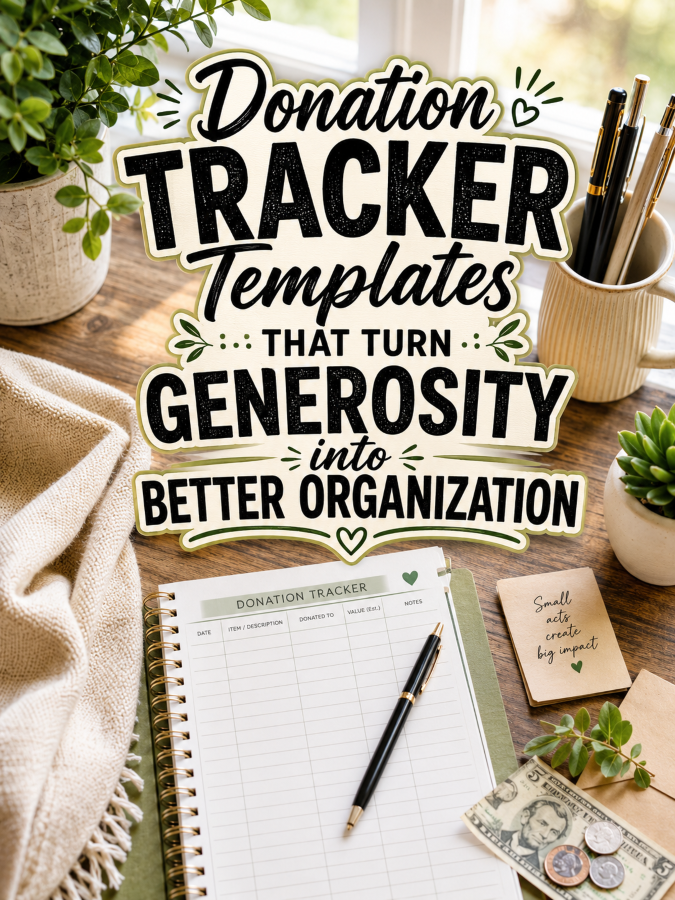
Donation Tracker Templates are downloadable spreadsheets, planners, and printable logs designed to help users record donated items, estimated values, recipient organizations, receipts, mileage, volunteer hours, and tax documentation.
A starter tracker can comfortably sell for around $7. Expand it into charitable giving planners, household inventory systems, volunteer trackers, and premium financial organization bundles, and you’ve built a natural product ladder reaching $27, $47, and even $77.
People don’t simply want records. They want confidence that important information won’t disappear when they need it most. That someone creating that solution could absolutely be you!
Why This Niche Works
People donate all year long. Spring cleaning, moving house, downsizing, estate management, holiday giving, disaster relief, school drives, and community events all create opportunities for better record keeping.
Many donors rely on memory, random envelopes, and photos that become about as organized as socks escaping from a tumble dryer during a thunderstorm.
Once customers discover a system that genuinely simplifies donation tracking, they’ll often return for budgeting tools, home inventories, tax organizers, garage sale planners, and countless related thingees.
Unlike trends that come and go faster than novelty kitchen gadgets, charitable giving has remarkable staying power.
Prior to pouncing upon this opportunity, you should first know all about the:
Tools You’ll Need
You don’t need accounting software that requires three certifications and a ceremonial password scroll. These dependable tools are more than enough.
- Canva for designing printable trackers and workbook pages.
- Google Docs for organizing instructions and companion guides.
- AWeber for building your email list with organization tips and updates.
- GetResponse for launches, newsletters, and customer follow-up.
- Gumroad for selling downloadable templates and bundles.
- Teachable if you’d eventually like to teach financial organization or household management.
- Amazon Donation Tracker Research for studying features customers appreciate most.
Don’t spend three weeks selecting icons for receipt categories while your future customers are currently searching for paperwork from last April.
Next, move to:
Your 5-Step Action Plan
Follow these five steps unless you’d rather spend 22 hours digging through folders labeled “Important Documents” that somehow contain appliance manuals and expired coupons.
Step 1. Research Real Donation Challenges
Spend about 92 minutes researching tax forums, decluttering communities, nonprofit blogs, and customer reviews. Pay close attention to the frustrations people mention most often.
Create a master list containing 28 to 35 tracking categories. Include donated items, estimated values, dates, recipient organizations, receipt numbers, mileage, volunteer hours, and follow-up reminders.
Your research becomes an X-ray machine that uncovers record-keeping frustrations many donors simply accept as inevitable.
Step 2. Build Your Core Tracker Template
Create a collection containing 18 to 24 pages or spreadsheet tabs that guide users through the entire documentation process.
Include donation logs, receipt trackers, value estimators, mileage records, tax preparation pages, and annual summaries. Keep everything simple because simplicity is always a Good Thing.
Step 3. Create Specialty Editions
Build separate versions for households, churches, nonprofit volunteers, businesses, estate management, school drives, and community organizations.
Specific templates always feel more valuable than one giant workbook attempting to organize every charitable act since the invention of filing cabinets.
Your customers will appreciate having choices.
Step 4. Add High-Value Bonuses
This is where your template begins standing out from the thundering herd.
Include receipt checklists, annual giving summaries, volunteer hour logs, mileage calculators, donation calendars, and charitable goal trackers.
Those bonus thingees require very little additional effort yet dramatically increase the value of your bundle.
People love practical extras that save time during tax season.
Step 5. Build Your Product Ladder
Launch your starter template for $7. Expand into financial organization systems around $27, then introduce premium household management libraries approaching $77.
Before long, your business won’t simply be selling spreadsheets and trackers. You’ll be helping people stay organized while supporting causes that matter to them.
Once you’ve figured out all of the above, the next step is implementing:
3 Ways to Stand Out From The Thundering Herd!
Let’s be honest. Most donation trackers are about as exciting as reading appliance warranty paperwork during a power outage.
The Good Thing is that people aren’t looking for excitement here. They’re looking for clarity, organization, and the ability to find a receipt without reenacting an archaeological dig through kitchen drawers.
Way 1. Track More Than Just Donations
Most templates stop after recording item names and estimated values.
Go further by including mileage logs, volunteer hour trackers, charitable goals, recurring donation schedules, tax preparation summaries, and annual giving reports. Those extra thingees make your tracker feel far more complete.
Customers love solutions that remove multiple headaches at once.
Way 2. Create Versions for Different Types of Givers
A family donating old furniture has different needs than a church volunteer or a small business supporting local fundraisers.
Create versions tailored for households, nonprofits, churches, schools, businesses, and estate planners. Specificity feels like a custom suit while generic products often resemble one-size-fits-all rain ponchos.
Way 3. Make Tax Season Less Terrifying
Many people only realize they need documentation when tax season arrives carrying the emotional energy of a surprise pop quiz.
Create annual summaries, receipt checklists, deduction reports, and year-end reviews that make preparation dramatically easier. Buyers appreciate products that save them stress later.
Next, here’s the thing. You’re probably NOT the only person offering this service. So you now require:
3 Nifty Ways to Find Customers
You don’t need paid ads because generosity leaves footprints all over the internet if you know where to look.
Way 1. Decluttering and Minimalism Communities
People clearing their homes often donate large amounts of items throughout the year.
Offer organization advice, decluttering tips, and donation preparation ideas before introducing your tracker. Helpful people become trusted people remarkably quickly.
Way 2. Financial Planning Communities
Budgeting groups and financial blogs regularly discuss charitable giving and tax organization.
Your tracker naturally fits alongside budgeting worksheets, expense logs, and financial planning resources.
Way 3. Nonprofit and Volunteer Networks
Churches, schools, charities, and volunteer groups often need better record-keeping systems.
Offer bulk licenses, group discounts, or custom versions that support organizations managing multiple contributors and events.
Speaking of completed projects, now let’s move to:
3 Takeaways You Won’t Find Elsewhere!
These aren’t feel-good reminders. They’re practical lessons that quietly transform one template into a dependable digital product business.
Takeaway 1. You’re Selling Peace of Mind
Customers aren’t buying spreadsheets and checkboxes.
They’re buying confidence that they can find important records quickly when they need them most. That’s incredibly valuable.
Takeaway 2. Organization Is an Evergreen Need
People move, donate, volunteer, and support causes throughout every season of life.
That creates steady demand for practical systems that simplify record keeping and reduce stress.
Takeaway 3. One Tracker Can Become an Entire Financial Toolkit
Your donation tracker can naturally expand into expense logs, home inventories, tax organizers, budgeting tools, estate planners, and charitable giving systems.
Those connected thingees make scaling much easier because you’re serving customers who already appreciate organization.
Now that you know the above, it’s time for:
3 Common Mistakes to Avoid
Many creators focus only on tax deductions.
That’s Not a Good Thing. Many customers want organization and personal records even when taxes aren’t involved.
Some sellers make templates too complicated.
If customers need a training course to record donated books and winter coats, something has gone terribly wrong. Simplicity is always a Good Thing.
Others stop after creating one tracker.
The biggest opportunity often appears when customers request companion tools for budgeting, decluttering, and financial organization.
What else should you know? How about:
Scaling Your Results
Expand into household organization systems.
Create home inventories, expense logs, budgeting planners, estate organizers, tax binders, and financial dashboards that complement your donation tracker beautifully.
Create premium giving bundles.
Bundle trackers, planners, receipts, logs, calendars, and annual reports into complete charitable management systems customers will happily purchase together.
Build an email list customers genuinely appreciate.
Share organizing tips, seasonal giving ideas, tax preparation reminders, and printable updates throughout the year. A collection containing 32 financial organization products could realistically generate an additional $518 to $1,463 each month through bundles, repeat purchases, memberships, and seasonal launches. Trust me, you’ll thank me later.
Let’s now wrap up everything via the:
Your Next Steps
Start by listing 35 pieces of information people regularly struggle to track during donations and charitable giving. Then design pages that solve those frustrations one by one.
Create your first template in Canva using clear layouts, practical instructions, and simple tracking systems. If someone can begin using it within five minutes, you’ve created something valuable.
Then introduce your tracker to five decluttering groups, financial communities, nonprofit organizations, or budgeting blogs. Remember, 5 good messages beats 50 generic ones every single time.
One thoughtful template can quietly become the beginning of an entire financial organization business.
Next, let’s finish with:
Final Thoughts
The best donation systems don’t make people more generous. They make generosity easier to manage.
Your Donation Tracker Templates can reduce stress, improve organization, and help people support causes they care about without worrying about paperwork later. That’s exactly why this niche continues creating opportunities for printable creators.
Start with one tracker that solves one meaningful problem exceptionally well. Keep listening to your customers. Keep improving your products. Keep building useful systems that quietly make life easier.
You don’t need bazillions of products to build meaningful income. You simply need one thoughtful resource that helps people stay organized while doing good in the world.
That’s it. That’s your beginning!
If you were creating your first Donation Tracker Template tomorrow morning, would you build it for families, churches, volunteers, small businesses, or community organizations?
Enjoy!