Introduction
Chess clubs are wonderful things.
They bring together strategy lovers, competitive thinkers, curious beginners, and at least one person who somehow finishes every game in four minutes while everyone else is still deciding whether the knight looks happier on f3 or c3.
The games aren’t usually the problem.
Organizing everything around the games is.
Club leaders juggle player registrations, pairings, attendance, tournament schedules, ratings, lesson plans, equipment inventories, membership payments, and enough paperwork to make a tax accountant sit quietly in respectful admiration.
Meanwhile, somebody always asks where the score sheets went.
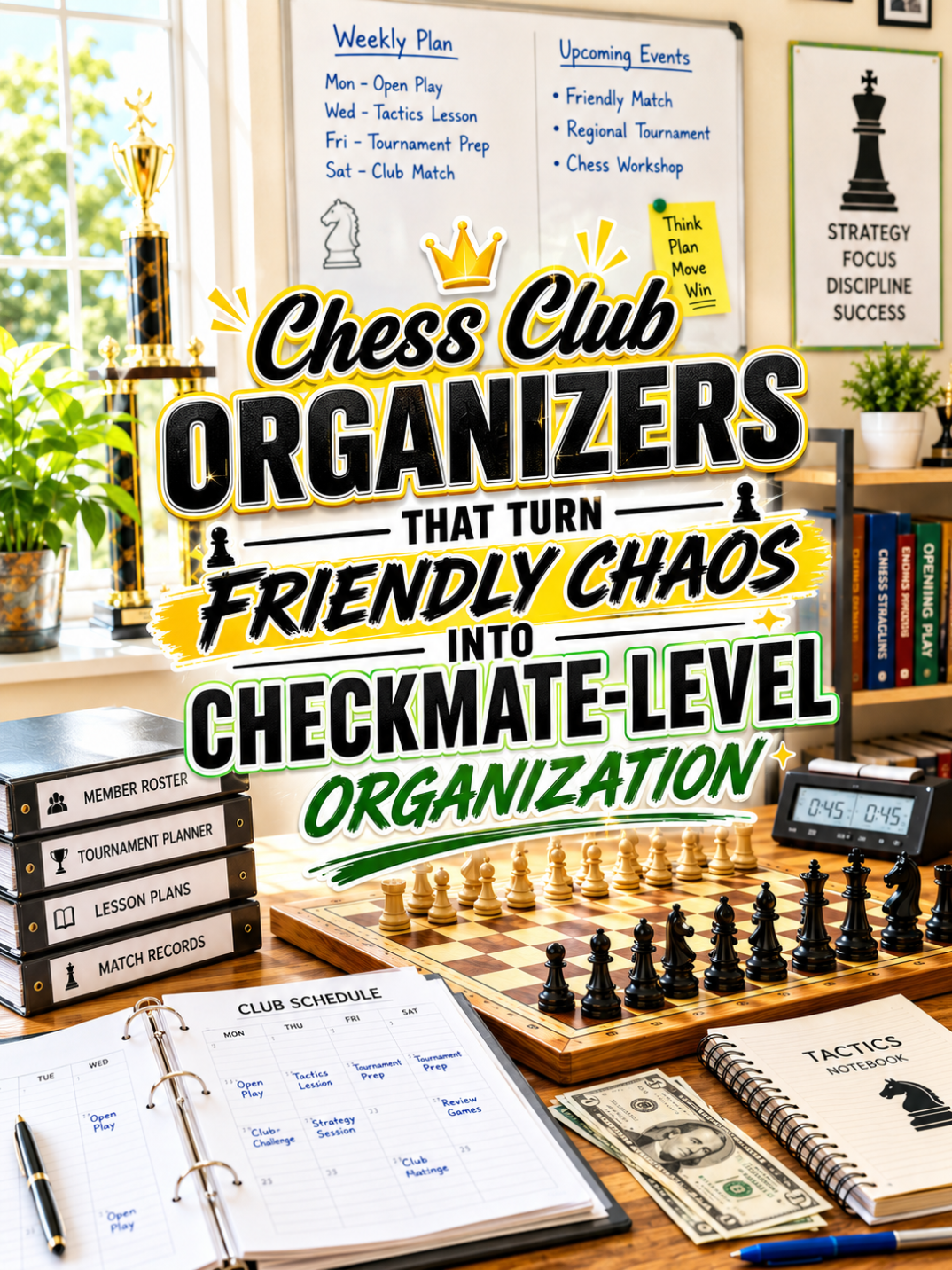
That’s exactly why Chess Club Organizers continue selling year after year. They help clubs run more smoothly while giving printable creators an evergreen niche product with surprisingly loyal customers and excellent expansion opportunities.
One thoughtfully designed organizer can quietly save hours of administrative work while helping club leaders spend more time teaching strategy and less time hunting for missing pairing sheets.
Quick Answer
Chess Club Organizers are downloadable binders, spreadsheets, attendance systems, tournament trackers, membership logs, lesson planners, and scorekeeping tools designed to help clubs stay organized and efficient.
A starter organizer can comfortably sell for around $7. Expand it into tournament systems, coaching planners, study journals, junior club resources, and premium club management libraries, and you’ve built a natural product ladder reaching $27, $47, and even $77.
Club leaders aren’t simply buying printables. They’re buying smoother events and fewer administrative headaches. That someone creating that solution could absolutely be you!
Why This Niche Works
Chess continues growing around the world.
Schools, libraries, community centers, online groups, and private clubs continue launching new programs every year.
Many organizers rely on notebooks, spreadsheets, screenshots, and heroic levels of memory that eventually surrender during tournament season.
Once customers discover a system that genuinely simplifies club management, they’ll often return for tournament trackers, study journals, coaching materials, and countless related thingees.
Unlike trendy hobbies that vanish after a few years, chess has demonstrated an impressive commitment to longevity over the last several centuries.
Prior to pouncing upon this opportunity, you should first know all about the:
Tools You’ll Need
You don’t need a grandmaster title or a room filled with antique wooden chess sets. These dependable tools are more than enough.
- Canva for creating organizer pages, score sheets, and club materials.
- Google Docs for organizing lesson plans and club documentation.
- AWeber for building your email list with club tips and updates.
- GetResponse for newsletters, launches, and customer follow-up.
- Gumroad for selling downloadable organizers and bundles.
- Teachable if you’d eventually like to teach chess coaching or club management.
- Amazon Chess Organizer Research for studying features club leaders appreciate most.
Don’t spend four weeks choosing bishop icons while your future customers are currently trying to figure out who won Board Three last Tuesday.
Next, move to:
Your 5-Step Action Plan
Follow these five steps unless you’d rather spend 22 hours redesigning score sheets while another organizer quietly captures the local club market.
Step 1. Research Real Club Challenges
Spend about 92 minutes exploring chess forums, school club communities, coaching groups, and customer reviews.
Create a master list containing 28 to 35 organizer pages. Include attendance logs, pairings sheets, lesson plans, equipment inventories, tournament trackers, and player development records.
Your research becomes an X-ray machine that reveals administrative frustrations many clubs simply accept as unavoidable.
Step 2. Build Your Core Organizer
Create a collection containing 36 to 48 printable pages that guide organizers through memberships, events, lessons, and tournaments.
Include calendars, trackers, registrations, budgets, and reporting pages. Keep everything simple because simplicity is always a Good Thing.
Step 3. Create Specialty Editions
Build separate versions for schools, libraries, community clubs, youth programs, competitive teams, and private coaching groups.
Specific organizers always feel more valuable than one giant workbook attempting to manage every chess club on Earth simultaneously.
Your customers will appreciate having choices.
Step 4. Add High-Value Bonuses
This is where your organizer starts standing out from the thundering herd.
Include tournament brackets, lesson templates, certificates, progress reports, equipment checklists, and achievement trackers.
Those bonus thingees require very little extra effort yet dramatically increase the value of your bundle.
Club leaders love practical extras that save time.
Step 5. Build Your Product Ladder
Launch your starter organizer for $7. Expand into coaching systems around $27, then introduce premium club libraries approaching $77.
Before long, your business won’t simply be selling organizers. You’ll be helping clubs create better learning environments and stronger communities.
Once you’ve figured out all of the above, the next step is implementing:
3 Ways to Stand Out From The Thundering Herd!
Let’s be honest. Most club organizers look like accounting paperwork accidentally wandered into a chess tournament.
The Good Thing is that chess clubs need much more than attendance sheets and membership lists. Your organizer can become the operational brain of the entire club.
Way 1. Support Player Development
Chess clubs don’t simply run events.
They help players improve.
Include rating trackers, lesson summaries, opening repertoires, tactical goals, tournament reflections, and progress reports. Those extra thingees make your organizer valuable to coaches and players alike.
Improvement is one of the strongest motivations in chess.
Way 2. Build Around Different Club Types
A primary school chess club operates very differently from a competitive adult club or a public library program.
Create versions for schools, youth academies, community clubs, coaches, homeschool groups, and tournament organizers. Specific organizers always feel more useful than generic solutions.
Way 3. Make Tournament Days Easier
Tournaments generate paperwork with the enthusiasm of rabbits discovering an unlimited carrot buffet.
Include pairing sheets, standings trackers, score logs, prize records, tiebreak calculators, and volunteer assignments. Buyers appreciate systems that simplify busy event days.
Next, here’s the thing. You’re probably NOT the only person offering this service. So you now require:
3 Nifty Ways to Find Customers
You don’t need paid advertising because chess clubs practically shine the Bat Signal every tournament season.
Way 1. Chess Communities
Facebook groups, forums, Discord servers, and local club pages contain thousands of organizers and coaches looking for practical resources.
Offer useful tips, lesson ideas, and tournament advice before introducing your products. Helpful creators become trusted creators remarkably quickly.
Way 2. Schools and Libraries
Schools and libraries continue launching chess programs every year.
Reach out with sample pages, starter kits, and educator discounts that make adoption easy.
Way 3. Coaches and Tournament Directors
Professional coaches and organizers often manage multiple groups simultaneously.
Affiliate partnerships and licensing opportunities can place your organizer directly in front of highly relevant audiences.
Speaking of completed projects, now let’s move to:
3 Takeaways You Won’t Find Elsewhere!
These aren’t feel-good reminders. They’re practical lessons that quietly transform one organizer into a dependable digital product business.
Takeaway 1. You’re Selling Time
Customers aren’t buying score sheets and attendance logs.
They’re buying more time to teach, coach, organize tournaments, and help players improve.
Takeaway 2. Chess Communities Are Loyal
Players often stay involved in chess for years or even decades.
That creates opportunities for repeat customers, referrals, and companion products.
Takeaway 3. One Organizer Can Become an Entire Chess Ecosystem
Your club organizer can naturally grow into study journals, tournament binders, coaching systems, opening trackers, and rating logs.
Those connected thingees make scaling dramatically easier because your customers already value structure and improvement.
Now that you know the above, it’s time for:
3 Common Mistakes to Avoid
Many creators focus only on administration.
That’s Not a Good Thing. Clubs also care deeply about teaching, player growth, and community building.
Some sellers ignore younger players.
Youth clubs often need very different resources than adult organizations. Age-specific versions are always a Good Thing.
Others stop after creating one organizer.
The biggest opportunities often appear when customers begin requesting tournament tools and coaching resources.
What else should you know? How about:
Scaling Your Results
Expand into complete chess systems.
Create study journals, puzzle trackers, opening repertoires, tournament binders, lesson plans, and coaching resources that naturally complement your original organizer.
Create premium memberships.
Offer monthly club resources, lesson plans, tournament kits, and seasonal materials that organizers look forward to receiving.
Build an email list chess educators genuinely appreciate.
Share coaching tips, tournament ideas, educational resources, and printable updates throughout the year. A collection containing 30 chess products could realistically generate an additional $486 to $1,438 each month through memberships, bundles, repeat customers, and affiliate partnerships. Trust me, you’ll thank me later.
Let’s now wrap up everything via the:
Your Next Steps
Start by listing 35 frustrations chess organizers regularly encounter while running clubs and tournaments. Then create pages that solve those problems one by one.
Build your first organizer in Canva using practical layouts, simple instructions, and flexible tracking systems. If a club leader saves even one hour per week, you’ve created something valuable.
Then share your organizer with five chess communities, schools, libraries, coaches, or tournament directors. Remember, 5 good messages beats 50 generic ones every single time.
One thoughtful organizer can quietly become the beginning of an entire chess education business.
Next, let’s finish with:
Final Thoughts
The best chess clubs aren’t simply places where games happen. They’re places where confidence, friendships, and lifelong learning quietly grow.
Your Chess Club Organizers can help create those environments. They reduce administrative stress, improve structure, and help coaches focus on what matters most helping players improve and enjoy the game.
Start with one organizer that solves one meaningful club problem exceptionally well. Keep listening to your customers. Keep improving your products. Keep building resources that strengthen chess communities one club at a time.
You don’t need bazillions of products to build meaningful income. You simply need one thoughtful organizer that helps somebody spend less time chasing paperwork and more time saying, “Checkmate.”
That’s it. That’s your beginning!
If you were creating your first Chess Club Organizer tomorrow morning, would you build it for schools, community clubs, youth programs, coaches, or tournament directors?
Enjoy!