Introduction
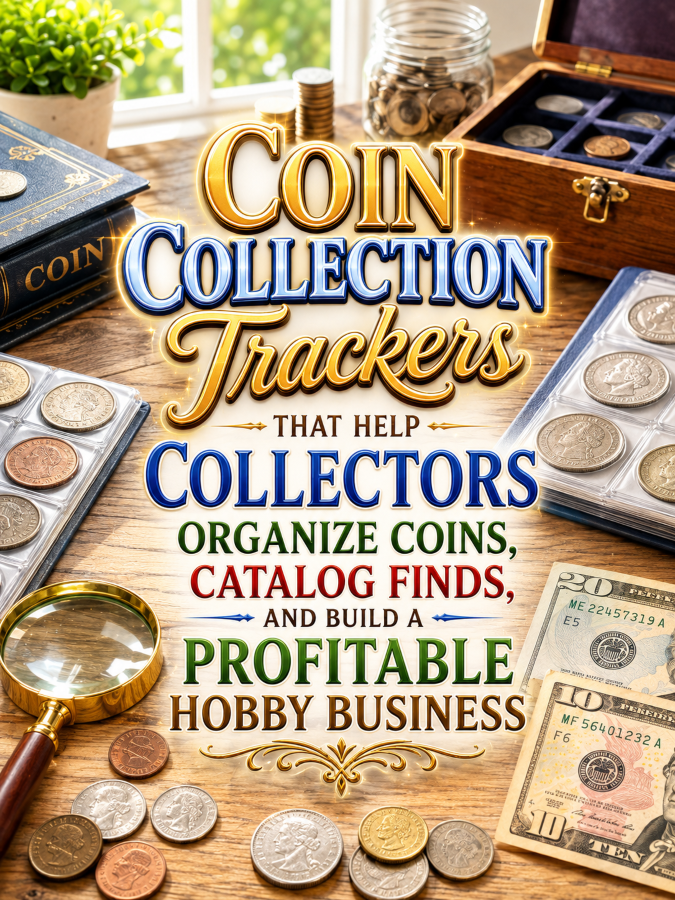
Coin collecting has a funny way of starting with one interesting coin and somehow turning into albums, holders, storage boxes, reference books, duplicates, inherited collections, and enough tiny pieces of metal to make you wonder whether the collection is still a hobby or has quietly become a small museum.
That creates an excellent opportunity for practical digital products.
Coin collectors need ways to catalog coins, record dates and mint marks, track condition, organize collections by country or series, document purchases, manage duplicates, create wishlists, record storage locations, and keep track of coins they may eventually trade or sell.
A Coin Collection Tracker can solve those problems while creating a natural $7 to $77 product ladder. Start with a focused $7 coin catalog. Expand it into a $17–$27 collector organization toolkit. Add research, budgeting, acquisition, trading, and selling tools at $37–$47. Then create a $67–$77 premium collection command center.
Quick Answer
A Coin Collection Tracker can start as a $7 coin catalog, expand into a $17–$27 Coin Collector Organization Toolkit, grow into a $37–$47 Complete Coin Collection Planner, and reach $67–$77 as a premium customizable Coin Collection Command Center.
Quick Win
Create a coin record sheet that captures the country, denomination, year, mint mark, coin type, condition notes, acquisition date, purchase price, storage location, catalog reference, and personal notes.
Why This Niche Works
Coin collectors include beginners, casual hobbyists, serious numismatists, error-coin hunters, world-coin collectors, commemorative-coin collectors, inherited-collection organizers, dealers, traders, and people who simply enjoy finding interesting coins.
Coins are naturally suited to detailed recordkeeping. A single collection can be organized by country, denomination, year, mint, series, theme, condition, acquisition source, or storage location.
As the collection grows, remembering all those details becomes difficult.
A tracker turns a box of coins into an organized personal reference library.
It can help answer practical questions:
- Which coins do I own?
- Which coins am I still looking for?
- Which coins are duplicates?
- Where is a particular coin stored?
- Which coins need further research?
- How much have I spent on the collection?
- Which series are incomplete?
- Which coins might I want to trade or sell?
The Reasonable Pricing Rule
Do not turn a $7 tracker into a $77 product simply by adding hundreds of repetitive coin-entry pages.
More pages do not automatically mean more value.
The $7 product should solve one focused problem: cataloging coins.
The $17–$27 product should organize the broader collecting hobby.
The $37–$47 product should connect collecting, research, purchasing, budgeting, trading, inventory, and resale.
The $67–$77 product should provide editable templates, specialty editions, digital options, and a complete collection management system.
Your $7 Starter Product
Create a printable called the Coin Collection Tracker.
Include:
- Coin Collection Catalog
- Country or Issuing Authority
- Denomination
- Year
- Mint Mark
- Coin Type
- Theme or Series
- Condition Notes
- Acquisition Date
- Purchase Price
- Storage Location
- Catalog Reference
- Duplicate Status
- Research Notes
- Personal Notes
The goal is to give collectors one simple place to document what they own and what they still need to investigate.
Grow It Into a $17 to $27 Coin Organization Toolkit
Once a collector has more than a few coins, the basic catalog can become a complete hobby organization system.
Create a Coin Collector’s Organization Toolkit priced between $17 and $27.
Include:
- Everything from the $7 starter product
- Country Collection Tracker
- Year-by-Year Collection Tracker
- Denomination Tracker
- Mint Mark Tracker
- Series Completion Tracker
- Duplicate Coin Inventory
- Missing Coin Tracker
- Coin Wishlist
- Future Purchase Planner
- Coin Show Planner
- Dealer Visit Log
- Coin Trade Log
- Coin Lending Log
- Acquisition Source Tracker
- Collection Storage Map
- Album Inventory
- Coin Holder Inventory
- Coin Supply Inventory
- Monthly Collecting Planner
- Annual Collection Review
Now you are selling a practical collecting system instead of a simple inventory sheet.
Build a $37 to $47 Complete Coin Collection Planner
The next level should feel like a command center for serious collectors, researchers, traders, and small coin-selling businesses.
Create a Complete Coin Collection Planner priced between $37 and $47.
Include:
- Annual Collection Planner
- 90-Day Collecting Goals
- Collection Growth Tracker
- Coin Spending Tracker
- Monthly Collecting Budget
- Acquisition Log
- Collection Cost Worksheet
- Estimated Collection Value Worksheet
- Research Journal
- Series Completion Tracker
- Country Collection Progress Tracker
- Coin Show Planner
- Auction Notes
- Dealer Visit Log
- Trade Planning Worksheet
- Coin Trading Tracker
- Used Coin Sales Tracker
- Marketplace Listing Planner
- Product Photography Checklist
- Social Media Content Planner
- Coin Collection Content Planner
- Quarterly Collection Review
- Year-End Collection Review
This version moves beyond recording individual coins. It helps buyers manage how they collect, research, acquire, organize, trade, display, and occasionally sell coins.
Create a $67 to $77 Premium Bundle
The premium product should offer flexibility and specialization rather than simply becoming an enormous binder.
Create a Coin Collection Command Center priced between $67 and $77.
Include:
- Editable Canva Templates
- Fillable PDF Version
- Tablet-Friendly Digital Version
- Beginner Coin Collector Edition
- Serious Collector Edition
- World Coin Collector Edition
- U.S. Coin Collector Edition
- Ancient Coin Research Edition
- Commemorative Coin Edition
- Error Coin Research Edition
- Coin Show Edition
- Coin Dealer Edition
- Coin Reseller Edition
- Coin Inventory System
- Marketplace Listing Workbook
- Collection Budget Workbook
- Research Notes Workbook
- Storage Organization Worksheets
- Collection Review Workbook
- Quick-Start Setup Guide
- Customization Instructions
- Commercial Use Options Where Appropriate
The premium bundle should feel like a flexible system that can support a personal collection, advanced hobby, research project, content business, trading activity, or small coin-selling operation.
Example Product Ladder
$7 Starter: Coin Collection Tracker
$17–$27 Toolkit: Coin Collector’s Organization Toolkit
$37–$47 Bundle: Complete Coin Collection Planner
$67–$77 Premium: Coin Collection Command Center
Recommended Tools
- Canva for planner layouts, editable templates, covers, worksheets, and promotional graphics
- ChatGPT for collecting categories, research prompts, content ideas, checklists, and marketing copy
- Google Sheets for larger collections and sortable inventories
- Creative Fabrica for commercial-use graphics, fonts, and design resources
- remove.bg for clean product mockups
- Google Trends for researching collecting interests and seasonal demand
- Etsy for researching digital product demand
- Payhip or Gumroad for digital product delivery
Your 5-Step Action Plan
Step 1: Start With the Collection
Build the $7 tracker around one clear problem: helping collectors remember what they own.
Keep the catalog straightforward. A buyer should be able to record a new coin quickly without learning a complicated database.
Step 2: Solve the Organization Problem
Expand the product with country trackers, series trackers, missing-item lists, duplicate records, album inventories, storage locations, and wishlists.
This creates the $17–$27 organization toolkit.
Step 3: Add the Serious Collector Experience
For the $37–$47 version, introduce budgets, acquisition records, research logs, coin shows, dealer visits, trades, sales, content planning, and collection reviews.
Now the planner supports the broader collecting experience instead of simply cataloging coins.
Step 4: Create Specialty Editions
Develop versions for beginners, world-coin collectors, U.S. coin collectors, commemorative-coin collectors, error-coin researchers, serious collectors, content creators, dealers, and resellers.
Specialization makes the marketing message much stronger because the buyer can immediately see how the planner fits their collecting style.
Step 5: Build the Premium Command Center
Add editable templates, fillable PDFs, digital versions, specialty editions, promotional resources, and customization instructions.
The premium product should save the buyer time and make the system easier to adapt to their own collection, club, classroom, audience, or business.
Common Pricing Mistakes to Avoid
The first mistake is making the tracker attractive but impractical.
Collectors need information they can find quickly. Decorative elements can make the product feel polished, but they should never crowd out useful writing space.
The second mistake is putting everything into the $7 product.
If the starter already includes research management, budgets, trades, coin-show planning, content calendars, resale tools, and digital templates, there is very little reason for customers to upgrade.
The third mistake is forgetting that coin collectors have very different goals.
A beginner does not need the same system as a specialist with thousands of coins. A world-coin collector has different needs from someone focused on one country’s series. A researcher may care far more about references and notes than a casual hobbyist.
Use specialty editions to solve those differences.
Important Collection-Value Consideration
Coin values can vary substantially based on factors such as condition, rarity, authenticity, variety, demand, market conditions, and the specific characteristics of an individual coin.
If you include collection-value worksheets, position them as tools for recording the collector’s own research and estimates rather than guaranteed valuations.
A useful worksheet can include purchase price, estimated value, valuation date, source of the estimate, condition notes, identification details, and research references.
That keeps the planner useful without pretending a worksheet can predict the collectibles market. If only a spreadsheet could also predict tomorrow’s auction results, we’d all be sitting around doing that instead.
Where to Find Buyers
- Coin collecting Facebook groups
- Numismatic communities
- World coin collector groups
- Country-specific collecting groups
- Coin show communities
- Coin trading groups
- Coin dealer communities
- Collector forums
- Pinterest collector audiences
- Etsy digital-product communities
- Local coin clubs
Visual platforms can work particularly well because organized albums, interesting coins, collection displays, storage systems, and coin-show setups are naturally visual.
Affiliate Opportunities
Coin collection content creates natural opportunities for related affiliate products.
- Coin albums
- Coin holders
- Coin flips
- Storage boxes
- Coin capsules
- Magnifying glasses
- Digital scales
- Coin sorting trays
- Desk lighting
- Reference books
- Collection storage systems
- Labeling supplies
Create useful content around the problems these products solve. For example, write about organizing a growing coin collection, setting up a beginner’s collecting station, protecting coins during storage, or preparing for a coin show.
Internal Link Suggestions
- Stamp Collection Trackers
- Vinyl Record Collection Trackers
- Book Collection Trackers
- Board Game Collection Trackers
- Puzzle Collection Trackers
- LEGO Collection Trackers
- Dollhouse Project Planners
- Model Building Project Planners
Pinterest Pin Ideas
- The Coin Collection Tracker Every Collector Needs
- Finally Organize Your Coin Collection
- Track Every Coin You Own With This Simple System
- Organize Your Coins by Country, Year, Mint, and Series
- From Coin Album to Organized Collection
- Build a $7 to $77 Coin Collection Product Ladder
Frequently Asked Questions
Who buys Coin Collection Trackers?
Coin collectors, beginners, serious numismatists, world-coin collectors, country specialists, error-coin enthusiasts, coin-show participants, researchers, dealers, content creators, and resellers can all benefit from these products.
Can this niche generate repeat customers?
Yes. Coin collectors can build collections for decades, specialize in new series, attend coin shows, trade items, research discoveries, reorganize albums, create educational content, and occasionally sell coins. Each activity creates opportunities for additional specialized planners.
Should I create different versions for different coin collectors?
Absolutely. A beginner coin catalog, world coin planner, U.S. coin tracker, series-completion workbook, research journal, coin-show planner, dealer inventory system, and reseller workbook can all target different buyers.
Can the $7 starter product work for beginners?
Yes. In fact, beginners may appreciate a simple recordkeeping system that teaches them what information is useful to capture without overwhelming them.
Can I include catalog reference fields?
Yes. Reference fields can be useful for collectors who maintain detailed records. Keep them flexible enough to accommodate the cataloging and reference systems the buyer already uses.
Can I include a collection value tracker?
Yes. A worksheet can help buyers record purchase prices, estimated values, valuation dates, and research sources. Make it clear that any valuation is an estimate or personal record rather than a guaranteed market value.
Call to Action
A coin collection can be full of history, artwork, fascinating discoveries, duplicates, mystery pieces, and enough tiny objects to make “I will organize these later” a surprisingly ambitious promise.
Start with a $7 Coin Collection Tracker that helps people remember what they own. Then expand it into a $17–$27 organization toolkit, a $37–$47 complete collector planner, and finally a $67–$77 premium collection command center.
Do not build the entire ladder at once. Start with one useful solution, watch what your audience needs next, and build each upgrade around a real problem.
That’s how a simple coin catalog can become the foundation for a much bigger digital product business.
Conclusion
Coin collectors already have enough tiny details to keep track of. They should not also have to remember which album contains a particular coin, whether they already own a specific issue, which series still has gaps, or where that interesting find from last month’s show disappeared to.
A Coin Collection Tracker turns a collection of individual coins into an organized personal reference library. It gives collectors a practical way to document countries, denominations, dates, mint marks, series, condition notes, acquisition details, storage locations, research, trades, and future wants.
Start with the focused $7 tracker. Expand it into the $17–$27 hobby organization toolkit. Add budgeting, research, acquisitions, coin shows, trades, content, and resale tools at $37–$47. Then create the premium $67–$77 command center with editable and specialized resources.
Once you have the framework working, you can adapt the same system for stamps, vinyl records, books, board games, puzzles, LEGO collections, model kits, dollhouses, and other collectible hobbies.
One coin may be tiny. A serious collection can become enormous. A good tracker makes sure the size of the hobby does not become the size of the headache.
Here’s what you uncovered today. If something made you pause, smile, or feel curious, follow that spark and start working toward it today. Momentum begins with one decision.
Enjoy!