Introduction
Camping sounds wonderfully relaxing until you’re standing in the driveway surrounded by tents, sleeping bags, cooking supplies, clothes, food, flashlights, children’s gear, and one mysterious bag that nobody remembers packing. Outdoor families quickly discover that a great camping trip depends on remembering a surprisingly large number of little things. That’s exactly why a reusable Camping Trip Planner can become such a practical digital product.
A Camping Trip Planner gives families one place to organize the trip before they leave, while they’re traveling, and after they return. It can include destination details, packing lists, meal planning, campsite information, activity planning, family responsibilities, expense tracking, and post-trip notes. Good Thing, because the best camping planner doesn’t tell people how to camp; it helps them remember what works for their own family.
The reusable part is especially important. Families don’t go camping once and suddenly become experts at packing everything perfectly, so a planner they can print again for every trip has ongoing value. One family might use it for weekend camping, another for road trips, another for campground stays, and another for annual family adventures. You’re creating a tool that can become part of their outdoor routine instead of a one-time worksheet.
Quick Answer
A Camping Trip Planner is a printable or digital planning system that helps outdoor families organize destinations, packing, meals, activities, transportation, responsibilities, expenses, and post-trip memories. The strongest version is reusable, allowing families to copy or reprint the pages for every new camping adventure. You can start with a $7 camping starter planner and expand it into $17, $27, $47, and $77 outdoor family planning systems.
Why This Niche Works
Camping involves many moving parts, but families usually repeat many of the same planning tasks. They need to decide where they’re going, what they’re bringing, what they’re eating, what activities they want to do, and who is responsible for each part of the trip.
That repeatability makes camping a natural printable niche. A family may use the same packing checklist every time while changing the destination, weather, meals, activities, and special equipment. A reusable planner gives them a familiar system while still leaving room for every trip to be different.
There’s also an emotional side to outdoor family trips. Camping can create stories that families remember for years, from the first successful tent setup to rainy mornings, campfire dinners, beautiful views, and the child who somehow managed to get marshmallow everywhere. That’s Not a Good Thing for the thundering herd selling generic checklists if your product captures both organization and memories.
What You Can Put Inside A Camping Trip Planner
1. Camping Trip Overview
Start with a simple trip overview page. Include destination, travel dates, campsite or lodging details, people attending, transportation information, and the main purpose of the trip.
You can also add space for reservation information and important contact details. Keep it flexible so the page works for a weekend campground stay, a family road trip, or a longer outdoor adventure.
2. Reusable Camping Packing List
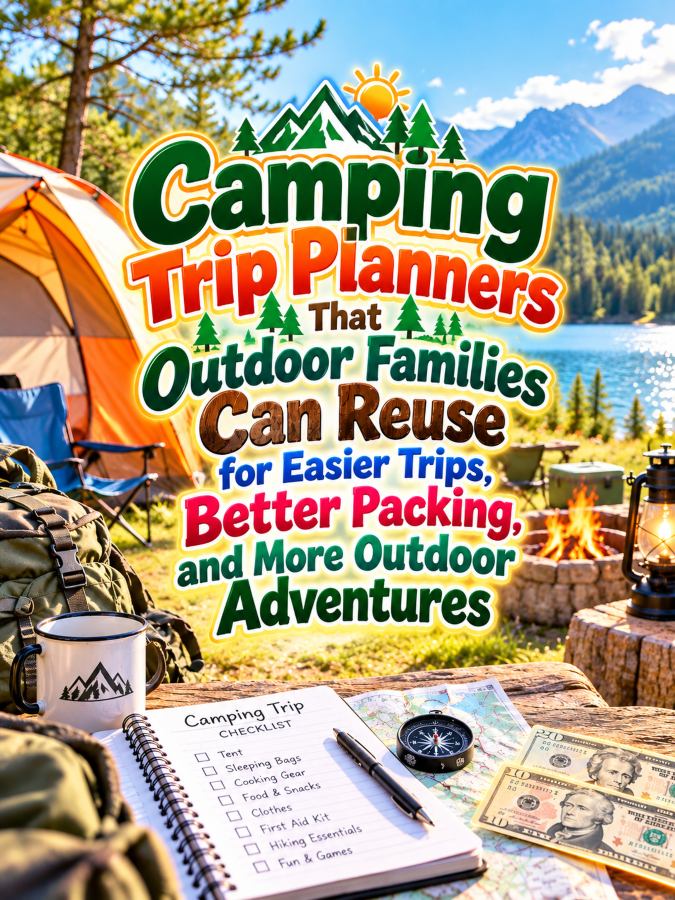
The packing list can become the heart of the planner. Divide it into useful categories such as shelter, sleeping gear, clothing, cooking supplies, food, personal items, family gear, and outdoor equipment.
Make the list reusable by adding checkboxes and blank lines for family-specific items. One family may need baby gear, another may need fishing equipment, and another may have a dog joining the adventure. The best checklist gives them a starting point without pretending every family packs exactly the same way.
3. Family Gear Inventory
Create a page where families can keep track of the camping equipment they already own. Include items such as tents, sleeping bags, lanterns, cooking equipment, chairs, tables, coolers, and other reusable gear.
You can add fields for quantity, condition, storage location, and notes. This can help families avoid buying duplicates and make it easier to identify equipment that needs replacing or repairing before the next trip.
4. Camping Meal Planner
Food planning can make or break a camping weekend. Create a simple meal planner where families can organize breakfast, lunch, dinner, snacks, drinks, and special treats for each day.
Add a connected shopping list so users can turn the meal plan into a practical preparation checklist. You can also include space for notes about meals that worked especially well outdoors and meals the family would rather never discuss again.
5. Camping Activity Planner
Give families a place to plan activities without making the schedule too rigid. They can record hiking ideas, swimming, fishing, sightseeing, games, nature walks, campfire activities, photography, or simply “do absolutely nothing for two hours.”
Include flexible spaces for weather-dependent alternatives. That makes the planner more useful because outdoor plans sometimes need to change. A good planner leaves room for adventure instead of treating every minute of a camping trip like a corporate meeting.
6. Family Responsibility Planner
Camping involves a lot of little jobs. Create a page where families can assign responsibilities such as packing, loading the vehicle, setting up camp, preparing meals, cleaning, checking supplies, and packing up.
This can be especially useful for families with older children. Instead of one person quietly doing everything while everyone else enjoys the scenery, the planner can make responsibilities visible and easier to share.
7. Camping Expense Tracker
Outdoor adventures can involve campsite fees, fuel, food, equipment purchases, activities, parking, and other expenses. Give families a simple place to record planned and actual spending.
You can include categories for transportation, campsite, food, equipment, activities, and miscellaneous expenses. This turns the planner into a practical trip-management tool while helping families understand what different camping trips actually cost them.
8. Camping Trip Review and Memory Page
Finish the planner with a post-trip review. Families can record favorite moments, activities they enjoyed, equipment they used most, meals that worked, things they forgot, and what they want to pack differently next time.
Add space for favorite photographs, funny stories, memorable moments, and future camping ideas. This turns the practical planner into a family keepsake and creates a useful record for the next adventure.
Tools You’ll Need
You can create your first Camping Trip Planner with a simple design setup. Canva can handle the planner pages, covers, checklists, icons, tables, and printable layouts, while Google Docs can help you organize prompts and draft the content before designing it.
For selling and delivering your digital products, you can explore Gumroad or Teachable. If you want to build an email audience around family travel and outdoor printables, AWeber and GetResponse can help you stay connected with potential buyers.
For market research, browse Amazon camping planners and family camping checklists to see what formats already exist. Look for gaps around reusable planning, family responsibilities, meal organization, gear inventories, expenses, and trip memories rather than simply copying existing products.
Your 5-Step Action Plan
Step 1: Choose Your Outdoor Family
Start by deciding who you want to help. You could target families with young children, weekend campers, beginner campers, camping road-trippers, large families, or families who take several outdoor trips every year.
Each audience has slightly different needs. A family with young children may need more activity and packing pages, while frequent campers may care more about gear inventories, reusable checklists, and trip history. Five good messages beats 50 generic ones every single time.
Step 2: Create Your $7 Starter Planner
Start with the essentials. Include a trip overview, reusable packing list, meal planner, activity planner, family responsibility page, and trip review.
Keep it simple enough that someone can print it before a weekend trip and immediately understand what to do. You’re selling organization, not homework.
Step 3: Build Your $17 Expanded Planner
Add more detailed gear inventory pages, meal planning sheets, shopping lists, expense trackers, activity ideas, family packing pages, and trip review sections.
You can also add specialized pages for different types of trips. Weekend camping, road-trip camping, family campground stays, and longer outdoor vacations can each have their own variations.
Step 4: Create Your $27 Family Camping Workbook
Your $27 version can become a more complete outdoor planning system. Add annual camping goals, campground research pages, trip comparison sheets, equipment maintenance records, budget planning, meal-prep pages, and family adventure logs.
This gives frequent campers a reason to keep using the product beyond one trip. The planner becomes a growing record of their family’s outdoor adventures.
Step 5: Build The Product Ladder
Your $47 product can become a complete Family Camping Binder containing trip planning, packing, gear inventory, meals, activities, expenses, responsibilities, and memories. Your $77 bundle could include specialized planners for camping weekends, road trips, family adventures, camping meal planning, and outdoor memory keeping.
You can also create companion products such as Hiking Adventure Journals, Camping Meal Planners, Outdoor Gear Inventories, Road Trip Organizers, National Park Adventure Logs, and Family Vacation Memory Books. One outdoor family can naturally become a customer for several related products.
That’s it. That’s your beginning! You don’t need to create the ultimate camping encyclopedia; you need to make the next family camping trip easier to organize.
What Comes Next
The real power of this product is reuse. Once a family has a planner they like, they can print another copy for every trip and gradually build a collection of their outdoor adventures.
That opens the door to related products that serve the same customer. A family who buys a camping planner may also need a hiking log, road-trip organizer, outdoor gear inventory, camping meal planner, or vacation memory book.
You’re not simply selling a checklist. You’re creating a repeatable system that can help families prepare better, divide responsibilities, remember what worked, and enjoy more of the adventure. Good Thing, because the best camping printable should help people spend less time worrying about what they forgot and more time enjoying where they are.
Next, we’ll explore three ways to make Camping Trip Planners stand out from the thundering herd, three nifty ways to find outdoor-family customers, three takeaways that can turn one camping planner into a larger outdoor product ecosystem, and three common mistakes to avoid.
We’ll also break down the $7-to-$77 product ladder and show how the reusable nature of the planner can create opportunities for bundles, specialized versions, and complementary outdoor products. Because one camping trip is an adventure, but a family that camps regularly can become a long-term customer.
3 Ways to Stand Out From The Thundering Herd!
1. Make Reusability The Main Selling Point
Many camping checklists are designed for one trip, but your planner can become a reusable family system. Give users pages they can print again and again while also including sections where they can record what they learned from previous trips.
For example, a family can keep a master packing list but create a fresh trip page for every destination. They can also record which gear they actually used, which meals worked, what they forgot, and what they want to change next time. That’s a Good Thing because the planner becomes more useful with every camping adventure.
2. Design For Real Family Chaos
Don’t design the planner for a fictional family that calmly packs matching bags three days before departure. Real families forget things, change plans, run late, discover that someone packed six shirts but no socks, and occasionally decide that a rainy forecast means the entire trip needs a backup plan.
Build flexibility into the pages. Include blank spaces, backup activity planning, family-specific packing sections, weather notes, last-minute reminders, and “don’t forget next time” prompts. Your planner should help families recover from imperfect planning instead of making them feel guilty for not following the checklist perfectly.
3. Combine Planning With Memories
Most camping planners concentrate entirely on logistics. You can make yours more memorable by adding pages that capture the experience after the work is done.
Include favorite moments, best campsite memory, favorite meal, funniest family story, favorite activity, photographs, and “what we’ll do differently next time.” Now your planner becomes something families may want to keep rather than throw away after the trip. Trust me, you’ll thank me later when you realize that memory pages can give a practical planner much more emotional value.
3 Nifty Ways to Find Customers
1. Create Content Around Camping Problems
Instead of simply advertising a camping planner, talk about the problems families experience before a trip. Create content around packing, organizing camping food, keeping children occupied, dividing responsibilities, remembering gear, and preparing for unexpected weather.
Each useful piece of content can naturally lead to one section of your planner. A post about “What to Pack for a Family Camping Weekend” can lead to your packing checklist, while a post about “How to Organize Camping Meals” can introduce your meal-planning pages. Five good messages beats 50 generic ones every single time.
2. Offer A Free Family Camping Checklist
Create a simple one-page camping checklist as your free entry product. Include the most important categories and enough blank space for families to customize it.
Then introduce the complete planner as the next step. Explain that the full version includes meal planning, gear inventory, activity planning, family responsibilities, expenses, and post-trip memories. That’s Not a Good Thing for generic marketing because the freebie actually demonstrates the problem your paid product solves.
3. Market Before Camping Season
Timing matters with outdoor products. Families are more likely to think about camping when warmer weather approaches, school breaks are coming, or they begin planning annual vacations and weekend adventures.
Start your marketing early enough for people to prepare. You can create content around spring camping preparation, summer family adventures, fall camping trips, holiday outdoor getaways, or weekend campground planning. You’re showing up when people are making plans instead of waiting until their tent is already packed in the car.
3 Takeaways You Won’t Find Elsewhere!
1. The Packing List Isn’t The Whole Product
It’s tempting to think the main value is the checklist, but the checklist is only the beginning. The bigger opportunity is helping families organize the entire trip.
Destination information, meals, activities, responsibilities, expenses, gear, and memories all belong in the same system. When those pieces work together, the planner becomes something a family can rely on for every adventure.
2. Every Trip Can Teach You How To Plan The Next One
Camping is a learning process. Maybe the family brought too much food, not enough warm clothing, the wrong size cooler, or three different games that nobody touched.
A post-trip review captures those lessons while they’re fresh. Over time, the family develops its own personalized camping system. That’s a Good Thing because your printable becomes more valuable through repeated use rather than becoming obsolete after one trip.
3. Family Camping Can Become A Collection Business
Once you have the core camping planner, you can expand into adjacent outdoor products. Hiking journals, national park logs, road-trip planners, camping meal systems, outdoor gear inventories, nature observation journals, and family adventure books all serve closely related customers.
You don’t need to create unrelated products just to make your shop look bigger. Build around the same customer and solve the next problem they are likely to have. That’s how you create a useful product ecosystem instead of a random pile of PDFs.
3 Common Mistakes To Avoid
1. Don’t Make The Checklist Too Long
A camping checklist can become enormous if you try to include every item anyone could possibly bring outdoors. Eventually, the family spends more time reading the checklist than packing.
Start with useful categories and leave room for personalization. The best reusable checklist provides a reliable framework without pretending that every family, destination, season, or camping style is identical.
2. Don’t Assume Every Family Camps The Same Way
Some families stay at developed campgrounds, some prefer road trips, some enjoy tent camping, and others bring trailers or recreational vehicles. Their packing lists, meals, equipment, and responsibilities can be very different.
Instead of forcing one universal system, create flexible pages and specialized editions. You can eventually offer versions for weekend campers, family tent campers, road-trip campers, and outdoor adventure families. That gives you more products while making each one more relevant.
3. Don’t Turn The Planner Into A Survival Manual
Your product should focus on planning and organization. You don’t need to provide emergency procedures, wilderness survival instructions, medical guidance, or technical outdoor advice unless you have the appropriate expertise and authoritative sources.
Keep the core value simple: help families organize their own trips. Include fields for emergency contacts or important information if appropriate, but avoid presenting the printable as a substitute for professional or official outdoor safety guidance.
Scaling Your Results
Your $7 starter product can be a Family Camping Starter Planner containing a trip overview, reusable packing list, meal planner, activity page, responsibility checklist, and post-trip review. It’s an easy entry point for families planning a weekend adventure.
Your $17 version can expand into a complete Camping Trip Organizer with gear inventory pages, detailed meal planning, shopping lists, expense tracking, campsite notes, family responsibilities, and multiple trip templates. At $27, you can create a Family Outdoor Adventure Workbook with annual camping goals, trip comparisons, equipment records, campground research pages, and memory sections.
Your $47 product can become a complete Family Camping Binder containing everything from trip planning and packing to meals, activities, gear, expenses, and memories. Your $77 bundle could combine camping, hiking, road-trip, national park, and family adventure planners into one larger outdoor collection.
You can also create smaller companion products that introduce buyers to your shop. A Camping Meal Planner, Camping Gear Inventory, Family Hiking Journal, National Park Adventure Log, Road Trip Organizer, or Outdoor Family Bucket List can each become a standalone offer or bundle component.
A collection containing 40 well-designed outdoor family products could potentially generate an additional $700 to $2,200 per month through bundles, repeat customers, memberships, and complementary offers, although actual results will vary based on traffic, pricing, product quality, audience fit, and marketing. The goal isn’t to promise a particular income; it’s to show how one well-defined audience can support a growing catalog.
Your Next Steps
Start by deciding what kind of outdoor family you’re helping. Don’t try to create the universal camping planner for every human who has ever seen a tent.
Build the $7 version around the most important planning problems for that audience. Then test every page by imagining an actual family preparing for a real trip, including the last-minute scramble when someone asks, “Did we pack the flashlight?”
After that, listen for the next problem. Maybe customers need a camping meal planner, a gear inventory, a road-trip organizer, or a family adventure journal. Each question can become the seed of another product.
That’s it. That’s your beginning! One reusable camping planner can become one product, then a product ladder, then a complete outdoor family collection. You don’t need to build the entire thundering herd of camping printables at once; you just need to make the next adventure easier.
Final Thoughts
Camping Trip Planners are a great printable niche because the problem repeats. Families may visit different destinations, but they still need to pack, plan meals, organize gear, coordinate responsibilities, manage expenses, and remember what worked.
The reusable nature of the product gives you an even stronger selling point. Every new trip gives the customer another reason to print or duplicate the pages, while the review sections help them improve their personal camping routine over time.
The best product won’t promise a perfect camping trip. It will simply help a family feel more prepared, more organized, and less likely to forget the things that matter. If you were creating your first Camping Trip Planner tomorrow morning, would you focus on weekend family campers, families with young children, road-trip campers, beginner campers, or families who take several outdoor adventures every year? Pick the group you understand best, build the simplest reusable system that solves their biggest planning headache, and let that first product show you where the next opportunity is hiding.
Enjoy!