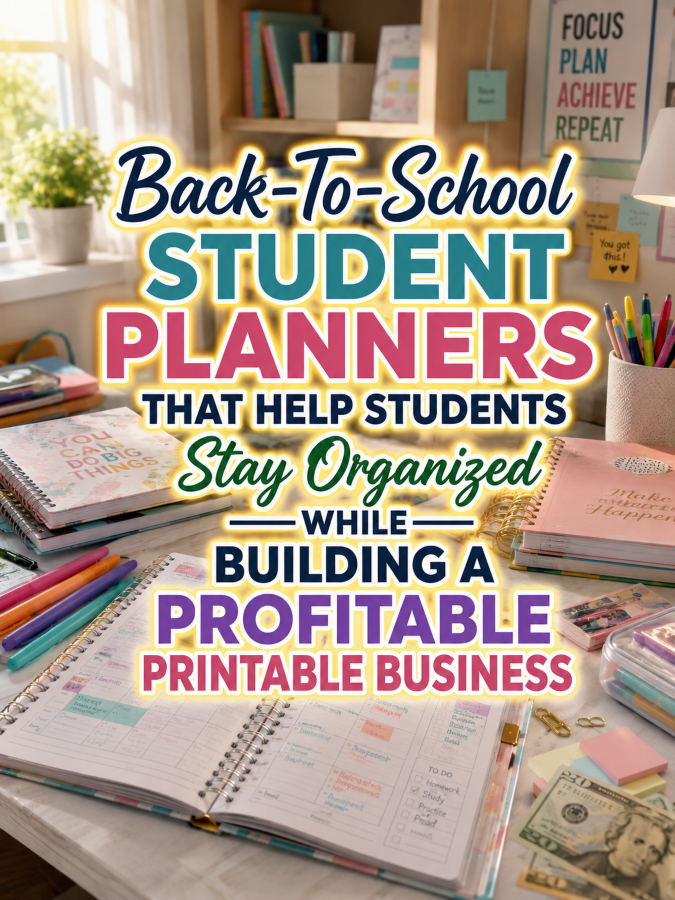
Introduction
Back-to-school season arrives every single year, and with it comes a whirlwind of excitement, fresh supplies, and brand-new goals. Students buy notebooks, parents stock up on backpacks, and teachers prepare classrooms for another busy school year. Everyone wants to start organized, but staying organized is often the real challenge.
Homework assignments begin piling up within the first week. Quiz dates, project deadlines, extracurricular activities, sports practices, and family commitments can quickly fill every available hour. Without a simple planning system, it’s surprisingly easy for important tasks to slip through the cracks.
That’s exactly where a well-designed student planner shines. Instead of juggling multiple notebooks and random sticky notes, students can keep everything in one organized place. Parents appreciate the structure, teachers appreciate prepared students, and students appreciate feeling less overwhelmed throughout the school year.
That’s exactly why Back-To-School Student Planners continue selling year after year. They solve a recurring problem that millions of families face every fall while giving printable creators an evergreen niche that experiences a predictable seasonal sales surge every single year.
One thoughtfully designed planner can become the daily companion that helps students build better study habits, manage their time, reduce stress, and improve their academic confidence.
Quick Answer
Back-To-School Student Planners are downloadable printable systems that help students organize class schedules, homework assignments, project deadlines, study plans, reading logs, test preparation, extracurricular activities, goal tracking, and daily routines. They are useful for elementary students, middle school students, high school students, homeschool families, and even college students.
A starter planner can comfortably sell for around $7. Expand it into subject-specific planners, homework management systems, study journals, exam preparation binders, homeschool planners, and premium academic success libraries, and you’ve built a natural product ladder reaching $27, $47, and even $77.
Your customers aren’t simply buying printable pages. They’re investing in better organization, improved time management, stronger study habits, and greater academic success for themselves or their children.
Why This Niche Works
Education never goes out of style. Every year brings a brand-new group of students entering kindergarten, middle school, high school, college, or homeschool programs. Even returning students often want fresh planners that match their new classes, goals, and schedules.
Parents are also willing to invest in resources that help their children become more organized and independent. A planner that reduces forgotten homework, missed deadlines, and last-minute panic quickly becomes something families genuinely appreciate. That’s always a Good Thing.
Once customers discover your student planner, they’ll often return for homework trackers, reading journals, assignment organizers, teacher planners, homeschool record books, classroom management systems, exam preparation guides, and countless related thingees. One successful planner can easily become the beginning of an entire education-focused printable business.
Unlike many trendy products that disappear after a few months, student planners enjoy dependable yearly demand because every school year creates a brand-new wave of potential customers. Prior to pouncing upon this opportunity, you should first know all about the:
Tools You’ll Need
You don’t need expensive software to build an outstanding student planner. These dependable tools are more than enough to launch a professional printable business that serves students and families for years to come.
- Canva for designing planner pages, calendars, assignment trackers, and colorful printable layouts.
- Google Docs for organizing planner content, educational resources, and instructional pages.
- AWeber for building your email list with study tips, planner updates, and printable freebies.
- GetResponse for newsletters, promotions, launches, and customer follow-up.
- Gumroad for selling downloadable planners and printable bundles to customers around the world.
- Teachable if you’d eventually like to teach study skills, academic organization, note-taking, or productivity systems.
- Amazon Student Planner Research for discovering which planner pages students, parents, and teachers value the most.
Don’t spend three weeks debating whether your planner should use blue headers or green headers while thousands of parents are actively shopping for school supplies. Your future customers care far more about useful planner pages than tiny design decisions that won’t improve organization.
Next, move to:
Your 5-Step Action Plan
Follow these five steps unless you’d rather spend the back-to-school season watching somebody else’s planner become the one every organized family recommends. A little preparation today can create printable income that returns every school year.
Step 1. Research Real Student Challenges
Spend about 90 minutes exploring parenting Facebook groups, teacher communities, homeschool forums, Pinterest boards, Reddit student discussions, and Amazon reviews. Pay close attention to the frustrations students and parents repeatedly mention because those problems become your product ideas.
Create a master list containing at least 40 to 50 printable pages. Include homework trackers, assignment planners, weekly schedules, monthly calendars, reading logs, project planners, exam preparation sheets, goal trackers, study timers, attendance logs, and extracurricular planning pages. Your research becomes an X-ray machine that reveals exactly what families are searching for before every school year begins.
Step 2. Build Your Core Student Planner
Create a collection containing 50 to 70 printable pages that help students stay organized from the first day of school until the final exam. Include daily planning pages, homework logs, assignment trackers, study schedules, class notes, reading records, and academic goal worksheets. Keep everything clean, simple, and easy to use because simplicity is always a Good Thing.
Remember that students will use these pages almost every day. Clear layouts, generous writing space, and practical organization will always outperform complicated designs that look impressive but feel difficult to use.
Step 3. Create Specialty Editions
Build separate planners for elementary students, middle school students, high school students, homeschool families, college students, students with ADHD, and exam preparation. Specialized planners almost always feel more valuable because customers can choose the version that perfectly fits their situation.
Each specialty edition becomes another opportunity to serve a different audience while expanding your printable catalog. Before long, you’ll have an education library instead of just one planner.
Step 4. Add High-Value Bonuses
This is where your planner begins standing out from the thundering herd. Include printable class schedules, teacher contact pages, reading challenge trackers, scholarship application logs, study habit checklists, reward charts, subject dividers, assignment priority worksheets, and exam countdown calendars.
Those bonus thingees require very little additional work yet dramatically increase the value customers receive. Families love complete systems because they eliminate the need to search for additional printable pages elsewhere.
Step 5. Build Your Product Ladder
Launch your starter planner for $7 and make it the foundation of a much larger education brand. Expand into premium academic planners around $27, complete homeschool management systems around $47, and comprehensive educational libraries approaching $77. Every new product naturally supports the others while encouraging repeat purchases throughout the school year.
Before long, your business won’t simply be selling printable planners. You’ll be helping students become more organized, reducing stress for parents, supporting teachers, and giving families practical tools that contribute to academic success year after year.
Once you’ve figured out all of the above, the next step is implementing:
3 Ways to Stand Out From The Thundering Herd!
The student planner market is filled with thousands of printable products, so simply creating another calendar isn’t enough. The Good Thing is that many existing planners are either too generic or packed with pages students never actually use. Your opportunity is to create a planner that becomes part of a student’s daily routine instead of another notebook that gets forgotten after the first month of school.
Way 1. Design for Real Student Life
Students don’t just need a place to write down homework. They also need help balancing classes, extracurricular activities, sports, part-time jobs, family responsibilities, and personal goals. Include planners that help them organize every part of their busy schedule instead of focusing on assignments alone.
Add pages for class schedules, project timelines, reading trackers, assignment priorities, study sessions, exam countdowns, club activities, volunteer hours, and personal goals. Those practical thingees make your planner useful every single day, which dramatically increases customer satisfaction and positive reviews.
Way 2. Create Age-Specific Editions
A planner for a second grader shouldn’t look anything like one designed for a college student. Younger students benefit from colorful layouts, reward charts, simple checklists, and parent communication pages, while older students appreciate clean designs, detailed planning sections, and long-term goal tracking. Tailoring your planners to specific age groups immediately helps you stand out from the thundering herd.
Parents are much more likely to purchase a planner that feels designed specifically for their child’s needs. That small adjustment makes your products feel far more valuable than generic one-size-fits-all planners.
Way 3. Focus on Student Success
Your planner should help students do more than stay organized. Include study habit trackers, goal-setting worksheets, habit builders, reading challenges, gratitude pages, motivational reflections, and exam preparation checklists that encourage positive academic habits throughout the year.
Parents love products that support both organization and personal growth. Teachers appreciate resources that encourage responsibility. That’s a Good Thing because your planner becomes more than just another school supply-it becomes a success tool.
Next, here’s the thing. You’re probably NOT the only person offering this service. So you now require:
3 Nifty Ways to Find Customers
The wonderful thing about this niche is that your audience gathers in very predictable places every year. Parents, teachers, homeschool families, and students actively search for organization tools before school begins, making it easier to reach motivated buyers.
Way 1. Parenting and Homeschool Communities
Facebook groups for parents, homeschool families, PTA organizations, and educational communities are filled with people preparing for the upcoming school year. Offer a free homework tracker or weekly assignment planner before introducing your complete student planner. Providing immediate value builds credibility much faster than simply posting a sales link.
Once parents see how helpful your free printable is, many will happily purchase the complete planner. Building trust first almost always produces better long-term results than pushing for quick sales.
Way 2. Pinterest
Pinterest becomes incredibly active during back-to-school season because families search for organization ideas, classroom inspiration, study tips, and printable resources. Create attractive pins featuring colorful planner spreads, assignment trackers, reading logs, study schedules, and academic goal worksheets that encourage people to click and save your content.
Unlike posts that disappear quickly on other social platforms, Pinterest pins often continue bringing visitors for months or even years. That’s one reason printable businesses love Pinterest so much. Trust me, you’ll thank me later.
Way 3. Teachers, Tutors, and Educational Bloggers
Teachers, tutors, learning coaches, and education bloggers are constantly looking for resources they can recommend to families. Reach out with affiliate partnerships or collaborative opportunities that allow them to introduce your planners to their audiences. Their recommendations often carry tremendous credibility because families already trust their educational advice.
You don’t always have to build your own audience from scratch. Sometimes partnering with someone who already serves your ideal customers is the fastest path to steady sales.
Speaking of helping students succeed, now let’s move to:
3 Takeaways You Won’t Find Elsewhere!
Most printable sellers compete by adding more pages. The smartest sellers compete by creating better outcomes for their customers. That difference may sound small, but it completely changes how your products are perceived.
Takeaway 1. You’re Selling Confidence, Not Calendars
Your customers aren’t buying printable planner pages because they love filling in boxes. They’re buying a system that helps students remember assignments, prepare for exams, manage their time, and reduce the stress that often comes with a busy school schedule. Those emotional benefits are what truly drive purchasing decisions.
When you write your product descriptions, focus on the transformation instead of the features. Show parents how your planner helps their children become more confident and independent learners.
Takeaway 2. Every School Year Creates New Customers
Unlike many niches that eventually slow down, education renews itself every year. New kindergarten students begin school, older students move into new grades, homeschool families update their curriculum, and college students prepare for another semester. That recurring demand creates a dependable opportunity for long-term printable sales.
Returning customers often purchase updated planners every school year, especially if you continue improving your products. Repeat buyers are one of the biggest strengths of this niche.
Takeaway 3. One Planner Can Become an Entire Academic Library
Your Back-To-School Student Planner can naturally expand into homework organizers, reading journals, teacher planners, homeschool management systems, exam preparation guides, scholarship application trackers, college planning binders, and complete academic success libraries. Those connected thingees make scaling much easier because each new product complements the others.
Instead of creating unrelated printables, build a complete education ecosystem that encourages customers to return whenever they need another planning tool. That’s how sustainable printable businesses are built.
Now that you know the above, it’s time for:
3 Common Mistakes to Avoid
Many creators overload their planners with unnecessary pages. That’s Not a Good Thing. Students are much more likely to use a planner that feels simple, practical, and easy to maintain throughout the school year. Focus on quality instead of quantity.
Some sellers forget the parents. Parents are often the actual buyers, so include pages they appreciate, such as parent-teacher conference notes, school contact information, attendance trackers, reading logs, and academic progress sheets. Helping parents stay informed makes your planner much more attractive.
Others create one planner and stop there. That’s like opening a school with only one classroom. Expand into planners for different grade levels, subjects, homeschooling, college, ADHD support, study skills, and exam preparation to build a much stronger printable business.
What else should you know? How about:
Scaling Your Results
Expand into a complete education organization ecosystem. Create teacher planners, homeschool binders, classroom management systems, reading journals, assignment trackers, study planners, scholarship organizers, graduation planners, and academic goal workbooks that naturally complement your original student planner. Every additional product increases the overall value of your catalog while creating more opportunities for repeat purchases.
Create a Student Success Membership. Release fresh printable pages every month featuring seasonal study planners, exam preparation worksheets, reading challenges, productivity trackers, habit builders, classroom resources, and exclusive educational printables. Members will continue building their planner collections throughout the school year, giving your business dependable recurring income.
Build an email list families genuinely appreciate. Share study tips, organization ideas, printable freebies, exam preparation advice, reading challenges, productivity strategies, and back-to-school checklists that help students succeed. A collection containing 40 education-focused printable products could realistically generate an additional $700 to $2,200 each month through memberships, bundles, repeat customers, and affiliate partnerships. Trust me, you’ll thank me later.
Let’s now wrap up everything via the:
Your Next Steps
Start by making a list of the biggest organizational challenges students face during the school year. Think beyond homework by including time management, study habits, extracurricular activities, exam preparation, reading assignments, and long-term goal setting. Those challenges will become the foundation of your planner.
Design your first planner in Canva using clean layouts, readable fonts, generous writing space, and practical worksheets that students will actually enjoy using every day. Focus on creating pages that reduce stress and improve organization rather than simply filling the planner with decorative designs. Practical planners almost always earn better reviews and stronger word-of-mouth recommendations.
Then share your planner with five parenting groups, homeschool communities, teacher Facebook groups, Pinterest boards, or education bloggers. Remember, 5 good messages beats 50 generic ones every single time. One thoughtfully designed student planner can quietly become the foundation of an entire education printable business.
Next, let’s finish with:
Final Thoughts
Every successful school year begins with a plan, and your printable planner can help students build that plan one day at a time. From organizing homework and preparing for exams to developing better study habits and achieving personal goals, your planner becomes much more than a collection of printable pages. It becomes a daily tool that helps students succeed with greater confidence.
So, begin with one planner that solves one meaningful problem exceptionally well. Continue listening to parents, teachers, and students while expanding your printable collection to meet their changing needs. Before long, you’ll have a growing library of educational resources that families look forward to purchasing every school year.
You don’t need bazillions of products to build meaningful income. You simply need one thoughtfully designed student planner that helps learners stay organized, builds confidence, and makes every school day a little less overwhelming.
That’s it. That’s your beginning!
If you were creating your first Back-To-School Student Planner tomorrow morning, would you design it for elementary students, middle school students, high school students, homeschool families, or college students?
Enjoy!