Introduction
Vinyl collecting has a funny way of starting with one record. Then you find another. Then there is a used record shop, a favorite artist, a special pressing, a record your parents owned, and suddenly the shelf is full and you are holding an album thinking, “Do I already own this one, or is this merely the third copy I have convinced myself is completely different?”
That makes Vinyl Record Collection Trackers a practical digital product niche with plenty of room for specialization.
Vinyl collectors need ways to catalog records, track artists, organize genres, document pressing information, record purchase prices, manage storage locations, track listening sessions, build wishlists, monitor duplicates, and keep track of records they may want to buy, trade, or sell.
For digital product sellers, the niche also creates a natural $7 to $77 product ladder. Start with a focused record catalog, expand it into a $17-$27 vinyl organization toolkit, grow it into a $37-$47 complete collector planner, and finish with a $67-$77 premium collection command center.
Quick Answer
A Vinyl Record Collection Tracker can start as a $7 record catalog, expand into a $17-$27 vinyl organization toolkit, grow into a $37-$47 complete record collector planner, and reach $67-$77 as a premium customizable vinyl collection command center.
The trick is not to make every level bigger just because you can. Each level should solve a larger organizational problem. The $7 product catalogs records. The $17-$27 product organizes the collection. The $37-$47 product manages the collector’s entire hobby. The $67-$77 product adds flexibility, specialization, digital versions, and business tools.
Quick Win
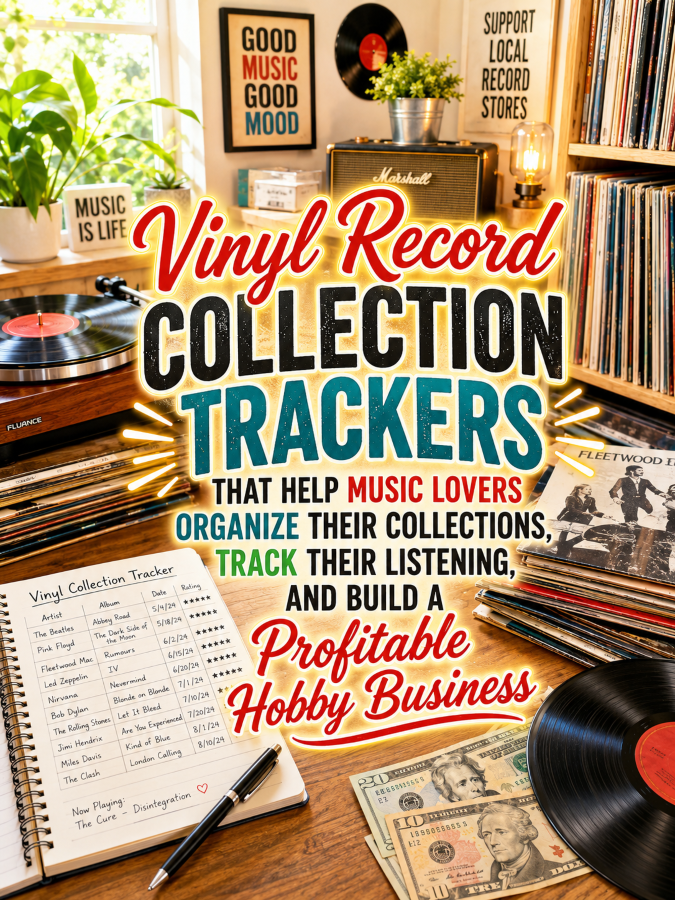
Create a Vinyl Record Collection Tracker that records the artist, album title, release year, label, catalog number, format, pressing information, condition, purchase date, price paid, storage location, personal rating, and listening notes.
Why This Niche Works
Vinyl collectors range from casual music lovers with a few favorite albums to serious collectors with hundreds or thousands of records. There are also crate diggers, DJs, music reviewers, record-store enthusiasts, collectors of specific genres, collectors of particular artists, and people who buy and sell used records.
Vinyl collections are naturally suited to cataloging.
Every record can have a different artist, album, label, release year, pressing, condition, edition, purchase price, and storage location.
As a collection grows, remembering all those details becomes increasingly difficult.
A tracker turns a shelf full of records into an organized personal music library.
It can help answer practical questions:
- Which records do I own?
- Which albums am I missing from a favorite artist?
- Which records do I have duplicates of?
- Where is each record stored?
- Which records need cleaning or repair?
- Which albums have I listened to recently?
- Which records are on my wishlist?
- How much have I spent on the collection?
- Which records might I want to sell or trade?
That makes the niche useful for both hobbyists and people who have turned their music obsession into a small creative business.
The Reasonable Pricing Rule
Do not create a $77 product by taking your $7 record tracker and adding 400 pages of nearly identical album-entry sheets.
More pages do not automatically equal more value.
The $7 product should solve one focused problem: cataloging a vinyl collection.
The $17-$27 product should organize the collection and the collector’s workflow.
The $37-$47 product should connect collecting, listening, purchasing, budgeting, maintenance, trading, reviewing, and resale.
The $67-$77 product should provide editable templates, specialty editions, digital versions, and a complete collection management system.
Every upgrade should save time, reduce confusion, or help the buyer make better decisions about their collection.
Your $7 Starter Product
Create a printable called the Vinyl Record Collection Tracker.
Include:
- Vinyl Collection Catalog
- Artist Information
- Album Title Record
- Release Year
- Record Label
- Catalog Number
- Format Information
- Pressing or Edition Notes
- Condition Tracker
- Purchase Date
- Purchase Price
- Storage Location
- Personal Rating
- Listening Notes
- Favorite Tracks
The goal is simple: give collectors one place to document what they own and remember the details that matter to them.
Grow It Into a $17 to $27 Vinyl Organization Toolkit
Once someone owns more than a few shelves of records, the basic catalog starts needing reinforcements.
Create a Vinyl Collector’s Organization Toolkit priced between $17 and $27.
Include:
- Everything from the $7 starter product
- Artist Collection Tracker
- Album Series Tracker
- Genre Collection Tracker
- Record Label Tracker
- Pressing & Edition Tracker
- Record Condition Log
- Cleaning & Maintenance Log
- Record Storage Location Map
- Shelf Inventory
- Duplicate Record Tracker
- Record Wishlist
- Artist Wishlist
- Future Purchase Planner
- Record Store Visit Planner
- Crate-Digging Notes
- Record Swap Tracker
- Record Lending Log
- Gift Record Tracker
- Listening Challenge Tracker
- Monthly Listening Log
- Annual Collection Review
This transforms the product from a simple inventory sheet into a complete vinyl hobby organization system.
You can make this tier more useful by including sample pages that show how to organize records alphabetically, by genre, by artist, by collection theme, or by storage location.
Build a $37 to $47 Complete Vinyl Collector Planner
The next level should feel like a command center for serious collectors, DJs, reviewers, record enthusiasts, and people who actively buy, trade, or sell records.
Create a Complete Vinyl Record Collector Planner priced between $37 and $47.
Include:
- Annual Collection Planner
- 90-Day Listening Challenge
- Collection Growth Tracker
- Vinyl Spending Tracker
- Monthly Record Budget
- Collection Cost Worksheet
- Estimated Collection Value Worksheet
- Record Review Journal
- Artist Completion Tracker
- Discography Tracker
- Genre Exploration Planner
- Record Store Visit Log
- Record Fair Planner
- Crate-Digging Research Sheet
- Record Cleaning Schedule
- Equipment Maintenance Log
- Record Lending Tracker
- Record Swap Planner
- Used Record Sales Tracker
- Marketplace Listing Planner
- Product Photography Checklist
- Social Media Content Planner
- Music Review Content Planner
- Quarterly Collection Review
- Year-End Collection Review
This version moves beyond simply knowing what is on the shelf.
It helps buyers manage how they collect, listen, maintain, review, purchase, trade, organize, and occasionally sell records.
Create a $67 to $77 Premium Bundle
The premium version should provide flexibility and specialization instead of simply creating a gigantic printable binder.
Create a Vinyl Collection Command Center priced between $67 and $77.
Include:
- Editable Canva Templates
- Fillable PDF Version
- Tablet-Friendly Digital Version
- Serious Collector Edition
- Music Discovery Edition
- Record Store Shopper Edition
- DJ Collection Edition
- Music Reviewer Edition
- Music Content Creator Edition
- Record Dealer Edition
- Record Reseller Edition
- Used Vinyl Inventory System
- Marketplace Listing Workbook
- Record Review Content Calendar
- Social Media Promotion Templates
- Record Fair Planning Kit
- Collection Budget Workbook
- Storage Organization Worksheets
- Maintenance Planning Workbook
- Quick-Start Setup Guide
- Customization Instructions
- Commercial Use Options Where Appropriate
The premium bundle should feel like a flexible system that can support a personal collection, serious hobby, DJ library, content project, record-selling operation, or music community.
Example Product Ladder
$7 Starter: Vinyl Record Collection Tracker
$17-$27 Toolkit: Vinyl Collector’s Organization Toolkit
$37-$47 Bundle: Complete Vinyl Record Collector Planner
$67-$77 Premium: Vinyl Collection Command Center
Recommended Tools
- Canva for planner layouts, editable templates, covers, worksheets, and promotional graphics
- ChatGPT for collection categories, listening challenges, review prompts, content ideas, and marketing copy
- Google Sheets for larger collections and sortable record databases
- Creative Fabrica for commercial-use graphics, fonts, and design resources
- remove.bg for clean product mockups
- Google Trends for researching vinyl collecting interests and seasonal buying patterns
- Etsy for researching digital product demand
- Payhip or Gumroad for digital product delivery
Your 5-Step Action Plan
Step 1: Start With the Collection
Build the $7 tracker around one clear problem: helping vinyl collectors remember what they own.
Keep the catalog simple. A buyer should be able to record a new album quickly without needing to understand a complicated database.
Step 2: Solve the Storage Problem
Expand the product with shelf inventories, storage locations, duplicate trackers, artist indexes, genre indexes, condition records, and maintenance logs.
This creates the $17-$27 organization toolkit.
Step 3: Add the Collector Experience
For the $37-$47 version, introduce budgets, listening challenges, record fairs, store visits, reviews, cleaning schedules, swaps, lending, content planning, and resale tools.
Now the planner supports the entire hobby instead of simply cataloging albums.
Step 4: Create Specialty Editions
Develop versions for serious collectors, DJs, record reviewers, music content creators, crate diggers, record dealers, and resellers.
Specialization makes your marketing message much stronger because the buyer can immediately see how the planner fits their particular relationship with vinyl.
Step 5: Build the Premium Command Center
Add editable Canva templates, fillable PDFs, digital versions, specialty editions, promotional templates, and customization instructions.
The premium product should save the buyer time and make the system easier to adapt to their own collection or audience.
Common Pricing Mistakes to Avoid
The first mistake is making the tracker attractive but impractical.
Vinyl collectors need information they can find quickly. Decorative elements can make a product feel premium, but they should never crowd out useful writing space.
The second mistake is putting every feature into the $7 product.
If the starter already includes budgeting, maintenance, content planning, resale management, record fairs, and digital templates, there is very little reason for a customer to upgrade.
The third mistake is forgetting that vinyl collectors have different goals.
A casual listener does not need the same system as someone cataloging thousands of records. A DJ has different needs from a collector focused on rare pressings. A record reviewer needs a different workflow from someone simply building a personal library.
Use specialty editions to solve those differences.
Important Collection-Value Consideration
Vinyl records can have wildly different values depending on condition, pressing, edition, demand, authenticity, completeness, and current market conditions.
If you include collection-value worksheets, make them tools for recording the collector’s own estimates or research rather than promising a guaranteed valuation.
A useful worksheet can include fields for purchase price, estimated value, valuation date, source of the estimate, condition notes, and any relevant edition or pressing information.
That keeps the planner practical without pretending that a blank worksheet can predict the entire collectibles market. That would be a rather impressive trick for a piece of paper.
Where to Find Buyers
- Vinyl collector Facebook groups
- Record collecting communities
- Music enthusiast groups
- DJ communities
- Record store communities
- Crate-digging groups
- Music review communities
- Record fair communities
- Pinterest music audiences
- Etsy digital-product communities
- Local record clubs
Visual platforms can work especially well because record shelves, colorful album covers, listening spaces, turntable setups, and organized collections are naturally shareable.
Affiliate Opportunities
Vinyl collection content creates natural opportunities for related affiliate products.
- Vinyl records
- Record storage shelves
- Record crates
- Turntables
- Record cleaning supplies
- Outer record sleeves
- Inner sleeves
- Record storage boxes
- Display frames
- Turntable accessories
- Record stands
- Listening-room organization supplies
Instead of simply recommending products, create useful content around the problems they solve. For example, you could create content about organizing a growing record collection, protecting records during storage, setting up a practical listening station, or creating a better crate-digging system.
Internal Link Suggestions
- Book Collection Trackers
- Board Game Collection Trackers
- Puzzle Collection Trackers
- LEGO Collection Trackers
- Dollhouse Project Planners
- Model Building Project Planners
- Photography Project Planners
- Scrapbooking Project Planners
Pinterest Pin Ideas
- The Vinyl Record Collection Tracker Every Collector Needs
- Finally Organize Your Vinyl Collection
- Track Every Record You Own With This Simple System
- Organize Your Records, Artists, Pressings, and Listening History
- From Record Shelf to Organized Music Library
- Build a $7 to $77 Vinyl Collection Product Ladder
Frequently Asked Questions
Who buys Vinyl Record Collection Trackers?
Vinyl collectors, casual music lovers, DJs, crate diggers, record reviewers, music content creators, record-store enthusiasts, serious hobbyists, and used-record sellers can all benefit from these products.
Can this niche generate repeat customers?
Yes. Vinyl enthusiasts can build collections for decades, discover new artists, participate in record fairs, review albums, reorganize storage, maintain equipment, create music content, trade records, and occasionally resell albums. Each activity creates opportunities for additional specialized planners.
Should I create different versions for different vinyl audiences?
Absolutely. A serious collector catalog, DJ record planner, crate-digging journal, record-review planner, record-store shopping planner, and reseller inventory system can all target different buyers.
Can the $7 starter product work for beginners?
Yes. Keep it simple. The buyer should be able to catalog their existing records immediately without having to learn a complicated collection-management system.
Can I include pressing and edition information?
Yes. Pressing, catalog number, label, release year, edition, and condition fields can be extremely useful for serious collectors. Keep the fields flexible enough to work for casual collectors while still providing useful space for more detailed records.
Can I include a collection value tracker?
Yes. A worksheet can help buyers record purchase prices, estimated values, valuation dates, and research sources. Make it clear that any valuation is an estimate or personal record rather than a guaranteed market value.
Call to Action
A vinyl collection can be full of great music, beautiful artwork, nostalgia, discoveries, impulse purchases, and at least one record you bought because the cover looked interesting and now you are emotionally invested in defending that decision.
Start with a $7 Vinyl Record Collection Tracker that helps people remember what they own. Then expand it into a $17-$27 organization toolkit, a $37-$47 complete collector planner, and finally a $67-$77 premium collection command center.
Do not build the entire ladder at once. Start with one useful solution, watch what your audience needs next, and build each upgrade around a real problem.
That’s how a simple record catalog can become the foundation for a much bigger digital product business.
Conclusion
Vinyl collectors already have enough to think about when searching for the next great record. They should not also have to remember where an album is stored, whether they already own it, which pressing they purchased, or who borrowed it six months ago.
A Vinyl Record Collection Tracker turns a shelf full of albums into an organized personal music library. It gives collectors a practical way to document artists, albums, pressings, conditions, purchase prices, storage locations, listening experiences, maintenance, and future wants.
Start with the focused $7 tracker. Expand it into the $17-$27 hobby organization toolkit. Add budgeting, listening challenges, maintenance, reviews, record fairs, swaps, content, and resale tools at $37-$47. Then create the premium $67-$77 command center with editable and specialized resources.
Once you have the framework working, you can adapt the same system for books, board games, puzzles, LEGO collections, model kits, dollhouses, stamps, coins, and other collectible hobbies.
One record is music. A growing vinyl collection is a library, a hobby, and sometimes a small logistical operation with surprisingly strong opinions about alphabetization. A good tracker helps collectors spend less time wondering what they own and more time enjoying what is already on the shelf.
So here’s what you’ve discovered today – if anything excites you, why not start working towards that goal today?
Enjoy!