Introduction
Planning a vacation is exciting right up until someone asks, “How much is this actually going to cost?”
Suddenly there are airfare prices on one website, hotel quotes in an email, restaurant ideas saved on a phone, attraction tickets in another browser tab, and a handwritten packing list sitting on the kitchen counter beside a passport that definitely wasn’t there five minutes ago.
The vacation isn’t the stressful part. Keeping the budget under control is.
Many travelers start with good intentions, but once booking fees, transportation, souvenirs, meals, and those “we’re already here, so why not?” purchases appear, the budget begins wandering off like a shopping cart with one very determined wheel.
That’s exactly why Vacation Budgeting Spreadsheets continue attracting buyers year after year. They help travelers plan smarter, avoid surprise expenses, and enjoy their trips with greater confidence while giving digital creators an evergreen printable business.
One thoughtfully designed budgeting system can quietly replace vacation stress with peace of mind before anyone even packs a suitcase.
Quick Answer
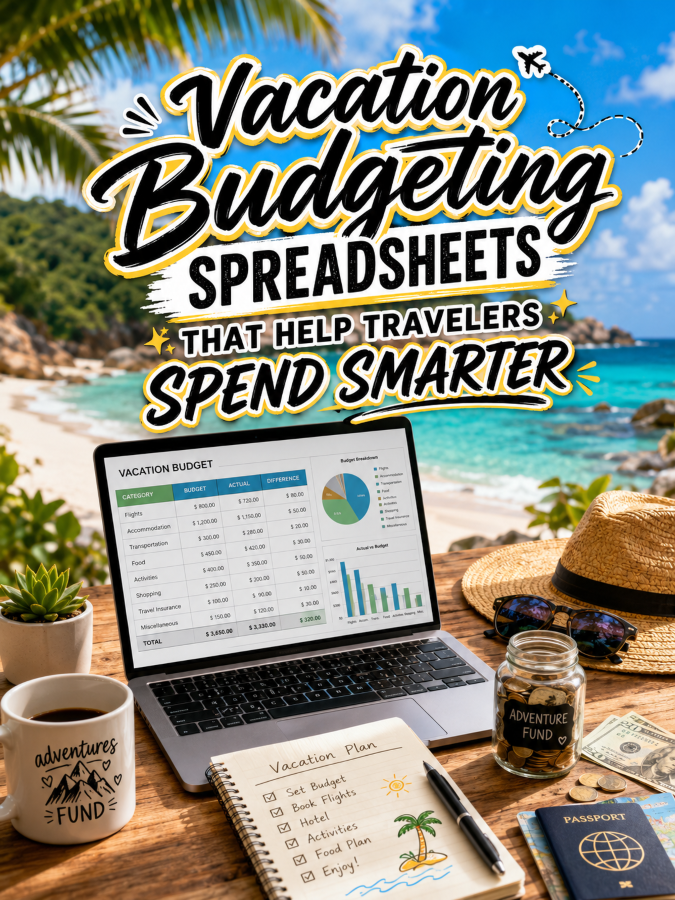
Vacation Budgeting Spreadsheets are downloadable planners that help travelers estimate transportation, accommodations, meals, activities, shopping, emergency funds, daily spending, and overall trip costs. Many also include savings trackers, packing planners, itineraries, and expense summaries.
A starter spreadsheet can comfortably sell for around $7. Expand it into family travel planners, cruise organizers, international trip systems, editable budgeting workbooks, and premium travel planning bundles, and you’ve built a natural product ladder reaching $27, $47, and even $77.
Travelers don’t want vacations filled with money worries. They want simple systems that help every dollar work a little harder. That someone creating that solution could absolutely be you!
Why This Niche Works
People never stop planning trips. Family vacations, weekend getaways, road trips, cruises, anniversary celebrations, school holidays, business travel, and bucket-list adventures all require thoughtful budgeting.
Many travelers use random notes, scattered spreadsheets, or budgeting apps that become about as organized as a suitcase packed during a windstorm. That’s a bit like visiting a buffet where every dessert is delicious but nobody remembered to label what anything is.
Once someone discovers a budgeting system that genuinely reduces travel stress, they’ll happily return for packing planners, itinerary builders, travel journals, cruise organizers, expense trackers, and countless related thingees.
Unlike travel trends that change every season, saving money on vacation is always a Good Thing.
Prior to pouncing upon this opportunity, you should first know all about the:
Tools You’ll Need
You don’t need to travel the world to build this printable business. These dependable tools are more than enough to get started.
- Canva for designing printable worksheets, trackers, and covers.
- Google Docs for organizing planning guides and instructions.
- AWeber for building your email list with travel planning tips and printable updates.
- GetResponse for automated launches, newsletters, and customer follow-up.
- Gumroad for selling downloadable spreadsheet bundles.
- Teachable if you’d eventually like to teach travel planning or budgeting.
- Amazon Travel Budget Research for studying planner layouts, budgeting books, and customer reviews.
Don’t spend weeks collecting shiny software thingees. Spend that time creating budgeting tools travelers will happily use before every trip.
Next, move to:
Your 5-Step Action Plan
Follow these five steps unless you’d rather spend 22 hours trying to remember whether the hotel deposit was already paid while someone keeps asking if there’s enough money left for dessert every single evening.
Step 1. Research How People Plan Vacations
Spend about 92 minutes studying travel planners, budgeting worksheets, family travel blogs, vacation forums, and customer reviews. Look closely at the budgeting problems travelers mention most often.
Create a master list containing 28 to 35 spreadsheet pages. Include transportation budgets, accommodation trackers, meal estimates, activity planners, savings goals, emergency funds, packing costs, currency conversion notes, souvenir budgets, and daily expense logs.
Your research becomes an X-ray machine that uncovers financial surprises travelers would much rather avoid.
Step 2. Design Your Core Budgeting System
Create a printable collection containing 36 to 48 planning pages that naturally guide travelers from saving for the trip to tracking expenses after they return home.
Include trip overviews, daily spending trackers, savings challenges, expense summaries, itinerary planners, payment schedules, packing lists, and travel checklists. Keep everything simple because simplicity is always a Good Thing.
Step 3. Build Specialty Editions
Create separate budgeting systems for family vacations, cruises, Disney trips, international travel, weekend getaways, road trips, honeymoon planning, and solo adventures.
Specific planners always feel more valuable than one giant workbook trying to organize every possible vacation.
Your customers will appreciate having choices.
Step 4. Add High-Value Bonuses
This is where your spreadsheet begins standing out from the thundering herd.
Include printable packing checklists, travel savings trackers, itinerary builders, restaurant planners, emergency contact pages, passport reminders, vacation countdowns, and travel journal pages.
Those bonus thingees don’t require much additional work, yet they dramatically increase the value of your bundle.
People love thoughtful extras that help them enjoy their trip with less stress.
Step 5. Build Your Product Ladder
Launch your starter spreadsheet for $7. Expand into complete travel planning systems around $27, then introduce premium family travel libraries approaching $77.
Before long, your business won’t simply be selling budgeting pages. You’ll be helping families create memorable vacations without worrying about unpleasant financial surprises.
Once you’ve figured out all of the above, the next step is implementing:
3 Ways to Stand Out From The Thundering Herd!
Let’s face it. There are plenty of vacation budget planners online. That’s about as surprising as finding sunscreen in a beach bag.
The Good Thing is that many of them only track spending. Your spreadsheet can help travelers plan, save, organize, and actually enjoy their vacation without constantly reaching for a calculator.
Way 1. Build for Different Types of Travelers
Not every vacation looks the same. Create separate budgeting systems for family vacations, solo travelers, couples, cruises, road trips, international adventures, Disney vacations, camping trips, and weekend escapes.
When buyers immediately find a planner designed for their style of travel, they stop comparing spreadsheets and start imagining how much easier planning could become.
Way 2. Budget the Entire Vacation
Most people remember hotels and airfare.
They often forget airport parking, baggage fees, snacks, tips, souvenirs, travel insurance, attraction tickets, toll roads, pet boarding, and emergency expenses. Include every category so your spreadsheet becomes a complete travel command center instead of another basic expense tracker.
Way 3. Make Saving Feel Achievable
Planning a vacation should feel exciting, not overwhelming.
Add savings challenges, monthly goal trackers, countdown calendars, payment schedules, and milestone celebrations. Watching progress grow motivates people to stick with their budget long before departure day arrives.
Next, here’s the thing. You’re probably NOT the only person offering this service. So you now require:
3 Nifty Ways to Find Customers
You don’t need paid advertising because travelers practically shine the Bat Signal every time they begin searching for flights, booking hotels, or planning the next family getaway.
Way 1. Pinterest
Travel planning remains one of Pinterest’s strongest categories throughout the year.
Create attractive pins showing budgeting pages, vacation planners, packing checklists, savings trackers, and itinerary layouts. Beautiful visuals encourage people to save your content months before they actually travel.
Way 2. Family Travel Facebook Groups
Parents regularly ask how other families afford vacations without overspending.
Share practical budgeting tips before mentioning your printable. Helpful advice builds credibility much faster than constant promotions.
Way 3. Travel Bloggers and YouTube Creators
Many travel creators recommend planning tools that help their audiences prepare smarter vacations.
Offer your spreadsheet for reviews, collaborations, or affiliate partnerships. Their audience already values practical travel resources, making your product a natural fit.
Speaking of completed projects, now let’s move to:
3 Takeaways You Won’t Find Elsewhere!
These aren’t feel-good reminders. They’re practical ideas that quietly turn one spreadsheet into a dependable digital product business.
Takeaway 1. You’re Selling Peace of Mind
Travelers aren’t buying a spreadsheet because they enjoy budgeting.
They’re buying confidence that they’ll return home with wonderful memories instead of unexpected credit card surprises. That’s the true value of your product.
Takeaway 2. Travel Happens All Year Long
People don’t only travel during summer.
Spring break, holiday vacations, business trips, anniversaries, cruises, weekend getaways, school breaks, and family reunions create demand throughout the entire year.
Takeaway 3. One Spreadsheet Can Grow Into an Entire Travel Collection
Your Vacation Budgeting Spreadsheet can naturally expand into packing planners, travel journals, itinerary builders, cruise organizers, road trip planners, travel bucket lists, passport trackers, and family vacation binders.
Those connected thingees encourage customers to return every time they begin planning another adventure.
Now that you know the above, it’s time for:
3 Common Mistakes to Avoid
Many creators only budget the obvious expenses.
That’s Not a Good Thing. Travelers also need categories for tips, baggage fees, airport meals, parking, travel insurance, emergency funds, and souvenirs if they want a realistic budget.
Some sellers overwhelm users with complicated formulas.
Most buyers simply want something they can understand within a few minutes. Keeping everything clear and easy to use is always a Good Thing.
Others create one planner and stop there.
The biggest opportunity comes from building a complete collection of travel planning resources that customers can use before every vacation.
What else should you know? How about:
Scaling Your Results
Expand beyond vacation budgeting.
Create printable collections for cruise planning, family itineraries, travel journals, packing systems, RV adventures, campground planning, travel photography logs, and bucket-list adventures. One successful spreadsheet can inspire dozens of related products.
Create premium travel planning bundles.
Bundle budgeting spreadsheets, packing planners, itinerary builders, passport trackers, travel journals, emergency contact pages, restaurant planners, and vacation countdowns into complete travel management systems that customers will happily purchase together.
Build an email list that travelers genuinely enjoy.
Share seasonal travel tips, budgeting ideas, destination planning resources, and printable updates throughout the year. A collection containing 35 travel planning products could realistically generate an additional $524 to $1,472 each month through repeat buyers, memberships, bundle sales, and seasonal launches. Trust me, you’ll thank me later.
Let’s now wrap up everything via the:
Your Next Steps
Start by listing 35 budgeting categories that travelers regularly forget until they’re already on vacation. Don’t try to build the world’s most complicated spreadsheet because that’s usually a Not a Good Thing.
Design your first budgeting system in Canva using clean layouts that make planning feel simple instead of stressful. If someone can organize an entire vacation without questioning their life’s choices, you’ve built something genuinely helpful.
Then introduce your spreadsheet to five travel communities, family vacation groups, Pinterest boards, or travel bloggers. Remember, 5 good messages beats 50 generic ones every single time.
One thoughtfully designed Vacation Budgeting Spreadsheet can quietly become the beginning of an entire travel planning printable business.
Next, let’s finish with:
Final Thoughts
The best vacations aren’t remembered because every dollar was tracked perfectly. They’re remembered because families laughed together, explored new places, tried wonderful food, and returned home with unforgettable memories instead of financial regrets.
Your Vacation Budgeting Spreadsheet helps make those experiences possible. It removes uncertainty, keeps spending organized, and gives travelers the confidence to enjoy their adventures without constantly worrying about the budget. That’s exactly the kind of printable people use again every time they plan another trip.
Start with one spreadsheet that solves one common travel problem, keep listening to your customers, and continue expanding your collection one helpful planner at a time. You don’t need bazillions of printables to build a thriving digital business. You simply need one thoughtful budgeting system that helps people travel smarter.
That’s it. That’s your beginning!
If you were creating your very first Vacation Budgeting Spreadsheet today, which type of trip would you build it for first – family vacations, road trips, cruises, international travel, or weekend getaways?
Enjoy!