Introduction
Quilting has a way of turning fabric, thread, patience, and imagination into something deeply personal. One project might become a cozy family heirloom, while another becomes a gift, a wall hanging, or the beginning of a handmade collection. But behind every beautiful quilt is a surprising amount of planning, measuring, cutting, fabric selection, piecing, pressing, quilting, and record keeping.
Experienced quilters know that every project creates a pile of details worth remembering. Fabric requirements, pattern names, block measurements, color combinations, cutting instructions, thread choices, batting types, and finishing notes can quickly end up scattered across notebooks and scraps of paper. That’s Not a Good Thing because the information from one successful quilt can make the next project easier, faster, and more enjoyable.
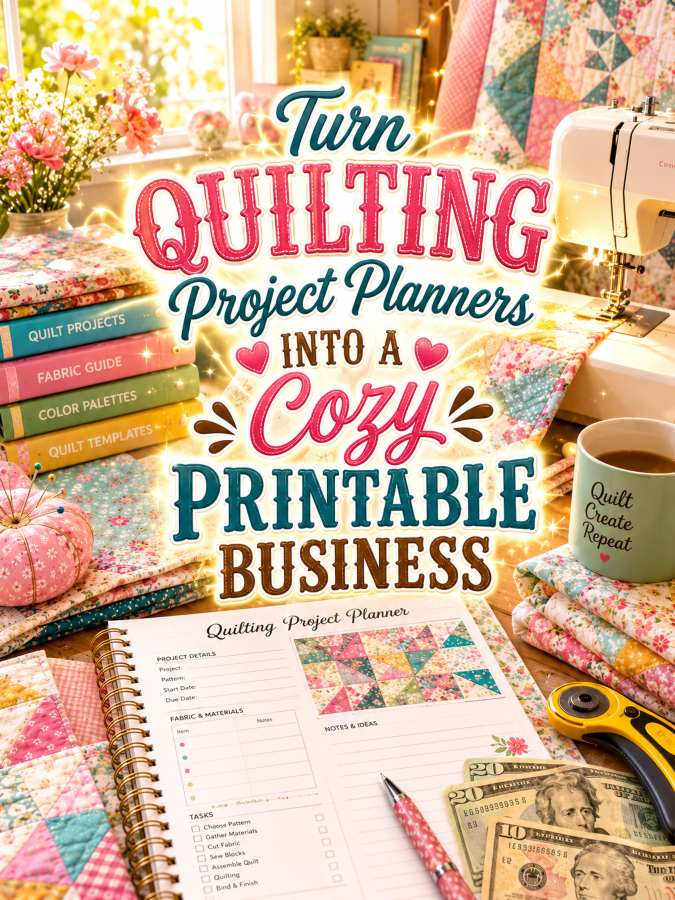
That’s exactly where Quilting Project Planners become incredibly valuable. A well-designed planner gives quilters one cozy little command center for capturing ideas, organizing materials, tracking progress, recording techniques, and documenting finished quilts. Over time, it becomes part project planner, part creative journal, and part personal quilting reference library.
Quilting has a wonderfully loyal community of hobbyists who are constantly starting new projects, collecting fabrics, learning techniques, joining challenges, and creating gifts for friends and family. Those makers naturally need tools for organizing all of those creative adventures. That makes quilting planners an excellent evergreen printable niche with plenty of room for specialized products.
One thoughtfully designed Quilting Project Planner can quietly become the foundation of a profitable printable business while helping quilters spend less time searching through fabric bins and more time doing what they love.
Quick Answer
Quilting Project Planners are downloadable printable systems that help quilters organize project ideas, patterns, fabric inventories, color palettes, cutting plans, measurements, sewing progress, quilting techniques, supplies, deadlines, costs, and finished quilt records.
A starter planner can comfortably sell for around $7. Expand it into fabric inventory binders, quilt journals, pattern organizers, sewing planners, craft room management systems, and premium quilting libraries priced at $27, $47, and even $77.
Your customers aren’t simply buying printable pages. They’re investing in less project chaos, better fabric organization, fewer forgotten details, more finished quilts, and a creative system they can return to every time inspiration strikes.
Why This Niche Works
Quilters naturally collect projects faster than they finish them. A beautiful fabric bundle can inspire a new quilt before the current one is even halfway completed. Add patterns, charm packs, fat quarters, scraps, rulers, threads, batting, and countless saved ideas, and suddenly the sewing room has become a treasure hunt nobody intentionally planned. A quilting planner gives all those creative pieces somewhere useful to live.
Quilters also love documenting successful combinations. They may want to remember which fabric line worked beautifully with a particular pattern, which thread produced the best finish, or how they modified a block to fit their vision. Recording those decisions helps makers reproduce successful techniques and avoid repeating frustrating mistakes. That’s always a Good Thing.
Once customers discover your Quilting Project Planner, they’ll naturally become interested in fabric inventory sheets, quilt journals, sewing room organizers, pattern binders, craft fair planners, handmade business trackers, and countless related thingees. One successful quilting printable can easily grow into an entire creative-maker product line.
Unlike fleeting craft trends, quilting has a strong tradition of passing skills, patterns, and finished pieces from one generation to another. Prior to pouncing upon this opportunity, you should first know all about the:
Tools You’ll Need
You don’t need a giant sewing room or a mountain of fabric to create useful printables for quilters. These dependable tools are more than enough to research the niche, design your products, market them, and build a growing digital shop.
- Canva for designing quilting planners, fabric inventories, project trackers, pattern organizers, and printable craft room systems.
- Google Docs for organizing product ideas, worksheet content, instructions, and quilting resources.
- AWeber for building an email list with quilting tips, printable freebies, project inspiration, and product announcements.
- GetResponse for newsletters, promotions, automated campaigns, and customer follow-up.
- Gumroad for selling downloadable quilting planners and printable maker bundles worldwide.
- Teachable if you’d eventually like to teach quilting organization, project planning, sewing skills, or handmade business systems.
- Amazon Quilt Planner Research for discovering which quilting journal and organization pages makers appreciate the most.
Don’t spend weeks deciding whether your little spool-of-thread illustration should sit two pixels farther to the left while quilters are trying to remember where they put the pattern for that gorgeous quilt they started last winter. Your future customers care much more about useful organization than decorative perfection.
Next, move to:
Your 5-Step Action Plan
Follow these five steps unless you’d rather watch another printable creator become the quilting organization expert everyone recommends. The smartest entrepreneurs create products that become more useful every time a customer starts another project.
Step 1. Research Real Quilter Challenges
Spend about 90 minutes exploring quilting Facebook groups, Reddit quilting communities, Pinterest boards, YouTube quilting channels, sewing forums, and reviews of existing quilting journals. Pay attention to the problems makers repeatedly mention, especially fabric organization, unfinished projects, pattern tracking, measurements, color planning, and remembering project details. Those conversations reveal exactly what your printable should help organize.
Create a master list containing at least 40 to 50 printable pages. Include project planners, fabric inventories, pattern records, color palette worksheets, cutting plans, block trackers, sewing progress pages, supply checklists, quilting technique notes, project budgets, deadline trackers, and finished quilt records. Your research becomes an X-ray machine that reveals where quilters need practical organization.
Step 2. Build Your Core Quilting Project Planner
Create a collection containing 50 to 70 printable pages that support quilters from the first spark of inspiration through the finished quilt. Include project overview pages, pattern information, fabric requirements, color planning, cutting notes, block progress, quilting details, finishing records, and project reflections. Keep every page simple, practical, and easy to use because simplicity is always a Good Thing.
Give makers generous writing space because quilting projects can involve a surprising number of measurements and variations. A flexible planner allows customers to adapt the pages to small wall quilts, baby quilts, lap quilts, large bed quilts, and everything wonderfully in between.
Step 3. Create Specialty Editions
Build separate planners for beginners, scrap quilters, modern quilters, traditional quilters, appliqué enthusiasts, English paper piecing fans, quilt guild members, and quilters who sell their finished work. Specialized editions immediately feel more valuable because customers recognize their own creative interests in the pages.
Each specialty edition expands your audience while strengthening your product catalog. Before long, you’ll have a complete quilting resource library instead of relying on one general-purpose planner.
Step 4. Add High-Value Bonuses
This is where your Quilting Project Planners begin standing out from the thundering herd. Include printable fabric stash inventories, UFO project trackers, quilt gift planners, sewing room checklists, quilt show preparation sheets, scrap management pages, project cost calculators, and annual quilting goal sheets.
Those bonus thingees require relatively little additional design work yet dramatically increase the perceived value of your product. Complete quilting systems are much easier to position as premium resources because they support the maker’s entire creative workflow.
Step 5. Build Your Product Ladder
Launch your starter Quilting Project Planner for $7 and let it become the foundation of a growing maker printable business. Expand into premium quilting organization systems around $27, complete sewing room binders around $47, and comprehensive quilting libraries approaching $77. Every additional product naturally complements the others while encouraging repeat purchases.
Before long, your business won’t simply be selling quilting planners. You’ll be helping makers organize their fabric, finish more projects, preserve their creative ideas, and build a beautiful record of the quilts they’ve created.
Once you’ve figured out all of the above, the next step is implementing:
3 Ways to Stand Out From The Thundering Herd!
The quilting printable market is filled with project journals and pattern notebooks, but many of them stop at basic project information. The Good Thing is that quilters need much more than a place to write down a quilt’s name. They need help managing fabric, patterns, measurements, unfinished projects, deadlines, and all those wonderfully tempting ideas that keep appearing before the current quilt is finished.
Way 1. Turn the Planner Into a Quilter’s Command Center
Don’t limit your planner to one project page followed by several blank sheets. Include fabric inventories, pattern records, color palette worksheets, cutting plans, block trackers, sewing progress pages, quilting technique notes, finishing details, and project cost records. Your goal is to make the planner useful from the first idea all the way through the final binding stitch.
Add sections for batting, backing fabric, thread, rulers, specialty tools, machine settings, quilting designs, and finishing notes. Those practical thingees transform your planner into a creative command center instead of another notebook that gets tucked into a drawer. That’s always a Good Thing because quilters appreciate anything that helps tame project chaos.
Way 2. Celebrate the Fabric Stash
Let’s be honest. Fabric is not merely a supply for many quilters. It is practically a collection, a treasure trove, and occasionally a reason to rearrange the sewing room at 10 p.m. Create printable stash inventories that allow makers to record fabric colors, patterns, quantities, collections, storage locations, and potential project ideas.
Include scrap management sheets and “use what I have” project planners that encourage customers to turn existing fabric into finished quilts. A planner that helps makers discover treasures already hiding in their sewing rooms can feel surprisingly valuable.
Way 3. Build Around the Emotional Side of Quilting
Quilts often carry stories. A quilt may commemorate a wedding, welcome a new baby, celebrate a graduation, preserve clothing from a loved one, or become a treasured family heirloom. Include memory pages, recipient information, inspiration notes, milestone records, quilt labels, gifting details, and photographs of finished projects.
When your planner preserves both the practical process and the emotional story behind the quilt, it becomes something customers may keep for years. That’s one of the easiest ways to rise above the thundering herd.
Next, here’s the thing. You’re probably NOT the only person offering this service. So you now require:
3 Nifty Ways to Find Customers
Your ideal customers are already discussing fabric, patterns, sewing machines, quilting techniques, and unfinished projects online. The challenge isn’t finding quilters. The challenge is introducing your planner where their creative conversations are already happening.
Way 1. Quilting Communities
Quilting Facebook groups, Reddit communities, quilt guild pages, sewing forums, and online craft communities are excellent places to introduce useful resources. Offer a free fabric inventory sheet or quilt project tracker before recommending your complete Quilting Project Planner. Helping first builds trust much faster than immediately promoting a paid product.
Quilters naturally exchange pattern recommendations, fabric ideas, sewing tips, and organizational tricks. One genuinely helpful printable can introduce your shop to a highly targeted audience without requiring a giant advertising budget.
Way 2. Pinterest
Pinterest is practically tailor-made for quilting content. People search for quilt patterns, color palettes, fabric organization, sewing room ideas, quilting inspiration, scrap projects, and handmade gift ideas throughout the year. Create attractive pins featuring planner spreads, fabric inventory pages, project trackers, and quilt organization tips that encourage makers to save your content for their next project.
Because Pinterest content can continue appearing in searches long after publication, a well-designed pin can keep sending potential customers to your shop while you’re busy designing your next collection. Trust me, you’ll thank me later.
Way 3. Quilting Bloggers and Creators
Quilting bloggers, YouTube quilters, sewing instructors, fabric designers, quilt guild leaders, craft influencers, and quilting educators already have highly targeted audiences. Reach out with affiliate partnerships or printable bundle opportunities that allow them to recommend your planner alongside their tutorials, patterns, and project inspiration.
A quilting creator might showcase your project planner during a quilt-along, while a sewing educator could recommend your fabric inventory sheets to students. Those partnerships place your product in front of people who already understand its value.
Speaking of long-term growth, now let’s move to:
3 Takeaways You Won’t Find Elsewhere!
Many printable creators think they’re selling quilting planners. The most successful entrepreneurs understand they’re helping makers preserve creativity, reduce project chaos, and finish more of the quilts they dream about. That difference gives your product a much stronger practical and emotional value.
Takeaway 1. You’re Selling Creative Clarity
Your customers aren’t purchasing printable pages simply to fill out information. They’re investing in a system that helps them decide what to make, gather what they need, track progress, remember important details, and actually finish projects. Those benefits can make the difference between another unfinished quilt and a beautiful finished piece.
When writing your product descriptions, focus on the transformation from scattered ideas to organized creativity. You’re helping quilters make room for more creating and less searching.
Takeaway 2. Every Finished Quilt Creates Another Story
Quilters rarely stop after completing one quilt they love. A finished baby quilt can inspire a wedding quilt, which can inspire a scrap quilt, which can inspire a holiday project, and suddenly the “I’ll only make one more” promise has completely disappeared. That ongoing cycle creates natural demand for additional planners, journals, fabric inventories, and project organizers.
Instead of constantly searching for unrelated audiences, continue serving the same makers as their quilting skills and collections grow. Loyal customers can become the foundation of a very healthy printable business.
Takeaway 3. One Quilting Planner Can Become an Entire Craft Brand
Your Quilting Project Planner can naturally expand into fabric stash organizers, sewing room planners, quilt show binders, pattern trackers, scrap management systems, craft fair organizers, handmade business planners, sewing journals, and complete quilting libraries. Those connected thingees encourage repeat purchases because each product supports another part of the maker’s creative life.
Before long, quilters won’t simply recognize your project planner. They’ll know your shop as a dependable source of practical resources for organized, creative makers.
Now that you know the above, it’s time for:
3 Common Mistakes to Avoid
Many creators make their planners too decorative. That’s Not a Good Thing. Quilters need space for measurements, fabric notes, sketches, project changes, and progress tracking. Beautiful design matters, but practical writing space matters even more when a customer is sitting beside a sewing machine with fabric everywhere.
Some sellers ignore unfinished projects. Quilters often have a charming little collection of UFOs, meaning unfinished objects, waiting patiently for their turn. Create dedicated UFO trackers that help makers document where each project stands, what remains to be done, and which project they want to finish next. Turning unfinished projects into visible goals creates another reason to keep using your planner.
Others stop after creating one planner. That’s like opening a fabric shop with only one bolt of cotton. Continue expanding into stash inventories, quilt journals, sewing room organizers, pattern trackers, quilt show planners, craft business systems, and handmade gift planners to build a much stronger printable business.
What else should you know? How about:
Scaling Your Results
Expand into a complete quilting ecosystem. Create fabric inventory systems, quilt journals, sewing room organizers, UFO trackers, pattern binders, quilt show planners, craft fair organizers, handmade business worksheets, gift quilt planners, and seasonal quilting collections that naturally complement your original Quilting Project Planner. Every additional printable strengthens your catalog while encouraging repeat purchases from loyal makers.
Create a Quilter’s Creative Club. Release fresh printable pages every month featuring project trackers, fabric organization sheets, seasonal quilting challenges, stash-busting worksheets, quilt goal pages, sewing room checklists, and exclusive maker resources. Members receive fresh reasons to organize and create throughout the year while your business benefits from dependable recurring revenue.
Build an email list quilters genuinely appreciate. Share quilting organization tips, printable freebies, stash-busting challenges, project ideas, color inspiration, sewing room organization advice, and seasonal quilting resources throughout the year. A collection containing 40 quilting and sewing printables could realistically generate an additional $700 to $2,200 each month through memberships, bundles, repeat customers, and affiliate partnerships. Trust me, you’ll thank me later.
Let’s now wrap up everything via the:
Your Next Steps
Start by listing everything a quilter needs to remember from the first project idea through the final stitch. Think about choosing a pattern, selecting fabrics, calculating materials, cutting pieces, tracking blocks, quilting, binding, labeling, gifting, and documenting the finished quilt. Those recurring activities will naturally become the foundation of your printable collection.
Design your first Quilting Project Planner in Canva using cozy layouts, generous writing space, practical tracking pages, and consistent branding that can easily expand into future quilting products. Focus on helping makers organize their creativity rather than covering every page with decorative patchwork. Functional planning tools almost always become customer favorites.
Then introduce your planner to five quilting Facebook groups, Pinterest boards, quilt guild communities, sewing bloggers, or quilting YouTube creators. Remember, 5 good messages beats 50 generic ones every single time. One thoughtfully designed Quilting Project Planner can quietly become the beginning of an entire cozy printable business.
Next, let’s finish with:
Final Thoughts
A quilt is rarely just fabric stitched together. It can represent patience, creativity, family, friendship, tradition, and memories that last for generations. A well-designed Quilting Project Planner helps makers organize the practical details while preserving the story behind every finished piece. That’s an incredible transformation from a simple printable product.
So, begin by creating one planner that solves one meaningful quilting organization challenge exceptionally well. Continue listening to customer feedback while expanding your collection into matching fabric, sewing, project management, and handmade business resources that naturally work together. Before long, you’ll have a printable brand that quilters happily recommend to friends, guild members, and fellow fabric lovers.
You don’t need bazillions of unrelated printables to build meaningful income. You simply need one thoughtfully designed Quilting Project Planner that helps makers organize their fabric, finish more quilts, and preserve the beautiful stories stitched into every project.
That’s it. That’s your beginning!
If you were creating your first Quilting Project Planner tomorrow morning, would you design it for beginners, scrap quilters, traditional quilters, modern quilters, or makers who sell their finished quilts?
Enjoy!