Introduction
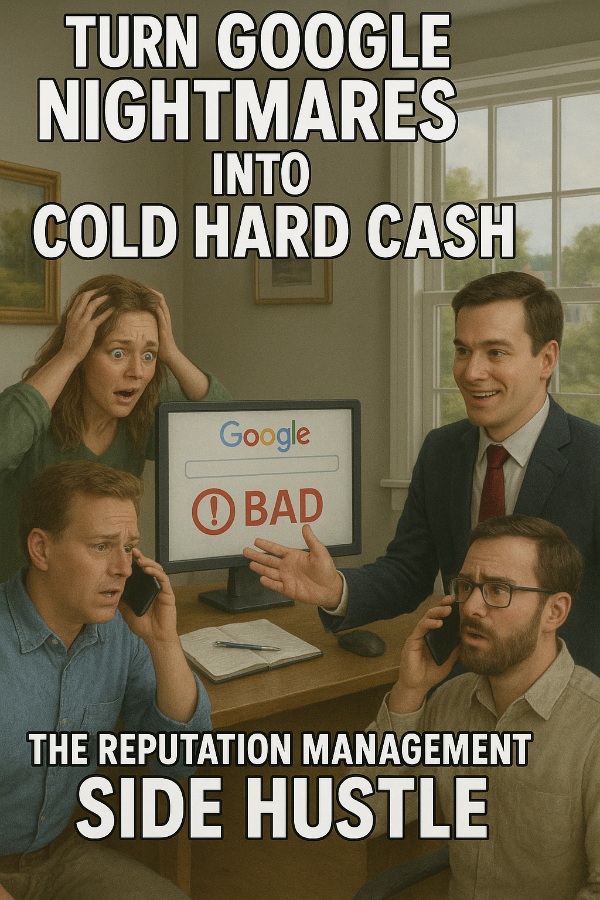
Picture this. Someone Googles your client’s name at 3am.
- The first result? A mugshot from that “misunderstanding” in 2019.
- Second result? A one-star Yelp review calling them a “con artist with the personality of soggy toast.”
- Third? An ex-girlfriend’s revenge blog titled “Why Derek Is Literally The Human Equivalent Of A Parking Ticket.”
Derek is panicking. Derek has beeyons of reasons to panic. Derek also has money.
Congratulations – Derek just became your favorite client.
Welcome to online reputation management, where you get paid actual dollars to make people’s digital disasters vanish like my coffee does before 9am. It’s part detective work, part digital construction, part internet archaeology, and part “please sweet baby pandas make this nightmare disappear.”
See? Right there’s your business model. And it pays like you just discovered the secret menu at a fancy restaurant where everything costs triple.
Tools You Need
You don’t need a bleepload of fancy equipment to start rescuing reputations. Just grab these essentials and you’re golden.
Domain Hosting – Get yourself reliable hosting from Bluehost or similar. You’ll build positive content sites to outrank the nightmare stuff. Runs about $3-10 monthly – cheaper than your coffee addiction. Probably.
Graphics Tools – Canva Pro for making things look professional. Because nothing says “trust me with your reputation” like clip art from 1997, right? Actually no. Don’t do that.
Writing Polish – Grammarly keeps you from looking like you learned English from spam emails. ChatGPT generates content ideas when your brain goes on vacation without telling you.
SEO Tracking Software – SEMrush or Ahrefs shows you where the bad stuff ranks. Then you watch it drop like a stone tied to an anvil tied to another heavier stone. Free trials available for the commitment-phobic.
Project Management – Something simple like Trello or even a notebook to track which crisis you’re fixing today. Because trust me, you’ll have multiple crises. It’s like herding caffeinated cats.
Alrighty then – now that you’re armed with the basics, let’s get into the meat and potatoes of actually doing this thing. Stay with me here.
Your 10 Step Action Plan
Step 1: Find Your First Panicking Client
Start by looking for people who KNOW they have a problem. Real estate agents with bad reviews. Small business owners who got flamed on social media. Executives who partied too hard in college and forgot the internet never forgets.
Check local business listings. Scroll through review sites. Look for patterns – someone with one terrible review alongside a bunch of good ones? That’s a live one.
Here’s the coolio thingee though – approach them gently. Nobody wants to hear “Hey, I noticed your Google results make you look like a supervillain!” Try: “I help professionals improve their online presence. Mind if I show you what potential clients see when they Google you?”
Step 2: Audit Their Digital Disaster
Google their name. Then Google it in an incognito window. Then Google it with their city name added. Write down everything you find on pages 1-3 of results.
Create a simple spreadsheet. Column 1: The URL. Column 2: What it says. Column 3: How bad it is on a scale of “meh” to “career-ending catastrophe.”
This audit becomes your battle plan AND your sales pitch. Nothing motivates someone faster than showing them their own internet horror show in organized form. It’s like holding up a mirror, except the mirror is the entire internet and it’s not being kind.
Step 3: Price Your Panic-Fixing Services
Basic cleanup? Start at $500-1000 for individuals. Small businesses? $1500-3000. Executives with serious problems? $5000-10000+.
Don’t underprice this! You’re not just moving some website rankings around. You’re saving careers. Relationships. Business deals. That’s worth beeyons more than your hourly rate at some soul-crushing day job.
Monthly maintenance packages work great too. Charge $300-500 monthly to keep monitoring their results and squash new problems before they metastasize like digital cancer. See? Recurring revenue while you sleep.
Step 4: Create Positive Content Properties
Register domains like ClientName.com or ClientNameConsulting.com if available. Build simple one-page sites showcasing their professional side. Include bio, accomplishments, testimonials, contact info.
Make it look legit but don’t overthink it. You’re not building the next Facebook. You’re building a digital life raft that Google will rank higher than the burning ship.
WordPress makes this stupid easy. Grab a professional theme for $60 from ThemeForest. Customize it. Launch it. Move on to the next property. You’ll build 5-10 of these per client.
Step 5: Leverage Social Media Profiles
Create or optimize their LinkedIn. Facebook business page. Twitter. Instagram. Medium blog. YouTube channel. Pinterest if it fits their industry. Each platform is another positive result pushing the bad stuff down!
Next, fill these profiles completely. Professional photos. Detailed bios. Links to their website. Regular posts showing their expertise. Google loves social media platforms – they rank like champions on steroids.
The beauty here? Most of these platforms let you control the content completely. You’re essentially creating a wall of positive results that search engines trust. It’s like building a fortress made of LinkedIn profiles and Instagram posts.
Step 6: Write and Distribute Press Releases
Write newsworthy press releases about your client. New business launch. Community involvement. Industry award. Promotion. Anything that sounds vaguely impressive.
Submit these to press release distribution services like PRWeb or PR Newswire. These get picked up by news sites and create authoritative backlinks.
Each press release becomes another search result. Another positive page. Another step between the searcher and that unfortunate mugshot from the “incident.” Eh? Starting to see how this works?
Step 7: Guest Post on Industry Blogs
Reach out to blogs in your client’s industry. Offer to write free guest posts. Everyone loves free content – it’s like offering someone a puppy except the puppy is words and it doesn’t poop on their carpet.
Write these posts as your client. Include their bio and photo. Link back to their main website. Each guest post is another positive search result with their name on it.
Target sites with good domain authority. Check using your SEO tools from earlier. One guest post on a high-authority site beats ten posts on random nobody blogs that Google doesn’t trust.
Step 8: Request Review Removal When Possible
For genuinely false or defamatory reviews, contact the platform directly. Yelp, Google, Facebook – they all have review removal request processes. Document why the review violates their terms.
Be persistent. Follow up weekly. Escalate if needed. Sometimes the nuclear option works – hire a lawyer to send a cease and desist for actual defamation. That’ll get attention faster than yelling “fire” in a crowded theater. (Don’t actually yell fire in crowded theaters, that’s super illegal and also rude.)
Not all reviews can be removed, but the ones that can be? Gold. Pure gold.
Step 9: Monitor and Maintain Rankings
Set up Google Alerts for your client’s name. Check their search results weekly. New negative content? Jump on it immediately with fresh positive content.
Use your SEO tools to track keyword rankings. “Client Name” should show YOUR created properties in top results. If bad stuff starts creeping up, create more positive content.
This is why monthly maintenance packages are brilliant. You’re not just doing the work once – you’re the digital bodyguard standing watch 24/7. Right? That’s valuable.
Step 10: Report Results and Retain Clients
Create monthly reports showing search result improvements. Screenshots of before/after. Graph showing positive content rising and negative content falling. Clients love seeing visual proof their money wasn’t wasted.
Ask for testimonials. Referrals. Case studies you can use for your own marketing. Happy clients who were saved from digital disaster become your best salespeople.
Keep them on monthly maintenance. Most will stay because paranoia is a powerful motivator. Nobody wants to see that mugshot climb back up to result #1. You’re basically selling peace of mind wrapped in spreadsheets.
Now that you’ve got the basic playbook down, let’s talk about where this can take you. Because this business scales like coffee consumption during finals week.
How to Scale in the Future
Start solo, handling 3-5 clients yourself. You’re doing everything – content creation, social media management, client communication, invoicing, probably forgetting to eat lunch.
Then hire a content writer on Upwork to handle blog posts and social media. Pay $20-30 hourly for decent quality. Suddenly you can handle 10-15 clients without losing your mind.
Next level? Build a full agency!
Hire specialists – SEO expert, content manager, client success person, maybe a legal consultant for the really messy cases. Charge premium rates for “comprehensive reputation management solutions.” Move from $3000 per client to $15000 per client. Take on corporate clients dealing with PR nightmares worth millions. Start an enterprise division charging $50000+ for crisis management when the CEO gets caught doing something spectacularly stupid on camera.
That’s when you know you’ve made it – when incompetent executives need you to save them from their own terrible decisions. See how this escalates?
5 Creative Tips
- Start a reputation management blog and rank for “how to remove negative Google results.” Sounds boring, right? Wrong! This is how you attract people frantically Googling at 2am after discovering their internet nightmare. Write helpful guides. Show case studies (with permission or anonymized). These searchers are pre-qualified leads who KNOW they need help. They’ll throw money at you like you’re selling umbrellas during a hurricane. Use this traffic to build your email list and offer free audits that convert to paid clients.
- Create a “reputation protection” monthly subscription service for people who DON’T have problems yet. Think of it like insurance for your digital identity. Charge $99-199 monthly to monitor their online presence and squash problems before they explode. Most people won’t need anything, so it’s almost passive income. But when someone DOES need help, you’re already their trusted provider. Position it as preventive care for their career. Sell it to executives, real estate agents, doctors, lawyers – anyone whose reputation directly affects their income.
- Partner with local PR firms and offer white-label services. PR firms understand reputation management but often don’t have the technical SEO skills. You handle the actual work, they handle the client relationship, everyone gets paid. Charge them 50-60% of retail, they mark it up to clients, nobody has to know you’re the wizard behind the curtain. Build relationships with 3-4 PR firms and suddenly you’ve got steady work without doing any marketing yourself. It’s like being a ghost writer except instead of books, you’re ghost-writing someone’s entire internet presence.
- Offer “reputation insurance” annual packages to small businesses. Restaurants, dental offices, home service companies – they all live and die by online reviews. Charge $2400 annually ($200 monthly) to monitor their reviews, respond professionally to negative feedback, and actively generate positive reviews from happy customers. Bundle in social media posting and you’ve got a service that costs them less than a part-time employee but protects their most valuable asset. Most businesses will say yes because losing customers over bad reviews costs way more than $200 monthly. Math! It works!
- Create done-for-you reputation cleanup productized services on platforms like Upwork or Fiverr. Start at $500 for a basic package: audit report, 5 optimized social profiles, and 2 positive content properties. Stack packages up to $5000 for comprehensive cleanup. The platform brings you clients, handles payments, even does some marketing. You just deliver results. Sure they take 20% commission, but they’re also doing half your work finding clients. Scale this until you’re doing 10+ packages monthly, then use those case studies to launch your own independent agency at higher prices. You’re essentially using the platform as a paid training ground.
Alrighty then! You’ve got your skills, your pricing, your service offerings. Now let’s talk about actually finding these panicking people who need your help.
5 Excellent Ways to Get in Front of Customers
Remember – your network is your net worth. Start by telling everyone you know what you do. Your weird uncle who works in real estate? He knows someone with a reputation problem. Your former college roommate who’s now a lawyer? Lawyers LOVE referring clients to specialists. Talk about your business everywhere.
- Join local business networking groups and chambers of commerce. These groups are packed with small business owners who deal with online reviews constantly. Attend meetings. Give a 2-minute pitch about reputation management. Offer free audits. Real estate agents especially need this – their entire livelihood depends on reviews and Google presence. One satisfied realtor will refer you to their entire office, and suddenly you’ve got 20 potential clients who all know each other. It’s like network marketing except legitimate and you’re not annoying your family at Thanksgiving.
- Create partnerships with web developers and SEO agencies. They get client requests for reputation cleanup but don’t offer it themselves. Be their go-to referral partner. Offer 20% commission for every client they send. Most will happily take passive income for making an introduction. Plus these partnerships give you credibility – being recommended by their trusted web developer carries weight. Build relationships with 5-10 agencies and you’ll have more leads than you can handle.
- Run targeted Facebook or LinkedIn ads to professionals in reputation-sensitive industries. Target real estate agents, lawyers, doctors, financial advisors, executives. Your ad: “What do clients see when they Google your name? Get a free reputation audit.” Boom. People click, you show them their results, many become clients. Budget $300-500 monthly for ads and track your cost per client carefully. If you’re spending $100 to acquire a $3000 client, you’ve found a money printing machine. Spend more money on that machine. Right? Common sense!
- Speak at local business events about online reputation management. Call it “How One Bad Review Can Cost You $50,000 in Lost Business” or “What Your Google Results Really Say About You.” Speak for free. Give massive value. End with “Anyone want a free audit?” Half the room will raise their hands. Book 10 audit calls, close 3-4 as clients, repeat monthly. Public speaking positions you as the expert, builds trust faster than any ad, and generates better quality leads. Plus most local business groups are desperate for speakers and will practically beg you to present. Win-win!
You’re armed. You’re dangerous! You’ve got the skills and you know where to find clients. Now let’s talk about the five specific ways you’re gonna get paid.
Service 1: Basic Reputation Cleanup
This is your bread and butter. Client has 3-5 negative results on page one. You push them down to page three where nobody looks. Ever.
Charge $1500-3000 as a one-time project. Takes you 2-3 weeks of work. Create 10-15 positive properties. Optimize social profiles. Write content. Build backlinks. Deliver a report showing before/after results.
Most small business owners and professionals fall into this category. They don’t have massive crises – just annoying problems that cost them customers. You fix it, they’re thrilled, they refer you to everyone they know because you just saved their business from slow death by bad reviews. This is your volume business – stack 5-10 of these per month and you’re looking at $10,000-20,000 monthly before expenses. Not too shabby for pushing internet buttons, eh?
Service 2: Monthly Reputation Monitoring
After fixing someone’s problem, sell them insurance. Monthly monitoring for $300-500 keeps you watching their results. New negative content? You jump on it immediately.
This is pure recurring revenue. Land 20 monthly clients at $400 each? That’s $8000 monthly before you even take on new projects. Plus most clients stay for years because paranoia never really goes away.
Include a monthly report. Screenshots of their search results. Any new reviews. Social media activity. Make them feel like you’re constantly protecting them – because you are. This service takes you maybe 2 hours monthly per client once systems are in place. That’s $200 per hour for checking Google and sending a PDF. Better margins than most businesses dream about. Set up automated monitoring alerts so you’re not manually checking everything, and suddenly you’re running a semi-passive business that pays you while you sleep. The dream, right?
Service 3: Review Generation Systems
Instead of just fixing bad reviews, help businesses generate good ones. Build them a system that automatically asks happy customers for reviews after every transaction.
Charge $1000-2000 for setup, then $200-300 monthly to manage it. You’re using tools like Podium or Birdeye to automate the process. Customize the messages, monitor responses, handle the occasional angry customer.
Home service companies love this – plumbers, electricians, landscapers. So do restaurants, medical practices, and retail stores. Anyone with lots of transactions needs positive reviews flowing in constantly to bury the inevitable occasional bad one. You’re not just fixing their past – you’re protecting their future!
Position it as offensive strategy vs defensive cleanup. Businesses that understand marketing will throw money at you because they get it – more positive reviews equals more customers equals more money. It’s basic math wrapped in automation.
Service 4: Executive Personal Branding
Help executives and entrepreneurs build impressive personal brands online. LinkedIn optimization. Thought leadership content. Speaking engagements. Media mentions. The whole package.
This is your premium service. Charge $5000-15000 for comprehensive personal branding packages. These clients have money and understand the value of a strong online presence.
Work with them quarterly to maintain and grow their brand. Many will stay on retainer for $2000-5000 monthly because their reputation directly impacts their earning potential. A CEO whose Google results show they’re an industry leader can command higher speaking fees, attract better opportunities, land bigger deals. You’re not just managing reputation – you’re actively building their brand equity.
And this is where the real money lives, and clients at this level understand it. They’re not price shopping – they’re looking for results. Deliver those results and they’ll stay with you forever while referring you to their equally wealthy friends. Boom – you just entered a different income bracket.
Service 5: Crisis Management Packages
When someone’s reputation explodes dramatically – scandal, viral negative post, news coverage of something bad – that’s your moment for premium pricing.
Crisis packages start at $10,000 and go up to $50,000+ depending on severity. You’re working fast, pulling every tool from your arsenal, often coordinating with their legal team and PR people.
These situations are rare but lucrative. One or two crisis clients annually can fund your entire business. Market yourself to law firms, PR agencies, and HR departments as their emergency reputation specialist.
The clients are desperate, the timeline is compressed, and they understand that fixing this is worth whatever it costs. Bill for the value, not the hours. You’re saving careers, preventing lawsuits, protecting businesses from collapse. That’s worth a lot more than your day rate. Plus the case studies from successfully managing crises position you as the person to call when everything hits the fan.
Remember, nothing builds credibility like “I saved a Fortune 500 exec from career death” testimonials. Print that on your business cards. Actually maybe don’t print that on your business cards, but you get the idea.
Your Next Steps
Here’s what you’re doing today. Not tomorrow, not when you feel “ready” – today!
Open a Google Doc and write down three people you know who might need reputation management or know someone who does. Text them right now. “Hey, started a new business helping people improve their online reputation. Know anyone who’s worried about what comes up when people Google them?”
That’s step one. Step two: Go to Upwork or Fiverr. Search for “reputation management” and see what other people are charging. Notice they’re getting hired at those rates. That’s proof this market exists and pays. Step three: Set up a simple one-page website. Your name, what you do, how to contact you. Carrd makes this stupid easy and costs like $19 annually. Done. You’re in business.
Don’t overthink it!
You don’t need a fancy office, a business license, or an LLC to start. You need one client with one problem and the willingness to figure out how to fix it. Everything else is just fancy procrastination dressed up as “preparation.” The best time to start was five years ago.
The second best time is today, right after you finish reading this sentence. Go!
Conclusion
Look – people will always need reputation management. As long as the internet exists, people will say dumb things, get caught doing embarrassing things, and have enemies who weaponize Google against them. That’s job security for you.
This isn’t some trendy business model that’ll disappear when the next shiny thing comes along! This is solving a real, painful, expensive problem for people who have money to fix it. They’re not price shopping – they’re panic buying. Be the calm professional who can fix their nightmare, and they’ll pay whatever you ask. Plus you get to work from anywhere with a laptop. No inventory. No employees initially. Low overhead. High margins. It’s like someone designed the perfect business model and then forgot to tell anyone about it!
But now you know. Go take advantage of it before your neighbor reads this same post and becomes your competitor. Ready? Of course you are.
Now get moving and make greatness happen today.
Enjoy!