
Subscription scams use fake sign-up, free-trial, renewal, or payment notices to make you believe you have been charged for a service you never requested. In the Fubo TV scam, recipients receive a convincing welcome email warning that they must cancel before a trial ends to avoid being billed. The cancellation link leads to a fake website designed to steal personal, account, or payment information. If you receive an unexpected subscription email, don’t click its links or call any number provided. Check your accounts and bank statements independently, then contact the company through its official website.
Key takeaways
- An unexpected welcome, renewal, or payment email may be a subscription phishing scam rather than proof that you opened an account.
- Scammers create urgency by warning that a free trial will convert into a paid subscription unless you cancel immediately.
- Never use the cancellation link or contact details in a suspicious message. Visit the company’s official website or app independently.
- Check your payment statements for unauthorized charges and use Bitdefender Scamio to analyze suspicious subscription emails, screenshots, or links before responding.
If you ever receive a “Welcome” email for a service you never signed up for, don’t panic, but don’t ignore it either. It’s most likely a subscription scam, and treating it as such from the very beginning can save you a lot of trouble.
While subscription-based online services offer convenience and access to a wide range of content and services, they also come with the risk of falling victim to subscription sign-up or renewal scams. Knowing these scams can help avoid unwanted charges, data loss, and potential identity theft.
Fubo TV email scam example
Here’s an example of a phishing “Welcome” email received by someone who never signed up for the service. Fubo TV is a streaming service for live sports, news, and entertainment, and the recipient wasn’t even interested in sports, so they knew something was amiss from the moment they saw the email in their inbox.
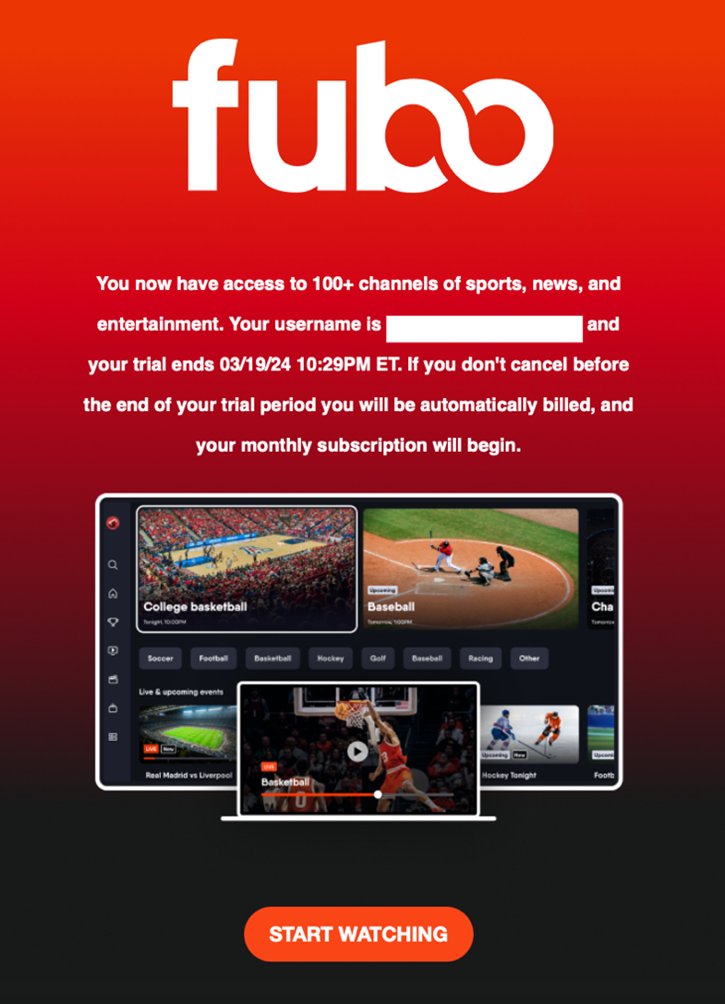
The email’s text is quite convincing, especially the part where it states that the recipient must cancel before the end of the trial period to avoid being automatically charged. For a service you never signed up for, that’s the first thing you’d want to do, right? Not quite.
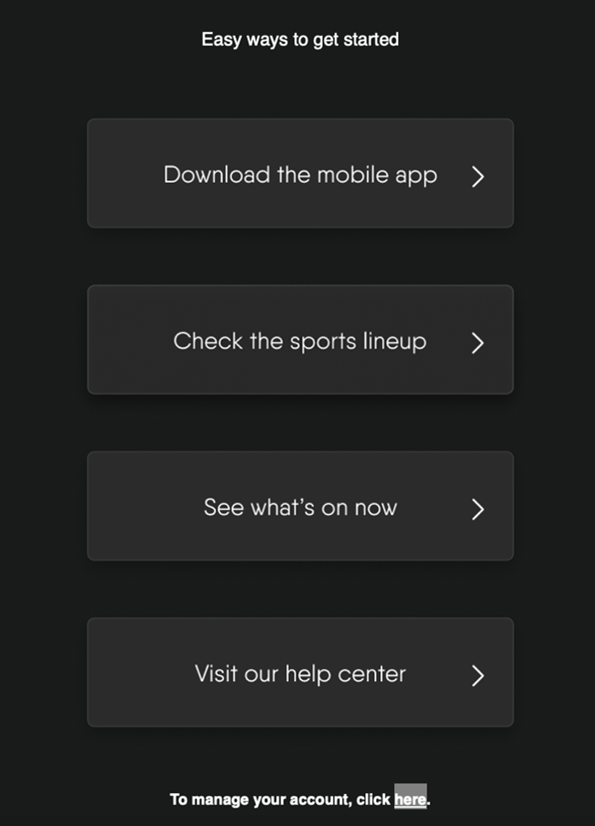
Clicking on the provided link will lead to another fake page, where any information entered will go directly to the scammer. This is a common tactic used in phishing scams to steal sensitive personal and financial information.
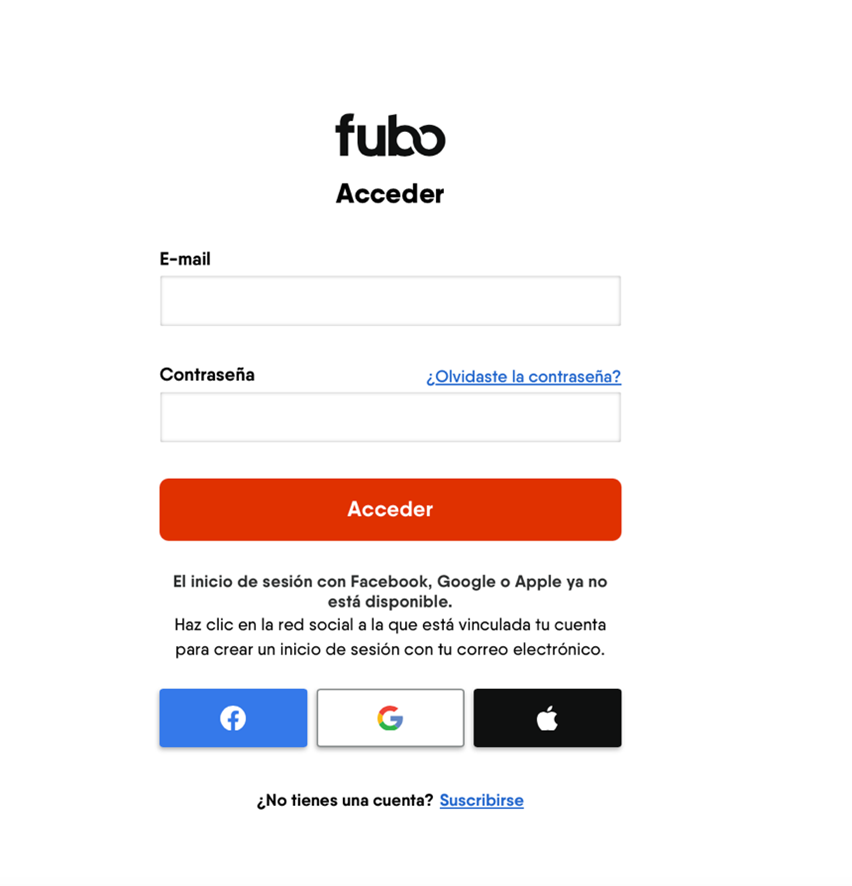
What to Do Instead
1. Double-check the email with Scamio.
You can take a screenshot of the email or copy and paste the text. Scamio analyzes it and tells you whether it’s a scam or not.
You can also check the email address the email was sent from. In this case, it was transactional@fubo.fubo.tv.
Scamio is available for free on any device or operating system via your web browser or Facebook Messenger.
2. Contact the company directly through verified channels and explain the situation. Let them know about the scam and ensure that you don’t have an account with them.
3. Review your bank and credit card statements for unauthorized charges or subscriptions.
In the worst-case scenario, a fraudster might sign you up for a service without your knowledge or consent, having obtained not only your email address but also your payment card details. In this case, you may end up being charged for a service you never wanted or used.
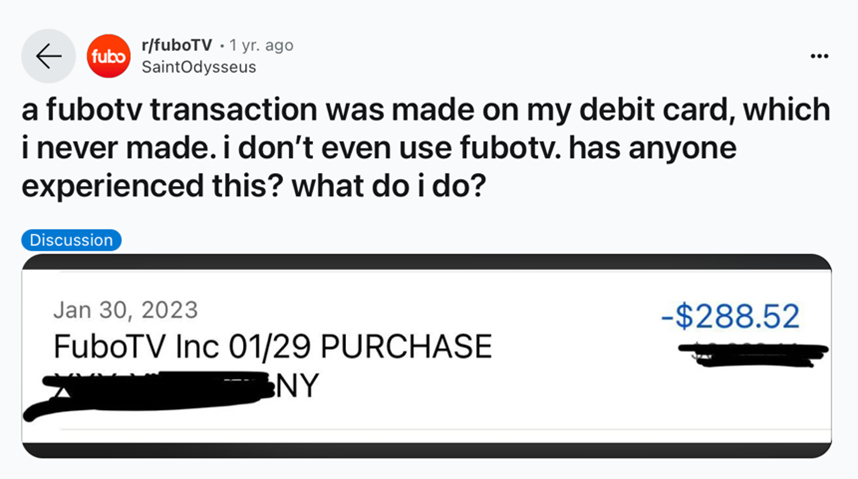
These scams often attempt to obtain personal and financial information from their victims, putting them at risk of identity theft and financial fraud.
If you suspect that you have fallen victim to a scam, report it to your bank or credit card company, and to the relevant authorities such as the Federal Trade Commission (FTC) or the Internet Crime Complaint Center (IC3).
Frequently asked questions (FAQs)
What is a subscription trap?
A subscription trap is a deceptive tactic that tricks people into signing up for recurring payments without realizing it. It may involve misleading free trials, hidden terms, fake subscription confirmations, or difficult cancellation processes. Cybercriminals also use fake subscription emails to convince victims they’ve been charged for a service they never signed up for, hoping they’ll click a phishing link or provide payment details.
Why am I being charged for a subscription I don’t have?
If you see a charge for a subscription you don’t recognize, it could be an unauthorized transaction, a forgotten free trial that renewed automatically, or a billing description that’s different from the company’s name. It may also be a scam email claiming you’ve been charged when no payment was actually made. Before taking action, check your bank or credit card statement, review your account subscriptions, and contact the company through its official website—not through links or phone numbers in the email.
How to stop spam subscription payments?
First, confirm whether the charge is real by checking your bank or credit card statement. If it is, cancel the subscription through the provider’s official website or app. If you don’t recognize the charge, contact your bank or card issuer immediately to dispute it and request a replacement card if necessary. If the “subscription” only appears in an email and not on your statement, it’s likely a phishing attempt. Delete the message and use Bitdefender Scamio to check whether it’s a scam before clicking anything.