Introduction
Students know they should study.
They know they should review notes, complete assignments, prepare for exams, read ahead, organize their materials, and probably stop saying, “I’ll do it later.”
And then later arrives.
Unfortunately, later apparently has other plans.
That’s where Student Habit Trackers can become surprisingly valuable.
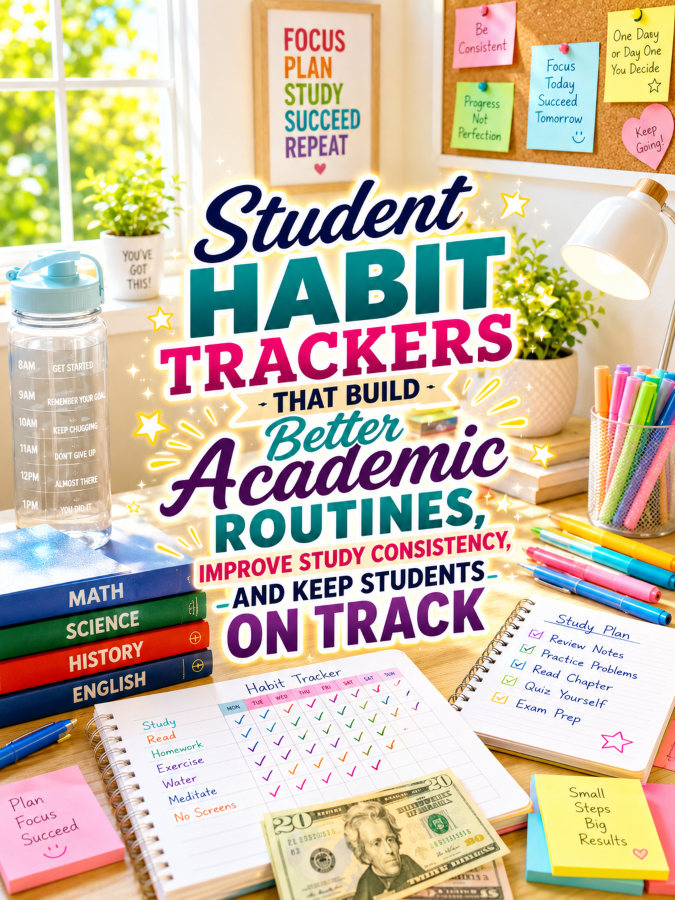
A well-designed habit tracker gives students a simple visual system for recording study sessions, homework routines, reading, review habits, organization, goal progress, and other academic behaviors they want to develop.
That’s Not a Good Thing when students attempt to remember every assignment and routine entirely from memory. But it becomes a very Good Thing when a printable makes progress visible and turns vague intentions into repeatable actions.
The opportunity isn’t creating another generic habit chart. It’s creating a student-friendly routine-building system that helps learners understand what they are trying to improve, track their consistency, and recognize progress over time.
One thoughtfully designed Student Habit Tracker can become the foundation of a much larger printable business covering study planners, homework trackers, exam-preparation workbooks, reading logs, academic goal planners, assignment organizers, and student productivity systems.
Quick Answer
Student Habit Trackers are downloadable planning tools that help learners monitor recurring academic routines such as studying, reading, reviewing, completing assignments, organizing materials, and preparing for assessments.
A starter tracker can sell for around $7. Expand it into study planners, academic goal workbooks, homework systems, exam-preparation planners, reading trackers, and complete student productivity bundles priced at $27, $47, or even $77.
Your customers aren’t simply buying pages to color in boxes. They’re investing in a visual system that helps students build consistency and become more aware of their academic routines.
Why This Niche Works
Academic success involves more than completing individual assignments. Students also need recurring routines.
They may need to establish habits around reviewing class material, reading regularly, preparing for upcoming deadlines, organizing their workspace, checking assignment portals, studying for tests, or planning their week.
A habit tracker gives those behaviors somewhere to live.
That’s always a Good Thing because students can see patterns instead of relying on the wonderfully unreliable memory system known as “I think I studied yesterday.”
There is also a natural motivational component. Students often enjoy seeing streaks, completed weeks, progress charts, goal milestones, and visual evidence that they’re following through.
That makes habit trackers especially appealing when they’re designed to encourage progress without turning every missed day into a dramatic academic catastrophe.
Once customers discover your Student Habit Trackers, they’ll naturally become interested in study planners, homework trackers, reading logs, exam-preparation pages, academic goal sheets, assignment organizers, and countless related thingees.
One successful tracker can easily grow into an entire student-productivity printable brand.
Prior to pouncing upon this opportunity, you should first know all about the:
Tools You’ll Need
You don’t need to be an educational psychologist to create useful student organization resources. You need a practical design platform, thoughtful research, and simple tools for marketing and selling your finished printables.
- Canva for designing habit trackers, study planners, academic goal sheets, homework organizers, and student productivity printables.
- Google Docs for organizing workbook content, research notes, prompts, and product ideas.
- AWeber for building an email list with study tips, productivity resources, printable freebies, and product announcements.
- GetResponse for newsletters, promotions, automated campaigns, and customer follow-up.
- Gumroad for selling downloadable habit trackers, study systems, academic planners, and student organization bundles.
- Teachable if you’d eventually like to teach study organization, student productivity, goal setting, or academic planning systems.
- Amazon Student Habit Tracker Research for discovering which student planners, habit trackers, study logs, and productivity features learners are already interested in.
Don’t spend three weeks creating a complicated productivity dashboard with enough tiny icons to make a student feel like they’re managing a space mission.
Students need clarity.
Make the tracker attractive. Make it motivating. But most importantly, make it easy to use consistently.
Next, move to:
Your 5-Step Action Plan
Follow these five steps unless you’d rather watch another printable creator become the student-productivity expert everyone recommends. The smartest entrepreneurs create products around the recurring academic routines students actually struggle to maintain.
Step 1. Research Real Student Routine Challenges
Spend about 90 minutes exploring student communities, parent groups, education forums, Reddit discussions, Pinterest boards, study communities, education blogs, and reviews of existing student planners.
Pay attention to conversations about procrastination, studying consistently, homework routines, reading, exam preparation, organization, time management, distractions, and keeping track of academic goals.
Create a master list containing at least 40 to 50 printable pages. Include daily habit trackers, weekly routine pages, study logs, reading trackers, homework records, academic goals, exam-preparation pages, and monthly progress reviews.
Your research becomes an X-ray machine that reveals where students need practical routine-building support.
Step 2. Build Your Core Student Habit Tracker
Create a collection containing 40 to 60 pages that helps students track recurring academic behaviors.
Include habits such as study time, reading, reviewing notes, completing assignments, organizing materials, preparing for the next school day, and other student-selected routines.
Add a simple status system such as Planned → Started → Consistent → Improving → Maintained.
Let students choose their own habits rather than dictating that every learner should follow exactly the same routine.
Keep every page simple, practical, and easy to use because simplicity is always a Good Thing.
Step 3. Create Specialty Editions
Build separate versions for elementary students, middle-school students, high-school students, college students, homeschool students, students preparing for exams, and students who simply need help developing consistent study routines.
You can also create specialty editions for reading habits, homework completion, exam preparation, study consistency, organization, morning routines, evening routines, and academic goal setting.
Specialized editions immediately feel more valuable because students and families can choose a system that matches their situation.
Step 4. Add High-Value Bonuses
This is where your Student Habit Tracker begins standing out from the thundering herd.
Include weekly routine planners, study-session logs, academic goal pages, assignment checklists, reading trackers, exam-preparation sheets, monthly reviews, and progress-reflection pages.
Add a “My Academic Habits” worksheet where students select a small number of routines they want to practice consistently.
Create a “Weekly Habit Review” page where students can identify what worked, what got in the way, what they completed, and what they want to adjust next week.
That reflection component is important because tracking alone doesn’t automatically create better habits.
You could also include a “Small Wins” page where students record accomplishments such as completing a difficult assignment, studying ahead, finishing a book, organizing their notes, or following their routine for an entire week.
Because apparently students occasionally need proof that they’re making progress when their brains are busy announcing everything they haven’t done yet.
Those bonus thingees require relatively little additional design work yet can dramatically increase the perceived value of your product.
Step 5. Build Your Product Ladder
Launch your starter Student Habit Tracker for $7 and let it become the foundation of a growing student-productivity printable collection.
Expand into study planners around $17, academic goal workbooks around $27, complete student productivity binders around $47, and comprehensive academic organization libraries approaching $77.
Every additional product naturally complements the others while encouraging repeat purchases.
Before long, your business won’t simply be selling habit charts. You’ll be helping students organize study routines, track academic goals, manage assignments, prepare for exams, develop reading habits, and reflect on their progress.
Once you’ve figured out all of the above, the next step is implementing:
3 Ways to Stand Out From The Thundering Herd!
The student-planner market already has habit charts, study logs, assignment trackers, and productivity calendars. The Good Thing is that many of them focus heavily on checking boxes without helping students understand the routines behind those boxes. Your opportunity is to create a system that makes academic habits feel achievable, visible, and worth continuing.
Way 1. Build a “Tiny Habits” Academic System
One of the biggest mistakes students make is trying to change everything at once.
They decide they will study for three hours every night, read fifty pages every evening, organize every notebook, finish assignments early, wake up at dawn, and become a completely different human being by Tuesday.
That plan may last approximately fourteen minutes.
Instead, design your tracker around small, repeatable behaviors.
Give students space to select three to five habits they genuinely want to practice.
Those habits might include reviewing notes for ten minutes, checking assignments, reading before bed, preparing materials for tomorrow, or completing a short study session.
This makes the product feel achievable rather than intimidating.
That’s always a Good Thing because consistency usually becomes easier when the starting point doesn’t feel enormous.
Way 2. Track Progress Without Creating Guilt
A missed day shouldn’t turn the tracker into a giant monument to failure.
Give students opportunities to restart, reset, and reflect.
Instead of focusing entirely on streaks, include weekly completion percentages, personal bests, improvement notes, and “What I Learned” sections.
You can also create a “Reset and Restart” page for students who fall out of their routine.
The message should be simple: missing a day is information, not the end of the world.
That approach can make your product feel much more supportive than a tracker that practically screams at students when they miss one checkbox.
Way 3. Connect Habits to Academic Goals
This is where your product can become much more powerful.
Give students space to identify an academic goal and then connect smaller habits to that goal.
For example, a student might choose “Improve my math grade” as a goal and then identify habits such as reviewing class notes, practicing problems, asking questions, and preparing before quizzes.
The tracker isn’t promising that those habits will guarantee a particular grade.
Instead, it helps students see how recurring actions can support a larger goal.
That connection gives every checkbox a reason.
It’s one of the easiest ways to rise above the thundering herd.
Next, here’s the thing. You’re probably NOT the only person offering this service. So you now require:
3 Nifty Ways to Find Customers
Your ideal customers are already searching for study planners, student productivity tools, homework trackers, academic organization, habit trackers, and exam-preparation resources. The challenge isn’t finding students or parents. It’s showing them that your tracker is designed to make routines manageable rather than adding another assignment.
Way 1. Student and Parent Communities
Student Facebook groups, parent communities, homeschool groups, study communities, academic-support groups, and Reddit discussions are excellent places to introduce useful resources.
Offer a free weekly study tracker, academic habit worksheet, reset page, or goal-planning sheet before recommending your complete system.
Helping first builds trust much faster than immediately promoting a paid product.
These communities are also fantastic sources of product research. Pay attention when students complain about procrastination, inconsistent studying, forgotten assignments, distractions, poor organization, or starting strong and then abandoning a routine.
Every recurring complaint is potentially another printable.
Way 2. Pinterest
Pinterest is a natural fit for student productivity because learners and parents search for study schedules, habit trackers, homework planners, exam-preparation worksheets, reading logs, and academic organization.
Create attractive pins featuring weekly habit trackers, academic dashboards, study logs, goal worksheets, reset pages, and student productivity bundles.
Because Pinterest content can continue appearing in searches long after publication, a useful collection of student-planning pins can keep bringing potential customers to your shop. Trust me, you’ll thank me later.
Way 3. Education Creators
Study YouTubers, tutoring businesses, homeschool educators, academic coaches, education bloggers, student-productivity creators, and learning communities already have audiences interested in better routines.
Reach out with affiliate partnerships, printable bonuses, freebie collaborations, student-planning bundles, or study-challenge resources.
A study creator could use your tracker during a 30-day study challenge, while a tutor could provide the weekly habit pages as a supplementary organization resource.
Those collaborations introduce your printable to people who already trust the person teaching them.
Speaking of long-term growth, now let’s move to:
3 Takeaways You Won’t Find Elsewhere!
Many printable creators think they’re selling habit trackers. The most successful entrepreneurs understand they’re helping students create systems around the behaviors that support their academic work.
That difference gives your Student Habit Tracker much greater practical value.
Takeaway 1. You’re Selling Consistency
Your customers aren’t purchasing pages simply because they like checking boxes.
They’re investing in a visual reminder of the routines they want to practice.
When students can see several completed days together, they gain visible evidence that they are capable of following through.
That’s a Good Thing because progress becomes easier to recognize when it is visible.
Takeaway 2. Reflection Makes Tracking More Useful
A tracker shouldn’t simply ask, “Did you do it?”
It should occasionally ask, “What helped?” and “What got in the way?”
Add short reflection prompts that encourage students to notice patterns in their routines.
Maybe studying immediately after school worked better than studying late at night. Maybe ten-minute review sessions were easier to maintain than long sessions. Maybe preparing materials the night before reduced morning chaos.
Those observations can help students adjust their routines instead of blindly repeating a system that isn’t working for them.
Takeaway 3. One Habit Tracker Can Become an Entire Student-Planning Brand
Your Student Habit Tracker can naturally expand into study planners, homework trackers, reading logs, exam-preparation workbooks, academic goal planners, assignment organizers, semester planners, project trackers, and student productivity systems.
Those connected thingees encourage repeat purchases because each resource supports another part of the student’s academic life.
Before long, students and parents won’t simply recognize your habit tracker. They’ll know your shop as a dependable source of practical resources for creating organized academic routines.
Now that you know the above, it’s time for:
3 Common Mistakes to Avoid
Many creators track too many habits. That’s Not a Good Thing. A page with 25 daily habits can make a student feel overwhelmed before breakfast. Encourage users to begin with a small number of meaningful routines.
Some sellers make streaks the entire product. Streaks can be motivating for some people, but missing one day shouldn’t make the entire system feel useless. Include resets, weekly reviews, progress summaries, and reflection pages so students can continue after interruptions.
Others stop after creating one tracker. That’s like opening a study-supply store with one pencil and calling it a complete academic system. Continue expanding into study planners, homework organizers, exam trackers, reading logs, academic goals, and project-management resources.
What else should you know? How about:
Scaling Your Results
Expand into a complete student-productivity ecosystem. Create study planners, homework trackers, reading logs, exam-preparation workbooks, academic goal planners, assignment organizers, semester calendars, project trackers, and student productivity binders that naturally complement your original habit tracker.
Every additional printable strengthens your catalog while encouraging repeat purchases from students and families who want to organize different aspects of academic life.
You can also create specialized collections for elementary students, middle-school students, high-school students, college students, homeschool students, exam-preparation students, and learners working on specific study routines.
Create a Student Routine Club. Release fresh printable resources every month featuring habit challenges, study planners, goal worksheets, reflection pages, reading trackers, and academic organization tools.
Members receive fresh reasons to maintain their routines while your business benefits from dependable recurring revenue.
Build an email list students and parents genuinely appreciate. Share study-organization tips, habit-building prompts, printable challenges, academic planning ideas, productivity worksheets, and free mini-planners throughout the year.
A collection containing 40 student-productivity-focused printable products could realistically generate an additional $700 to $2,200 each month through memberships, bundles, repeat customers, and affiliate partnerships. Trust me, you’ll thank me later.
Let’s now wrap up everything via the:
Your Next Steps
So.
Start by listing the recurring academic behaviors students may want to improve.
Think about studying, reviewing notes, reading, completing assignments, checking deadlines, organizing materials, preparing for assessments, planning the next day, and making time for rest.
Those recurring behaviors will naturally become the foundation of your printable collection.
Design your first Student Habit Tracker in Canva using clean layouts, generous writing space, simple habit grids, weekly reviews, academic-goal pages, and consistent branding that can easily expand into future student-productivity products.
Focus on making the tracker genuinely useful rather than covering every page with motivational quotes and enough lightning bolts to power the school building.
Functional student-planning tools almost always become customer favorites.
Include flexible habit fields so students can choose routines appropriate to their own academic situation rather than presenting your product as a guaranteed method for improving grades.
Then introduce your tracker to five student communities, parent groups, Pinterest boards, education creators, tutoring businesses, or homeschool communities.
Remember, 5 good messages beats 50 generic ones every single time.
One thoughtfully designed Student Habit Tracker can quietly become the beginning of an entire student-productivity printable brand.
Next, let’s finish with:
Final Thoughts
Better academic routines don’t usually appear because somebody bought a prettier planner. They develop when students find small actions they can repeat, recognize what helps them stay consistent, and adjust when something isn’t working.
A well-designed Student Habit Tracker can give them a simple visual structure for doing exactly that.
It can turn an abstract goal such as “I need to study more” into smaller actions that students can actually see and manage.
That’s an incredible transformation from a basic checkbox chart.
So, begin by creating one tracker that solves one meaningful student-routine challenge exceptionally well. Continue listening to student and parent feedback while expanding your collection into matching study, homework, reading, exam-preparation, goal-setting, and academic-organization resources that naturally work together.
You don’t need bazillions of unrelated printables to build meaningful income. You simply need one thoughtfully designed Student Habit Tracker that helps learners stop hoping their routines will magically improve and start building small systems they can actually practice.
That’s it. That’s your beginning!
If you were creating your first Student Habit Tracker tomorrow morning, would you design it for elementary students, middle-school students, high-school students, college students, homeschool students, exam-preparation students, or the wonderfully ambitious learner who has already planned the academic comeback approximately seven times?
Enjoy!