
The government aims to invest rising corporate tax revenue in youth, AI, energy and other long-term growth sectors.
Korea will launch the “Future Fund” to promote long-term economic growth, using what the government calls “windfall revenue” from increased tax collection driven by the recent AI boom, the Ministry of Planning and Budget said Friday.
The Budget Ministry unveiled the plan in partnership with relevant government agencies, saying the AI industry has sparked a major transition across various areas, from the economy to social systems, beyond just a technological revolution.
“Amid the global chip boom, domestic tax revenue is expected to rise sharply, driven by an increase in corporate tax revenue,” the Budget Ministry said.
“We need to use the fiscal capacity secured under the current circumstances as valuable ammunition to take the lead in the global competition for technological supremacy,” it added.
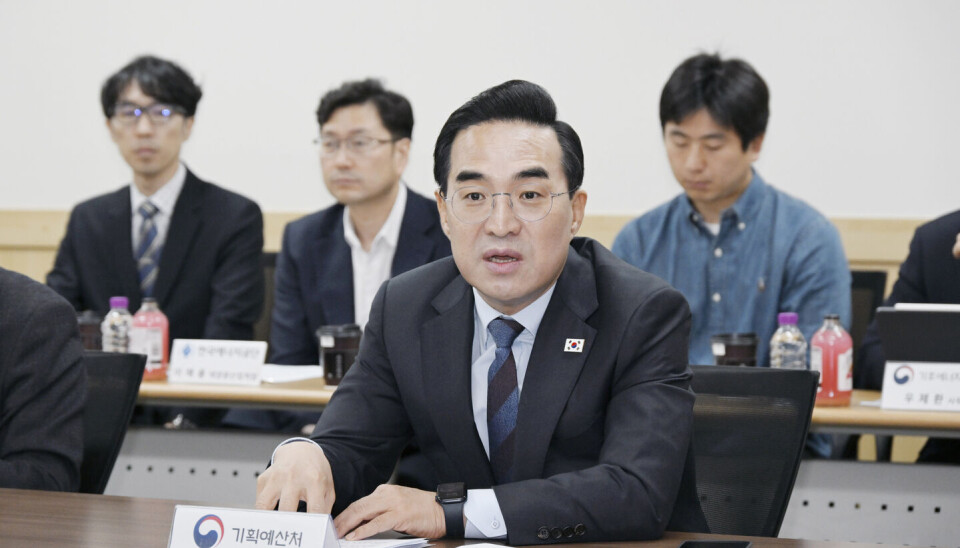
“Rather than spending these precious resources on one-off expenditures or using them to maintain fiscal soundness in a passive manner, we need to use them proactively to lay the groundwork for future growth,” Budget Minister Park Hong-geun also said during a press conference.
“We need to change the way we manage public finances in line with the characteristics of our economy and the evolving fiscal environment,” Park added.
“The government will set aside the sharply increasing tax revenue to establish the Future Fund and use it as a strategic investment platform to raise the country’s potential growth rate and mitigate the effects of tax revenue volatility,” he said.
The Budget Ministry introduced the concept of “windfall revenue,” referring to tax revenue exceeding its long-term trend due to structural economic changes or significant economic fluctuations, such as an industrial supercycle.
The government said the concept differs from surplus tax revenue, which refers to tax receipts exceeding official forecasts due to unexpected short-term economic fluctuations or forecasting errors.
The windfall revenue will be used to finance the Future Fund, while surplus revenue will be used to fund supplementary budgets, repay government debt or make contributions to the fund.
The Budget Ministry said the fund will serve as a strategic investment platform to boost the country’s economic growth potential.
“Investment will focus on key areas needed to raise the country’s potential growth rate, including youth, growth engines, regional economies and education,” the Budget Ministry said.
In detail, the fund will support young people at different stages of their lives, covering areas ranging from employment and housing to marriage and childbirth.
It will also support the government’s three megaproject initiative, centered on fostering the AI industry and related areas, such as physical AI, as well as the so-called seven future-oriented sectors.
The seven sectors are small modular reactors (SMRs), nuclear fusion, renewable energy, quantum technology, aerospace, advanced biology, and supply chains for advanced materials and components.
The fund will also serve as a platform for fiscal stability, contributing to greater stability and efficiency in the country’s budget management, the ministry said.
While the government has not yet unveiled the size of the Future Fund, pundits estimate it would be between 60 trillion won ($43.4 billion) and 70 trillion won, and could rise to as much as 100 trillion won depending on the industrial cycle.
“We are currently in the final stages of budget planning, which will be submitted to the National Assembly soon after completing the necessary procedures,” Park said, without elaborating on details, while noting the amount will be “significant.”
Korea, meanwhile, will also overhaul its education budget allocation mechanism to better reflect the country’s dwindling student population while bolstering higher education.

The proposal by the Budget Ministry will significantly change the current system, under which the government automatically allocates 20.79 percent of internal tax revenue, along with a portion of education tax revenue, to grants for local education offices.
According to the government, the number of people aged 3 to 17 fell sharply from 8.8 million in 2010 to 5.91 million in 2025, highlighting the need to readjust the education funding mechanism tied to internal tax revenue, which has generally increased despite the demographic decline.
“The linkage to internal tax revenue makes it difficult for the government to manage its finances flexibly at the national level, while sharp fluctuations in internal taxes, including corporate tax, have increased volatility in education grants,” it said.
Accordingly, the Budget Ministry proposed a new calculation formula reflecting the previous year’s grant amount, the three-year average nominal economic growth rate and demographic changes.
The government will ensure the total amount of grants does not fall below the previous year’s level, it added.
The proposal, meanwhile, will be reviewed by the Cabinet on Sept. 1 and submitted to the National Assembly on Sept. 3.
Yonhap