Introduction
Every sewing project begins with excitement.
You find the perfect pattern, choose gorgeous fabric, gather your notions, and confidently tell yourself, “This project should only take a couple of hours.”
Then reality arrives.
The matching thread disappears. You can’t remember which needle worked best. Halfway through the project you realize you forgot to buy interfacing, and somehow your measuring tape has wandered off to join the missing socks.
The sewing isn’t usually the difficult part.
Keeping every project organized is.
Whether someone quilts, makes clothing, sews plush toys, creates home décor, or runs a handmade business, staying organized saves time, money, and a surprising amount of frustration.
That’s exactly why Sewing Project Planner Printables continue selling year after year. They help makers organize every stitch while giving printable creators an evergreen niche with exceptional repeat-purchase potential.
One thoughtfully designed planner can quickly become the first printable every sewing enthusiast reaches for before cutting into their favorite fabric.
Quick Answer
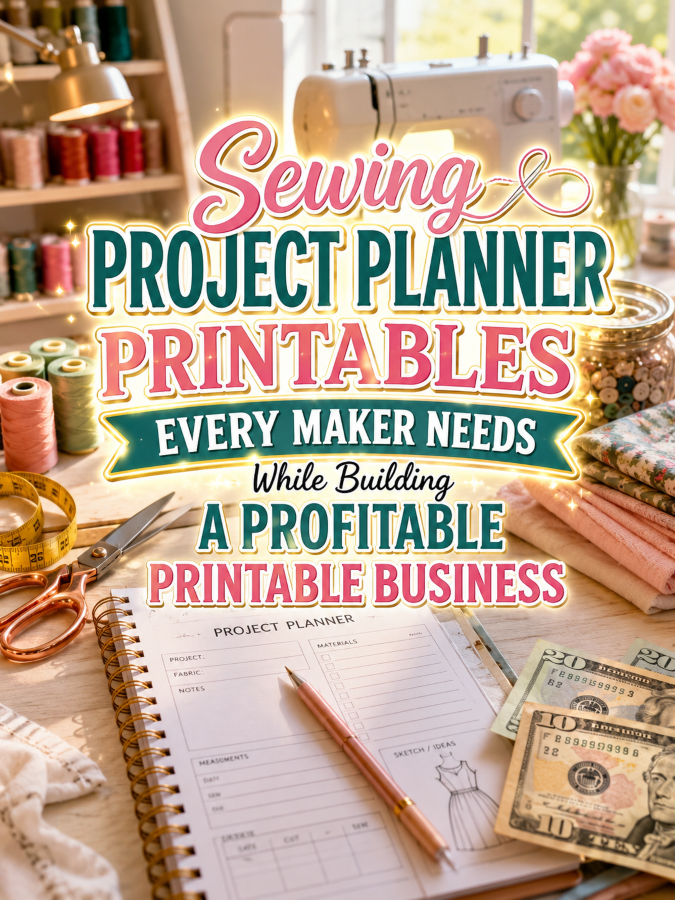
Sewing Project Planner Printables are downloadable planning systems that include project worksheets, fabric inventories, pattern trackers, measurement pages, supply checklists, budgeting sheets, machine maintenance logs, and completed project journals.
A starter planner can comfortably sell for around $7. Expand it into quilting planners, garment planning systems, handmade business organizers, embroidery journals, and premium sewing studio libraries, and you’ve built a natural product ladder reaching $27, $47, and even $77.
Your customers aren’t simply buying printable pages. They’re buying organization, confidence, fewer forgotten supplies, and more enjoyable sewing sessions.
Why This Niche Works
Sewing is a hobby that naturally creates repeat customers.
Very few makers stop after completing one project. One finished tote bag often leads to a quilt. One quilt inspires matching pillows. Before long, the fabric stash has quietly become its own ZIP code.
Sewing enthusiasts constantly begin new projects throughout the year, creating ongoing demand for planning systems that help keep everything organized.
Once customers discover your planner, they’ll often return for quilting planners, embroidery journals, pattern organizers, fabric inventory systems, craft room organizers, and countless related thingees.
Unlike fashion trends that constantly change, organization is always in style.
Prior to pouncing upon this opportunity, you should first know all about the:
Tools You’ll Need
You don’t need an industrial sewing machine or an entire wall filled with fabric. These dependable tools are more than enough.
- Canva for designing planner pages, inventory sheets, project trackers, and printable layouts.
- Google Docs for organizing sewing tips, instructions, and project notes.
- AWeber for building your email list with sewing tips and printable updates.
- GetResponse for newsletters, launches, and customer follow-up.
- Gumroad for selling downloadable sewing planners and printable bundles.
- Teachable if you’d eventually like to teach sewing organization, quilting, or project planning.
- Amazon Sewing Planner Research for discovering the planner features makers appreciate most.
Don’t spend three weeks deciding whether your fabric tracker should have floral borders or polka dots while your future customers are already searching for ways to organize their growing sewing projects.
Next, move to:
Your 5-Step Action Plan
Follow these five steps unless you’d rather spend 25 hours color-coding thread spools while somebody else’s printable quietly becomes the sewing planner everyone recommends at quilting club.
Step 1. Research Real Sewing Challenges
Spend about 95 minutes exploring quilting groups, sewing communities, handmade business forums, YouTube sewing channels, and customer reviews.
Create a master list containing 30 to 40 planner pages. Include project planners, fabric inventories, pattern libraries, supply checklists, measurement trackers, sewing machine maintenance logs, budget worksheets, and project completion journals.
Your research becomes an X-ray machine that reveals exactly where makers struggle before, during, and after every sewing project.
Step 2. Build Your Core Planner
Create a collection containing 40 to 55 printable pages that guide makers from their first fabric purchase to the finished project.
Include planning worksheets, cutting plans, shopping lists, progress trackers, project notes, and reflection pages. Keep everything simple because simplicity is always a Good Thing.
Step 3. Create Specialty Editions
Build separate planners for quilters, garment makers, embroidery enthusiasts, cosplay creators, beginners, handmade business owners, children’s clothing makers, and home décor projects.
Specific planners always feel more valuable than one giant workbook attempting to organize every sewing style simultaneously.
Your customers will appreciate having choices.
Step 4. Add High-Value Bonuses
This is where your planner begins standing out from the thundering herd.
Include printable measurement charts, fabric conversion tables, needle guides, thread references, quilt block trackers, project labels, sewing room inventories, and seasonal sewing challenge pages.
Those bonus thingees require very little additional effort yet dramatically increase the perceived value of your planner.
Makers love complete systems that simplify every stage of the creative process.
Step 5. Build Your Product Ladder
Launch your starter planner for $7. Expand into specialty sewing collections around $27, then introduce premium sewing studio libraries approaching $77.
Before long, your business won’t simply be selling printable planners. You’ll be helping makers complete more beautiful projects while enjoying the creative process even more.
Once you’ve figured out all of the above, the next step is implementing:
3 Ways to Stand Out From The Thundering Herd!
Let’s be honest. There are already plenty of sewing planners available online.
The Good Thing is that many of them are little more than lined notebook pages with a spool of thread on the cover.
Your planner can become the sewing assistant makers wish came with every pattern.
Way 1. Organize the Entire Creative Process
Don’t stop with project planning.
Create pages that help makers organize every stage of sewing, including inspiration, fabric shopping, budgeting, measurements, cutting layouts, sewing notes, machine settings, finishing details, and completed project photos.
Those planning thingees turn your printable into a true sewing companion instead of another forgotten worksheet.
Organization saves both time and expensive fabric.
Way 2. Help Makers Build Their Personal Sewing Library
Most sewing enthusiasts own far more patterns than they remember.
Include printable pattern catalogs, fabric stash inventories, thread organizers, notions trackers, project wish lists, and completed project galleries.
Helping customers quickly locate what they already own creates tremendous everyday value.
Way 3. Support Beginners and Experts
Beginners appreciate checklists and simple instructions.
Experienced makers value project histories, fitting notes, machine settings, alteration records, and fabric performance logs.
Offer sections that serve both audiences so your planner continues growing with your customers.
Next, here’s the thing. You’re probably NOT the only person offering this service. So you now require:
3 Nifty Ways to Find Customers
Your ideal buyers already gather wherever people share their latest sewing creations.
Way 1. Sewing and Quilting Facebook Groups
Thousands of makers proudly share finished projects, ask questions, recommend supplies, and celebrate creative wins every single day.
Offer free project planning sheets, fabric inventory pages, or sewing machine maintenance logs before introducing your complete planner. Helpful creators become trusted creators remarkably quickly.
Way 2. Pinterest
Sewing inspiration performs exceptionally well on Pinterest because makers constantly search for project ideas before starting their next creation.
Create beautiful pins featuring organized sewing rooms, printable planners, colorful fabric collections, quilting projects, and completed journals that naturally encourage clicks.
Way 3. Sewing Bloggers and YouTube Creators
Many sewing educators constantly recommend useful tools that simplify project management.
Affiliate partnerships and collaborations can introduce your planner to highly engaged audiences already looking for better ways to organize their sewing hobby.
Speaking of completed projects, now let’s move to:
3 Takeaways You Won’t Find Elsewhere!
These aren’t ordinary productivity tips. They’re practical lessons that quietly transform one sewing planner into a thriving printable business.
Takeaway 1. You’re Selling More Time to Sew
Customers aren’t purchasing planning pages.
They’re buying fewer forgotten supplies, less wasted fabric, better organization, and more uninterrupted creative time behind the sewing machine.
Takeaway 2. Every Finished Project Creates Another One
Most sewing enthusiasts never truly finish sewing.
One completed dress inspires another. One quilt becomes two. One holiday decoration turns into an entire seasonal collection.
That creates wonderful repeat sales opportunities throughout the year.
Takeaway 3. One Planner Can Become an Entire Sewing Brand
Your Sewing Project Planner can naturally expand into quilting journals, embroidery planners, fabric inventory systems, machine maintenance binders, handmade business organizers, craft fair planners, pattern libraries, and sewing challenge workbooks.
Those connected thingees make scaling dramatically easier because your customers already trust your organizational style.
Now that you know the above, it’s time for:
3 Common Mistakes to Avoid
Many creators focus only on planning new projects.
That’s Not a Good Thing. Customers also need pages for organizing finished projects, maintaining equipment, tracking supplies, and planning future ideas.
Some sellers ignore fabric organization.
Fabric inventories, scrap trackers, color swatches, and yardage records are often among the most-used pages inside a sewing planner. Including them is always a Good Thing.
Others stop after releasing one planner.
The biggest opportunities often appear when customers begin requesting planners for quilting, embroidery, children’s clothing, cosplay, seasonal décor, and handmade business management.
What else should you know? How about:
Scaling Your Results
Expand into a complete sewing organization ecosystem.
Create quilting planners, embroidery journals, fabric inventory binders, handmade business planners, sewing room organizers, craft fair preparation kits, project photography logs, pattern storage systems, and seasonal sewing challenge books that naturally complement your original planner.
Create a Sewing Club membership.
Release fresh printable inserts every month featuring seasonal sewing challenges, project planners, machine maintenance reminders, organization pages, and exclusive planning resources that members look forward to adding to their binders.
Build an email list makers genuinely appreciate.
Share fabric organization tips, sewing hacks, free planner pages, seasonal project ideas, printable bonuses, and creative inspiration throughout the year. A collection containing 36 sewing organization products could realistically generate an additional $598 to $1,872 each month through memberships, bundles, repeat customers, and affiliate partnerships. Trust me, you’ll thank me later.
Let’s now wrap up everything via the:
Your Next Steps
Start by listing 40 common sewing tasks, then organize them into categories like project planning, fabric management, measurements, equipment maintenance, budgeting, pattern organization, finishing techniques, and creative inspiration.
Build your first planner in Canva using clean layouts, practical trackers, easy-to-read worksheets, and helpful reference pages that makers will use again and again. If one sewing enthusiast finishes more projects because of your planner, you’ve created something genuinely valuable.
Then share your planner with five quilting communities, sewing Facebook groups, Pinterest boards, sewing bloggers, or YouTube educators. Remember, 5 good messages beats 50 generic ones every single time.
One thoughtfully designed planner can quietly become the foundation of an entire sewing organization printable business.
Next, let’s finish with:
Final Thoughts
The best sewing projects aren’t simply stitched together with thread. They’re stitched together with creativity, patience, planning, and the satisfaction of turning beautiful ideas into something real.
Your Sewing Project Planner Printables can become part of that creative journey. Every completed checklist, every organized fabric stash, and every finished project helps makers spend less time searching and more time creating.
Start with one planner that solves one meaningful sewing challenge exceptionally well. Keep listening to makers. Keep improving your planning systems. Keep building printable products that make every sewing session smoother, more organized, and even more enjoyable.
You don’t need bazillions of products to build meaningful income. You simply need one thoughtfully designed planner that makes someone smile and say, “I finally know exactly where everything is!”
That’s it. That’s your beginning!
If you were creating your first Sewing Project Planner tomorrow morning, would you design it for quilters, garment makers, embroidery enthusiasts, handmade business owners, or beginners just learning to sew?
Enjoy!