Introduction
Recipes have a funny way of becoming family history. A handwritten recipe card can carry the memory of a grandmother’s kitchen, a holiday dinner, a child’s favorite birthday cake, or the meal everyone requested when they came home. The recipe itself may be simple, but the story attached to it can be priceless.
The problem is that family recipes rarely stay organized. Some are scribbled on index cards, others are clipped from magazines, printed from websites, saved as screenshots, or written on the back of an envelope because apparently that was the closest piece of paper available at the time. That’s Not a Good Thing when a treasured recipe disappears just when someone wants to make it again. A thoughtfully designed recipe binder can turn that collection of scattered recipes into something organized, beautiful, and worth preserving.
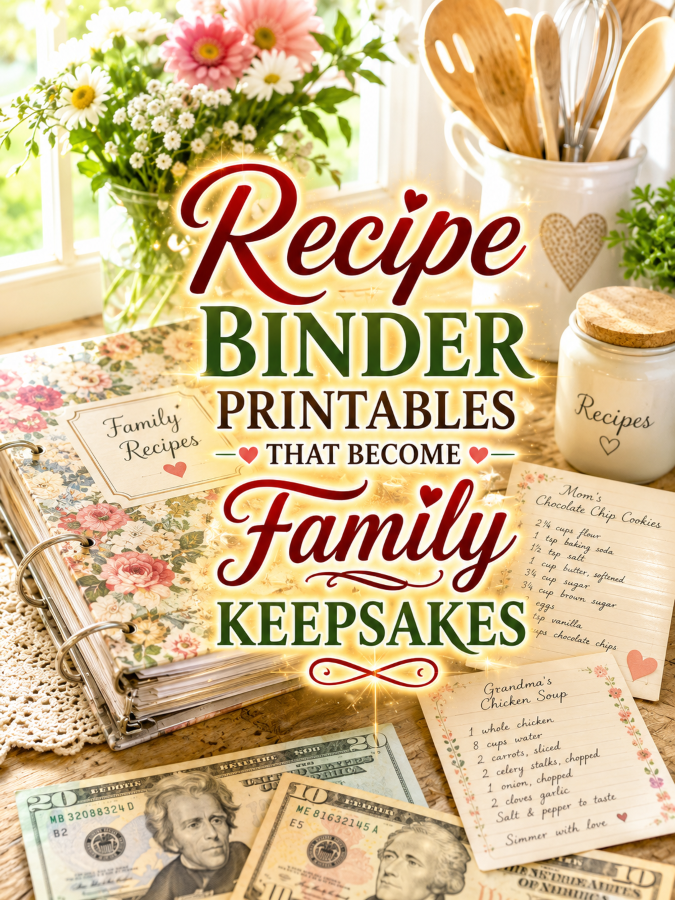
That’s exactly where Recipe Binder Printables become incredibly valuable. A printable binder can help families organize recipes by category, record ingredients and instructions, preserve handwritten notes, document family traditions, and capture the stories behind favorite dishes. Over time, the binder becomes more than a kitchen organizer because it becomes a family keepsake that can be passed from one generation to another.
Recipe organization appeals to home cooks, busy parents, newlyweds, grandparents, food lovers, meal planners, bakers, homesteaders, and families who want to preserve traditional recipes. These customers aren’t necessarily looking for fancy culinary technology. They want something practical, attractive, and meaningful. That makes recipe binder printables an excellent evergreen niche with both emotional and commercial appeal.
One thoughtfully designed Recipe Binder can become the foundation of a profitable printable business while helping families preserve the meals, memories, and little kitchen traditions they never want to lose.
Quick Answer
Recipe Binder Printables are downloadable pages that help families organize recipes by category while recording ingredients, instructions, preparation notes, cooking times, serving sizes, substitutions, family ratings, photographs, and personal stories.
A starter recipe binder can comfortably sell for around $7. Expand it into baking binders, family recipe collections, holiday recipe organizers, meal-planning systems, kitchen binders, recipe card packs, and premium family cookbook libraries priced at $27, $47, and even $77.
Your customers aren’t simply buying recipe pages. They’re investing in a way to organize favorite meals, preserve family traditions, and create a physical keepsake that can eventually be handed down to someone they love.
Why This Niche Works
Recipes are both practical and emotional. People need recipes to cook meals, but family recipes often carry stories that have nothing to do with measurements or cooking temperatures. A good binder gives customers room to preserve both sides of the experience. That’s a powerful combination because people are more likely to value a product when it solves a practical problem while protecting something meaningful.
Recipe collections also grow naturally. A newlywed couple may begin with a handful of favorite dishes and eventually add holiday recipes, family specialties, baking favorites, children’s creations, and recipes discovered during their own travels. The binder becomes a living collection that changes as the family changes. That creates opportunities for refill pages and complementary products.
That’s always a Good Thing because your customer doesn’t have to stop at one purchase. Someone who buys a general recipe binder may later want a holiday recipe section, baking collection, freezer-meal planner, meal-planning pages, or family cookbook pack. One useful printable can become the beginning of a much larger kitchen organization system.
Once customers discover your Recipe Binder Printables, they’ll naturally become interested in meal planners, grocery organizers, pantry inventories, baking journals, recipe cards, kitchen management binders, and countless related thingees. One successful recipe product can easily grow into an entire food-and-home printable brand.
Unlike short-lived trends, cooking and family traditions aren’t going anywhere. Prior to pouncing upon this opportunity, you should first know all about the:
Tools You’ll Need
You don’t need to be a professional chef to create useful recipe organization products. You need a practical design tool, a way to research what home cooks actually want, and simple platforms for building an audience and selling your printables. Keep your first product focused and useful, then expand based on customer feedback.
- Canva for designing recipe binders, recipe cards, meal-planning pages, kitchen organizers, and family cookbook printables.
- Google Docs for organizing recipe categories, product ideas, instructions, and printable content.
- AWeber for building an email list with recipe organization tips, printable freebies, cooking resources, and product announcements.
- GetResponse for newsletters, promotions, automated campaigns, and customer follow-up.
- Gumroad for selling downloadable recipe binders and kitchen printable bundles worldwide.
- Teachable if you’d eventually like to teach meal planning, recipe organization, family cooking, baking organization, or kitchen management.
- Amazon Recipe Binder Research for discovering which recipe organization features and formats customers appreciate the most.
Don’t spend three weeks deciding whether your little whisk illustration needs a slightly more sophisticated handle while someone’s grandmother’s handwritten pancake recipe is sitting in a kitchen drawer waiting to disappear. Your future customers care much more about useful organization and meaningful preservation than decorative perfection. Make the binder beautiful, but make it practical first.
Next, move to:
Your 5-Step Action Plan
Follow these five steps unless you’d rather watch another printable creator become the recipe organization expert everyone recommends. The smartest entrepreneurs create products that solve a real household problem while giving customers an emotional reason to keep using them. Recipe binders are especially powerful because they can do both.
Step 1. Research Real Recipe Organization Problems
Spend about 90 minutes exploring recipe organization Facebook groups, cooking communities, Pinterest boards, family meal-planning groups, baking communities, and reviews of existing recipe binders. Pay attention to complaints about missing recipes, poor categorization, handwriting, recipe substitutions, family favorites, and preserving old recipes. Those conversations reveal exactly what your printable should help solve.
Create a master list containing at least 40 to 50 printable pages. Include recipe records, category dividers, family-favorite pages, handwritten recipe preservation sheets, baking logs, holiday recipe sections, recipe rating pages, ingredient substitution notes, meal-planning pages, grocery lists, and family food-story pages. Your research becomes an X-ray machine that reveals where home cooks need practical organization.
Step 2. Build Your Core Recipe Binder
Create a collection containing 50 to 70 printable pages that support families from collecting recipes through organizing and preserving them. Include recipe templates, category dividers, family notes, cooking records, photographs, and memory pages. Keep every page simple, practical, and easy to use because simplicity is always a Good Thing.
Include several recipe layouts rather than forcing every dish into the same format. A soup recipe may need different information from a cake, while a family heirloom recipe might require additional space for handwritten notes and memories. That flexibility makes the binder useful for real kitchens rather than merely pretty on a computer screen.
Step 3. Create Specialty Editions
Build separate binders for family recipes, baking, holiday cooking, desserts, healthy meals, slow-cooker recipes, homesteading kitchens, newlyweds, and grandparents preserving recipes for younger generations. Specialized editions immediately feel more valuable because customers recognize the exact purpose behind the product.
You can also create versions for recipe swaps, church or community cookbooks, family reunions, and inherited recipe collections. Each specialty edition expands your audience while allowing you to reuse your strongest layouts and design framework.
Step 4. Add High-Value Bonuses
This is where your Recipe Binder Printables begin standing out from the thundering herd. Include printable category tabs, recipe cards, grocery lists, meal planners, pantry inventory sheets, family-favorite trackers, holiday menu planners, freezer inventory pages, and kitchen shopping lists.
Then add the emotional pages: “Who taught me this recipe?”, “Why our family loves this dish,” “First time I made it,” and “Family memories.” Those bonus thingees require relatively little additional design work yet can dramatically increase the perceived value of your product. Suddenly, you’re not just selling a binder; you’re helping someone build a family cookbook.
Step 5. Build Your Product Ladder
Launch your starter Recipe Binder Printable bundle for $7 and let it become the foundation of a growing kitchen organization business. Expand into premium family cookbook systems around $27, complete kitchen binders around $47, and comprehensive family recipe libraries approaching $77. Every additional product naturally complements the others while encouraging repeat purchases.
Before long, your business won’t simply be selling recipe pages. You’ll be helping families organize favorite meals, preserve treasured recipes, document traditions, and create keepsakes that may eventually become part of the family’s history.
Once you’ve figured out all of the above, the next step is implementing:
3 Ways to Stand Out From The Thundering Herd!
The recipe printable market is packed with recipe cards, meal planners, and pretty kitchen pages. The Good Thing is that many of those products focus almost entirely on the food itself. Your opportunity is to make your Recipe Binder Printables about both the recipe and the story behind it, because that’s what can transform an ordinary kitchen organizer into something a family treasures.
Way 1. Make Family Stories Part of Every Recipe
Don’t stop at ingredients, directions, and serving sizes. Add prompts for who created the recipe, where it came from, when the family usually makes it, who taught it to the customer, and why everyone loves it. Those details turn a simple recipe page into a tiny piece of family history.
Include dedicated memory pages for handwritten recipes, old family photographs, holiday traditions, and stories about meals shared together. A recipe for chocolate cake becomes much more meaningful when the page also explains that Grandma made it every birthday for forty years. That’s always a Good Thing because emotional value can turn a printable into a keepsake.
Way 2. Design for Recipe Preservation
Many families already have recipes written on aging index cards, newspaper clippings, stained scraps of paper, or fading notebook pages. Create dedicated preservation pages where customers can carefully copy those recipes while keeping the original source information. Include fields for the original handwriting, source, approximate date, recipe contributor, and any changes made over the years.
You can even create “original recipe” and “modern version” pages so families can preserve an old recipe while documenting how they currently prepare it. This gives your product a purpose beyond organization. It becomes a bridge between generations.
Way 3. Create a Binder That Grows With the Family
Make your pages easy to print and add whenever a new recipe appears. Include refillable category dividers for appetizers, soups, main dishes, side dishes, desserts, baking, drinks, holiday recipes, family favorites, and recipes to try. Customers should be able to keep adding pages for years instead of replacing the entire binder every time their collection grows.
You can also create milestone pages for weddings, new babies, family reunions, holidays, and special celebrations. That gives your binder a reason to remain relevant through different stages of family life. It’s one of the easiest ways to rise above the thundering herd.
Next, here’s the thing. You’re probably NOT the only person offering this service. So you now require:
3 Nifty Ways to Find Customers
Your ideal customers are already saving recipes, discussing family meals, planning holiday menus, and looking for ways to organize their kitchens. The challenge isn’t finding home cooks. The challenge is showing them that your binder can preserve both their recipes and the memories attached to them.
Way 1. Family and Cooking Communities
Cooking Facebook groups, family organization communities, baking groups, homemaking communities, recipe-swap groups, and food-focused online communities are excellent places to introduce useful resources. Offer a free family recipe card or recipe memory page before recommending your complete binder. Helping first builds trust much faster than immediately promoting a paid product.
Recipe lovers naturally exchange family favorites, holiday traditions, cooking tips, and inherited recipes. One genuinely useful free printable can introduce your shop to an audience that already understands the emotional value of preserving recipes.
Way 2. Pinterest
Pinterest is practically made for recipe organization because people constantly search for recipe binders, meal planners, family cookbook ideas, recipe cards, kitchen organization, baking resources, and holiday menu planning. Create attractive pins featuring recipe pages, family memory prompts, binder dividers, and before-and-after organization ideas.
Because Pinterest content can continue appearing in searches long after publication, a strong collection of useful recipe pins can keep sending potential customers to your shop. Trust me, you’ll thank me later.
Way 3. Food and Family Creators
Food bloggers, family lifestyle creators, baking YouTubers, homemaking influencers, recipe creators, cooking instructors, and genealogy or family-history bloggers already have audiences interested in recipes and traditions. Reach out with affiliate partnerships, bundle collaborations, or freebie swaps that allow them to recommend your binder alongside their content.
A baking creator could showcase your dessert recipe pages, while a family-history blogger could feature your recipe-memory pages as part of preserving family traditions. These partnerships can introduce your products to people who already have a strong emotional connection to recipes.
Speaking of long-term growth, now let’s move to:
3 Takeaways You Won’t Find Elsewhere!
Many printable creators think they’re selling recipe templates. The most successful entrepreneurs understand they’re helping families preserve memories. That difference gives your Recipe Binder Printables much more emotional and practical value.
Takeaway 1. You’re Selling Family Continuity
Your customers aren’t purchasing pages simply because they need somewhere to write down dinner instructions. They’re investing in a way to keep family traditions alive even when the person who originally created the recipe is no longer around to make it. That’s a much bigger transformation than simple kitchen organization.
When writing your product descriptions, focus on the idea of passing something meaningful forward. You’re helping someone create a collection that children, grandchildren, nieces, nephews, or other loved ones may eventually treasure.
Takeaway 2. Every Recipe Has a Story
A recipe might have been discovered during a vacation, created during a difficult season, perfected for a holiday, or requested every year by the same family member. Those stories create opportunities for additional memory pages, family cookbook collections, holiday recipe packs, and special occasion binders.
That means your products can grow beyond ordinary recipe organization. You’re creating a printable framework for preserving the stories that make food meaningful.
Takeaway 3. One Recipe Binder Can Become an Entire Kitchen Brand
Your Recipe Binder Printables can naturally expand into meal planners, grocery organizers, pantry inventories, baking journals, holiday menu planners, family cookbook pages, freezer meal systems, recipe-swap packs, and kitchen management binders. Those connected thingees encourage repeat purchases because each product supports another part of home cooking.
Before long, families won’t simply recognize your recipe binder. They’ll know your shop as a dependable source of practical and sentimental resources for organizing their kitchens and preserving family traditions.
Now that you know the above, it’s time for:
3 Common Mistakes to Avoid
Many creators make recipe binders too decorative. That’s Not a Good Thing. A recipe page needs enough room for ingredients, instructions, substitutions, notes, and possibly a photograph. Make the pages beautiful, but don’t sacrifice writing space just to squeeze in another decorative whisk or rolling pin.
Some sellers forget about handwritten recipes. Those old cards and scraps may be the most emotionally valuable items in the entire collection. Include dedicated pages for preserving handwriting, copying difficult-to-read recipes, recording original sources, and documenting the history behind inherited recipes.
Others stop after creating one recipe binder. That’s like opening a kitchen store with one measuring cup. Continue expanding into baking, holidays, meal planning, pantry management, family memories, recipe swaps, and cookbook collections to create a much stronger printable business.
What else should you know? How about:
Scaling Your Results
Expand into a complete family kitchen ecosystem. Create meal planners, grocery systems, pantry inventories, baking journals, holiday recipe binders, family cookbook collections, freezer meal planners, recipe-swap organizers, and kitchen management systems that naturally complement your original Recipe Binder Printables. Every additional product strengthens your catalog while encouraging repeat purchases.
Create a Family Recipe Club. Release fresh printable pages every month featuring seasonal recipes, holiday memory pages, recipe cards, family cooking prompts, kitchen organization sheets, and special keepsake pages. Members receive fresh resources throughout the year while your business benefits from dependable recurring revenue.
Build an email list families genuinely appreciate. Share recipe organization tips, printable recipe cards, family memory prompts, holiday cooking resources, meal-planning ideas, kitchen organization tips, and free mini-binder pages throughout the year. A collection containing 40 kitchen and recipe-focused printable products could realistically generate an additional $700 to $2,200 each month through memberships, bundles, repeat customers, and affiliate partnerships. Trust me, you’ll thank me later.
Let’s now wrap up everything via the:
Your Next Steps
Start by listing everything a family might want to preserve alongside a recipe. Think about ingredients, instructions, photographs, handwriting, recipe sources, memories, holidays, traditions, family favorites, and stories about the people who made the dish special. Those recurring details will naturally become the foundation of your printable collection.
Design your first Recipe Binder Printable in Canva using warm, clean layouts, generous writing space, practical category dividers, and consistent branding that can easily expand into future kitchen products. Focus on making recipes easy to preserve and retrieve rather than covering every page with elaborate food illustrations. Functional keepsake tools almost always become customer favorites.
Then introduce your binder to five cooking communities, Pinterest boards, family groups, baking communities, or food creators. Remember, 5 good messages beats 50 generic ones every single time. One thoughtfully designed Recipe Binder can quietly become the beginning of an entire family-kitchen printable business.
Next, let’s finish with:
Final Thoughts
A family recipe is rarely just a recipe. It can be a memory, a tradition, a voice from the past, or a little piece of someone who mattered. A beautiful Recipe Binder Printable gives families a practical way to preserve those treasures while continuing to add new recipes of their own. That’s an incredible transformation from a simple printable product.
So, begin by creating one binder that solves one meaningful recipe organization challenge exceptionally well. Continue listening to customer feedback while expanding your collection into matching meal planning, baking, holiday, kitchen organization, and family-memory resources that naturally work together. Before long, you’ll have a printable brand that families happily return to whenever another recipe deserves a permanent place in the collection.
You don’t need bazillions of unrelated printables to build meaningful income. You simply need one thoughtfully designed Recipe Binder that helps families organize what they cook, preserve where those recipes came from, and create a keepsake that can continue telling their family’s story for generations.
That’s it. That’s your beginning!
If you were creating your first Recipe Binder Printable tomorrow morning, would you design it for newlyweds, grandparents preserving family recipes, busy families, baking enthusiasts, or families building a multigenerational cookbook?
Enjoy!