Introduction
Quilters have a very special relationship with fabric, and by “special relationship,” I mean that a perfectly innocent trip to the fabric store can somehow result in another twelve yards coming home. The tricky part is remembering what is already hiding in the stash once those beautiful fabrics are folded, stacked, boxed, bagged, and tucked into every available corner of the sewing room. That’s Not a Good Thing when you buy another half-yard of the exact fabric you already own because the original piece has apparently entered witness protection.
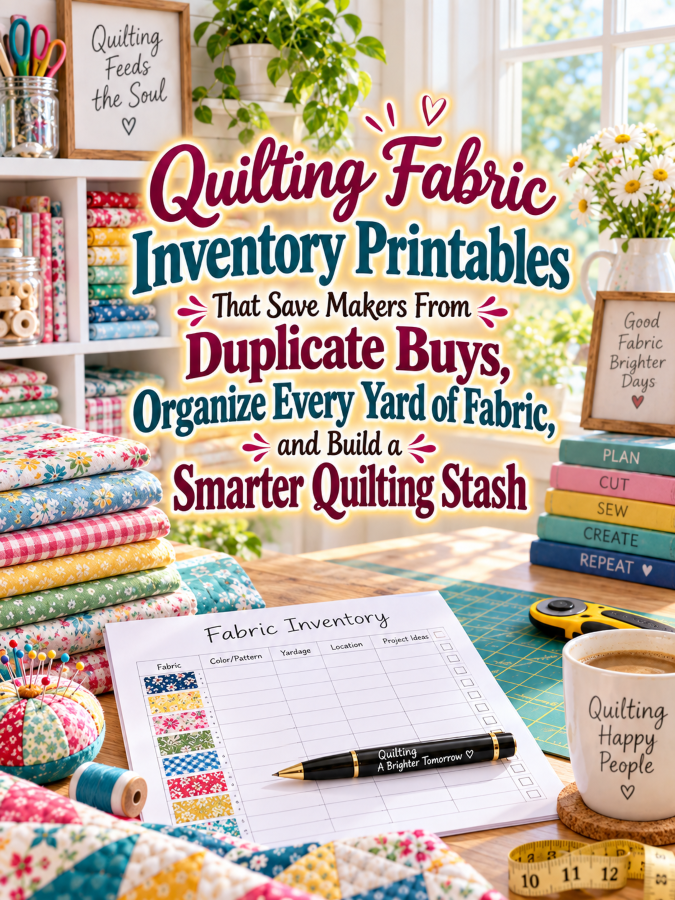
That is where quilting fabric inventory printables can become wonderfully practical. A well-designed inventory system gives quilters a simple way to record fabric colors, patterns, amounts, collections, locations, and project ideas so they can actually see what they already have. Instead of relying on memory, they have a visual reference they can check before heading to the fabric store or starting their next quilting project.
For a digital-product creator, this niche has another lovely advantage: quilters can have large and constantly changing stashes. New fabric arrives, old fabric gets used, scraps get created, unfinished projects get rediscovered, and suddenly the inventory needs its own little filing department. That creates plenty of opportunities for related printables, from basic stash trackers to scrap organizers, project planners, fabric swatch books, quilt planning systems, and comprehensive quilting organization binders.
Quick Answer
A quilting fabric inventory printable is an organizational system that helps quilters record and locate the fabric they already own. Useful pages can include fabric swatch records, yardage or piece-size fields, color and pattern categories, storage locations, collection information, purchase details, and project assignments. The goal is simple: help makers see their stash before they buy more fabric, which can save duplicate purchases and reduce the “I know I own this somewhere” treasure hunt.
The strongest products do not need to be complicated spreadsheets disguised as printables. They can be attractive, easy-to-update pages that fit naturally into a quilting binder, project notebook, or digital planning system. When the tracker is quick to update after a purchase or fabric cut, it becomes much more useful because the inventory has a chance of staying current rather than becoming an archaeological record of the stash from three years ago.
You can also build a product ladder around different levels of quilting organization. A $7 starter could include basic fabric inventory sheets, a $17 version could add swatch and storage-location pages, a $27 workbook could include scrap and project-assignment trackers, a $47 quilting stash management binder could combine fabric, projects, and shopping lists, and a $77 comprehensive quilting organization library could bring all of those systems together.
Why This Niche Works
Fabric inventory solves a very specific problem that many quilters understand immediately: owning fabric is easy, but knowing exactly what you own is another matter entirely. A stash can contain fat quarters, yardage, scraps, precut pieces, specialty fabrics, seasonal prints, solids, novelty designs, and leftovers from completed projects. Without some kind of system, finding one particular fabric can become a full afternoon activity involving boxes, bins, shelves, and increasingly dramatic sighing.
Quilters also make purchases based on visual memory, which is understandable because fabric is highly visual. Someone may remember owning “a blue floral” without remembering whether it was a fat quarter, two yards, a scrap, or the blue floral that has already been cut into 96 tiny pieces for a project. A fabric inventory printable can bridge that gap by turning a visual stash into an organized reference system.
The niche is also naturally expandable because fabric inventory connects with many other quilting activities. Once someone knows what fabric they own, they may want to track scraps, plan projects, create shopping lists, organize UFOs, record finished quilts, manage patterns, or plan fabric combinations. That’s a Good Thing because one useful printable can become the beginning of an entire quilting organization product collection.
There is also a strong emotional element to fabric organization. Quilters often collect fabrics because they love the colors, prints, memories, designers, collections, or possibilities attached to them, so an inventory can become more than a simple list of supplies. It can become a visual library of their creative resources, which makes the product feel personal rather than purely administrative.
What You Can Put Inside Quilting Fabric Inventory Printables
Fabric Stash Inventory Pages
The basic inventory page should give users a simple place to record each fabric or fabric group. Useful fields can include fabric description, color, pattern, approximate amount, fabric type, collection or designer, purchase date, and storage location. Leave enough room for notes because quilters will inevitably have additional information that does not fit neatly into your carefully behaved little boxes.
You can organize these pages by color, fabric type, storage bin, or another method that makes sense for the customer. You could also offer several versions so users can choose between a detailed inventory and a quick-reference inventory. Flexibility is valuable because one quilter may want to catalog every fat quarter while another simply wants to know which bin contains the green fabrics.
Fabric Swatch Pages
Because quilting is such a visual hobby, swatch pages can make your inventory much more useful. Give users a small space where they can attach or draw a fabric sample and then record details underneath it. This creates a mini fabric library that lets quilters compare colors and patterns without dragging half their stash onto the cutting table.
Swatch pages can also make the printable more attractive and collectible. A quilter may enjoy flipping through the pages and seeing the fabrics represented visually, especially when the inventory becomes a record of years of creative projects. That’s always a Good Thing because an organizational product becomes something the customer actually enjoys using rather than something that feels like paperwork.
Storage Location Tracker
Knowing that you own a fabric is only half the battle if you cannot find it. Add fields for shelf numbers, drawer names, bins, boxes, cabinets, or other storage locations so users can connect each inventory entry to a physical place. A simple location code system can make the tracker much more useful when the stash grows.
For example, a quilter could label containers as BIN-01, BIN-02, and BIN-03 and record those codes beside their inventory entries. When they need a particular fabric, they can check the tracker first and go directly to the correct location. That can turn “Where did I put that?” from a 45-minute mystery into a two-minute mission, and that is a Very Good Thing.
Duplicate Purchase Prevention Page
This should be one of the stars of the product because it addresses the exact problem your magnet title promises to solve. Create a quick-reference page where users can record fabrics they frequently need to check before purchasing, including colors, designers, collections, or commonly used basics. You could also include a simple “Check My Stash First” shopping page that customers can keep with their purse, quilting bag, or digital shopping notes.
The idea is not to prevent quilters from buying fabric because, honestly, that might require a separate miracle product. The goal is to help them make purchases with better information so they can avoid accidentally buying something they already have. That’s a Good Thing because the customer still gets to enjoy fabric shopping while having a better chance of remembering what is already waiting at home.
Fabric Used and Remaining Tracker
Inventory becomes outdated quickly when fabric is used, so include pages that let users record changes. They could note the project name, amount used, remaining amount, and date updated. This creates a simple bridge between the fabric inventory and the quilter’s project-planning system.
You can make this especially useful for larger pieces by giving users space to update approximate remaining yardage or piece sizes. For scraps and smaller pieces, a separate category can help because a two-inch strip and two yards of fabric should not necessarily be treated as the same inventory item. Your goal is to make the system match how quilters actually work, not how a perfectly rectangular spreadsheet wishes they worked.
Scrap Inventory Pages
Scraps deserve their own system because quilters often have collections of leftover pieces that are too useful to throw away but too small to remember individually. Create pages for scrap color, approximate size, shape, storage location, and possible project use. You can also include categories for strips, squares, triangles, crumbs, and other scrap groupings if they fit the audience you are targeting.
This creates an excellent opportunity for a separate scrap-management product later. A basic inventory can help users understand their stash, while a specialized scrap organizer can help them make better use of smaller pieces. That’s a Good Thing because you are helping customers solve one problem while naturally uncovering the next organization problem they already have.
Project Assignment Tracker
Another useful feature is a page that connects fabric to planned quilting projects. Users can record which fabrics are reserved for a particular quilt, whether the fabric has already been cut, and whether additional fabric is needed. This helps prevent a common problem where a beautiful fabric is mentally assigned to three different projects at the same time.
A project-assignment page can also include a “Reserved” status so the quilter knows that a particular fabric should not be considered available for another project. That’s Not a Good Thing when the inventory says you have two yards available, but one yard has secretly been promised to a quilt that has been sitting in a project basket since last summer.
Tools You’ll Need
Canva is an excellent choice for designing the visual side of the product, especially because quilting printables benefit from attractive swatch areas, clean grids, soft section dividers, and easy-to-read typography. Use Google Docs to write instructions, inventory explanations, quick-start guides, and customer worksheets before moving the polished content into your final design. Keeping the functional writing separate from the decorative design can make the entire creation process much easier.
For building an audience, AWeber and GetResponse can help you create email sequences around quilting organization. You could offer a free one-page “Check Your Fabric Stash Before You Shop” worksheet and then send helpful emails about organizing fabric, scraps, projects, and shopping lists. That’s always a Good Thing because your free content demonstrates the value of organization before you ask someone to purchase the complete system.
For selling your finished digital products, Gumroad can provide a straightforward way to deliver downloadable files, while Teachable could become useful if you eventually expand into quilting organization workshops, tutorials, or a larger educational product. You can also use Amazon Quilting Fabric Inventory Research to study the language quilters use when talking about fabric storage, stash organization, swatches, scraps, and duplicate purchases. That research can help you create a product that speaks the customer’s language instead of sounding like a generic inventory system wearing a quilt block as a hat.
Your 5-Step Action Plan
Step 1: Choose Your Quilter
Begin by deciding who you want the first version to serve. You could create a general quilting fabric inventory, or you could focus on stash-heavy quilters, scrap quilters, beginner quilters, fat-quarter collectors, or makers who participate in frequent fabric shopping. A clear audience makes it easier to decide which fields matter most and which pages can wait for a later product.
If you’re new to the niche, starting with a general quilter-friendly system can give you a broad foundation. Once you understand which pages customers use most, you can create specialized versions for different quilting styles and organizational needs. The thundering herd may rush toward creating every possible quilting printable at once, but you can be smarter by building one useful system and expanding from evidence.
Step 2: Design The “Check Before You Buy” Experience
Make duplicate-purchase prevention the heart of your product rather than burying it on page 27. Create a quick-reference inventory page that makes it easy for users to check their stash before shopping. You could include color categories, fabric collections, favorite basics, and a “shopping list versus already owned” comparison page.
The easier this process is, the more likely customers are to use it regularly. Consider creating a compact version that can be printed separately and carried in a quilting binder or stored digitally on a phone or tablet. When the customer can quickly check their stash while standing in the fabric aisle, your product suddenly becomes much more useful than a beautiful binder sitting at home looking decorative.
Step 3: Build The Inventory Around Visual Information
Quilters think visually, so do not make the entire system dependent on long written descriptions. Include swatch spaces, color categories, pattern descriptions, and optional photos or reference areas where appropriate. A visual inventory can make it much easier for someone to recognize a fabric without remembering its exact name or collection.
You can also experiment with different inventory layouts. One version could focus on detailed written information, while another could prioritize large swatches and quick visual references. Offering both styles can make the product more flexible without making the underlying system unnecessarily complicated.
Step 4: Connect Fabric To Projects
Once the stash is organized, help users connect their fabric to the projects they plan to make. Add pages for reserved fabrics, project names, estimated amounts needed, fabrics already available, and additional shopping needs. This turns the inventory into an active planning tool rather than a static catalog.
It also creates an opportunity for future products. A fabric inventory can lead naturally to quilt project planners, UFO trackers, scrap management systems, quilt binding trackers, finished quilt records, and pattern organization printables. That’s a Good Thing because your customer journey can grow naturally from “What do I own?” to “What am I making with it?”
Step 5: Turn The System Into A Product Ladder
Start with the $7 basic inventory and focus on solving the duplicate-buy problem clearly. Then create the $17 expanded tracker with swatches and storage locations, the $27 workbook with scraps and project assignments, the $47 complete stash-management binder, and the $77 comprehensive quilting organization library. Each level should provide a meaningful increase in organization rather than simply adding pages for the sake of making the file larger.
You can also create bundles for specific customer needs, such as a Fabric Stash Bundle, Scrap Organization Bundle, Quilt Project Bundle, or Complete Quilter’s Organization Bundle. This gives customers multiple ways to buy while giving you additional products to promote throughout the year. Trust me, you’ll thank me later when your product catalog starts behaving like a thoughtfully planned quilt instead of a pile of fabric squares that seemed like a good idea at the time.
Once you’ve figured out all of the above, the next step is turning your quilting fabric inventory printable into a system that makes stash organization easier, reduces duplicate-buy surprises, and helps quilters connect the fabric they already own with the projects they actually want to make.
“`html id=”k9v2ls”
3 Ways to Stand Out From The Thundering Herd!
Way 1: Make Duplicate-Buy Prevention The Hero
Your strongest selling point is already sitting right inside the problem: quilters sometimes buy fabric they already own because their stash has become larger than their memory. Make that problem the hero of your product instead of presenting another generic inventory sheet with rows and columns. Create a fast “Check Before You Buy” page that lets customers quickly search their stash by color, pattern, collection, or storage location.
You could even create a compact shopping companion that can be printed separately and tucked into a quilting notebook or stored digitally. Give the customer spaces for “Looking For,” “Already Own,” “Need to Buy,” and “Where It’s Stored,” so the shopping decision becomes much easier. That’s a Good Thing because you’re selling a solution to a very specific frustration rather than simply selling another pretty printable.
Way 2: Turn The Stash Into A Visual Fabric Library
Quilting is visual, so a text-only inventory misses a huge opportunity. Give customers room for fabric swatches, color notes, pattern descriptions, collection names, and storage information so they can create a visual library of their stash. A quilter should be able to flip through the pages and recognize the fabric without having to remember exactly what the manufacturer called “Blue Floral Something-or-Other.”
You can make the visual library even more useful by offering different page layouts for different types of fabric. One page might be designed for yardage, another for fat quarters, and another for small scraps or precut pieces. This makes your product feel intentionally designed for quilters instead of being a general inventory thingee that happened to wander into the quilting aisle.
Way 3: Build A “Fabric Has A Job” System
One clever way to make the tracker more useful is to give every fabric a purpose or status. A piece could be marked as available, reserved for a project, leftover from a finished quilt, designated for scraps, or waiting for an idea. This helps quilters understand not only what they own but also what is actually available for their next project.
Add a simple project-assignment page where users can connect specific fabrics with planned quilts. This creates a bridge between inventory and project planning, which gives you a natural path toward additional products. That’s always a Good Thing because one useful system can become the first stitch in an entire collection of related quilting printables.
3 Nifty Ways to Find Customers
Way 1: Create “Before You Buy More Fabric” Content
Your marketing practically writes itself because the duplicate-buy problem is so relatable. Create content around questions such as “Do You Know What’s In Your Fabric Stash?”, “How To Stop Buying Duplicate Fabric,” or “The Simple Fabric Inventory Every Quilter Needs.” These topics can attract quilters who already feel the pain your product is designed to solve.
You can demonstrate the system using a fictional stash and show how quickly someone can locate a particular color or fabric category. A before-and-after example can be especially effective because customers immediately see the difference between a mysterious pile of fabric and an organized visual inventory. That’s a Good Thing because you’re showing the transformation without needing to make exaggerated promises.
Way 2: Offer A Free Fabric Stash Starter Sheet
Create a one-page freebie that gives quilters a taste of your organization system. It could include spaces for fabric name, color, pattern, amount, storage location, and project assignment, along with a small “Check Your Stash First” reminder. Keep it genuinely useful so the freebie feels like a helpful quilting tool rather than a sales flyer wearing a disguise.
Once someone downloads the free page, use an email sequence to teach simple stash-management habits. You can talk about organizing by color, tracking storage locations, managing scraps, and recording fabric as soon as it enters the stash. Then introduce the complete inventory as the next logical step, because people who have already experienced the free system can immediately understand what the paid version adds.
Way 3: Create Content For Different Quilting Personalities
Not every quilter organizes fabric the same way, and that gives you several marketing angles. Some people love detailed records, some prefer visual swatches, some want simple storage-location tracking, and others primarily want to manage scraps and project leftovers. Create separate content for each type of customer rather than assuming one organizational method will make everyone equally happy.
You can even create niche versions based on the way quilters use their fabric. A scrap-quilter edition could emphasize small pieces and color sorting, while a fat-quarter edition could focus on collections, swatches, and project assignments. The thundering herd may be busy shouting that one tracker works for everybody, while you quietly create useful variations for the people who know exactly what kind of stash chaos they have.
3 Takeaways You Won’t Find Elsewhere!
Takeaway 1: Inventory Should Help With The Next Decision
An inventory is most useful when it helps the customer decide what to do next. Instead of simply recording “two yards of blue floral,” your system can help answer questions such as where it is stored, whether it is reserved for a project, and whether more fabric is actually needed. That turns inventory from passive record keeping into an active creative planning tool.
Add prompts such as “What project could use this?”, “Do I have enough?”, and “Is this fabric already assigned?” so the customer can make practical decisions from the information. You are not trying to tell quilters what they should make or buy, but you are giving them a better starting point for their own decisions. That’s always a Good Thing because organized information becomes much more valuable when it helps someone take the next step.
Takeaway 2: The Location Field May Be More Valuable Than It Looks
A quilter may remember owning a particular fabric but still have absolutely no idea where it lives. That makes storage location one of the most important fields in your entire product, especially for large stashes spread across multiple shelves, drawers, closets, bins, and rooms. A simple location code can save enormous amounts of searching.
Encourage customers to create their own consistent location system, such as Shelf A, Bin 03, Drawer 2, or another method that makes sense for their space. Then make that location highly visible on the inventory page. The whole point is to replace “I know it’s somewhere around here” with “It’s in Bin 03,” which is a wonderfully boring sentence and therefore a spectacularly Good Thing.
Takeaway 3: Your Customer’s Stash Can Become A Creative Resource
Organizing fabric does not have to be about restricting purchases or making the hobby feel more controlled. The inventory can help quilters rediscover fabrics they forgot they owned and inspire new combinations from materials already sitting in the stash. In that way, your product can encourage creativity while also helping customers make more informed shopping decisions.
Add a “Rediscover My Stash” page where quilters can choose a few fabrics they have not used recently and brainstorm possible projects. You could include prompts for color combinations, seasonal quilts, scrap projects, gifts, or future collections. That’s a Good Thing because the customer may discover that the next great quilting idea was already hiding in the cupboard.
3 Common Mistakes to Avoid
Mistake 1: Making Every Page Too Detailed
It can be tempting to record every possible detail about every piece of fabric, but that can quickly turn inventory into a second job. Most customers need enough information to identify, locate, and use their fabric, not a ten-page biography for every fat quarter. If recording one fabric takes longer than actually folding it, your system may be working against the customer.
Offer a quick-entry page alongside a more detailed page so users can choose how much information they want to record. Beginners can start with the basics, while serious stash organizers can use the expanded fields. This makes your product accessible without taking away the detailed features that experienced quilters may appreciate.
Mistake 2: Forgetting That Fabric Gets Used
A fabric inventory can become inaccurate surprisingly quickly once projects begin. Quilters cut fabric, use portions, move leftovers into scrap bins, lend materials to friends, or assign fabric to projects months before actually using it. If your system does not make updating the inventory easy, customers may eventually stop trusting it.
Include simple “Used,” “Remaining,” “Moved,” and “Reserved” fields or status options where appropriate. You can also add a monthly stash check page that encourages users to update the records without requiring a giant inventory audit. That’s Not a Good Thing if your beautifully organized inventory becomes less accurate every time someone reaches into the fabric bin.
Mistake 3: Designing A Product That Is Pretty But Hard To Use
Quilting printables can be beautiful, but decorative design should never overpower the actual tracking function. Tiny writing spaces, pale text, complicated backgrounds, excessive decoration, or confusing navigation can make an otherwise attractive product frustrating. Remember that someone needs to write in these pages, not merely admire them on Pinterest.
Test every page by actually printing it and filling it out with imaginary fabric information. Check whether the writing spaces are large enough, whether headings are easy to scan, and whether the customer can understand the page without your personal explanation standing beside them. That’s always a Good Thing because usability is what turns a pretty printable into a product people genuinely want to keep using.
Scaling Your Results
Once your basic fabric inventory is working, build a product ladder around the growing organizational needs of quilters. A $7 starter inventory can focus on fabric records and storage locations, while a $17 version can add swatches and shopping pages, and a $27 workbook can include scrap tracking and project assignments. A $47 stash-management binder can combine fabric, scraps, projects, and shopping organization, while a $77 comprehensive quilting library can include fabric inventory, UFO tracking, project planning, finished quilt records, pattern organization, and related worksheets.
You can also create specialized bundles that target specific problems. A Scrap Stash Bundle, Fat Quarter Organizer, Quilt Project Planner, Fabric Shopping Companion, or Complete Quilter’s Organization Binder can each become a separate offer or part of a larger bundle. This gives customers a clear reason to purchase another product because each new item solves a different piece of the same quilting-organization puzzle.
A collection containing 40 well-designed quilting organization products could potentially generate an additional $700 to $2,200 per month through bundles, repeat customers, memberships, and complementary offers, although actual results will vary based on traffic, pricing, product quality, audience fit, and marketing. The real opportunity is building a connected catalog where one product naturally introduces the next problem you can help organize. Trust me, you’ll thank me later when your product line starts looking less like a random pile of thingees and more like a beautifully pieced quilt.
Your Next Steps
Start with the problem that makes the product easiest to explain: duplicate fabric purchases. Build a simple inventory that helps quilters identify what they own, estimate what remains, record where it is stored, and check their stash before buying more. Once that basic experience works smoothly, add swatches, scraps, project assignments, and other features that increase the usefulness without making the system overwhelming.
Next, create a free sample that demonstrates your core idea. A one-page fabric stash tracker or “Check Before You Buy” sheet can introduce customers to your organization method and give you an opportunity to build an email audience around quilting organization. From there, show practical examples of how the complete system saves searching time, improves stash visibility, and helps quilters rediscover materials they already own.
Finally, expand based on the questions customers ask. If people want better scrap organization, build a scrap tracker, and if they want help connecting fabric to projects, build a quilt project planner. If they want everything in one place, create the larger binder, because that’s how a small printable can grow into a complete digital-product business serving a very specific and passionate audience.
Final Thoughts
Quilting fabric inventory printables solve a wonderfully specific problem: helping makers know what fabric they already own before the next beautiful bolt catches their eye. A strong system can organize fabric descriptions, swatches, quantities, storage locations, project assignments, and shopping reminders while making the stash easier to enjoy. Instead of treating organization as a chore, you can position the inventory as a visual library that helps quilters rediscover what they already have and make better-informed choices about what comes next.
The bigger business opportunity is even more exciting because fabric inventory naturally connects to so many other quilting needs. Once a customer organizes the stash, they may want to organize scraps, plan projects, track UFOs, record finished quilts, manage patterns, and create shopping lists. That’s a Good Thing because every new need gives you another opportunity to create a useful product that fits naturally into the same customer’s creative life.
You do not need to create the world’s most complicated quilting database to succeed with this idea. Create something simple enough to use, visual enough to enjoy, flexible enough to adapt, and practical enough to solve the duplicate-buy problem that inspired the product in the first place. That’s it. That’s your beginning!
If you were creating your first quilting fabric inventory printable tomorrow morning, which kind of quilter would you design it for, and what would you help that person find first in their stash? Start with that one problem, build one genuinely useful thingee around it, and let the next customer questions guide the rest of your product collection.
Enjoy!