Influencer Marketing’s growth is also what broke its credibility, according to Malik Ducard. As the industry got bigger, so did a basic question hanging over every sponsored post: does this creator actually believe what they are saying, or did a brand just write a check?
Malik has spent more than two decades moving between Hollywood and Silicon Valley, and he has landed on a simple distinction for what keeps audiences from tuning out. “I think that there’s a theme overall in the industry around trust and credibility,” he says. “People are really, really hungry for that.”
He built that view over more than a decade at YouTube, most recently as VP of Content Partnerships, where he worked on Hollywood’s shift onto the platform and helped build out its Creator Economy and multichannel network ecosystem. In December 2021, he joined Pinterest as its first Chief Content Officer, tasked with building a content and creator business around an audience that behaves differently from most social media. Pinterest users arrive already leaned in, Malik says, meaning they show up with intent already formed, wanting to plan, build, or design something, rather than settling in to be entertained. “When people come to Pinterest, they’re coming in a leaned-in posture versus a lean-back posture,” he says.
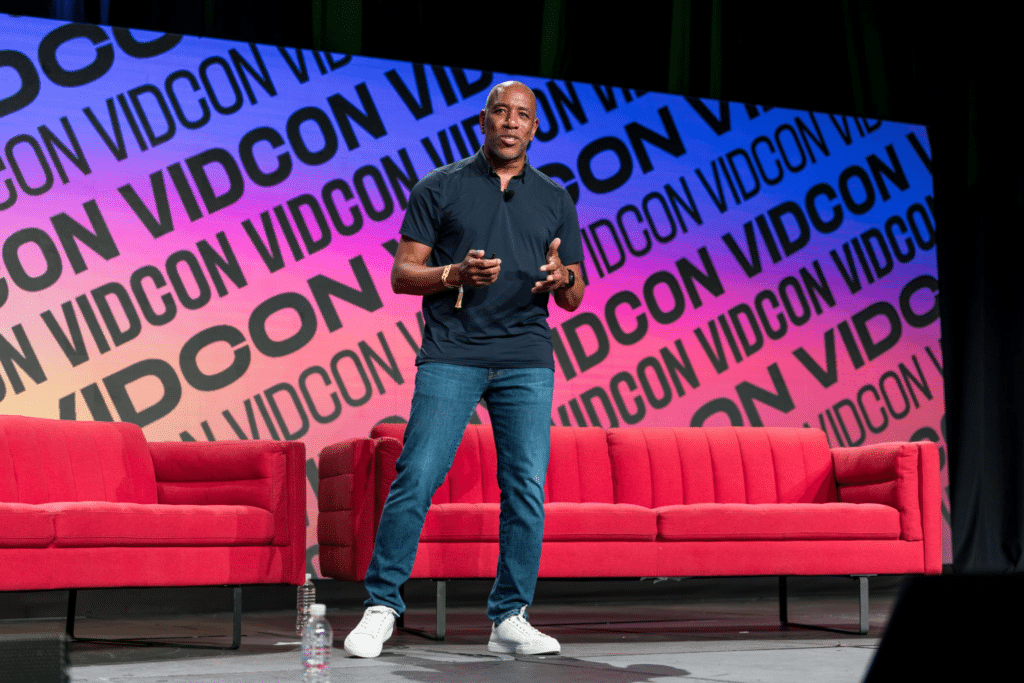
That framing was the backbone of the talk Malik had just delivered at VidCon, during an Industry Track session titled “The Credibility Advantage: Why Cred Beats Celeb Every Time.” The argument, and the audience reaction to it, sets up how he thinks about the rest of the industry’s trust problem, and where he wants Pinterest’s product to go next.
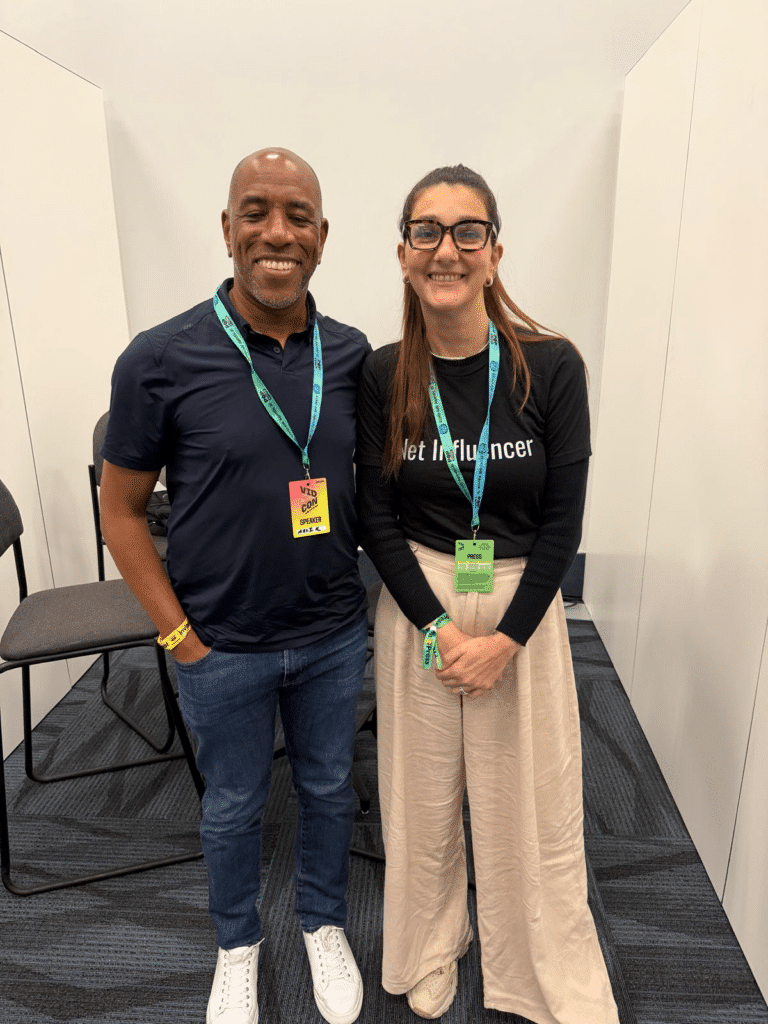
Photo: Malik Ducard & Ceci Carloni, Net Influencer’s Senior Editor, at VidCon Anaheim 2026
Influencer Marketing’s Growth Also Grew Its Trust Problem
As the Influencer Marketing industry expanded over the past decade, Malik says, that scale is precisely what produced the skepticism now surrounding it. He calls the growth itself “a good thing,” since it gave people who never had access to traditional media a way to build an audience. But growth invited scrutiny.
More people started asking whether an influencer actually meant what they said, Malik explains, boiling the industry’s discomfort down to one blunt question brands rarely ask out loud: “Were they just written a check to say that they did?”
That skepticism, in his telling, is not a fringe concern. He describes trust and credibility as a through line that ran across multiple sessions at VidCon this year, beyond his own talk. The bigger the industry gets, Malik argues, the more its credibility has to be earned rather than assumed.
Malik’s Advice To Brands: Buy Credibility, Not Blockbuster Names
Malik’s prescription for brands starts with a definition. “Credibility is authenticity plus knowledge and expertise,” he says, distinguishing it from simple audience size or celebrity status.
That distinction shapes his advice to marketers directly. Rather than defaulting to the creator with the largest following, he tells brands to look for people already talking about their products. “Work with the creators who may not be like the mega super influencer with billions of this and billions of that, but have high amounts of credibility,” he says. “Find the ones that are already posting about your brands or that already love you, because guess what, they’re doing it anyway.”
He is careful to frame this as additive rather than as a rejection of scale. “Big is not bad,” he says, but argues the industry has confused size with trustworthiness. “We have maybe mistaken largesse and blockbuster for credibility, and we need to prioritize credibility, authenticity,” he says.
For brands, the practical upshot is a sourcing shift: audit which creators are already discussing a product organically before commissioning a campaign to manufacture that same sentiment.
Why A Tuna Casserole Doesn’t Need A Punchline On Pinterest
Malik ties his credibility argument directly to how Pinterest is built. Users arrive already motivated to complete a project, he says, which changes what kind of creator content performs well on the platform.
“If I’m a food creator on other platforms that may really prioritize lean-back, and I’m making a tuna casserole, I better have a good joke and a good dance to go along with it,” he says. “Come on, Pinterest, the only thing that matters is that it’s a good tuna casserole recipe.”
That distinction shows up in how Pinterest creators describe their own work, according to Malik. Ask one what they create, and the answer is rarely “content.” It’s hairstyles, recipes, home designs, makeup looks, the tangible outcome rather than the format. “The first thing that you hear is the real world,” he says. “That’s how Pinterest was built.”
He points to a recent Pinterest brand campaign built around the idea that the best thing a person can find online is a reason to go offline, which he says drew traffic approaching 100 million views, a figure he attributes to the campaign tapping into a desire for life away from a screen rather than nostalgia for a particular era.
Malik extends the same argument to artificial intelligence, framing the issue as one of control rather than inevitability: the question isn’t whether AI reshapes content, but who directs it. “AI has to be a tool to connect creator with consumer,” he says. It also “has to be leveraged responsibly,” he adds, warning that AI goes wrong “when the human is not in the picture.”
A Product Roadmap And A Personal Pause, Both In Motion
Malik outlines three priorities for Pinterest’s product going forward: reinforcing the platform’s focus on well-being over time spent, expanding visual search, and building what he calls a “taste graph,” a system for recommending content based on aesthetic signals when a user doesn’t have the words to describe what they want.
“It’s one thing to have content in your system; that’s the easy part,” he says. “It’s another thing to match the right piece of content with the right user at the right time.”
Malik is also navigating his own transition. Pinterest restructured its executive ranks starting in January, when the company hired its first chief business officer and a new chief marketing officer, with content, revenue and communications leadership shifting into new reporting lines in the months that followed. Malik confirmed during the VidCon conversation that he is stepping back from his role this summer, after nearly five years as the company’s founding content chief. He described it as a personal decision to pause for the first time since his teenage years. “I decided to hit pause to take a step in a direction where I can really think, with some space, about opportunities for what’s next,” he says. “It’s all positivity and love.”
Whatever comes next for him, Malik’s closing point at VidCon returned to the same theme running through the rest of the conversation: proximity to the people actually making things.
“You don’t do things from far away, you don’t understand things from far away,” he says. “To be proximate to creators, to be proximate to the fans and the users, that’s the only way to understand it, to build, to be a part of it.”
Subscribe to Our Newsletter
Check Out Our Podcast