Introduction
Arriving on Friday, June 19, 2026, Juneteenth brings reflection, education, celebration, family history, community connection, and meaningful conversations into one important day. That makes it a very different kind of printable opportunity than the usual seasonal market where people toss pumpkins, hearts, or snowflakes onto a page and call it a business plan.
This isn’t the place for random graphics, rushed designs, or loud sales energy wearing tap shoes. People are looking for products that feel thoughtful, useful, respectful, and connected to the purpose behind the day itself.
That’s exactly why this opportunity matters for printable creators who approach it with care! Families, teachers, homeschoolers, community organizers, churches, libraries, and event planners often need simple resources that help people learn, reflect, celebrate culture, and start meaningful conversations without turning the whole thing into a 47-tab research stampede.
When your product feels intentional instead of slapped together, buyers can tell. Quickly. This is one of those markets where respect, clarity, and usefulness do more heavy lifting than fancy design tricks ever could!
Quick Answer
You can create Juneteenth printables that help families, educators, and community groups teach, celebrate, reflect, and organize meaningful activities. The best products focus on education, conversation, event support, journaling, and age-appropriate learning instead of shallow decoration.
If you keep the tone respectful, the layout clean, and the purpose clear, one simple printable can grow into a seasonal bundle buyers may return to year after year.
A Very Good Thing indeed.
Now let’s turn that respectful idea into something useful, polished, and actually sellable.
Before You Begin
Before you create a Juneteenth printable, take a few minutes to understand the meaning of the day. This matters because buyers can feel the difference between a product created with care and one tossed together like Canva templates tossed into a washing machine set for organized chaos.
You don’t need to become a historian overnight, thank goodness. But you do need enough context to create something respectful, accurate, and helpful.
- National Museum of African American History and Culture – Juneteenth Overview
- History.com – What Is Juneteenth?
- PBS – Learn About and Celebrate Juneteenth
Use these resources to guide your tone, product purpose, and educational angle. Then build printables that support learning, reflection, conversation, and celebration without overcomplicating things.
Printable Ideas That Feel Useful and Respectful
The strongest Juneteenth printable products focus on education, celebration, reflection, and community engagement. Buyers generally aren’t searching for random decorative extras, no. Instead, they want tools that help create a meaningful experience without making them build everything from scratch while their coffee gets cold and their printer starts making mysterious robot noises.
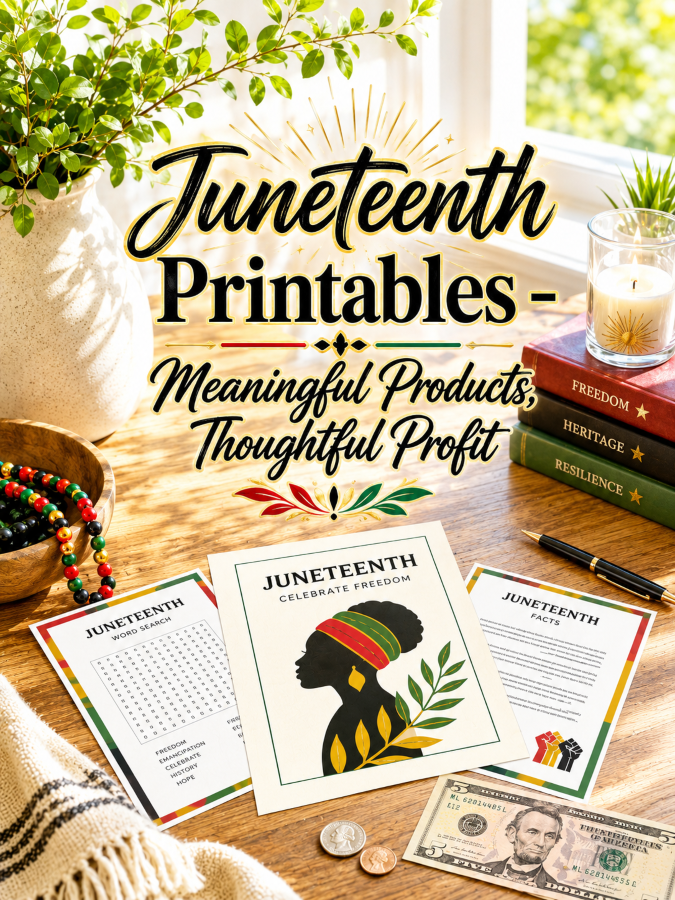
Good printable ideas can include educational activity sheets, reflection journal pages, community event planning kits, conversation starter cards, trivia games, timeline worksheets, family discussion pages, classroom posters, library handouts, and “Celebrate and Learn” printable bundles.
In other words, there’s a lot of possibilities here!
What you are really offering here is accessibility. You are helping someone teach, organize, explain, reflect, or celebrate in a way that feels easier and more prepared.
That matters because many buyers care deeply about doing this well, but they may not have time to create every worksheet, guide, question card, or event page themselves. Your printable becomes the calm little helper on the desk saying, “Here, friend, I brought structure.”
Designing With Intention Instead of Overload
This niche works best when the design supports the message instead of tap dancing in front of it. Clean layouts, readable type, thoughtful spacing, and grounded visuals matter far more than making every inch of the page shout for attention.
When you open Canva, start with clarity. Use readable fonts, generous spacing, and organized sections so the printable feels calm, welcoming, and easy to use.
Rich, grounded color palettes can work beautifully because they create warmth without overwhelming the purpose. Think polished and meaningful, not party supply aisle after a caffeine emergency.
The key focus here is simplicity. Does the design help the buyer teach, reflect, celebrate, or organize more easily? If the answer is yes, you are probably heading in the right direction.
If the page feels cluttered, overly commercial, or too busy, simplify it and bring the purpose back to the center.
Now that you know the basics, let’s move to:
Your 5 Action Steps
Step 1 – Choose One Clear Audience
Start by choosing who your printable is for. That one decision keeps the whole product from wobbling around like a shopping cart with one wheel holding a grudge.
You could create for families, teachers, homeschoolers, churches, libraries, community groups, or event planners. Each audience needs something slightly different, so pick one first and build around their real use case.
Step 2 – Pick One Purpose for the Printable
Next, decide what your printable should help the buyer do. Should it help them teach, reflect, discuss, plan, celebrate, or guide an activity?
This keeps your product focused. A reflection journal page should not suddenly become an event checklist, coloring book, trivia game, and emotional support sandwich.
Let one product do one job well!
Step 3 – Build a Simple First Product
Create one starter printable before trying to build a giant bundle. A simple reflection worksheet, kid-friendly learning sheet, or conversation card set can become your first useful product.
Keep the layout clean, the wording thoughtful, and the instructions easy to follow. The buyer should be able to download, print, and use it without needing computer support and three emergency snacks.
Step 4 – Expand It Into a Small Bundle
Once the first printable feels strong, add companion pages. For example, a reflection worksheet could grow into a journal pack with prompts, discussion questions, timeline notes, and a family activity page.
This is where the product becomes more valuable. You aren’t just selling a page. You are selling a small, helpful educational system that makes the buyer’s day easier, calmer, and more meaningful.
Step 5 – Package and List It Clearly
When you list the product, describe exactly who it helps and how they can use it. Avoid vague phrases like “perfect for everyone,” because everyone isn’t a customer!
(“Everyone” generally tends to appeal to “no one”… at least NOT enough for your printable to sell).
Use clear product photos, simple mockups, and practical examples. Show what is included, how many pages they get, what size the files are, and whether the product is editable in Canva or ready to print.
But let’s go beyond that now with:
3 Creative Tips
Tip 1 – Build Around a Real Moment
Think about when someone would actually use the printable. Would it be during a family dinner, classroom lesson, church event, library program, homeschool activity, or community gathering?
When you design for a real moment, your product becomes much easier to describe and sell! It also feels more useful because it fits into the buyer’s actual life, not some imaginary Pinterest cloud with perfect lighting.
Tip 2 – Add Gentle Guidance
Many buyers appreciate printables that include short instructions or starter notes. A simple “how to use this page” section can make your product feel more complete and beginner-friendly.
This is especially helpful for conversation cards, reflection pages, and educational activities. You aren’t just giving people a file; you’re helping helping them feel prepared!
Tip 3 – Create Age-Specific Versions
One printable idea can become several versions when you adapt it for different age groups. A child-friendly activity sheet will look very different from a teen reflection page or adult discussion guide, after all.
This gives you more product options without forcing you to invent a brand-new idea every time. The tiny profit critters approve, and frankly, they have clipboards.
And once everything is ready to go, it’s time for:
3 Excellent Ways to Get in Front of Customers
Before promoting in any community, become part of the space first. Join conversations, answer questions, share helpful ideas, and understand what people actually need before dropping links like confetti flying off a speeding racecar.
Way 1 – Connect With Teacher and Homeschool Communities
Teacher and homeschool groups often look for seasonal learning resources, but here’s the thing: trust matters! Engage first by sharing helpful tips, lesson ideas, or resource suggestions without immediately promoting your product.
Once you understand what people are asking for, you can create better printables and mention your product only where it fits naturally. Helpful first, selling second. That is the smart order of things.
Way 2 – Share Helpful Content on Pinterest
Pinterest works well for printable products because people search there with planning energy. They’re often looking for worksheets, activities, journals, classroom ideas, and event resources.
Create pins that show the printable in use, not just flat product covers. A pin titled around “Juneteenth reflection activity for families” or “Juneteenth classroom worksheet ideas” can attract buyers who already know what they need and are searching for that specific product.
Way 3 – Partner With Community Event Planners
Local organizations, churches, libraries, and small community groups often need simple event materials. They may appreciate printable signs, schedules, discussion pages, activity sheets, or planning checklists.
You can offer a small free sample or a low-cost starter kit to show the quality of your work. When people see that your product saves time and feels respectful, they are more likely to trust the full bundle.
3 Creative Ways to Find Customers
Way 1 – Search Etsy for Buyer Language
Use Etsy to study how buyers search for similar resources. Look at titles, descriptions, reviews, and common product types, but don’t copy anyone’s work.
You’re looking for language patterns. If buyers mention “classroom activity,” “family discussion,” “kids worksheet,” or “event planning,” those phrases can guide your own product positioning.
Way 2 – Use Pinterest Trends for Planning Clues
Pinterest Trends can help you see when people start searching for related ideas. Seasonal buyers often plan earlier than sellers expect, which is rude but useful.
Use that information to publish your product before the search wave arrives. The goal is to be ready when people start planning, not sprinting behind the trend with one shoe and a half-finished Canva file lagging behind.
Way 3 – Listen to Questions in Education Spaces
Browse public education blogs, teacher resource discussions, homeschool forums, and community event pages to see what people are trying to explain or organize. Questions are product clues wearing tiny business hats, after all.
If people keep asking how to teach the meaning of Juneteenth to kids, how to plan a simple event, or how to start family conversations, that tells you what kind of printable may be helpful.
And when you’re ready to sell? Move to:
3 Ways to Make Money With This Product
Way 1 – Sell a Starter Printable
A starter printable is your simplest entry point. This could be a reflection page, timeline worksheet, classroom activity, coloring-and-learning sheet, or conversation card set.
Keep the price accessible and the value clear. A small product can attract first-time buyers, build trust, and show you which audience responds before you build something larger.
Way 2 – Create a Complete Bundle
A bundle gives buyers a fuller experience. For example, you could include learning sheets, reflection pages, discussion cards, activity ideas, printable signs, event checklists, and a simple planning guide.
This works especially well for families, homeschoolers, teachers, and community organizers who want more than one page. They are buying convenience, structure, and peace of mind. That is a lovely little value sandwich!
Way 3 – Offer Editable Canva Templates
Editable Canva templates can increase the usefulness of your product. Buyers may want to customize event details, classroom names, discussion questions, dates, or activity instructions.
This is especially helpful for event planners, churches, libraries, and community groups. Make sure your instructions are clear, your template links work, and your license terms explain what buyers can and cannot edit.
Your Next Steps
Start with one audience and one purpose. Do not try to create the ultimate Juneteenth printable kingdom on day one, complete with flags, worksheets, journals, signs, and a tiny parade float. Begin with one useful product.
Choose whether you want to help people teach, reflect, discuss, plan, or celebrate. Then create one clean printable that supports that goal with respect and clarity.
After that, expand it into a small bundle. Add companion pages, create clear mockups, write a buyer-friendly description, and list it on a platform like Etsy, Gumroad, or Payhip.
Most importantly, review the finished product before publishing. Ask yourself:
- Is this respectful?
- Is this useful?
- Is this easy to understand?
If yes, you are much closer to creating something buyers can genuinely appreciate.
Conclusion
Juneteenth printables can be a meaningful opportunity when they are created with care, purpose, and real usefulness. This isn’t about chasing a date on the calendar, no. Instead, it’s about helping people learn, reflect, organize, celebrate, and connect in a thoughtful way.
When your printable feels grounded and respectful, buyers respond differently. They aren’t just buying a file. They are buying support for a moment that matters and that, dear reader, that is a powerful reason indeed.
So take one small idea and build it well! Start with clarity, keep the tone human, and create something someone can use with confidence.
That is how a simple printable becomes something far more valuable than another digital download sitting in a folder wearing fuzzy slippers.
Enjoy!