
In a recent episode of the “Mixture of Experts” podcast, IBM AI Engineer Sandi Besen and Chief Architect & DE, Watson X Orchestrate, Gabe Goodhart discussed the evolving landscape of artificial intelligence, touching upon topics ranging from AI ethics in autonomous systems to the creative potential of AI.
The Speakers
Sandi Besen, an AI Engineer at IBM, brings a practical, hands-on perspective to the conversation. Her work at IBM likely involves developing and implementing AI solutions, focusing on the engineering challenges and real-world applications of AI technologies.
Gabe Goodhart, Chief Architect & DE for Watson X Orchestrate at IBM, offers a broader, architectural view. His role suggests a focus on how AI systems are designed, integrated, and orchestrated to solve complex problems, likely with an emphasis on scalability and robustness.
The full discussion can be found on IBM‘s YouTube channel.
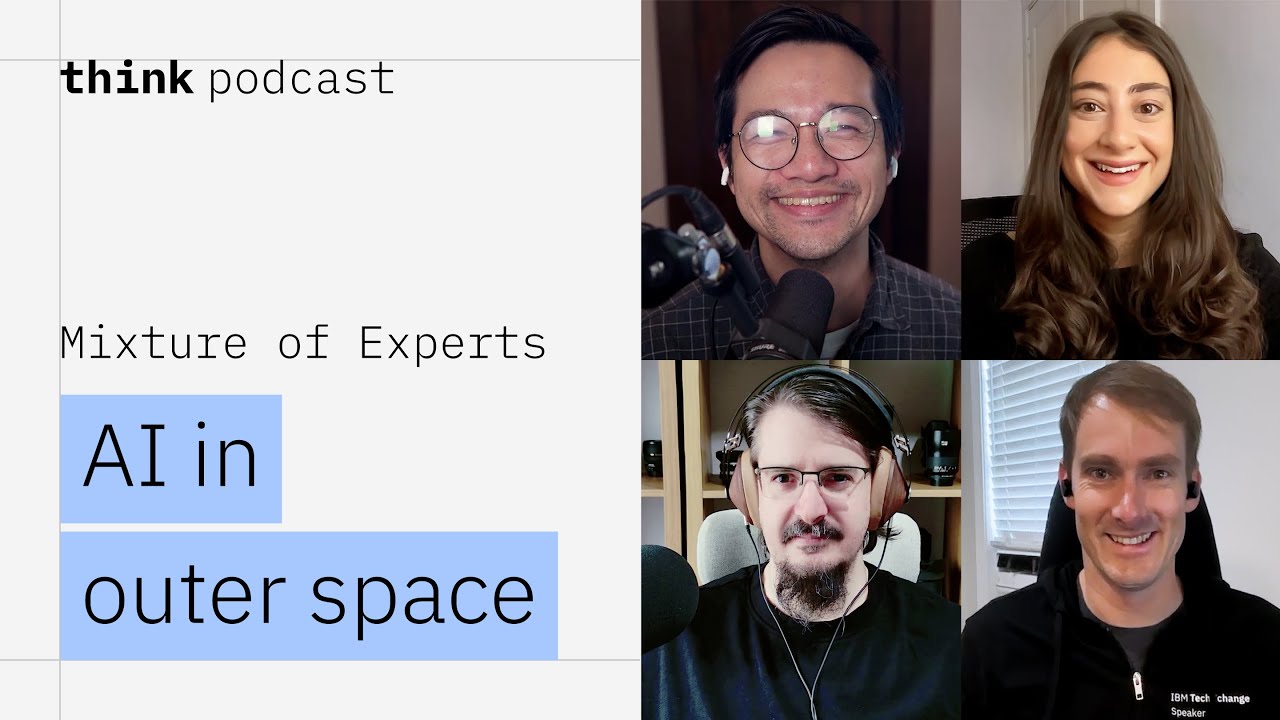
SpaceX IPO & AI data centers in space — from IBM
AI Ethics in Autonomous Systems
The conversation delved into the critical ethical considerations surrounding AI in autonomous systems. Besen highlighted the inherent difficulty in defining clear ethical guidelines for AI behavior, especially in unpredictable environments like space or autonomous vehicles. She emphasized that “nobody’s right until we can actually do it.” This sentiment points to the ongoing challenge of translating theoretical ethical principles into concrete, actionable AI behavior, particularly when unforeseen circumstances arise.
Goodhart echoed these concerns, noting that the development of AI for complex systems requires a deep understanding of potential failure modes and the need for robust safety protocols. He touched upon the idea that simply building AI is not enough; ensuring its responsible and beneficial deployment is paramount.
Cognitive Offloading vs. Surrender
A thought-provoking distinction was drawn between cognitive offloading and surrender in the context of human-AI interaction. Besen explained cognitive offloading as the process of using AI to augment human capabilities, allowing humans to offload tasks and focus on higher-level thinking. This is generally seen as a positive and productive use of AI.
However, the conversation also touched upon the potential for humans to “surrender” their cognitive functions to AI, leading to a decline in human skills and critical thinking. This raises concerns about over-reliance on AI and the potential for a loss of human agency. The challenge, Besen suggested, lies in finding the right balance, ensuring that AI serves as a tool to enhance human capabilities rather than replace them entirely.
AI and Creativity
The discussion also explored the burgeoning intersection of AI and creativity. Besen noted the emergence of AI-generated art and music, raising questions about authorship, originality, and the definition of creativity itself. While AI can generate novel outputs, the human element of intention, emotion, and lived experience remains a key differentiator.
The speakers acknowledged that while AI can be a powerful tool for creative exploration, it also prompts a re-evaluation of what it means to be creative and the role of the human artist in a world where machines can also generate art.
The Future of AI
Looking ahead, Besen and Goodhart discussed the potential for AI to become more integrated into our lives, not just as tools, but as collaborators. They envision a future where humans and AI work together in a symbiotic relationship, augmenting each other’s strengths and compensating for weaknesses. This future, they suggested, hinges on continued progress in AI safety, ethics, and the development of more nuanced human-AI interaction models.