Introduction
There is something about the first day of autumn that makes people look around and think, “Okay, my life needs a tiny broom, a big mug of coffee, and possibly a spreadsheet wearing a sweater.” The air changes, routines start wobbling, and suddenly getting organized does not feel like punishment. It feels like a fresh start with cinnamon on top!
That is why this printable idea works so beautifully. People do not simply want to enjoy autumn. They want to feel ready for it. They want calmer mornings, cleaner routines, better habits, and fewer “where did my entire week go?” moments.
And that is where your cozy little planner marches in, carrying a clipboard and wearing emotional support boots, no less.
You aren’t selling “just another planner.” You’re selling a clean slate! You’re selling that lovely feeling of control when life stops acting like a laundry basket full of squirrels. You’re selling the emotional sigh of, “Ahhh, I can actually do this.”
That emotional payoff matters.
It turns a simple printable into something people want now, buy quickly, and use again and again.
Tools Required
Canva
Use Canva to create your seasonal planners, trackers, reset pages, and cozy printable layouts. It is beginner-friendly, quick to use, and perfect for creating pages that look polished without requiring a design degree or three backup coffees.
Placeit
Use Placeit to create lifestyle mockups that show your printable in warm autumn settings. A cozy desk, a mug, a notebook, and a little leaf situation can make buyers instantly picture your planner in their own lives.
Creative Fabrica
Use Creative Fabrica to find autumn fonts, graphics, clipart, and design elements. Strong visuals help your printable feel more valuable, more giftable, and less like something your printer coughed up during a Tuesday crisis.
Use Pinterest to share seasonal ideas, cozy routine tips, and printable previews. Autumn content can do well there because people are already searching for inspiration, organization, home routines, and fresh-start ideas.
Autumn Planners
Use Autumn Planners to browse seasonal planners for layout and content inspiration. You aren’t copying. You’re studying what buyers already respond to, like a polite little market research detective in fuzzy socks.
And now that your toolbox is ready, let’s move into the actual money-making part.
Your 10 Step Action Plan
Step 1: Research Autumn Reset Ideas
Start by exploring autumn reset routine ideas on Pinterest, Etsy, blogs, YouTube, and seasonal planner listings. Look for repeated themes like habit tracking, meal planning, weekly routines, cozy self-care, decluttering, back-to-school organization, and getting life back under control before the holiday tornado arrives.
As you research, do not just collect pretty ideas. Look for buyer intent. If you keep seeing people talk about chaotic mornings, messy schedules, lost motivation, or needing a fresh start, that is not random chatter. That is your market waving tiny flags.
This step matters because strong products begin with real demand. You want your printable to feel like the answer to something people already want, not like a random folder that wandered into Etsy wearing a scarf.
Step 2: Choose a Clear Printable Theme
Pick one focused concept, such as “The Cozy Comeback Planner,” “Fall Into Focus Planner,” or “Autumn Momentum Workbook.” Your theme should be clear enough that buyers understand it in three seconds, even if their coffee has not started working yet.
A strong theme keeps your product from feeling scattered. Instead of tossing in every page known to humanity, choose pages that support one core promise. For example, this planner could help buyers reset routines, plan their weeks, track habits, organize priorities, and feel calmer during the fall season.
Clarity sells because confused buyers do not buy. They squint, wander away, and suddenly they are watching videos about soup. Keep the promise obvious, warm, and easy to grasp.
Step 3: Design Your Core Pages
Open Canva and begin creating your main printable pages. Choose warm autumn tones, simple layouts, readable fonts, and plenty of breathing room. Cozy does not mean cluttered. Cozy means useful, pretty, and calm enough that nobody needs a nap after looking at it.
Think about how the buyer will actually use each page.
- Can they print it easily?
- Can they write on it comfortably?
- Can they understand what to do without needing a map, a snack, and emotional backup?
The goal is not to make decoration with lines! The goal is to create practical pages wrapped in seasonal charm. When a printable looks lovely and works well, buyers feel safer clicking Buy Now.
Step 4: Add Practical Sections
Include useful sections like habit trackers, weekly planning pages, mood logs, goal pages, seasonal checklists, decluttering prompts, meal ideas, and reflection pages. Each page should earn its place; no lazy filler pages allowed.
People love pretty printables, but they buy printables that solve something like:
- A habit tracker helps them stay consistent.
- A weekly plan helps them see their time.
- A reflection page helps them notice what is actually working.
This is where your printable moves from “cute” to “I need this.” That is the sweet spot. Cute gets attention, but useful gets sales.
Step 5: Export and Test Your File
Export your finished design as a high-quality PDF and print a test copy. This step is not glamorous, but neither is discovering after launch that your margins are acting like rebellious ferrets.
Check spacing, readability, page flow, ink usage, and whether the design still looks good in black and white. Some buyers will print in color while others will print on whatever printer has survived since 2014. Your file should be friendly to both!
Testing builds trust before the customer ever sees the product. A clean file feels professional, and professional products are easier to recommend, bundle, and sell again.
Step 6: Create Lifestyle Mockups
Use Placeit or Canva mockups to show your printable in cozy autumn scenes. Think warm desk, mug nearby, planner pages visible, a soft blanket, maybe a tiny pumpkin minding its own business.
Mockups help people imagine ownership. They stop seeing a PDF file and start seeing themselves using the planner on a calm Sunday morning. That mental picture is powerful because people buy the feeling as much as the file.
Your mockups aren’t decoration. They are visual sales copy. They whisper, “This will make your life feel more together,” which is much nicer than shouting, “Buy my PDF, stranger.”
Step 7: Upload to Sales Platforms
List your printable on Etsy, Gumroad, Payhip, or your own site. Use a clear title, strong images, a helpful description, and tags that match what buyers are actually searching for.
Keep your first listing simple. You do not need to build the world’s most elaborate product empire before launching. You need one useful product, presented clearly, with a buying path that does not feel like solving a toaster puzzle.
Once your product is live, you have created a digital asset. It can sell while you sleep, drink coffee, walk the moose, or stare dramatically at your analytics like a marketing detective.
Step 8: Write a Compelling Description
Your description should focus on what the planner helps the buyer do. Do not simply list “weekly page, tracker, checklist, reflection sheet.” Instead, explain how those pages help them reset routines, feel organized, and move into autumn with more calm and less chaos.
Buyers need to see the benefit quickly. Tell them who it is for, what is included, how to use it, and why it will help. Keep it friendly, clear, and benefit-driven.
Your words should feel like guidance, not a product label. The buyer should think, “Oh, this person gets me,” which is much better than, “Well, that was a paragraph wearing beige pants.”
Right?
Step 9: Promote Through Visual Platforms
Create Pinterest pins, short videos, blog snippets, and social posts that show the planner in action! Consider:
- Show a messy routine becoming calmer.
- Show a weekly plan getting filled in.
- Show the habit tracker helping someone build a tiny win streak.
Make sure every pin or post leads directly to the product listing. Do not make people wander through seven links and a digital corn maze. Clear paths help more people click, understand, and buy.
Seasonal products need seasonal promotion. Start early, post consistently, and keep the visuals warm, practical, and easy to understand.
Step 10: Expand Your Product Line
Once your first planner is live, build variations! Create a daily planner, student version, busy parent version, self-care edition, holiday prep planner, or winter reset follow-up. One idea can become a whole tiny product family.
This matters because repeat customers are easier to sell to than brand-new strangers. If someone loves your autumn planner, they’ll probably also want your winter planner, holiday planner, or new-year reset kit.
Growth comes from building on what works! One printable is a product.
But a connect SET of printables?
A connected set of printables is a shop strategy with a tiny crown!
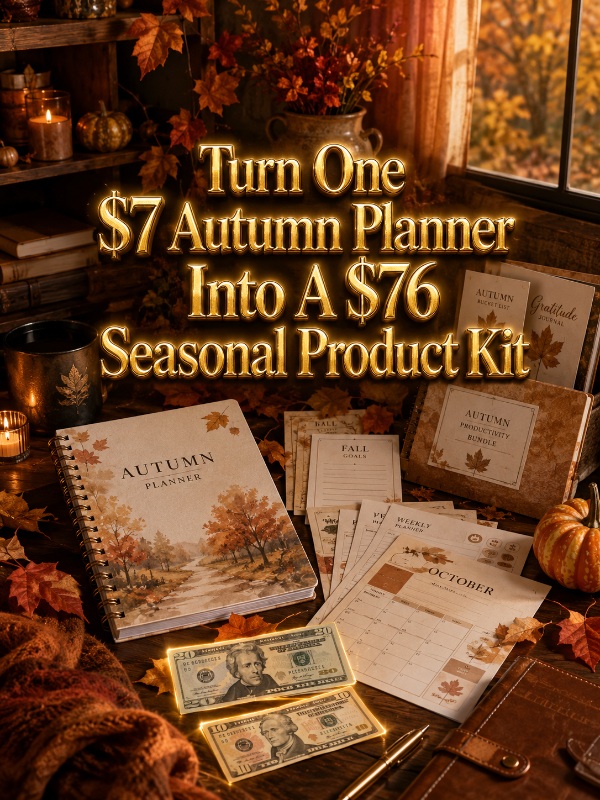
How to Turn One $7 Autumn Planner Into a $76 Seasonal Product Kit
This is where the idea gets more exciting, and also where we keep the pricing realistic. You aren’t taking one basic printable planner, waving a pumpkin wand over it, and suddenly charging $76. That would be adorable, but also mildly ridiculous.
Instead, you are building a value ladder. The $7 version is the simple starter product. Then each higher-priced version adds more usefulness, more convenience, more customization, or more business value. That is how the price becomes believable.
Think of it like building a tiny autumn income staircase. The first step is simple. The next step adds more value. Then you keep stacking useful pieces until your $7 planner has grown into a $76 seasonal product kit with fuzzy socks and a serious little business brain.
$7 – The Simple Printable Planner
Start with a clean, useful PDF planner. This could include a weekly reset page, habit tracker, goal page, reflection page, and simple autumn checklist. Keep it easy to print, easy to use, and easy to understand in about three seconds.
This entry-level offer works because it feels low-risk. A buyer can say yes quickly without needing a committee meeting, a budget spreadsheet, or a long emotional chat with their coffee mug.
At this level, your job is not to include everything. Your job is to create one quick seasonal win. Can the buyer feel more organized in 10 minutes? Good. That is your first tiny profit critter doing its job.
$17 – The Expanded Autumn Reset Bundle
Next, turn the simple planner into a fuller reset bundle. Add more pages, such as meal planning, cleaning reset pages, daily routines, mood tracking, gratitude prompts, budget check-ins, cozy self-care ideas, and weekly review pages.
Now the buyer is not getting one small printable. They are getting a more complete seasonal system. That makes the offer feel more valuable and gives you a natural reason to raise the price.
The magic here is simple. You aren’t charging more just because the leaves got crunchy. You’re charging more because the buyer gets more help, more structure, and more ways to use the product in real life.
$27 – The Guided 30-Day Cozy Comeback Challenge
After that, add a guided challenge. This could be a 7-day or 30-day reset experience that tells the buyer exactly what to do each day. People love a clear path because decision fatigue is real, and it often wears pajamas at 2 p.m.
Each day can include one tiny action, one reflection prompt, and one planner page to complete. For example, Day 1 could be “Clear Your Mental Clutter,” Day 2 could be “Reset Your Morning Routine,” and Day 3 could be “Plan Your Cozy Weekly Rhythm.”
This turns your product from a printable into an experience. That matters because a static PDF is useful, but a guided challenge feels like progress with a friendly coach holding a pumpkin latte.
$47 – The Editable Canva Planner Kit
Now add an editable Canva version. This gives buyers the ability to customize colors, change headings, add their own sections, remove pages they do not need, and make the planner feel personal.
Editable versions are especially appealing to teachers, coaches, bloggers, community owners, and small business owners. They may want to adapt the planner for students, clients, email subscribers, or their own audience.
This is where your product starts feeling more premium. You’re no longer selling only printable pages. You’re selling flexibility, speed, and customization. That is worth more because it saves buyers time and gives them control.
$76 – The Commercial-Use Autumn Reset Income Kit
The $76 version should not be positioned as a regular personal-use planner. That would be a tough sell, unless your planner also folds laundry and makes soup. Instead, position this as a complete seasonal product kit for people who want to use it in their own business.
This version can include the printable PDF, expanded bundle, 30-day challenge, editable Canva templates, commercial-use license, product listing copy, Pinterest pin templates, lifestyle mockups, email promo copy, and a short selling guide.
Now the buyer is not paying $76 for planner pages. They are paying $76 for a ready-to-use seasonal product system they can customize, promote, bundle, or use as a lead magnet, bonus, or paid product.
That is the difference. A $76 planner sounds expensive. A $76 commercial-use autumn reset income kit sounds like a practical shortcut for someone who wants a seasonal offer without starting from a blank screen and a snack-based panic spiral.
The Realistic Price Ladder
- $7: Simple printable planner for personal use.
- $17: Expanded autumn reset bundle with more pages and trackers.
- $27: Guided 30-day cozy comeback challenge.
- $47: Editable Canva planner kit for customization.
- $76: Commercial-use autumn reset income kit with templates, mockups, promo copy, and selling support.
This keeps the promise honest. You aren’t pretending a basic printable magically becomes worth $76. You’re showing how one small idea can grow into a bigger, more useful offer.
And the best part?
You can repeat this same ladder for winter, spring, summer, back-to-school, new year, holiday prep, birthday resets, business resets, and niche audiences. One cozy idea becomes a repeatable product machine with leaves in its hair.
Next let’s explore:
5 Great Ways to Get In Front of Customers
Pinterest Seasonal Inspiration Boards
Create Pinterest boards around autumn routines, cozy organization, planner ideas, seasonal self-care, and fresh-start habits. People go to Pinterest looking for ideas they can use, which makes it a natural home for your printable.
Focus on helping first. Share tips, page previews, routine ideas, and simple seasonal planning examples. When you become a useful source of inspiration, your product becomes the next logical step instead of a pushy sales pitch wearing tap shoes.
Always add value before promoting. Trust builds faster when people feel helped, not hunted.
Blog Content That Solves Real Problems
Write simple blog posts about resetting routines for autumn, planning a calmer week, or getting organized before the holidays. Inside the post, naturally mention your printable as a tool that supports the process.
Helpful content can bring buyers long after you publish it. A good blog post becomes a little traffic helper that keeps working in the background, possibly while wearing reading glasses.
The key is to solve a real problem first. When your content helps people feel understood, your product recommendation feels natural.
Online Communities With Intention
Join communities where people discuss productivity, journaling, planning, homemaking, self-care, or seasonal routines. But do not join and immediately drop links like a caffeinated billboard. That is how trust leaves the room wearing sneakers.
Spend time answering questions, sharing ideas, and becoming familiar. Once people see you as helpful, they become more open to what you create.
Relationships beat random promotion. Every time.
Short-Form Visual Content
Create short videos showing how your planner helps turn a messy routine into something calmer. Before-and-after visuals work well because they show the transformation quickly.
You could show a blank week becoming planned, a habit tracker getting filled in, or a cozy Sunday reset routine using the printable. Keep the videos simple and useful. Nobody needs cinematic fog unless the planner is haunted, and let’s not do that today!
Visual storytelling makes your product feel real. When people see it in use, they can picture using it too.
Email Freebie Strategy
Offer one sample page as a free download in exchange for an email address. A habit tracker, weekly reset page, or autumn checklist can work beautifully.
This gives people a taste of your product before they buy. If the free page helps them, the full planner feels like the natural next step.
An email list also gives you a direct path to future sales. Algorithms may nap, wander, or act moody, but your list stays yours.
5 Super Creative Tips to Make Money
Create a Seasonal Reset Series
Turn this idea into a full seasonal series. Create planners for autumn, winter, spring, summer, holidays, back-to-school, new year, and even birthday month resets.
A series makes your product line feel intentional. Buyers who enjoy one planner may come back for the next one, especially if the design style feels familiar and dependable.
This is how one idea turns into a repeatable income machine. Tiny profit critters love repeatable systems!
Bundle for Higher Value
Bundle several planners together into one bigger product. For example, combine your autumn planner with a habit tracker pack, cozy meal planner, decluttering checklist, and weekly routine pages.
Bundles feel more valuable because buyers feel like they are getting a complete system. That makes it easier to charge more without feeling like you are asking them to trade a kidney for a PDF.
Smart bundling increases your average order value. Same traffic, bigger sale. Lovely little math party.
Add Guided Challenges
Create a 7-day or 30-day autumn reset challenge inside the printable. Challenges make the planner feel more interactive and less like a pile of pretty pages waiting for motivation to arrive.
Each day can include a tiny action, such as clearing one drawer, planning meals, reviewing goals, setting a bedtime routine, or choosing three weekly priorities. Small steps make the buyer feel successful quickly.
When people actually use your product, they remember it. That increases the chance they buy from you again.
Offer Customizable Versions
Create editable versions in Canva so buyers can personalize sections. They can change colors, add names, adjust routines, or adapt pages to their family, business, or school schedule.
Customization makes the product feel more flexible and personal. That can justify a higher price because buyers aren’t simply getting a PDF. They are getting a planner they can shape to fit their life.
You can also sell the editable version as an upgrade. Same core product, more value, better income potential.
Target Specific Audiences
Create versions for specific buyers, such as busy moms, college students, teachers, entrepreneurs, homeschool families, or women resetting routines after a stressful season. Specific products often convert better because buyers feel seen.
A general autumn planner is nice. An autumn reset planner for overwhelmed moms? That feels more direct. An autumn planning kit for Etsy sellers getting ready for Q4? Now the buyer is leaning forward.
Specificity cuts through the noise. It tells the right person, “This was made for you.”
Your Next Steps
Start by opening Canva and creating one simple page. Do not try to build the grand cathedral of autumn productivity on day one. Begin with one useful page, such as a weekly reset planner or habit tracker.
Once that first page works, build the rest around it. Add pages that support the same promise, such as goal setting, routine planning, mood tracking, weekly priorities, and seasonal reflection.
Progress comes from action, not from overthinking until your coffee files a complaint.
After your printable is complete, upload it to Etsy, Gumroad, Payhip, or your own shop. Watch how people respond. Pay attention to clicks, favorites, questions, and sales because those clues tell you what buyers care about.
Every product teaches you something. Maybe your title needs work. Maybe your mockups need more warmth. Maybe buyers love the habit pages but ignore the reflection pages. That feedback is not failure. It is your roadmap with sticky notes.
Then create the next variation. Build a winter version, a holiday version, or a niche version for one clear audience. Each new product strengthens your shop and gives buyers another reason to come back.
And then?
You build the $17 version, the $27 challenge, the $47 editable upgrade, and the $76 bundle!
Momentum starts quietly. Then one day you look up and realize you have a tiny printable empire wearing a cardigan.
Conclusion
Autumn already carries a natural sense of renewal. People feel it in the cooler air, the changing routines, and that sudden urge to organize everything before the holiday season starts tap dancing on the calendar.
When your printable lines up with that feeling, it becomes more than a product. It becomes a helpful companion for someone who wants a calmer week, better habits, and a little more control.
People aren’t only buying planner pages. They are buying the possibility of a better routine. They are buying a small moment of hope wrapped in pumpkins, checkboxes, and warm colors.
That emotional connection is where the real value lives. Your planner supports habits, encourages reflection, and helps someone feel more prepared for the season ahead.
And when a simple digital product does that, it can become part of a steady income stream.
Not bad for a printable with cozy boots, aye?
PS: Useful Resources
Use these links to explore ideas, validate demand, and polish your printable before launch.
- Search autumn planners on Etsy
- Search planner templates on Canva
- Explore autumn ideas on Pinterest
- Find autumn planning communities on Reddit
- Browse autumn planners
Start with one page today. One page becomes a planner. One planner becomes a bundle. One bundle becomes a tiny business sidekick with leaves in its hair.