Introduction
Every fishing trip has a story. Maybe the fish were biting before sunrise, the weather changed halfway through the day, or one particular lure suddenly produced an incredible catch. Experienced anglers know that small details can make a surprisingly big difference on future trips. Unfortunately, many of those details disappear from memory almost as quickly as the fish disappear from the boat.
Anglers often remember the big catch but forget the conditions surrounding it. Water temperature, weather, tide, location, bait, lure, time of day, depth, and technique can all influence a successful outing. Without a reliable record, recreating that success becomes a guessing game. That’s Not a Good Thing when one well-documented trip could provide clues for many future adventures.
That’s exactly where Fishing Trip Logbooks become incredibly valuable. Instead of relying on memory, scattered photographs, or random notes in a phone, anglers can document every trip in one organized system. Over time, the logbook becomes a personal fishing database filled with patterns, favorite locations, successful techniques, memorable catches, and lessons learned.
Fishing attracts recreational anglers, competitive fishermen, families, campers, kayak anglers, tournament participants, and outdoor enthusiasts year after year. Many of them love tracking catches, experimenting with techniques, exploring new waters, and improving their results. That makes fishing logbooks an evergreen printable niche with plenty of room for specialized products.
One thoughtfully designed Fishing Trip Logbook can quietly become the foundation of a profitable printable business while helping anglers turn scattered fishing memories into useful information they can actually use.
Quick Answer
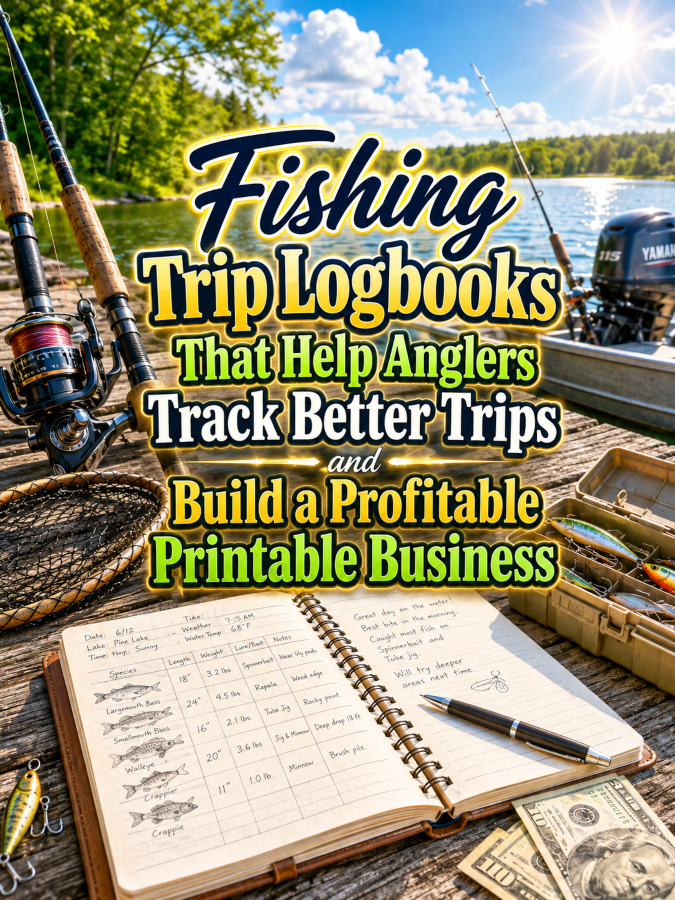
Fishing Trip Logbooks are downloadable printable systems that help anglers record trip dates, locations, weather, water conditions, tides, water temperature, bait, lures, species caught, sizes, techniques, equipment, expenses, photographs, and personal observations.
A starter logbook can comfortably sell for around $7. Expand it into fishing planners, tournament organizers, kayak fishing journals, freshwater logs, saltwater records, family fishing journals, and premium outdoor adventure libraries priced at $27, $47, and even $77.
Your customers aren’t simply buying printable pages. They’re investing in better fishing records, smarter trip planning, improved techniques, memorable experiences, and a personal reference system that becomes more valuable with every trip.
Why This Niche Works
Fishing is a pattern-driven hobby. Anglers constantly pay attention to weather, water conditions, seasons, bait, lure selection, depth, structure, and time of day. A detailed logbook allows them to compare successful trips and identify patterns that might otherwise be forgotten. That makes a fishing journal useful rather than merely decorative.
Fishing is also wonderfully diverse. One angler may spend weekends chasing bass in freshwater lakes, while another targets trout in mountain streams or offshore species along the coast. Those different interests create natural opportunities for specialized printable products that speak directly to each type of angler. That’s always a Good Thing.
Once customers discover your Fishing Trip Logbook, they’ll naturally become interested in camping journals, kayaking logs, hiking adventure journals, hunting organizers, outdoor gear trackers, boat maintenance records, tournament planners, and countless related thingees. One successful fishing product can easily grow into an entire outdoor recreation printable brand.
Unlike short-lived trends, fishing has generations of enthusiasts who return to the water year after year. Prior to pouncing upon this opportunity, you should first know all about the:
Tools You’ll Need
You don’t need a fishing boat sitting in your backyard to create useful printables for anglers. These dependable tools are more than enough to research, design, market, and sell a practical fishing logbook.
- Canva for designing fishing logbooks, catch records, trip planners, equipment trackers, and printable outdoor organizers.
- Google Docs for organizing product ideas, planning worksheets, educational content, and printable instructions.
- AWeber for building an email list with fishing tips, printable freebies, seasonal ideas, and product announcements.
- GetResponse for newsletters, promotions, automated campaigns, and customer follow-up.
- Gumroad for selling downloadable fishing journals and outdoor printable bundles worldwide.
- Teachable if you’d eventually like to teach fishing organization, trip planning, outdoor skills, or fishing business strategies.
- Amazon Fishing Logbook Research for discovering which fishing record pages anglers appreciate the most.
Don’t spend weeks deciding whether your fish illustrations should have slightly larger fins while anglers are searching for a better way to remember which lure worked last Saturday. Your future customers care much more about useful records than decorative details.
Next, move to:
Your 5-Step Action Plan
Follow these five steps unless you’d rather watch another printable creator become the fishing organization expert everyone recommends. The smartest entrepreneurs create products that become more valuable every time customers use them.
Step 1. Research Real Angler Challenges
Spend about 90 minutes exploring fishing Facebook groups, Reddit fishing communities, YouTube fishing channels, outdoor forums, Pinterest boards, and Amazon reviews. Pay attention to the details anglers repeatedly discuss, especially questions about successful locations, lure selection, water conditions, seasonal patterns, and catch records. Those recurring conversations reveal exactly what your printable should help them organize.
Create a master list containing at least 40 to 50 printable pages. Include trip logs, catch records, weather trackers, water condition sheets, lure records, bait trackers, equipment checklists, location notes, tournament records, personal best trackers, expense logs, and annual fishing summaries. Your research becomes an X-ray machine that reveals where anglers need practical organization.
Step 2. Build Your Core Fishing Trip Logbook
Create a collection containing 50 to 70 printable pages that support anglers before, during, and after every fishing trip. Include trip planning worksheets, catch records, weather observations, water conditions, equipment notes, lure performance pages, personal reflections, and future destination planners. Keep every page simple, practical, and easy to use because simplicity is always a Good Thing.
Give anglers plenty of room to record details because experienced fishermen often have more information to remember than a tiny checklist can accommodate. A flexible layout makes the logbook useful for quick weekend trips as well as full-day fishing adventures.
Step 3. Create Specialty Editions
Build separate logbooks for bass fishing, trout fishing, fly fishing, saltwater fishing, kayak fishing, ice fishing, tournament anglers, family fishing trips, and beginner fishermen. Specialized editions immediately feel more valuable because customers recognize that the product understands the type of fishing they actually enjoy.
Each specialty edition expands your audience while strengthening your product catalog. Before long, you’ll have a complete fishing resource library instead of relying on one general-purpose logbook.
Step 4. Add High-Value Bonuses
This is where your Fishing Trip Logbooks begin standing out from the thundering herd. Include printable gear checklists, tackle inventory sheets, personal best trackers, fishing bucket lists, boat preparation checklists, tournament planning pages, seasonal fishing calendars, and catch summary sheets.
Those bonus thingees require relatively little additional design work yet dramatically increase the perceived value of your product. Complete fishing systems are much easier to position as premium resources because they help anglers organize more than just their catches.
Step 5. Build Your Product Ladder
Launch your starter Fishing Trip Logbook for $7 and let it become the foundation of a growing outdoor printable business. Expand into premium fishing planning systems around $27, complete angler binders around $47, and comprehensive outdoor adventure libraries approaching $77. Every additional product naturally complements the others while encouraging repeat purchases.
Before long, your business won’t simply be selling fishing logbooks. You’ll be helping anglers organize their trips, recognize patterns, improve their techniques, preserve their favorite memories, and plan their next adventure with greater confidence.
Once you’ve figured out all of the above, the next step is implementing:
3 Ways to Stand Out From The Thundering Herd!
The fishing printable market is filled with generic catch journals, but many of them barely scratch the surface of what serious anglers want to remember. The Good Thing is that you can create something much more useful by turning a basic fishing log into a personal performance and adventure system. When every page helps anglers understand their trips better, your printable becomes something they actually want to keep using.
Way 1. Turn Every Catch Into Useful Data
Don’t stop at recording the fish species and date. Give anglers space to document weather, water temperature, water clarity, tide conditions, depth, location, bait, lure, retrieve style, time of day, and other observations that may have influenced the outcome. Those details allow customers to compare trips and recognize patterns that could improve future fishing adventures.
Include personal best trackers, successful lure records, seasonal patterns, favorite locations, catch summaries, and post-trip reflections. Those practical thingees transform your logbook from a simple diary into a personal fishing reference system. That’s always a Good Thing because anglers can become better at the hobby simply by paying attention to their own records.
Way 2. Create Specialty Logbooks
Fishing is not one-size-fits-all. Bass anglers have different needs from fly fishermen, while kayak anglers, saltwater fishermen, ice fishermen, and tournament competitors each track different information. Create specialized editions that speak directly to each type of angler instead of forcing everyone into the same generic format.
Specialized products immediately feel more relevant because customers recognize their own fishing style in the pages. That relevance can make your product easier to market and easier for customers to recommend to fellow anglers.
Way 3. Make It Useful Beyond the Water
The fishing adventure doesn’t begin when the first cast is made. Anglers prepare tackle, inspect equipment, check weather conditions, plan routes, organize bait, maintain boats, and review previous trips before heading out. Include preparation checklists, gear inventories, trip planning pages, maintenance records, and post-trip reviews so your logbook becomes useful before and after every outing.
When one printable supports the complete fishing experience, it becomes far more valuable than a collection of blank catch sheets. That’s one of the easiest ways to rise above the thundering herd.
Next, here’s the thing. You’re probably NOT the only person offering this service. So you now require:
3 Nifty Ways to Find Customers
Your ideal customers are already talking about lures, fishing spots, tackle, boats, weather conditions, and memorable catches online. The challenge isn’t finding anglers. The challenge is introducing your product where their conversations are already happening.
Way 1. Fishing Communities
Fishing Facebook groups, Reddit fishing communities, local angling clubs, tournament groups, kayak fishing communities, and outdoor forums are excellent places to introduce practical resources. Offer a free catch record sheet or fishing trip checklist before recommending your complete Fishing Trip Logbook. Helping first builds trust much faster than immediately promoting a paid product.
Anglers naturally share useful gear recommendations and resources with fellow fishermen. One genuinely helpful printable can introduce your shop to a highly targeted audience without requiring a massive advertising budget.
Way 2. Pinterest
Pinterest is packed with searches for fishing tips, tackle organization, fishing trip ideas, outdoor adventures, bass fishing, fly fishing, and camping. Create attractive pins featuring catch records, tackle checklists, trip planners, personal best trackers, and fishing journal spreads that encourage anglers to save your content for their next outing.
Because Pinterest content can continue appearing in searches long after publication, your early pins can keep sending potential customers to your product pages. Trust me, you’ll thank me later.
Way 3. Fishing Creators and Outdoor Brands
Fishing bloggers, YouTube anglers, tournament competitors, outdoor photographers, fishing guides, tackle reviewers, and outdoor influencers already have highly targeted audiences. Reach out with affiliate partnerships or printable bundle opportunities that allow them to recommend your logbook alongside their fishing content. Their recommendations can carry considerable weight because their followers already trust their experience.
Strategic partnerships also give you opportunities to create specialized versions around particular fishing styles, regions, or audiences. Strong relationships can become a valuable source of traffic long after the initial collaboration.
Speaking of long-term growth, now let’s move to:
3 Takeaways You Won’t Find Elsewhere!
Many printable creators think they’re selling fishing journals. The most successful entrepreneurs understand they’re helping anglers turn experience into knowledge. That difference gives your product a much stronger emotional and practical value.
Takeaway 1. You’re Selling Better Fishing Decisions
Your customers aren’t purchasing pages simply to record the size of a fish. They’re investing in a system that helps them remember what worked, understand changing conditions, prepare more effectively, and make smarter decisions on future trips. Those benefits become increasingly valuable as their collection of fishing records grows.
When writing product descriptions, focus on the knowledge customers can build over time instead of simply listing the number of pages included. You’re helping anglers create their own personal fishing playbook.
Takeaway 2. Every Trip Adds Another Piece of the Puzzle
A single fishing trip may not reveal much, but dozens of documented outings can uncover useful patterns. Anglers may discover that certain lures work better during specific seasons, that particular locations perform better under certain conditions, or that their best catches happen during specific times of day. That accumulated information gives the logbook increasing value with every entry.
This creates a powerful reason for customers to keep using your product rather than treating it as a one-time purchase. The more they record, the more useful their personal fishing database becomes.
Takeaway 3. One Logbook Can Become an Entire Outdoor Brand
Your Fishing Trip Logbook can naturally expand into tackle inventory planners, boat maintenance records, tournament organizers, kayak fishing journals, camping planners, hunting logs, hiking journals, outdoor bucket lists, and complete adventure libraries. Those connected thingees encourage repeat purchases because each product supports another part of an outdoor enthusiast’s lifestyle.
Before long, anglers won’t simply recognize your fishing logbook. They’ll know your shop as a dependable source of practical outdoor organization resources.
Now that you know the above, it’s time for:
3 Common Mistakes to Avoid
Many creators make their logbooks too generic. That’s Not a Good Thing. Anglers appreciate details that reflect real fishing conditions, including weather, water temperature, lure selection, depth, location, and catch information. Give customers enough flexibility to document the details that actually matter to them.
Some sellers forget about preparation. Fishing trips involve much more than recording catches. Gear preparation, tackle organization, boat checks, route planning, weather research, and post-trip equipment maintenance all create opportunities for useful printable pages. Supporting the complete adventure makes your product far more valuable.
Others stop after creating one fishing journal. That’s like opening a tackle shop with one lure on the shelf. Continue expanding into bass fishing logs, fly fishing journals, kayak fishing planners, tournament binders, boat maintenance records, tackle inventories, and outdoor adventure planners to build a stronger printable business.
What else should you know? How about:
Scaling Your Results
Expand into a complete angler ecosystem. Create tackle inventory planners, boat maintenance binders, tournament organizers, kayak fishing journals, bass fishing logs, fly fishing planners, camping journals, outdoor bucket lists, fishing goal trackers, and seasonal fishing calendars that naturally complement your original Fishing Trip Logbook. Every additional printable strengthens your catalog while encouraging repeat purchases from loyal anglers.
Create a Fishing Adventure Membership. Release fresh printable pages every month featuring seasonal fishing planners, catch trackers, tournament worksheets, tackle organization pages, fishing challenges, outdoor checklists, and exclusive angler resources. Members continue improving their fishing organization throughout the year while your business benefits from dependable recurring revenue.
Build an email list anglers genuinely appreciate. Share fishing tips, printable freebies, seasonal reminders, tackle organization ideas, trip planning advice, outdoor inspiration, catch-tracking resources, and fishing productivity strategies throughout the year. A collection containing 40 outdoor printable products could realistically generate an additional $700 to $2,200 each month through memberships, bundles, repeat customers, and affiliate partnerships. Trust me, you’ll thank me later.
Let’s now wrap up everything via the:
Your Next Steps
Start by listing everything an angler does before, during, and after a fishing trip. Think about checking weather conditions, selecting tackle, preparing bait, planning the destination, recording catches, documenting successful techniques, maintaining equipment, and reviewing the day’s results. Those recurring activities will naturally become the foundation of your printable collection.
Design your first Fishing Trip Logbook in Canva using clean layouts, generous writing space, practical record pages, and consistent branding that can easily expand into future fishing products. Focus on helping anglers capture useful information rather than filling every page with decorative fish graphics. Functional organization tools almost always become the resources customers use repeatedly.
Then introduce your logbook to five fishing Facebook groups, Pinterest boards, outdoor communities, fishing bloggers, or YouTube anglers. Remember, 5 good messages beats 50 generic ones every single time. One thoughtfully designed Fishing Trip Logbook can quietly become the beginning of an entire outdoor printable business.
Next, let’s finish with:
Final Thoughts
The best anglers don’t simply remember their biggest catches. They remember the conditions, techniques, locations, and decisions that helped create those successful days on the water. A Fishing Trip Logbook gives them a practical way to capture that information while preserving the stories and memories that make fishing such a rewarding pastime. That’s an incredible transformation from a simple printable product.
So, begin by creating one logbook that solves one meaningful fishing organization challenge exceptionally well. Continue listening to customer feedback while expanding your collection into matching angler and outdoor resources that naturally work together. Before long, you’ll have a printable brand that fishermen enthusiastically recommend to fellow anglers.
You don’t need bazillions of unrelated printables to build meaningful income. You simply need one thoughtfully designed Fishing Trip Logbook that helps anglers remember what worked, improve their next trip, and keep every great fishing story alive.
That’s it. That’s your beginning!
If you were creating your first Fishing Trip Logbook tomorrow morning, would you design it for bass anglers, fly fishermen, kayak anglers, saltwater enthusiasts, tournament competitors, or families who simply love fishing together?
Enjoy!