Introduction
Imagine this.
You are walking down the street, sipping your coffee, enjoying your day – when suddenly you spot her.
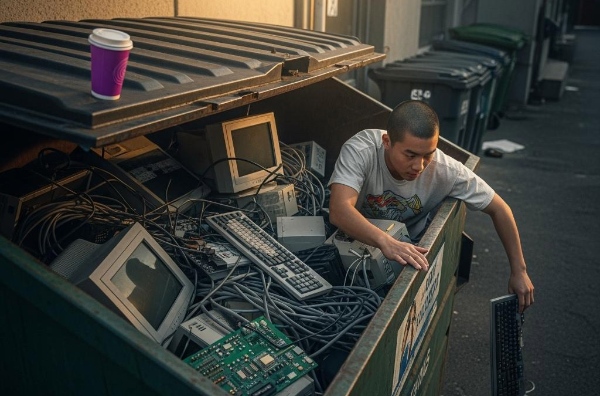
Half-buried in a giant dumpster.
Her legs are flailing. One arm is balancing what looks like a tangle of old cords. The other is triumphantly holding up something… square? Beige? Definitely not modern.
“What on earth is she doing?” you wonder.
Well – brace yourself – because you are about to find out!
She is hunting treasure.
And not the pirate kind. Nope – she is dumpster diving for vintage tech.
You see, while the rest of the world scrolls TikTok and dreams about NFTs, there is a quiet underground world filled with people who lose their minds over things like original Nintendo cartridges, 1980s boom boxes, floppy disk drives, ancient computer parts, and even dusty Betamax players.
And here is the kicker.
People will pay real money for this stuff.
Some collect. Some repair. Some resell. Some rebuild Frankenstein-like contraptions that somehow bring these ancient gadgets back to life.
Meanwhile, our friend in the dumpster? She is making bank.
And you? You are about to learn how to join her.
Stick with me here – this is going to be fun.
What This Report Is (and Why You Should Be Ridiculously Excited)
Many people look at old tech and say, bleh. Dust!
But not you! In your case – you are wise enough to see the potential profits waiting patiently under the dust to be discovered.
And do not worry – you will not be required to live inside a garbage can like Oscar the Grouch. This is smart, clean(ish), targeted treasure hunting. You will learn where to look, what to grab, and exactly how to turn it into real dollars.
The money is waiting! Want to see how you can both collect it AND provide an awesome service as well? Read on!
How to Make Money in This Niche
Monetization Method #1: The Parts Flipper
Here is the revenue-building little secret about old tech: even when it does not work, people still want its guts.
Collectors, hobbyists, and repair technicians need parts. And not just any parts – specific ones that only came from machines built decades ago. Those parts are not mass-produced anymore. Which means? You have got leverage.
Imagine pulling an old VCR from a dumpster. Sure, nobody watches VHS tapes anymore (unless you are that one weird uncle), but inside that VCR? Gears. Motors. Belts. Circuit boards. Sensors. And yes – those are worth money.
You do not even have to know what half the parts are. That is the beauty of it. Somebody out there knows. Somebody out there needs it. Somebody out there is willing to pay.
Let us break it down.
-
Open up the device carefully.
-
Separate key components like circuit boards, ribbon cables, stepper motors, laser assemblies, or power supplies.
-
Clean them up a bit.
-
Photograph each part clearly with good lighting.
-
List them individually on eBay, Etsy, or niche forums like Reddit’s r/HardWareSwap.
For example:
-
A vintage laser lens assembly from a CD player can sell for $40 – $100.
-
Stepper motors for floppy disk drives? $15 – $30 each.
-
Original ribbon cables for retro gaming consoles? $10 – $50 depending on rarity.
And here is the kicker – one dumpster score can yield dozens of parts.
You are not selling “an old VCR.” You are selling 10 – 20 individual pieces from inside the old VCR. That is how you multiply small finds into big payouts.
You do not need to be a tech wizard. YouTube will happily teach you how to safely disassemble almost any vintage device. And once you get familiar with common components, you will start recognizing which units are absolute goldmines.
Bonus tip: damaged devices are often more valuable for parts than working units. The repair community needs those spares. Ask me how I know.
Once you get in the groove, you will never look at e-waste piles the same way again.
Monetization Method #2: The Nostalgia Reseller
Brace yourself – this part gets fun.
Humans are sentimental creatures. And nothing sparks warm fuzzy feelings like the technology of our youth.
Remember the satisfying click of inserting a VHS tape? The clunky beep of an old Nokia phone? The oversized buttons on a 1980s boombox? Yep. Those memories are valuable.
Collectors will pay ridiculous sums to recapture that nostalgia. And you, my friend, will happily sell it to them.
This strategy is not about tearing things apart. This is about finding complete, working (or mostly working) units and flipping them to eager buyers.
Let us say you pull out:
-
A Nintendo 64 console with controllers.
-
A Sony Walkman that still plays tapes.
-
An Apple iBook G3 clamshell laptop.
-
A functioning IBM Selectric typewriter.
You clean them up. You test them. You photograph them beautifully. You list them on collector sites, eBay, or specialized Facebook groups.
Prices?
-
Nintendo 64 bundles can easily fetch $150 – $300.
-
Original Walkmans regularly sell for $80 – $200.
-
iBook G3 clamshells? $250 or more if working.
-
IBM Selectric typewriters? $150 – $400 depending on model.
And do not even get me started on vintage calculators. Some old Hewlett-Packard models sell for $500+ to collectors.
Now – you will occasionally need minor repairs. But here is where it gets fun: entire communities exist who teach these repairs for free. YouTube is your friend. Forums like Vintage Computer Federation or iFixit will become your new hangouts.
Plus, you will start learning what has resale heat just by watching sold listings. Pay attention. Some models nobody cares about. Others? Instant bidding wars.
The best part? Once you build your reputation, collectors may start reaching out directly, asking you to find specific models. That is when you start feeling like a treasure broker.
Monetization Method #3: The Rare Parts Locator
Some people spend months searching for one little part. One tiny piece that will bring their beloved retro tech back to life. You can be the hero who finds it for them.
The Rare Parts Locator model is about building relationships with collectors and repair techs who need obscure parts. Instead of just listing everything publicly, you maintain a private client list.
How does it work?
First – hang out where the hardcore collectors live:
-
Facebook Groups: Retro Gaming, Vintage Audio, Old Computer Restoration.
-
Subreddits: r/retrogaming, r/vintagecomputing.
-
Forums: AtariAge, Vintage Computer Federation.
You will quickly see posts like:
-
“Looking for a replacement drive belt for a Sony TC-WE475.”
-
“Need a functional CRT flyback transformer for a Commodore 1084S.”
-
“Hunting for a keyboard membrane for a ZX Spectrum.”
When you find these parts in your dumpster diving adventures, reach out. Offer your find directly. Build your client list.
After a few good deliveries, these folks will start messaging you.
Why does this model work so well?
Because time is money.
These hobbyists and technicians could spend months scouring listings. You are saving them time – and they are happy to pay for it.
Rare Parts Locator pricing can be significantly higher than standard eBay prices due to convenience and scarcity. A part that might sell for $30 on eBay could easily bring $75 when offered directly to a desperate buyer who has been searching for six months.
You become a tech archaeologist. The one who digs up ancient treasures lost to time – and makes good money doing it.
Monetization Method #4: The Vintage Tech Curator
Now we level up.
Instead of selling random pieces here and there, you build full curated vintage tech packages. Think of it like creating “starter kits” for collectors, museums, educators, or YouTube tech reviewers.
Packages might include:
-
A complete 1990s gaming setup: console, games, controllers, cables, and instructions.
-
A retro office bundle: working dot-matrix printer, IBM PC, vintage keyboard, and mouse.
-
A 1980s audio center: receiver, speakers, dual cassette deck, and boom box.
These bundles fetch premium prices because you are doing the hard work of assembling complete, functional sets.
Examples:
-
Full Nintendo 64 bundles regularly sell for $500+.
-
Retro office setups can pull in $1,000+ for serious collectors.
-
Complete audio systems often go for $300 – $800 depending on condition.
Buyers love turnkey packages because:
-
No hunting for missing parts.
-
Everything is tested and functional.
-
Aesthetic consistency across components.
Presentation is everything here. Clean, polish, photograph from multiple angles, and write engaging descriptions that highlight the nostalgia factor.
“Relive your 1985 mixtape days with this fully operational dual-cassette Sony sound system. All you need is your favorite hair metal cassette.”
That kind of copy sells.
Plus, once you build a reputation as a curator, repeat buyers will return. Many collectors want multiple setups – or may recommend you to friends.
And here is the kicker – these buyers often do not haggle. They know the value of complete, functional vintage tech packages. They are happy to pay premium prices for the convenience.
Monetization Method #5: The Content Creator Hustle
Alright – now let us talk about the wild card.
What if you could make money not only from the tech you pull… but from documenting the entire dumpster diving adventure itself?
Content creation around vintage tech is booming.
People LOVE watching:
-
Dumpster diving haul videos.
-
Restoration projects.
-
“Will it still work?” tests.
-
Repair tutorials.
-
Retro tech reviews.
YouTube channels like “Techmoan” and “LGR” have millions of views doing exactly this.
You do not need fancy equipment to start:
-
A smartphone with decent video.
-
A cheap lav mic.
-
Good lighting (natural works fine).
Film your hunts. Show your finds. Document your restorations. Share the stories behind the devices.
Once you build an audience, monetization kicks in:
-
YouTube ad revenue.
-
Affiliate links for repair tools.
-
Sponsored videos from tech brands.
-
Patreon supporters.
-
Selling the restored units to your fans.
Viewers love seeing behind-the-scenes footage of you pulling an old IBM keyboard from a dumpster, cleaning it up, and flipping it for profit. It is educational AND wildly entertaining.
Plus, content creation builds your authority. Buyers trust you more. Collectors reach out. Opportunities multiply.
This model snowballs beautifully. And you never run out of new material – because dumpsters keep filling.
Content creation turns your vintage tech side hustle into a full-fledged personal brand.
So let’s see just how you can get into this!
Tools You Need
Before you go leaping into dumpsters like some sort of caffeinated raccoon, let us gear you up properly. The right tools make this both safer and far more profitable.
Let’s Go Hands On:
- Heavy-Duty Work Gloves – Trust me – you do not want to go barehanded when sifting through piles of discarded electronics. Rusty screws, sharp plastic edges, mystery goo – these gloves keep your hands intact and looking fabulous.
- Headlamp – Dumpsters and storage units are dark. A good headlamp leaves your hands free and lets you see every valuable wire hiding in the shadows like a sneaky little tech goblin.
- Multi-Bit Screwdriver Set – Vintage tech was built like little fortresses. This set gives you every weird head you will need to crack them open safely without shredding the screws.
- Plastic Pry Tools – Prying open old plastic shells without snapping the whole thing in half requires these beauties. They are your gentle, non-destructive entry ticket.
- Anti-Static Wrist Strap – Old circuit boards hate static. This cheap little band keeps your hands from frying fragile parts while you dismantle your treasure.
- Cleaning Gel Putty – Scoop out years of dust and grime from keyboards, buttons, and crevices. Watching this goo pull gunk is oddly satisfying – and necessary.
- Compressed Air Cans – Blasting dust bunnies out of ancient devices feels like therapy. Plus, clean internals help your items sell better.
- Digital Multimeter – Testing power supplies, batteries, and circuits becomes a breeze. A simple multimeter can save you hours by identifying dead or healthy parts.
- Label Maker – Once you start stockpiling parts, you will want clear labels to track what everything is. Future you will thank you profusely.
And Now, External Tools:
- eBay – Your primary sales platform. Massive audience. Active collectors. Great searchability for rare parts.
- Facebook Marketplace – Excellent for local buyers who want to inspect items in person – especially for large or heavy equipment.
- iFixit Repair Guides – Your virtual mentor for disassembling and repairing pretty much any device under the sun. Step-by-step guides galore.
- Vintage Computer Federation – A brilliant online community of vintage computer collectors and restorers. Networking here opens doors to high-end buyers.
- YouTube – Your stage for showcasing repair content, haul videos, and restoration tutorials. Builds trust, audience, and extra income streams.
- Reddit Vintage Subreddits – Where obsessive retro tech collectors gather, share, and buy. Priceless for learning current market desires.
- Patreon – Once you have content fans, this lets your biggest supporters fund you directly for behind-the-scenes exclusives.
Good stuff! Let’s now, ahem, “DIVE” (get it? DIVE? Dumpster DIVING? Hahahahahaahhahacoffee thank you, I feel much better now) into:
How to Get Started
Step 1: Study What Actually Sells (Do Not Assume!)
Here is where most people blow it. They assume anything old is valuable. Nope. Plenty of old junk is, well… just old junk.
So your first real job is simple – become an eBay detective. Spend serious time researching SOLD listings, not just what people ask for. You want proof of actual buyers spending real money.
Make a spreadsheet. Yes – like a real grown-up, adult spreadsheet. Write down:
-
Item name.
-
Brand.
-
Model number.
-
Selling price.
-
Condition (working, parts only, refurbished).
Patterns will start popping out like groundhogs in springtime!
You will spot which brands command premium prices (hello Sony, Apple, and IBM). You will learn which consoles, audio equipment, and computer parts are always in demand. You will also learn which ones are complete duds.
Trust me – this step saves you from dragging home worthless boat anchors.
Step 2: Scout Your Local Territory (Find Your Gold Mines)
This is where the thrill kicks in. You will become very familiar with your town’s hidden treasure zones.
Map out locations like:
-
College dorms during move-out season (spoiler: students abandon LOTS of gear).
-
Office parks upgrading their equipment.
-
Tech companies liquidating outdated inventory.
-
Storage unit auctions.
-
Electronics recycling centers.
-
Estate sales and flea markets.
Print a simple map, circle your top 10 spots, and schedule regular visits. The more consistent you are, the more hidden gems you will score. Inventory turnover happens fast – you snooze, you lose.
Your goal? Turn these places into regular routes you can cruise like a Sunday morning yard sale tour. The more familiar you are with your town’s “tech dumping schedule,” the more money you will make.
Step 3: Build Your Dumpster Diving Gear Kit (Be Ready Always)
Imagine scoring a loaded dumpster – but you left your tools at home. Total heartbreak.
So prepare your Tech Treasure Kit:
-
Heavy-duty gloves – because sharp things happen.
-
Bright headlamp – some dumpsters are dark caves of mystery.
-
Multi-bit screwdriver set – tech is always screwed shut.
-
Plastic pry tools – open things without cracking fragile plastic.
-
Digital multimeter – test power supplies and boards on the spot.
-
Anti-static wrist strap – keep fragile boards safe.
-
Giant tote bin – carry your scores home like a pro.
Keep this kit packed and ready in your car at all times. You never know when opportunity strikes!
And yes, you will look hilariously professional to onlookers who wonder why you are emerging from dumpsters like Indiana Jones.
Step 4: Build Your Nerd Network (The Secret Shortcut)
Here is where most amateurs stall out – they work alone. Big mistake.
You need to plug into:
-
Vintage gaming Facebook Groups.
-
Electronics repair forums.
-
Subreddits like r/retrogaming, r/vintagecomputing.
-
Discord servers for tech enthusiasts.
-
Local repair shops that might buy from you.
Post photos of your finds. Ask questions. Offer parts. Make friends!
Once people know you can regularly score rare items, they will start contacting you with requests.
This network eventually becomes your private buyer list – pure gold. When a rare part lands in your hands, you already have hungry customers waiting.
Step 5: Practice Gentle Disassembly (No Barbarian Tactics)
Listen – you are not smashing open coconuts here. You need finesse.
When you get your first batch of devices home:
-
Set up a clean, well-lit workspace.
-
Use your plastic pry tools to separate casings.
-
Bag and label every part carefully.
-
Photograph parts during disassembly – this helps your listings later.
Watch YouTube disassembly guides for unfamiliar models. Some of these old devices have tricky hidden screws and clips. Break one fragile ribbon cable, and poof – there goes your profit.
Think surgeon, not caveman.
Step 6: Clean Like a Magician (The Buyer Loves Shiny)
Dirty sells slower. Shiny sells fast.
I like shiny and fast, don’t you? So!
Clean every part gently:
-
Use compressed air to blast out dust.
-
Apply isopropyl alcohol (carefully!) for surface grime.
-
Gel putty works miracles inside buttons and crevices.
-
Polish outer shells gently with microfiber cloths.
Restoration magic is part of the fun. Your goal? Make every item look as close to “fresh out of 1987” as humanly possible.
Bonus? Buyers pay 15% to 40% more for spotless gear.
Step 7: Craft Killer Listings (The Sale Happens Here)
This is where the rubber meets the road.
Each listing should include:
-
Bright, clear, close-up photos from multiple angles.
-
Model numbers clearly visible.
-
Honest condition notes.
-
What has been tested.
-
What repairs were done.
-
Any known issues disclosed.
Write your descriptions like you are speaking to an excited collector, not some boring warehouse robot. Example:
“Original Nintendo 64 with two controllers, fully cleaned, tested, and plays perfectly. Includes power supply and AV cables. Cosmetic wear on joystick (see photos). Relive your GoldenEye days in full glory.”
This tone builds trust AND excitement.
Step 8: Ship Like a Pro (Protect Your Reputation)
Buyers get angry when their delicate vintage gear arrives smashed. Protect your reputation fiercely.
For every package:
-
Double box fragile items.
-
Bubble wrap every surface.
-
Use sturdy boxes with reinforced corners.
-
Add ‘FRAGILE’ stickers even if the post office ignores them.
The extra care pays off in glowing reviews, repeat customers, and zero refunds.
Step 9: Document the Adventure (Double Your Monetization)
Remember – you are not just flipping old tech. You are building a brand.
Start filming:
-
Dumpster haul days.
-
Restoration projects.
-
“Can we fix it?” repair attempts.
-
Full resales and profit breakdowns.
Post on YouTube, TikTok, Instagram. People LOVE this stuff. You will attract:
-
Ad revenue.
-
Sponsorships.
-
Affiliate sales.
-
Buyers who watch your content.
Even your mistakes make great content. People love seeing you struggle and succeed. It feels real.
Step 10: Scale Up with Systems (Turn Hustle Into Business)
Once you have momentum:
-
Set regular scavenging routes.
-
Build supplier relationships with recyclers.
-
Rent small storage for organized inventory.
-
Hire help for listing and packing.
-
Launch your own website or Shopify store.
-
Create premium restoration services for high-end buyers.
At this stage, you are not dumpster diving – you are running a specialized, profitable, and honestly very fun niche empire.
Whew. You still with me? Good – because we are just getting warmed up. Let’s consider:
5 Creative Tips
-
Create “Rescue Missions” with Your Followers. Announce live scavenger hunts where followers suggest locations or challenge you to find specific items. Engage your audience directly while sourcing inventory and boosting your content views.
-
Launch a “Tech Orphan Adoption Service.” Give discarded devices playful personalities. Market them as “adopting” retro gadgets that deserve a loving home. Creates emotional appeal and helps drive sales from buyers who love the nostalgia.
-
Bundle Repair Guides With Sales. Include simple printed repair instructions or video links when selling parts. Makes your listing more attractive to nervous buyers who want help fixing their devices.
-
Offer a Vintage Tech Subscription Box. Curate monthly mystery boxes containing small collectible parts, stickers, retro goodies, and surprise finds. Build recurring revenue while offloading your small-item inventory.
-
Host “Fix-It Nights” Locally or Online. Invite hobbyists to virtual or physical events where you walk through live repairs. Charge a small fee, build community, and often pick up additional parts sales during the events.
Followed by:
5 Powerful Takeaways
- Your town is loaded with money people overlook. Old tech piles are everywhere – if you know where to look.
- Every broken device hides multiple income streams. From parts to restorations to content – one dumpster dive can fuel weeks of sales.
- Collectors are emotionally invested. Nostalgia buyers are often willing to pay premiums for complete, working, shiny devices.
- Content supercharges your reach. Filming your journey turns a side hustle into a full personal brand.
- Small consistent effort compounds rapidly. One hour per day quickly turns into serious income and expertise you never imagined.
Betcha you never knew this, aye? 🙂 And now that you know how to Dumpster Dive for Vintage Tech, let’s move to:
Your Next Steps
Let us be honest – you are probably feeling two things right now.
One part of you is thinking, “This actually makes total sense!”
And the other part? Well, it is probably whispering, “Jeepers! But where do I even start?”
Do not worry – we are not building the Great Wall of China here.
Instead, we’re building a tiny lemonade stand that happens to make people feel safe, seen, and slightly amused.
Here is exactly what you can do next:
- Pick ONE monetization method from this report. Start with the one that feels easiest for you right now. Parts flipping? Nostalgia reselling? Content creation? Rare part locating? Choose your starter quest.
- Set a tiny first milestone. This could be researching your local recycling centers, buying your first tool kit, or simply scouting one dumpster this weekend. Tiny wins stack up faster than you expect.
- Make it real by blocking off your first “build session.” No need for marathon hours. Just one focused hour where you work on your first find. That is all it takes to flip the mental switch.
- Tell somebody you trust. Saying out loud, “I am building a vintage tech treasure business,” turns this from a fun idea into a serious project. You will be surprised how much encouragement you receive.
- Bookmark this report. You will come back to it repeatedly. Each time you revisit, you will realize how far you have traveled since your first hesitant dive.
Remember – your curiosity, humor, and passion are your secret weapons.
And you will be helping preserve pieces of history that others never thought twice about.
One brave step forward. That is all you need today!
What You Have Just Learned
You now hold the playbook for turning dumpsters into dollars.
You learned how to scout, disassemble, clean, sell, and scale – while creating content that pulls people into your wild journey. This is not just dumpster diving.
This is niche empire building, one floppy disk and VCR at a time!
And let us be honest – who else gets to say their business involves flashlights, gloves, and the sweet smell of 1980s plastic?
Now go – your future treasures are waiting.
Enjoy!