Artificial Intelligence & Machine Learning
,
Next-Generation Technologies & Secure Development
Cybersecurity Regulator Says Saraab AI Model Can Spot Deepfakes With 91% Accuracy
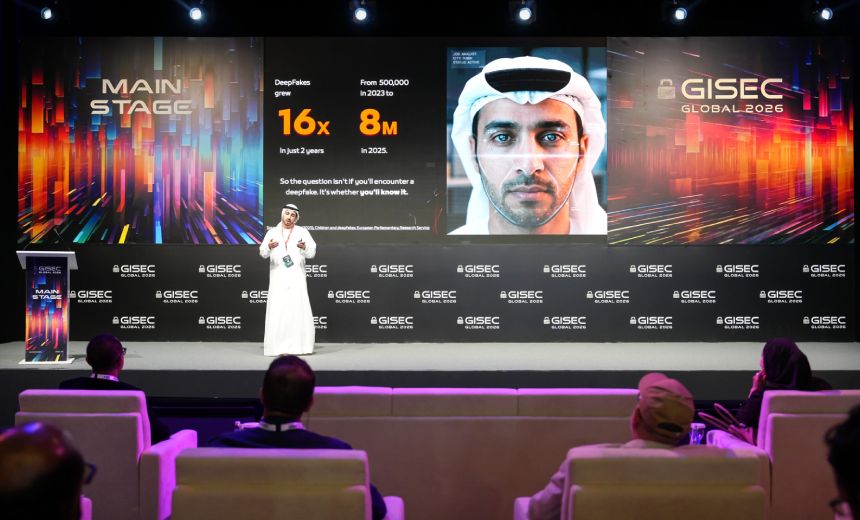
Officials from the Dubai Electronic Security Center unveiled Saraab, an AI tool for detecting deepfake videos at a GISEC cybersecurity event on Sept. 16, 2026. (Image: GISEC)
The Dubai Electronic Security Center, the Middle Eastern emirate’s cybersecurity regulator, has built an artificial intelligence model called Saraab that detects deepfake videos, and plans to open source it by the end of the year so it can be tested, used and improved by researchers, AI companies and cybersecurity experts.
See Also: Unit 42 Breaking Insights: Combat Risks from Frontier AI Models
It is the first model of its kind developed by a government agency in the Arab world, said DESC CEO Yousuf Hamad Al Shaibani, announcing the news last week at the huge GISEC Global cybersecurity event in Dubai. He added in a statement that Saraab reflects “our ambition to develop solutions and expertise that originate in Dubai and create an impact beyond its borders.”
The model, which analyzes faces and other elements of a video to determine an overall confidence score whether it’s fake or not, is 91% accurate, DESC official Hassan Majab told ISMG, making it the most effective way available to distinguish deepfakes.
Majab said Saraab would be added to the open-source models available in the Hugging Face library under a research and learning license. “Anybody can download it, and use it,” he said, “Maybe in a year from now, when the deepfake technologies get more advanced, somebody can take it and improve on it.”
“Like everyone else working in this area, we learn from each other when we see each other’s work, and we get more expertise from each other,” Majab said.
Saraab starts work by analyzing faces in the video, looking for tiny clues of deepfakery. It will produce what Majab called “a descriptive analysis,” giving an overall confidence score for the authenticity of the video as a whole, plus an analysis of each face, and an explanation of why it detected any to be deepfakes.
Dubai, one of the seven emirates that make up the United Arab Emirates, knows all too well the potential impact of deepfake videos.
Videos apparently depicting panicked passengers rushing on March 7 through Dubai airport in the aftermath of Iranian missile strikes began to circulate widely on social media. Newswire AFP called the fake clips out, citing “a person walking through a glass panel …, pieces of luggage moving by themselves and an unusually open waiting area.”
Saraab was one of three major initiatives DESC unveiled at GISEC. The second was the Dubai Cyber Skills Framework, which provides a unified reference framework for qualifications, certifications, training pathways and career progression for professionals across the cybersecurity sector – providing a common methodology for measuring skills and competency in line with internationally recognized standards.
The third initiative was an auditor certification program for Dubai’s cybersecurity standard for government agencies and public-sector contractors, the Information Security Regulation. The program equips auditors and others to assess compliance with the ISR through a consistent methodology and clearly defined standards.