Introduction
Crochet projects have a funny habit of multiplying when you’re not looking. One minute you’re happily working on a scarf, and the next thing you know you’ve got a blanket in progress, three amigurumi ideas bookmarked, a sweater waiting for yarn, and enough saved patterns to keep you crocheting until the next century. That’s where crochet pattern organizers can swoop in and rescue the situation before the yarn stash starts running the household.
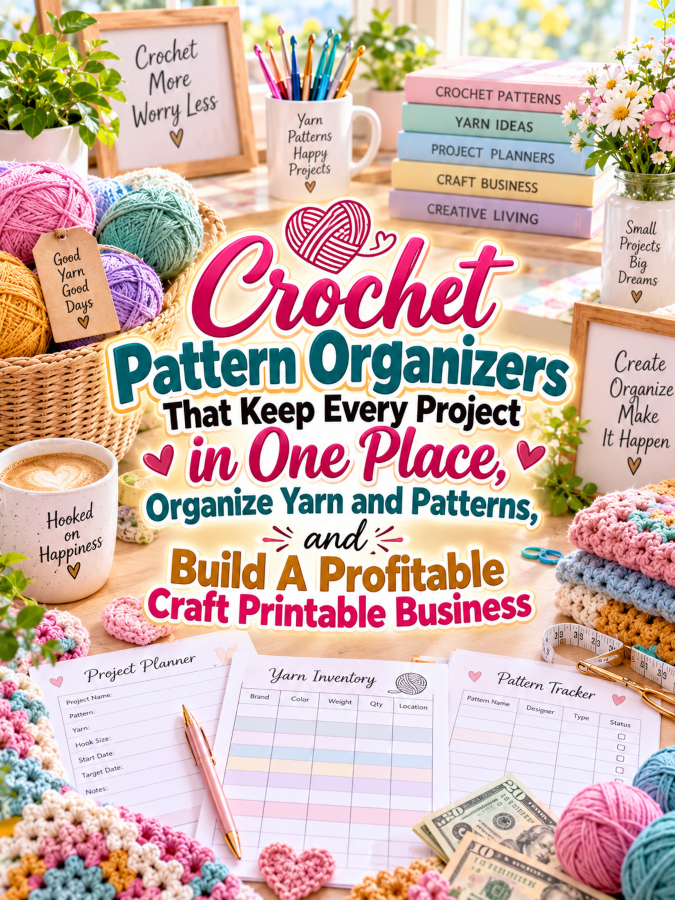
A crochet pattern organizer gives crafters one place to keep patterns, project notes, yarn information, hook sizes, measurements, progress updates, and finishing details. Instead of searching through notebooks, screenshots, downloaded PDFs, browser bookmarks, and mysterious pieces of paper, crocheters can keep their project information together. The result is a system that makes it easier to start projects, pause them, return to them, and actually finish them.
And here’s the sneaky-good business opportunity: crocheters don’t just collect patterns because they also collect ideas, yarn, tools, works in progress, and project notes. A well-designed organizer can help bring all those moving parts together without making the hobby feel like a corporate inventory meeting. You’re selling a calmer way to manage a creative hobby, and that’s a Good Thing.
Quick Answer
A crochet pattern organizer is a printable or digital planning system that helps crocheters store pattern information, track projects, organize yarn and hooks, record measurements, and manage works in progress. You can create a simple pattern binder, a project planner, a yarn-and-pattern organizer, or a complete crochet project management system. The strongest products help crocheters find what they need quickly and keep each project moving forward.
A $7 starter product could include a pattern record sheet, project planner, yarn tracker, hook-size record, and works-in-progress tracker. A $17 version could add project budgeting, pattern notes, stitch references, yarn substitution pages, and project progress sheets, while a $27 workbook could provide a complete crochet organization system. A $47 binder could organize an entire crochet library, and a $77 comprehensive collection could include pattern management, yarn inventory, project planning, gift planning, finished-project records, and seasonal crochet organization.
The key is to organize the information crocheters repeatedly need without making the system cumbersome. A great organizer should answer simple questions quickly, such as “Where’s that pattern?”, “What yarn did I use?”, “Which hook size did I use?”, “How far along am I?”, and “What was I supposed to do next?” If your product can save someone from digging through twelve folders to answer one of those questions, you’ve already created something useful. That’s it. That’s your beginning!
Why This Niche Works
Crochet is a project-based hobby, which makes it naturally suited to tracking and organization. A single crocheter may work on several projects at different stages, use different yarn brands and weights, follow patterns from different sources, and make personal modifications along the way. Without a consistent system, those details can become difficult to remember once a project sits untouched for a few weeks.
Crocheters also tend to build collections over time. They may accumulate patterns, hooks, yarn, stitch markers, project bags, finished items, and ideas for future creations, which means their organizational needs can grow right alongside their hobby. A printable system that starts simple and expands with them can become something they use for years.
There is also a strong opportunity to create products for specific crochet lifestyles. You can design organizers for amigurumi makers, blanket crocheters, garment makers, crochet businesses, gift makers, beginners, advanced crocheters, or crafters who sell at markets. That gives you plenty of room to build a product line around one core idea without creating the same generic planner over and over.
What You Can Put Inside A Crochet Pattern Organizer
1. Crochet Pattern Record Sheets
Start with a dedicated page for recording important information about every pattern. Include the pattern name, designer, source, project type, skill level, yarn requirements, hook size, gauge, finished measurements, and notes. Add a space for the pattern location so the crocheter can quickly find the original file, book, website, or printed copy.
You can also include a checkbox showing whether the pattern has been started, completed, modified, or saved for later. This turns a simple pattern list into a useful working library. When a crocheter has hundreds of saved patterns, knowing which ones are actually worth revisiting can be surprisingly valuable.
2. Project Planner Pages
A project planner should help the crocheter move from “I want to make this” to “I’m actually making this.” Include the project name, pattern source, intended recipient, deadline, yarn, hook, estimated time, measurements, and special notes. You can also add a small project goal section so the crafter can explain why they’re making the piece.
Project planners can be especially helpful for larger creations such as blankets, sweaters, shawls, and detailed amigurumi. Break the project into stages so the crocheter can record progress without feeling overwhelmed. A giant blanket may still be a giant blanket, but at least now it has boxes.
3. Yarn Information Tracker
Yarn information is a major part of many crochet projects, so give it its own space. Include brand, yarn name, color, dye lot, weight, fiber content, yardage, quantity purchased, quantity used, and remaining amount. This helps crocheters remember what they used and makes it easier to find suitable yarn for future projects.
You can also add a yarn substitution section for cases where the original yarn is unavailable. Record the original yarn, replacement yarn, hook adjustment, gauge res
3 Ways to Stand Out From The Thundering Herd!
Way 1: Create A “Pick Up Where You Left Off” System
One of the biggest frustrations with unfinished crochet projects is forgetting exactly where you stopped. Your organizer can solve that problem by giving every active project a dedicated “Next Step” section where crocheters record the current row, round, stitch count, color, hook, and anything unusual they need to remember. When they return to the project days or weeks later, they can pick it up without spending twenty minutes staring at it like it just betrayed them.
You can make this feature a signature part of your product by creating a small WIP bookmark or project-status card that stays with the physical project. The card could include the project name, pattern, current row or round, hook size, yarn color, and next instruction. That’s a tiny thingee, but tiny thingees that solve annoying problems can become surprisingly valuable product features.
Way 2: Build A “Pattern-to-Project” Connection
Many crocheters have large pattern collections but don’t always know which patterns they’ve actually made. Create a system that connects each pattern record to the finished project, WIP, or planned project associated with it. This allows the crocheter to see whether a pattern is merely sitting in the library or has actually become something useful.
Add a simple status system such as Saved, Planned, Started, Paused, Completed, Gifted, Sold, or Favorite. You can also include a rating section where the crocheter records how enjoyable the pattern was to make and whether they would make it again. Over time, this turns the organizer into a personalized pattern recommendation system based on the crocheter’s own experience.
Way 3: Make Space For The Crafter’s Own Knowledge
Experienced crocheters develop plenty of personal knowledge that isn’t necessarily written in the original pattern. They discover yarn combinations they love, hook adjustments that work, construction tricks, finishing techniques, and little fixes that make future projects easier. Give them dedicated pages to capture those discoveries.
Create sections such as “My Favorite Yarn Combinations,” “Hook Adjustments That Worked,” “Pattern Fixes,” “Techniques To Remember,” and “Things I’ll Do Differently Next Time.” These pages can turn the organizer into a personal crochet reference book. That’s a Good Thing because the longer someone uses the organizer, the more valuable their own accumulated notes become.
3 Nifty Ways to Find Customers
Way 1: Offer A Free WIP Tracker
Works-in-progress are a perfect entry point because almost every serious crocheter understands the problem. Create a free one-page WIP tracker that lets users record project name, pattern, yarn, hook, current progress, and next step. Make it genuinely useful so customers can immediately experience the benefit of organized project information.
Once they use the free page, introduce your complete crochet organizer as the next logical step. Your email content can then cover topics such as managing multiple WIPs, organizing patterns, tracking yarn, recording modifications, and finishing more projects. You’re not trying to convince crocheters that they have a problem because their unfinished projects have probably already introduced themselves.
Way 2: Create “Crochet Organization” Content
Build helpful content around the everyday organization problems crocheters experience. You could create posts about organizing digital patterns, managing a growing yarn stash, keeping project bags organized, tracking WIPs, and deciding which projects to finish first. Each topic naturally connects to one or more pages inside your organizer.
You can also create short demonstrations showing how to use one page at a time. For example, show how a crocheter can take a pattern they’ve saved online, record its details, assign it a status, and connect it to a future project. That kind of practical demonstration makes your product easier to understand and gives potential customers a reason to imagine using it themselves.
Way 3: Build Seasonal Crochet Planning Packs
Seasonal projects create natural opportunities for additional products. A holiday gift-planning pack could help crocheters organize handmade gifts, deadlines, recipients, yarn, and progress, while a summer crochet planner could focus on lightweight garments, bags, accessories, and travel projects. You can also create birthday, baby shower, wedding, and market-preparation editions.
These seasonal packs can become companion products for people who already own your main organizer. They don’t need to replace the core product because they add specialized planning pages for a particular situation. That creates a reason for customers to return without requiring you to invent an entirely different business every season.
3 Takeaways You Won’t Find Elsewhere!
Takeaway 1: The Best Crochet Organizer Remembers What The Crafter Forgets
A useful organizer doesn’t try to make the crocheter remember more information. It gives them a place to record the information they are most likely to forget, such as the yarn used, hook size, pattern source, current row, modifications, and next step. This is especially valuable when a project sits untouched for several weeks.
Create prompts around the details that become frustrating later. Ask, “Where did I stop?”, “What hook was I using?”, “Which yarn color did I use?”, and “Did I change anything in the pattern?” Those questions turn your organizer into a practical memory system rather than another notebook full of information nobody knows how to use.
Takeaway 2: Finished Projects Deserve Their Own History
A finished crochet project can contain useful information that shouldn’t disappear once the last end is woven in. Record the pattern, yarn, hook, modifications, measurements, date completed, recipient, and lessons learned. This gives crocheters a reference they can use when making the project again or creating something similar.
For makers who sell crochet products, this information becomes even more useful. They can record material costs, time spent, selling price, customer preferences, and product variations. One finished-project page can therefore serve both a hobbyist and a growing handmade business owner.
Takeaway 3: Your Pattern Library Can Become A Decision-Making Tool
A pattern collection is only useful when the crocheter can find something they actually want to make. Add rating pages, favorite-pattern lists, project-type categories, skill-level notes, and “Make Again” records so users can learn from their own history. Over time, the organizer can answer questions such as which designers they enjoy, which project types they finish most often, and which yarn combinations work best for them.
This creates a valuable feedback loop. The crocheter records what they make, evaluates the experience, and uses that information to choose future projects. Your organizer becomes less about storing information and more about helping the customer make better creative decisions.
3 Common Mistakes to Avoid
Mistake 1: Trying To Track Every Tiny Detail
It’s tempting to make a crochet organizer enormous because there are so many details you could potentially record. But if every project requires filling out a two-page technical report before the first chain stitch, customers may decide that chaos is perfectly acceptable. Keep essential information easy to record and make advanced tracking optional.
Use quick fields, checkboxes, short tables, and simple prompts. Let experienced crocheters add more information when they want it without forcing beginners to complete unnecessary sections. A planner should support the hobby, not turn it into an administrative internship.
Mistake 2: Ignoring Digital Patterns
Modern crocheters often keep patterns in digital formats, which means a physical organizer needs to account for that reality. Give users space to record a website, digital file name, storage location, designer, or other identifying information. This helps connect the physical planner to the digital pattern library.
You can also include a “Pattern Backup” checklist encouraging users to make sure important files are stored safely. The organizer doesn’t need to manage the files itself; it simply helps the crocheter know where those files live. That little bridge between paper and digital organization can make the product much more useful.
Mistake 3: Making The Organizer Look Like A Spreadsheet
Organization is important, but crochet is still a creative hobby. If every page looks like a corporate accounting form, the product may feel more like bookkeeping than crafting. Use visual elements, pleasant typography, small illustrations, generous writing areas, and creative prompts while keeping the actual information easy to find.
You don’t need to decorate every corner with yarn balls and crochet hooks either. Too much decoration can make pages harder to print and use. Aim for a balance where the organizer feels like it belongs in a crocheter’s craft room while remaining practical enough to use regularly.
Scaling Your Results
Once your basic crochet pattern organizer gains traction, you can create specialized versions for different types of crocheters. An amigurumi organizer could include character design notes, color charts, safety-eye information, stuffing records, and pattern modifications, while a blanket planner could include color planning, square counts, row tracking, measurements, and layout diagrams. A garment planner could focus on measurements, sizing, gauge, fitting changes, and construction notes.
You can also create products for different stages of the crochet journey. A Beginner Crochet Project Planner can help new crocheters organize their first projects, while a Crochet WIP Management System can help experienced crafters tackle an overflowing project queue. A Crochet Business Project Planner can then serve makers who have moved from hobby projects into selling finished pieces.
Your product ladder can grow naturally from the $7 starter organizer to a $17 expanded system, a $27 complete workbook, a $47 crochet binder, and a $77 comprehensive crochet organization library. Add seasonal gift planners, yarn inventory sheets, pattern indexes, finished-project portfolios, and business-focused trackers as companion products. You’re not just selling one organizer anymore; you’re building a small ecosystem around the crocheter’s creative life.
A collection containing 40 well-designed crochet organization and project-planning products could potentially generate an additional $700 to $2,200 per month through bundles, repeat customers, memberships, and complementary offers, although actual results will vary based on traffic, pricing, product quality, audience fit, and marketing. The important part is to build the collection around real problems crocheters repeatedly experience rather than creating forty versions of the same checklist with different yarn illustrations.
Your Next Steps
Start with your simplest useful product: a crochet pattern organizer containing pattern records, project planners, a yarn tracker, a WIP tracker, and finished-project pages. Test it by imagining that you’re a crocheter with ten active projects, thirty saved patterns, and several bags of yarn waiting for their moment of glory. If you can use the system quickly without needing a tutorial longer than the pattern itself, you’re heading in the right direction.
Next, create a free WIP tracker or pattern record sheet and use it to attract your first audience. Show potential customers how the page works, explain the problem it solves, and then introduce the complete organizer as the bigger solution. Your content should make organization feel like something that gives crocheters more time to create, not something that steals time from the hobby.
Finally, watch what customers ask for and build from there. If they want yarn inventory, create it, and if they want blanket planning, make that your next specialized pack, while if they want a complete crochet binder, that’s your opportunity to build a higher-value offer. Let your customers help you decide which thingees belong in the next version.
Final Thoughts
Crocheters don’t need another system that makes their hobby feel like office work. They need a simple way to remember patterns, organize projects, track yarn, record modifications, manage WIPs, and celebrate the things they’ve actually finished. A thoughtfully designed crochet pattern organizer can give them exactly that while preserving the creative and personal side of the hobby.
The business opportunity grows because crochet itself creates a long list of connected organizational needs. A $7 starter organizer can lead to a $17 expanded system, a $27 workbook, a $47 binder, and a $77 comprehensive library, while specialized products for blankets, amigurumi, garments, gifts, seasonal projects, and crochet businesses give customers additional reasons to return. That’s a product ladder built around a hobby people can enjoy for years.
And here’s the part worth remembering: the best organizer doesn’t try to control the crocheter’s creativity. It quietly handles the information around the creativity so the crocheter can spend more time actually making things. When your product helps someone find a forgotten pattern, pick up a paused project, remember exactly which yarn worked, or finally finish that blanket that’s been sitting in a bag since approximately the invention of the internet, you’ve created something genuinely useful.
That’s it. That’s your beginning! Choose one type of crocheter, solve one organization problem, and build the simplest useful product around it before expanding into the bigger thingee collection. If you were creating your first crochet pattern organizer tomorrow morning, what would you help crocheters organize first: their patterns, their yarn, their works in progress, or their project notes?
Enjoy!