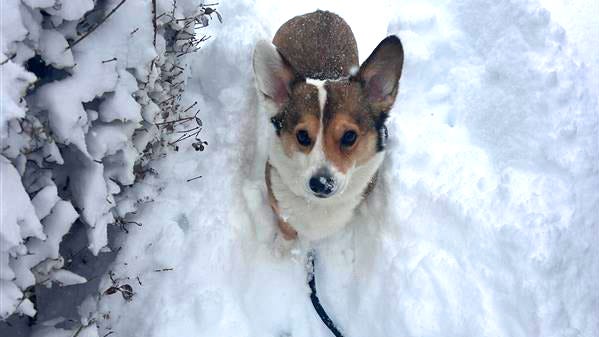

Blizzard conditions can’t stop this adorable corgi. Watch
Lewis the corgi navigates after the blizzard that blanketed the region with more than a foot of snow in some areas on Feb. 23, 2026.
Shorter days, icy sidewalks, rock salt in the paws.
North Jersey’s humans aren’t the only ones fed up with winter. Dogs are also feeling it.
Although the connection between light exposure and mood has yet to be proved among canines, animal experts say dogs can suffer depression and frustration when winter ruins their routines.
Because she’s just a foot tall, the height of the snow has been a big problem for Layla, a 7-year-old Yorkipoo from Rockaway Township in Morris County. Owner Jay Alexander, 49, said he’s been taking her for walks when he can.
“Can you imagine stepping outside and having to look over your head just to get a breath of fresh air?” he said. “I’ll shovel out an area for her to do what she’s got to do. But that gets old quickly.”
Pets get the winter blues, too
This cold and icy weather significantly reduces how likely people are to exercise their dogs, according to a 2021 survey of 3,153 people in the scientific journal Animals. Pet parents reported they were 48% less likely to get their dogs out and moving in cold weather and 64% less likely when ice was present.
In other words: When the sidewalks freeze, leashes stay on their hooks. Sustained drops in activity contribute to obesity and behavioral problems in pets, the same study found.
Then there’s the danger posed by rock salt and chemical ice melts, which can irritate paws and upset stomachs, said the American Society for the Prevention of Cruelty to Animals. Snow and ice can also accumulate between toes and cause discomfort or small cuts, particularly in long-haired breeds. For those reasons, vets recommend wiping dogs’ paws after walks.
Daisy, an 8-year-old, 85-pound goldendoodle from Montville, is done with the cold weather.
“She used to love the winter. She would roll in it. She spent hours out there. I couldn’t get her to come inside,” said her mom, Samantha Grabinsky, 38.
“This year, she’s not into it,” Grabinsky said. “I don’t know what’s going on. She doesn’t want to be out there. She comes in and licks her paws. Then she tries to roll all over the couch to get the snow off her. I can’t get her outside. She goes, and runs right back inside.”
How to keep your dog happy
“Dogs are deeply affected by changes in routine and environment,” said Karen van Haaften, an animal behaviorist with the ASPCA.
Try not to let snow cancel their walks, van Haaften counseled. Predictable feeding, walking and play schedules will help keep your pet’s mood up.
What humans call cabin fever may be expressed in dogs by pacing or acting withdrawn. They may seem “less interested in activities they normally enjoy,” van Haaften said. “Others may act out more — barking, chewing, seeking attention.
“Exercise is related to mood in animals as it is in people,” she continued. “For young, active dogs, especially, getting the right amount of exercise is key to keeping their mental health stable. If their needs aren’t fulfilled over time, that frustration can build.”
Just as with stir-crazy kids, indoor activities can help. Van Haaften suggests food puzzles or hiding treats around the house. Games and training sessions can provide stimulation when outdoor time is limited.
“A few rounds of hiding a treat and letting your dog sniff it out can really tire them out,” van Haaften said. “Mental work can be very fulfilling, especially in the short term.”