
Introduction
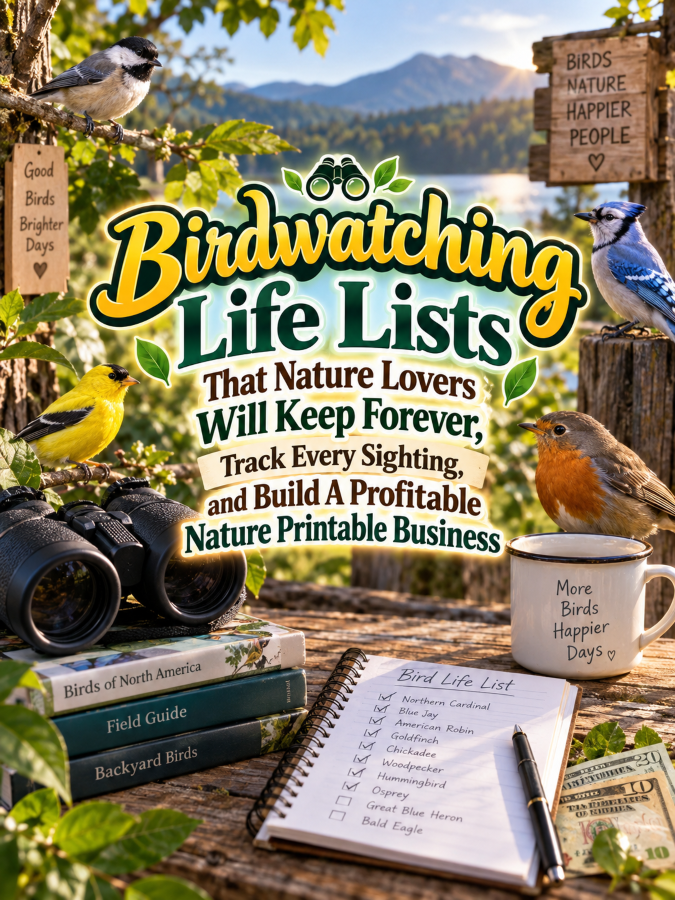
Birdwatchers have a wonderfully specific kind of problem: once you start noticing birds, you suddenly want to remember every single one. A bird seen for thirty seconds through binoculars can become a story you remember for years, but without a place to record it, the details can disappear into a camera roll, a notebook, or that mysterious collection of screenshots nobody can find later. That makes Birdwatching Life Lists a surprisingly strong printable opportunity because the product helps nature lovers turn individual sightings into a personal record of their adventures.
A life list is more than a checklist of bird names. It can become a record of where a bird was seen, when it was spotted, what the weather was like, who was there, what made the sighting special, and whether the bird was a first-time discovery. Your printable can help beginners build their first list while giving experienced birders a more organized way to document years of observations.
And here’s the Good Thing: you don’t have to create an intimidating scientific database to make this product useful. You can create a friendly, beautiful system that combines checklists, field notes, trip logs, species profiles, photo spaces, and personal milestones. That’s a Good Thing because birdwatchers aren’t just collecting names; they’re collecting experiences.
Quick Answer
Birdwatching Life Lists are printable or editable journals that help birdwatchers record the species they have observed throughout their birding journey. A starter product could include a life-list checklist, first-sighting log, birding trip journal, location tracker, observation notes, favorite sightings, and personal milestone pages. The product can work for beginners who are excited to identify their first few species as well as experienced birders who want a more organized record of their growing collection.
A $7 starter product could become a $17 Birdwatching Field Journal Bundle, a $27 Complete Birding Life List Workbook, a $47 Birdwatching Binder System, and a $77 Nature Observation Library with specialized journals, trip planners, habitat logs, seasonal observation pages, and family birdwatching activities. The opportunity is to build around the joy of collecting experiences and knowledge rather than simply selling another checklist. Make the pages useful enough that someone wants to take them outside, and you’ve got something worth keeping.
Why This Niche Works
Birdwatching has a natural collecting behavior built right into the hobby. Every new species can become another entry on a personal life list, and every new location can create another opportunity to discover something different. That creates a built-in reason for hobbyists to keep updating their records rather than using a printable once and forgetting about it.
Birdwatching also attracts people with different levels of experience. A beginner may be thrilled to identify ten species, while an experienced birder may have years of sightings spread across notebooks and digital tools. Your product line can serve both groups by offering simple starter journals alongside more detailed systems for serious hobbyists.
There’s also a strong memory-keeping angle. Birders often remember unusual sightings, beautiful habitats, unexpected encounters, and special trips because those experiences are connected to places and seasons. A well-designed life list can preserve not only what was seen but also the story surrounding the sighting.
What You Can Put Inside Birdwatching Life Lists
1. Master Life List
The master life list should be the heart of the product. Create a clean checklist where birdwatchers can record species they have observed and mark the date or status of each sighting. Leave enough space for notes without making the page so crowded that it looks like a tax form for feathers.
You can organize the list alphabetically or by broad bird groups, depending on the audience you’re targeting. For a beginner-friendly version, simple alphabetical organization may be easiest. For more experienced birders, additional fields such as location, date first seen, and number of observations can add useful depth.
2. First Sighting Log
Every first sighting can become a memorable event, so create a dedicated page for recording those moments. Include the species, date, location, weather, habitat, who was present, and what the birder remembers most about the encounter. This transforms the life list from a database into a collection of stories.
You can also add a small “How I Identified It” section where users can record the clues they noticed. They might remember the song, shape, color pattern, behavior, flight pattern, or habitat. That gives the journal an educational quality without pretending to replace a field guide or expert identification source.
3. Birding Trip Log
Create pages for recording individual birdwatching trips. Include the destination, date, duration, weather, habitat, people who joined the outing, species observed, and favorite sighting. A trip log helps users remember the context surrounding their observations.
You can also add a “Best Moment of the Trip” section because not every successful birding trip is about seeing the most species. Sometimes the highlight is one unusual bird, a beautiful sunrise, a quiet trail, or an unexpected encounter with another animal. Those details can make the finished journal much more personal.
4. Location and Hotspot Tracker
Birdwatchers often develop favorite locations where they know they can find certain species. Give them a way to record those places, what they’ve seen there, when they visited, and which habitats are present. This creates a personal map of their birdwatching adventures.
Include fields for location name, general area, habitat type, best season, favorite species, and notes. You could also add a simple rating for “Would Visit Again” or “Best Time to Return.” The goal is to help birders remember their own experiences without presenting your printable as an authoritative guide to where specific species can always be found.
5. Bird Behavior Observation Pages
Birdwatching becomes much more interesting when people begin noticing behavior rather than simply identifying species. Create observation pages for feeding, nesting, flying, bathing, calling, courtship, flocking, territorial behavior, or other observations. Give users room to describe what they actually saw.
This section can be especially appealing to nature lovers who enjoy slowing down and observing rather than racing through a checklist. It also gives families and children a way to participate because they can record interesting behaviors in simple language. You can make the prompts beginner-friendly while leaving room for experienced observers to write more detailed notes.
6. Seasonal Birding Tracker
Bird activity changes throughout the year, so create a seasonal tracker that helps users record observations by month or season. Include space for species seen, notable changes, favorite sightings, and locations visited. This can encourage birdwatchers to revisit the same area at different times of year.
A seasonal page also creates a natural reason for repeat use. Instead of finishing the journal after one trip, the user can return throughout spring, summer, fall, and winter. That recurring behavior is exactly what you want in a printable product because it turns a download into a long-term hobby companion.
7. Favorite Bird Profiles
Give birdwatchers space to create personal profiles for species that mean something to them. The page could include the bird’s common name, scientific name if desired, first sighting, favorite location, memorable behavior, photo, and personal notes. This lets users highlight the birds that are special to them rather than treating every entry as an identical checkbox.
You could also include a “Why I Like This Bird” prompt because sometimes the reason is wonderfully simple. Maybe the bird has a beautiful call, unusual behavior, striking markings, or appeared during a memorable family outing. Those personal details are what can turn a field journal into a keepsake.
8. Life List Milestones
Create milestone pages for achievements such as first bird, first ten species, first fifty species, first hundred species, first rare or unusual sighting, first birding trip, or first species spotted with a family member. Keep the milestones flexible so users can define achievements that matter to them.
A milestone system adds a little celebration to the hobby without turning it into a competition. Someone’s 25th species can be just as meaningful to them as another person’s 250th. Give your customers room to define their own progress, and the product becomes more welcoming to beginners.
Tools You’ll Need
Canva can help you design attractive Birdwatching Life Lists with clean checklists, observation pages, photo layouts, dividers, and nature-inspired graphics. Keep the design calm and readable because birdwatchers may actually print these pages and take them outdoors. A beautiful page is nice, but a beautiful page that is impossible to write on while standing beside a trail is That’s Not a Good Thing.
Google Docs can help you draft observation prompts, journal questions, instructions, product descriptions, and different versions of your life-list system. You can also use it to organize ideas before turning them into designed pages. That separation between content planning and visual design can save a surprising amount of time.
AWeber can help you build an email list around birdwatching, nature journaling, outdoor hobbies, and observation activities. A free “First 25 Bird Sightings” tracker could make a useful lead magnet for beginners. From there, you can introduce subscribers to larger life-list journals, field notebooks, and related nature printables.
GetResponse can help you create landing pages and email campaigns for your birdwatching printable products. You could build a short educational sequence about starting a life list, preparing for a birding outing, recording observations, and preserving memorable sightings. Useful content can naturally lead readers toward the full printable system.
Gumroad can provide a simple storefront for selling downloadable Birdwatching Life Lists, field journals, and related bundles. Start with one focused product and add specialized editions as you discover what buyers want. That approach keeps you from building a gigantic birding library before you’ve even sold your first feathered thingee.
Teachable could become useful if you eventually create a beginner birdwatching or nature journaling course. You could pair lessons about observation and record keeping with your printable journals. This gives you another way to monetize the same audience without needing to abandon the original product idea.
Amazon can help you research existing birding journals, field notebooks, life-list books, and nature observation products. Pay attention to customer reviews and questions to discover what birdwatchers wish those products handled differently. Use those insights to find gaps and improve your own product rather than copying an existing format.
Your 5-Step Action Plan
Step 1: Choose Your Birdwatching Audience
Start by deciding whether your first product is for beginners, experienced birders, families, children, nature journalers, or casual backyard birdwatchers. A beginner product might focus on simple identification records and first-sighting memories, while an experienced birder may want more detailed observation and location tracking. The clearer the audience, the easier it becomes to decide what belongs inside the journal.
For your first product, beginners can be an especially approachable audience because the product can make a potentially overwhelming hobby feel organized. You can use simple language and plenty of writing space while still making the journal attractive to experienced hobbyists. Once the core product works, create more specialized editions.
Step 2: Build the $7 Starter Life List
Create a compact starter product containing a master life list, first-sighting pages, birding trip logs, favorite bird profiles, seasonal observations, and milestone pages. Keep the system simple enough that someone can start recording birds immediately. Your goal is to create a product that makes a new birder excited to record the next sighting.
Add a short setup guide explaining how to begin a life list and how to use the journal during and after a birdwatching outing. Avoid making the instructions overly technical because your product should welcome beginners. You can always create a more advanced version later.
Step 3: Create a Free First-Sighting Tracker
Choose one page that provides immediate value and offer it as a free download. A First 25 Bird Sightings Tracker or First Birding Trip Journal would work well because the benefit is easy to understand. The freebie gives potential customers a chance to experience your design and your approach before purchasing the larger product.
Then create content around the beginner questions people naturally have. You could write about starting a life list, what to record during a birding trip, how children can participate in birdwatching, or how to remember interesting sightings. Each piece of useful content can point toward your free tracker and eventually toward your paid journal.
Step 4: Build the Product Ladder
Turn the starter journal into a larger product ladder. The $7 product can become a $17 Birdwatching Field Journal Bundle with additional trip logs, seasonal trackers, behavior pages, and photo layouts, while the $27 level could become a Complete Birding Life List Workbook. At $47, you could offer a Birdwatching Binder System, and at $77, you could create a Nature Observation Library.
Specialized products could include Backyard Birdwatching Logs, Family Birdwatching Journals, Children’s Birding Adventures, Bird Photography Logs, Seasonal Birdwatching Journals, Nature Walk Observation Books, and Birding Trip Planners. These products share the same audience while solving slightly different problems. That’s a Good Thing because one customer can potentially become interested in several products over time.
Step 5: Test It Outdoors
Take your printable outside before you publish it. Pretend you’re using it during an actual birdwatching session and see whether there is enough writing space, whether the checkboxes are easy to use, and whether the layout works when you’re distracted by an actual bird doing something interesting nearby. A printable designed for field use needs to survive real-world conditions, not just look beautiful on a computer screen.
Ask another birdwatcher or nature enthusiast to test it if possible. Watch which sections they naturally use and which ones they skip. Those observations can tell you what needs simplifying, expanding, or moving to a bonus section. That’s it. That’s your beginning!
What Comes Next
The real opportunity is to turn the life list into the center of a larger birdwatching and nature observation product line. Once someone has a place to record species, they may also want trip journals, habitat logs, backyard bird feeders trackers, seasonal observation pages, bird photography planners, and nature walk journals. One useful product can lead naturally into another without leaving the same hobby.
You can also create versions for different experience levels. Beginners might want simple checklists and first-sighting pages, while experienced birders may want detailed observation logs and multi-year records. Children can have drawing pages and simple prompts, while families can use shared trip journals.
And don’t forget the emotional side of the niche. A life list isn’t merely a list of birds; it’s a record of mornings spent outdoors, places explored, people who joined the adventure, and unexpected moments that became favorite memories. Help birdwatchers preserve those stories alongside the species names, and you’ve created something they may genuinely want to keep forever.
3 Ways to Stand Out From The Thundering Herd!
Way 1: Turn Every Sighting Into a Story
A basic life list tells someone what bird they saw, but a memorable birding journal can tell them why that sighting mattered. Add prompts for where the bird was seen, what it was doing, who was there, what the weather was like, and what made the encounter memorable. Suddenly, the life list becomes a personal record of outdoor adventures instead of a spreadsheet wearing feathers.
You can create a special “The Story Behind This Sighting” page for unusual, exciting, or personally meaningful observations. Give the birder space for a photograph, a short story, and a few observation details. This feature can become one of the reasons customers choose your journal over a basic checklist.
Way 2: Create a “First 100 Birds” Journey
Beginners can feel overwhelmed when they see experienced birders with enormous life lists. Give them a clear milestone-based journey by creating a First 25, First 50, and First 100 Birds system. Each milestone can include a celebration page, favorite sighting prompts, and a space to record what the birder has learned along the way.
This approach turns a large hobby into a series of manageable goals. Someone who thinks, “I’ll never recognize all those birds,” can instead think, “Let’s see if I can find ten.” That small psychological shift can make your product more approachable and can give buyers a reason to keep returning to the journal.
Way 3: Make It a Multi-Year Keepsake
Most simple birding checklists focus on the current list, but your product can encourage long-term documentation. Add pages for yearly totals, favorite locations, memorable sightings, personal milestones, and “birds I hope to see someday.” This turns the journal into something that can grow with the birder.
You can also create a yearly recap page where users record their favorite bird, most surprising sighting, favorite location, biggest birding lesson, and total species observed. After several years, the buyer has a personal history of their birdwatching journey. That’s a Good Thing because a product that becomes more valuable with time is much easier to love.
3 Nifty Ways to Find Customers
Way 1: Speak to Beginners Who Don’t Know Where to Start
Beginner birdwatchers are often excited but don’t know what they should record or how to organize their observations. Create content that answers simple questions such as “What Should Go in a Birding Journal?”, “How Do I Start a Life List?”, and “What Should I Record During My First Birdwatching Trip?” These topics naturally connect to your printable.
Offer a free First 25 Bird Sightings Tracker as the next step. Once someone has used that simple page, the complete life-list journal becomes an easy upgrade because they’ve already experienced the benefit of recording their observations. You’re giving them a tiny taste of the system instead of asking them to buy the whole birding buffet immediately.
Way 2: Create Family Birdwatching Products
Families looking for outdoor activities can become another audience for your products. Create simple pages where children can draw birds, record colors and behaviors, mark sightings, and write about their favorite observation. Parents can use the same trip pages to document the family’s outing.
This also creates a strong bridge into educational printables. You can develop bird identification worksheets, nature scavenger hunts, backyard bird observation pages, and family nature journals. One birdwatching life list can therefore introduce your shop to parents who are interested in screen-free outdoor activities.
Way 3: Market to the Memory-Keeping Side of Birding
Not every customer will be motivated by collecting the largest possible number of species. Some people simply love being outdoors, taking photographs, noticing seasonal changes, and remembering special moments. Create content around preserving birdwatching memories rather than competing over numbers.
Topics such as “How to Turn Birdwatching Trips Into Family Memories,” “What to Record After a Beautiful Birding Morning,” and “How to Build a Personal Nature Journal” can reach this audience. Your product then becomes a keepsake for nature lovers, not just a technical tracking tool.
3 Takeaways You Won’t Find Elsewhere!
Takeaway 1: Design for Both Observation and Reflection
The strongest birding journal can have two jobs: helping people record what they see and helping them think about what they experienced. Observation pages capture the facts, while reflection pages capture the feelings, stories, questions, and lessons connected to the outing. Combining those two elements gives the product more depth than a simple checklist.
For example, after a birding trip, ask “What surprised me today?”, “What did I notice that I hadn’t noticed before?”, and “What would I like to look for next time?” These questions encourage users to slow down and become more observant. That’s useful for beginners and experienced birders alike.
Takeaway 2: Give Users a Place for “Birds I Still Want to See”
A life list naturally creates curiosity about what comes next. Include a wish-list section where birdwatchers can record species they hope to encounter, places they want to visit, and seasons when they might have an opportunity to see them. This creates a bridge between documenting the past and planning future adventures.
You can divide the list into categories such as “Top Five Dream Birds,” “Birds I Hope to See This Year,” and “Places I Want to Explore.” This makes the printable useful even when the user isn’t actively recording a sighting. It becomes a planning companion as well as a memory book.
Takeaway 3: Build in Personal Milestones Instead of Competition
Birdwatching can be deeply personal, so don’t design the product around comparing one person’s life list with another person’s. Instead, celebrate personal milestones such as a first bird, first backyard sighting, first family birding trip, first successful identification, or first time spotting a favorite species. That makes the journal welcoming to people at every experience level.
You can include milestone certificates, celebration pages, or simple achievement trackers. The purpose isn’t to declare somebody the ultimate bird expert; it’s to help each user notice their own progress. That makes the product friendlier and more emotionally rewarding.
3 Common Mistakes to Avoid
Mistake 1: Making It Too Technical
Birdwatching has plenty of specialized terminology, but a beginner-friendly printable doesn’t need to sound like a scientific paper. If every page is packed with technical fields, abbreviations, and complicated identification categories, new birders may decide the hobby requires a degree before they even see their first bird.
Keep the core system simple and make advanced information optional. You can create an “Advanced Birder Edition” later for customers who want more detailed observation records. Start with accessibility because an easy-to-use product can serve a much wider audience.
Mistake 2: Treating the Life List Like a Static Checklist
A list is useful, but a static checklist can become boring after the initial excitement wears off. Give users reasons to keep returning through trip logs, seasonal pages, favorite bird profiles, milestone trackers, and future bird wish lists. The more ways the journal supports the hobby, the more likely it is to become a long-term companion.
Think of the master list as the spine of the product rather than the entire body. Everything else can connect to it. That structure also gives you natural opportunities to create future products without abandoning your original idea.
Mistake 3: Forgetting Field Usability
A birdwatching printable may be used outdoors, sometimes in bright sunlight, wind, humidity, or less-than-perfect conditions. Tiny text, cramped writing spaces, and overly decorative backgrounds can become frustrating when someone is standing on a trail trying to record a sighting before the bird disappears.
Design for practical use first. Give people enough room to write, make important fields easy to find, and offer a version that prints clearly without requiring expensive color printing. A beautiful field journal that is difficult to use in the field is That’s Not a Good Thing.
Scaling Your Results
Your $7 Birdwatching Life List Starter can become the foundation for a larger nature observation collection. A $17 bundle could add birding trip logs, seasonal trackers, behavior observation pages, photo layouts, and favorite bird profiles, while the $27 level could become a complete year-round Birdwatching Journal. At $47, you could offer a multi-year Birding Binder, and at $77, you could create a complete Nature Lover’s Observation Library.
Specialized products can include Backyard Birdwatching Logs, Children’s Birding Journals, Family Nature Walk Books, Bird Photography Logs, Seasonal Birdwatching Journals, Bird Feeder Observation Trackers, Nature Scavenger Hunts, and Wildlife Observation Journals. These products can share the same design language and customer base while solving different needs. One happy birdwatching customer may eventually become a nature-journaling customer too.
You can also create seasonal launches. Spring migration journals, summer backyard bird logs, autumn birdwatching trackers, winter bird observation books, and annual life-list recap pages give you natural reasons to market throughout the year. Seasonal products can refresh your catalog without requiring you to invent an entirely new business every few months.
A collection containing 40 well-designed birdwatching and nature observation products could potentially generate an additional $700 to $2,200 per month through bundles, repeat customers, memberships, and complementary offers, although actual results will vary based on traffic, pricing, product quality, audience fit, and marketing. Treat that as a possibility rather than a promise because product quality, audience size, discoverability, and marketing all matter. The bigger lesson is that a focused niche can support a connected catalog when each product solves another problem for the same audience.
Your Next Steps
Start by creating the simplest version of your Birdwatching Life List. Build the master list, first-sighting page, birding trip log, favorite bird profile, and milestone tracker first, then test the pages with an actual birdwatching outing. Pay special attention to writing space and how quickly someone can record an observation.
Next, create your free First 25 Bird Sightings Tracker and use it as the entry point into your product line. Create useful content around starting a life list, planning a birding trip, observing bird behavior, involving children, and preserving memorable sightings. Every piece of content should help the audience before it asks them to buy anything.
Then expand carefully into related products. Add backyard birding logs, family journals, children’s birdwatching books, seasonal observation trackers, bird photography planners, and multi-year life-list binders. Keep the products connected so your shop becomes a useful destination for nature lovers rather than a random collection of printable thingees.
Final Thoughts
Birdwatching Life Lists have a beautiful advantage because the product grows alongside the person using it. The first few birds might be exciting discoveries, but over time the journal can become a record of places visited, seasons experienced, people who shared the hobby, and memorable moments in nature. You’re helping customers preserve a piece of their personal outdoor history.
The best product won’t simply ask, “What bird did you see?” It will also ask, “Where were you?”, “What happened?”, “What did you notice?”, and “Why do you want to remember this?” Those questions transform a checklist into a keepsake. And a keepsake has a very different emotional value from a worksheet that gets printed once and disappears into a drawer.
Keep the first product approachable, make it practical enough for field use, and give birdwatchers plenty of reasons to return to it throughout the year. Then build outward into specialized journals, family products, seasonal editions, and broader nature observation tools. Trust me, you’ll thank me later when one little life-list printable turns into an entire flock of related products.
That’s it. That’s your beginning! If you were creating your first Birdwatching Life List tomorrow morning, would you start with the master species list, the first-sighting story page, or the birding trip log? Pick the page that would make a nature lover immediately want to grab their binoculars and start recording, build that first, and then let the rest of the flock follow.
Enjoy!