Introduction
Acrylic painting is one of those hobbies where creative ideas often arrive much faster than finished artwork. One day an artist is inspired by a sunset, the next day it’s a forest landscape, followed by abstract art, floral paintings, pet portraits, or holiday decorations. Without an organized system, reference photos, color recipes, supply lists, and project ideas can quickly become scattered across notebooks, sketchpads, and mobile phones.
Many painters assume they’ll remember which color combinations created that perfect ocean blue or exactly how many layers were needed to produce a beautiful textured background. Unfortunately, memory isn’t always as reliable as we’d like. Before long, valuable techniques, successful paint mixes, and creative breakthroughs are forgotten. That’s Not a Good Thing because every completed painting teaches lessons that can improve the next masterpiece.
That’s exactly where an Acrylic Painting Project Planner becomes incredibly valuable. Instead of chasing scattered notes and forgotten ideas, artists can organize every project from the first inspiration through the final brushstroke. Over time, the planner becomes a personal creative library filled with painting techniques, color experiments, finished projects, and future inspiration.
Acrylic painting continues attracting hobbyists, professional artists, retirees, homeschool families, art students, and handmade business owners every year. Whether people paint for relaxation, personal enjoyment, gallery exhibitions, or online sales, they appreciate practical tools that help them stay organized while creating better artwork. That makes this an evergreen printable niche with excellent long-term potential.
One thoughtfully designed Acrylic Painting Project Planner can quietly become the foundation of a profitable printable business while helping artists create more confidently and complete more projects every year.
Quick Answer
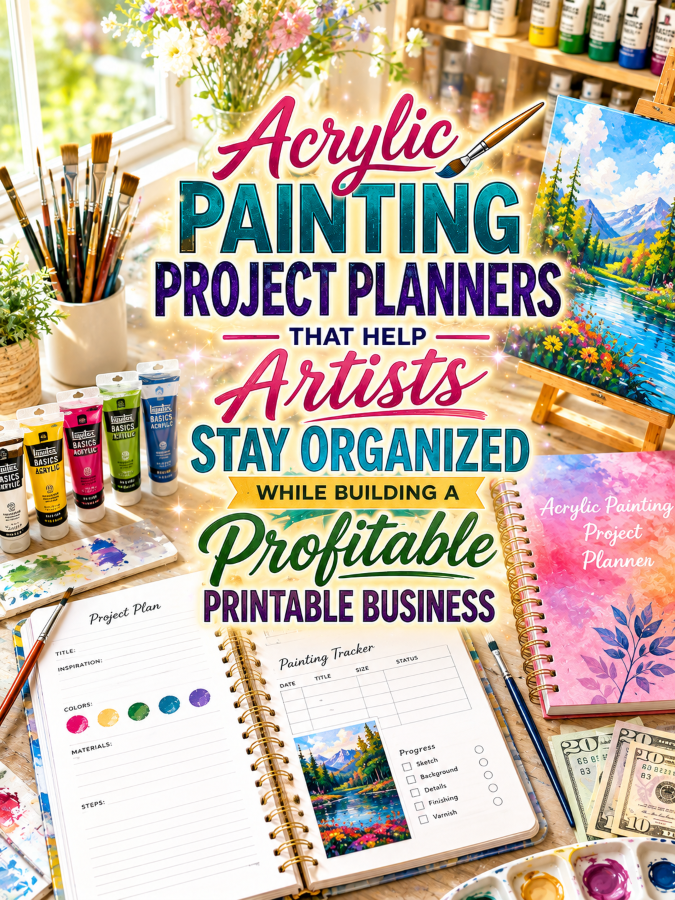
Acrylic Painting Project Planners are downloadable printable systems that help artists organize project ideas, reference photos, color recipes, paint inventories, brush techniques, supply lists, painting schedules, client commissions, exhibition planning, pricing worksheets, and finished artwork collections.
A starter planner can comfortably sell for around $7. Expand it into art business organizers, commission planners, sketchbook journals, exhibition planners, online shop management systems, and premium artist libraries priced at $27, $47, and even $77.
Your customers aren’t simply buying printable pages. They’re investing in better organization, improved painting skills, less wasted paint, stronger creative confidence, and a smoother artistic workflow.
Why This Niche Works
Artists naturally collect ideas faster than they complete projects. Acrylic painters constantly discover new techniques, inspiring photographs, color palettes, tutorials, and creative challenges. Without organized records, those ideas quickly disappear beneath stacks of unfinished sketches and scattered notes. A well-designed planner gives artists one dependable place to capture every spark of inspiration before it fades.
Many acrylic painters also sell their artwork through galleries, craft fairs, online marketplaces, commissions, and social media. That means they need more than creative inspiration. They also need inventory tracking, pricing worksheets, commission planners, exhibition schedules, and marketing pages that support the business side of being an artist. That’s always a Good Thing.
Once customers discover your Acrylic Painting Project Planner, they’ll naturally become interested in watercolor journals, sketchbook planners, art challenge trackers, craft fair organizers, polymer clay planners, resin art journals, woodworking planners, and countless related thingees. One successful planner can easily grow into a complete creative resource library.
Unlike short-lived craft trends, painting remains one of the world’s most enduring creative hobbies. Prior to pouncing upon this opportunity, you should first know all about the:
Tools You’ll Need
You don’t need an art studio overlooking the mountains to build a successful printable business for painters. These dependable tools are more than enough to help you design practical planning resources that artists will happily use throughout every creative project.
- Canva for designing painting planners, color logs, project worksheets, inventory trackers, and printable artist organizers.
- Google Docs for organizing painting instructions, planning notes, educational content, and printable worksheets.
- AWeber for building your email list with painting tips, printable updates, and creative inspiration.
- GetResponse for newsletters, promotions, product launches, and customer follow-up.
- Gumroad for selling downloadable planners and printable artist bundles worldwide.
- Teachable if you’d eventually like to teach acrylic painting, creative organization, art marketing, or handmade business strategies.
- Amazon Artist Planner Research for discovering which planning pages painters appreciate the most.
Don’t spend weeks deciding whether your paintbrush icons should be slightly thicker while artists are already looking for practical ways to organize their next collection. Your future customers care much more about improving their creative process than tiny decorative details.
Next, move to:
Your 5-Step Action Plan
Follow these five steps unless you’d rather watch another printable creator become the organization expert every painter recommends. The smartest entrepreneurs build resources that allow artists to spend more time painting and less time searching for forgotten ideas.
Step 1. Research Real Painting Challenges
Spend about 90 minutes exploring acrylic painting Facebook groups, Reddit art communities, Pinterest painting boards, YouTube art channels, artist blogs, Etsy seller communities, and Amazon reviews. Pay close attention to the organizational challenges painters mention repeatedly because those recurring frustrations become the inspiration for your printable products.
Create a master list containing at least 40 to 50 printable pages. Include project planners, color recipe logs, paint inventories, brush technique records, reference photo pages, commission planners, pricing worksheets, exhibition schedules, inventory logs, creative goals, painting challenges, and artwork reviews. Your research becomes an X-ray machine that reveals exactly where artists need practical organization.
Step 2. Build Your Core Acrylic Painting Planner
Create a collection containing 50 to 70 printable pages that support artists from the first sketch through the finished painting. Include planning worksheets, color experiments, paint recipes, project timelines, supply inventories, commission pages, gallery preparation checklists, pricing records, and creative reflections. Keep every page simple, practical, and easy to use because simplicity is always a Good Thing.
Remember that artists often move between several paintings at once. Clean layouts and logical organization allow them to quickly return to unfinished work without losing creative momentum.
Step 3. Create Specialty Editions
Build separate planners for landscape painters, portrait artists, abstract creators, pet portrait specialists, beginners, commission artists, art teachers, craft fair vendors, and online art businesses. Specialized planners almost always feel more valuable because customers immediately recognize resources created specifically for the artwork they enjoy creating.
Each specialty edition expands your audience while strengthening your printable catalog. Before long, you’ll have a complete library of artist resources instead of relying on one planner.
Step 4. Add High-Value Bonuses
This is where your Acrylic Painting Project Planner begins standing out from the thundering herd. Include printable color wheels, composition worksheets, monthly art challenges, social media planners, exhibition checklists, packaging trackers, portfolio planners, and customer follow-up worksheets.
Those bonus thingees require very little additional work yet dramatically increase the value artists receive. Complete creative business systems almost always outperform simple project planners because every page contributes to a smoother artistic workflow.
Step 5. Build Your Product Ladder
Launch your starter Acrylic Painting Project Planner for $7 and let it become the foundation of a growing artist resource business. Expand into premium creative planning systems around $27, complete art business organizers around $47, and comprehensive artist success libraries approaching $77. Every additional product naturally complements the others while encouraging repeat purchases.
Before long, your business won’t simply be selling painting planners. You’ll be helping artists stay organized, improve their techniques, complete more projects, and confidently grow both their creativity and their art businesses.
Once you’ve figured out all of the above, the next step is implementing:
3 Ways to Stand Out From The Thundering Herd!
The printable market for artists continues growing every year, but many project planners stop at simple project logs and supply lists. The Good Thing is that painters are looking for resources that help them improve their artwork, organize their creative process, and even grow an art business. Your opportunity is to create a planner that supports every stage of an artist’s journey instead of simply recording finished paintings.
Way 1. Organize the Entire Painting Process
Acrylic painting begins long before the first brush touches the canvas. Artists gather inspiration, select reference photos, experiment with color palettes, sketch compositions, prepare supplies, paint in layers, apply finishing details, photograph completed work, and often prepare pieces for sale. Design your planner to guide artists through every stage instead of providing only blank note pages.
Include pages for color mixing recipes, paint brand comparisons, brush techniques, drying time notes, varnishing records, framing plans, and artwork reviews. Those practical thingees help artists consistently reproduce their best work while building confidence with every new project. That’s always a Good Thing because organized artists spend more time creating and less time repeating avoidable mistakes.
Way 2. Help Artists Build a Business
Many acrylic painters eventually begin selling their artwork through commissions, galleries, craft fairs, social media, or online marketplaces. Include pricing worksheets, customer order forms, inventory logs, exhibition planners, marketing calendars, shipping checklists, and sales trackers that help customers grow beyond painting as a hobby. A planner that supports business growth naturally becomes much more valuable.
Artists appreciate resources that simplify both creativity and entrepreneurship. Helping someone earn income from their artwork creates far more value than simply helping them organize supplies.
Way 3. Create Specialty Collections
Not every painter creates the same style of artwork. Some specialize in landscapes, while others paint animals, abstract art, flowers, portraits, seasonal décor, or commissioned family keepsakes. Create specialized planner editions that speak directly to each audience instead of expecting one planner to satisfy every painter.
Specialized planners immediately feel more personal because artists recognize resources created specifically for the type of work they enjoy most. That’s one of the easiest ways to rise above the thundering herd.
Next, here’s the thing. You’re probably NOT the only person offering this service. So you now require:
3 Nifty Ways to Find Customers
Your ideal customers are already sharing paintings, tutorials, and creative inspiration online every day. The challenge isn’t finding artists. The challenge is introducing your planner before another creator becomes their favorite organizational resource.
Way 1. Painting Communities
Facebook painting groups, Reddit art communities, acrylic painting clubs, art school forums, handmade business groups, and creative communities are excellent places to introduce practical resources. Offer a free color mixing worksheet or painting project page before recommending your complete Acrylic Painting Project Planner. Helping first builds trust much faster than immediately asking for a sale.
Artists naturally share useful resources with fellow creators. One practical printable can quietly introduce your business to hundreds of highly interested potential customers.
Way 2. Pinterest
Pinterest remains one of the largest sources of painting inspiration online. People search for acrylic techniques, landscape tutorials, floral paintings, color palettes, studio organization, and art business ideas throughout the year. Create beautiful pins featuring planner spreads, color recipe pages, project planners, and studio organization worksheets that encourage users to save your content for future projects.
Unlike many social media platforms, Pinterest content often continues generating traffic for months or even years. Trust me, you’ll thank me later.
Way 3. Art Bloggers and Creative Educators
Painting bloggers, YouTube artists, art instructors, creative coaches, online art schools, and handmade business educators are constantly introducing useful resources to their audiences. Reach out with affiliate partnerships or printable bundle opportunities that allow them to recommend your planner alongside their tutorials and courses. Their recommendations often generate highly qualified buyers because artists already trust their guidance.
Strategic partnerships help your printable business grow steadily while reducing your dependence on paid advertising. Creative collaborations often become your strongest marketing advantage.
Speaking of long-term growth, now let’s move to:
3 Takeaways You Won’t Find Elsewhere!
Many printable creators believe they’re selling planners. The most successful entrepreneurs understand they’re helping artists become more organized, more productive, and more confident with every painting they complete. That simple shift completely changes how customers value your products.
Takeaway 1. You’re Selling Creative Momentum
Your customers aren’t purchasing printable pages simply to organize supplies. They’re investing in fewer unfinished paintings, stronger artistic habits, better color planning, improved techniques, and a smoother creative workflow. Those practical benefits are worth far more than the printable pages themselves.
When writing product descriptions, focus on helping artists create consistently instead of simply listing planner features. Painters buy systems that remove creative roadblocks.
Takeaway 2. Every Painting Inspires Another
Artists rarely stop after finishing one successful piece. Every completed painting sparks ideas for another landscape, portrait, floral arrangement, abstract canvas, or seasonal collection. That ongoing cycle naturally creates demand for planners, sketchbooks, commission organizers, inventory systems, and exhibition planners year after year.
Instead of constantly searching for new audiences, continue serving the same artists as their skills and businesses continue growing. Loyal customers often become the strongest foundation of a sustainable printable business.
Takeaway 3. One Planner Can Become an Entire Artist Brand
Your Acrylic Painting Project Planner can naturally expand into watercolor journals, sketchbook organizers, exhibition planners, commission management binders, art business workbooks, pricing guides, portfolio planners, social media calendars, and complete artist success libraries. Those connected thingees encourage repeat purchases because every product supports another stage of an artist’s creative journey.
Before long, painters won’t simply recognize your planner. They’ll know your shop as a dependable source of practical resources that help artists stay organized and grow their creative careers.
Now that you know the above, it’s time for:
3 Common Mistakes to Avoid
Many creators only include project planning pages. That’s Not a Good Thing. Artists also appreciate color recipe trackers, supply inventories, commission worksheets, pricing records, exhibition checklists, and marketing planners. Complete creative systems almost always outperform simple notebooks because they support the entire artistic process.
Some sellers overlook beginners. New painters often need encouragement while learning color theory, brush techniques, composition, and project planning. Include beginner-friendly pages, simple guidance, and creative prompts that help build confidence instead of overwhelming new artists.
Others stop after creating one painting planner. That’s like opening an art gallery with only one painting on display. Continue expanding into sketchbook planners, watercolor journals, art challenge trackers, commission organizers, portfolio planners, exhibition binders, and creative business systems to build a much stronger printable business.
What else should you know? How about:
Scaling Your Results
Expand into a complete artist ecosystem. Create watercolor planners, sketchbook journals, commission organizers, portfolio binders, exhibition planners, inventory systems, pricing workbooks, social media calendars, creative challenge journals, and studio management planners that naturally complement your original Acrylic Painting Project Planner. Every additional printable strengthens your catalog while encouraging repeat purchases from loyal artists.
Create an Artist Success Membership. Release fresh printable pages every month featuring painting challenges, color study worksheets, exhibition planners, inventory trackers, creative prompts, commission templates, business resources, and exclusive artist printables. Members continue improving both their artwork and their creative businesses while your shop benefits from dependable recurring revenue.
Build an email list artists genuinely appreciate. Share painting tips, printable freebies, creative inspiration, color palette ideas, studio organization advice, marketing strategies, exhibition planning resources, and artistic productivity tips throughout the year. A collection containing 40 artist-focused printable products could realistically generate an additional $700 to $2,200 each month through memberships, bundles, repeat customers, and affiliate partnerships. Trust me, you’ll thank me later.
Let’s now wrap up everything via the:
Your Next Steps
Start by listing every stage of an acrylic painting project from the first spark of inspiration to the finished artwork hanging on a wall or shipping to a customer. Think about gathering references, sketching ideas, mixing colors, painting layers, varnishing, photographing finished work, pricing artwork, and tracking sales. Those recurring activities will naturally become the foundation of your printable planner.
Design your first Acrylic Painting Project Planner in Canva using clean layouts, generous writing space, practical planning pages, and business worksheets that artists can immediately put to work. Focus on simplifying the creative process instead of filling every page with decorative artwork that adds very little practical value. Functional planning tools almost always become customer favorites.
Then introduce your planner to five painting Facebook groups, Pinterest boards, art bloggers, YouTube creators, or handmade business communities. Remember, 5 good messages beats 50 generic ones every single time. One thoughtfully designed Acrylic Painting Project Planner can quietly become the beginning of an entire artist resource business.
Next, let’s finish with:
Final Thoughts
The most successful painters don’t simply create beautiful artwork. They develop reliable systems that help them capture ideas, organize projects, improve techniques, and consistently finish what they start. Your Acrylic Painting Project Planner becomes an important part of that creative journey by helping artists spend less time searching for scattered notes and more time doing what they love most. That’s an incredible transformation from a simple printable product.
So, begin by creating one planner that solves one meaningful organizational challenge exceptionally well. Continue listening to customer feedback while expanding your collection into matching artist resources that naturally work together. Before long, you’ll have a printable brand that painters enthusiastically recommend to fellow creatives.
You don’t need bazillions of unrelated printables to build meaningful income. You simply need one thoughtfully designed Acrylic Painting Project Planner that helps artists stay organized while turning creativity into lasting success.
That’s it. That’s your beginning!
If you were creating your first Acrylic Painting Project Planner tomorrow morning, would you design it for landscape painters, portrait artists, beginners, commission painters, or artists building a full-time creative business?
Enjoy!