
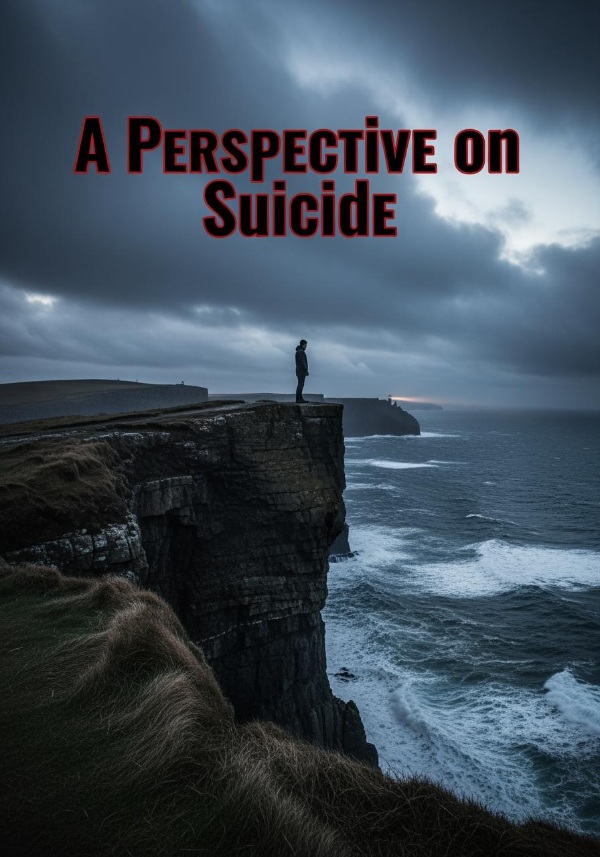
The following post is NOT from me. It’s no longer at its usual spot, but I bookmarked it back in 2014, more than 11 years ago. It is very much a worthwhile read. Names are changed from the original post.
=============
Suicide is not a choice to die, but rather an expression of the deepest human desire to survive.
This post has been in my heart for a long time. I’ve thought about it again and again. The subject seemed too heavy for our blog about delicious things. But in the past weeks, I have shared my thoughts on suicide three times with friends left in its wake. I think it is time for this post and I hope there are some out there for whom this brings clarity and comfort.
Twelve years ago this month, I lost my Uncle Bill to suicide.
At his funeral, Bill’s bishop addressed us. The words he spoke are burned into my mind. He said, “I feel impressed to tell you that Bill spent his life struggling to survive. Suicide was not a choice he made, but rather a choice he happened onto when his pain was greater than his ability to cope.”
This man, who took his own life, was a survivor in every sense of the word.
I imagine that in one way or another such is true of every soul who leaves the world this way.
Bill loved horses. When he was a teenager, the horse he was riding spooked and darted across the street right in front of an econoline van. He spent three months in the hospital recovering from his injuries.
Bill went on to graduate from high school and serve a two year religious mission.
In his early twenties, he was deer hunting in the mountains with a friend. His horse lost its footing on a rocky cliff-like outcropping and fell. Bill landed first and the horse landed on top of him. He sustained serious internal injuries and spent six months in the hospital.
Bill never completely healed from this accident. His spleen was badly damaged and his intestines had to be reconstructed. Scar tissue would build up in his intestines over time and cause painful blockages. He regularly had surgery to remove them.
Bill was always in pain. And yet he roped calves in rodeos, qualifying for national events. People called him the “singing cowboy” and he accompanied himself with the banjo or guitar. He patented several inventions and he went to school to become an airplane mechanic.
Bill was a survivor.
In his early thirties, he met and married Ann. I loved Ann. She was a breath of fresh air. She was fun and energetic. She made everyone around her feel special. Ann had beautiful brown hair and dark eyes. Bill adored her.
Over the next few years, Bill and Ann had three sweet sons. When Ann was pregnant with the third, she was diagnosed with breast cancer. Ann fought the cancer. She had a mastectomy and a hysterectomy. She underwent radiation, chemotherapy and painful experimental treatments.
Bill was very tender with her.
Ann played competitive softball. Soon after a cancerous rib was removed, she hit a home run. “Should have had that rib removed years ago,” she laughed.
A few months later, the cancer took Ann.
Bill was devastated.
He did his best to raise his sons. He was imperfect and impatient and he needed a lot of help. But he kept trying.
Over the next few years, Bill’s physical and emotional pain was intense. He married a good woman named Terry. They struggled to blend their families. They wanted to make it work. They wanted to be happy. Soon after their marriage, Terry was also diagnosed with breast cancer.
When I was living in Alexandria, Virginia, with my husband and children, Bill and his boys came to visit. I knew something was wrong when we picked them up from the airport. Bill was not himself. We discovered later that his doctor had taken him off Lortab (a painkiller upon which he was dependent) and put him on methadone (a strong drug used to wean addicts from heroine).
When he went down into the underground Metro station, Bill snapped. He paced frantically and tore off his shirt. He was visibly covered in sweat. After fleeing the station, Bill refused to get into a vehicle, but rather ran the few miles to the hospital. He was not aware of what was happening or why. That day he went into pulmonary failure due to drug withdrawal. He was hospitalized for the better part of a week and released only to fly home.
At 4:00 in the morning, before Bill and his boys left, I gave him a hug. I had never hugged Bill before. I was too proud to show affection that way. But for some reason, that day I hugged him. After he left, I could not sleep. The Spirit was so strong and its message was clear, “From now on, EVERYTHING IS GOING TO BE OKAY!” I thought that somehow my hug had made things better and I wondered why I hadn’t hugged him years earlier.
But everything wasn’t okay in the way I thought it would be. My dad called two days later, “Things have gotten really bad with Bill,” he said, “He’s taken his own life.” I learned that Bill had sought admission at his local hospital three desperate times only to be sent home where he shot himself with a hunting rifle.
Bill’s struggle to survive had come to an end.
It was excruciating for me. I can’t image what it was like for his boys, his wife, his parents. For years, I clung to that witness I’d received on the last day I saw him, EVERYTHING IS GOING TO BE OKAY. And twelve years later, I can honestly say this is true. The boys have had difficult struggles, but they have grown into men of whom their parents would be proud.
The bishop’s words at Bill’s funeral gave me comfort at the time. Bill had not been accountable, but I sensed there was deeper significance in his words, “Suicide was not a choice he made, but rather a choice he happened onto when his pain was greater than his ability to cope.”
Just last year, I had a clarifying experience – an experience that helped me to understand suicide a little better and led me to believe that it is really an expression of the deepest human desire to survive.
My family was watching a documentary on the 9/11 terrorist attacks and for the first time, I saw footage of someone jumping from the window of one of the twin towers. All at once, I understood what Bill’s bishop had meant. The person was not jumping from the building to die, but rather to escape the intense and consuming flames.
Bill was inside a figurative burning building and he happened upon an exit. His deep need to survive caused him to take it. Those who turn to suicide are in physical, emotional or spiritual pain. I don’t think they seek death. Instead, they seek escape, so that their identity and intelligence can survive.
Ever since my experience with Bill, I have felt compassion and a connection to anyone left in the wake of suicide. It is intensely agonizing for surviving loved ones. Not only do we mourn the loss of someone dear to us, but we also feel the pain of sorrow and of guilt. We wish we could have made a difference. We feel anger at their betrayal and our perception of their selfishness. We fear that all is lost. But, if we are willing to soften our hearts, over time we realize that we are forgiven, that they were not selfish and that all is not lost.
Bill’s bishop said one other thing that has stuck with me all these years. He said, “Christ did not call Bill home in this manner. But I can testify that He did welcome him home.”
I share these thoughts not in support of suicide, but rather to encourage loving remembrance and complete forgiveness of those we have lost to it. And to inspire us to reach out and touch with love each person with whom we interact, for God’s love spread through many hands may quench a fire we cannot see.
=============
If you know of anyone who is struggling with suicidal ideation, here are some helpful links for you:
Call/text 988 Suicide and Crisis Lifeline
- Woman’s Health: I’ve Having Suicidal Thoughts. What should I do?
- Have Her Six: Prevent Military Women Suicide
I hope this list helps all.
Thank you for reading.