Introduction
Pet grooming sounds simple until you have to remember when the last nail trim happened, which shampoo was used, whether your dog needs another appointment soon, and where you put the groomer’s phone number. Add multiple pets to the household and suddenly you’re running a tiny furry appointment department without the benefit of an assistant. That’s where Pet Grooming Record Printables can turn a messy collection of pet-care notes into a simple system.
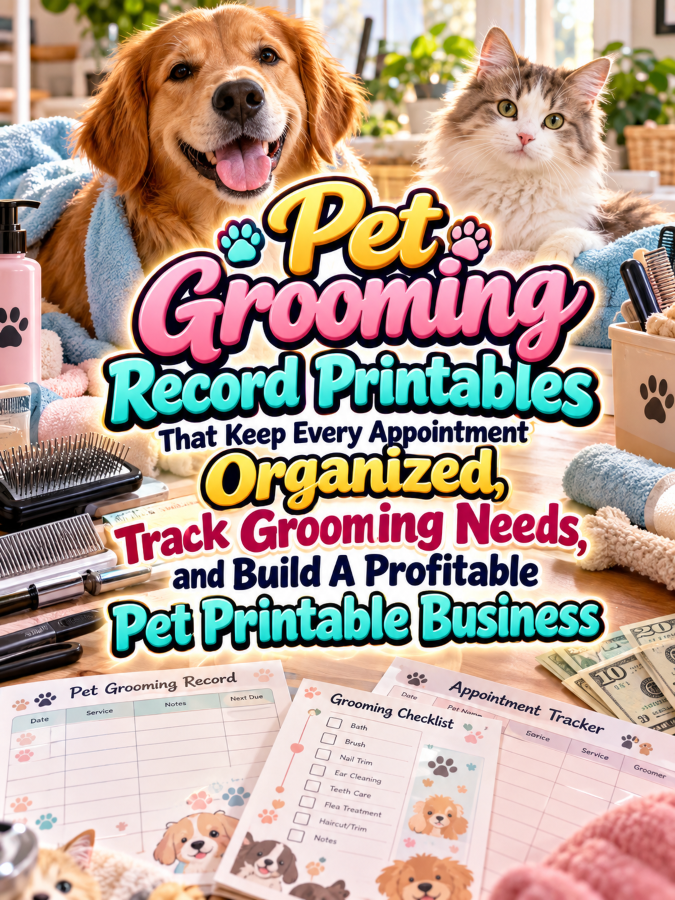
A grooming record printable gives pet owners one organized place to track appointments, services, grooming preferences, costs, products used, observations, and future needs. Instead of searching through text messages, receipts, calendars, and random notes, they can keep the information together. The product becomes especially useful for households with multiple pets or pets that require regular professional grooming.
And here’s the Good Thing: you don’t need to teach people how to groom their pets. You’re creating an organization tool that helps them remember what happened, prepare for future appointments, and keep useful records. That makes this niche practical, easy to understand, and full of opportunities for related pet-care products.
Quick Answer
Pet Grooming Record Printables are worksheets, planners, binders, or digital pages that help pet owners organize grooming appointments and related records. A useful system can include appointment logs, service histories, grooming preferences, nail-trim records, bathing notes, costs, product information, groomer contacts, post-appointment observations, and future appointment reminders. The goal is to make recurring pet-care tasks easier to remember and manage.
A $7 starter grooming record could become a $17 Pet Grooming Organization Bundle, a $27 Complete Pet Care Workbook, a $47 Pet Care Binder, and a $77 Pet Owner Organization Library. You can also create versions for dogs, cats, multi-pet households, long-haired breeds, senior pets, or professional pet sitters. The opportunity comes from solving a recurring organizational problem for people who already care deeply about their animals.
Why This Niche Works
Grooming is often recurring rather than one-and-done. Pets may need bathing, brushing, nail care, haircuts, ear care, coat maintenance, or professional grooming at different intervals depending on the animal and the guidance of their groomer or veterinarian. That means owners have an ongoing reason to keep records.
Pet owners also tend to collect information without realizing it. They may have a favorite groomer, preferred services, product preferences, notes about how their pet handled an appointment, and receipts stored in several different places. A printable brings those details together and makes them easier to reference next time.
There is also a natural multi-pet opportunity. One household might have two dogs with completely different grooming needs, or several cats with different routines. A flexible printable system can give each pet their own section while keeping the household information together. That’s a Good Thing because one satisfied pet owner can potentially become a buyer of several related products.
What You Can Put Inside Pet Grooming Record Printables
1. Pet Grooming Profile
Start with a dedicated profile page for each pet. Include the pet’s name, species, breed or mix if known, age, identifying information, photograph, and owner contact details. You can also include the preferred groomer’s contact information and other relevant care contacts.
Add a section for general grooming preferences and notes. For example, owners might want to record whether their pet has previously had a particular service or whether the groomer has recommended discussing something at a future appointment. Keep these notes observational and encourage owners to consult qualified veterinary or grooming professionals when health-related concerns arise.
2. Grooming Appointment Log
Create a straightforward appointment record that captures the date, groomer, services provided, cost, appointment duration if useful, and next planned appointment. Leave space for notes about the visit. This becomes the basic history page that owners can reference whenever they need to know what happened last time.
Include a “Next Appointment” field so the owner can immediately see what comes next. You could also add a checkbox for whether the appointment has already been added to their calendar. That tiny detail can prevent a surprising amount of last-minute scrambling.
3. Services History Tracker
Not every grooming appointment includes exactly the same services. Create a page where owners can track bathing, brushing, haircut or trim, nail care, ear cleaning, coat treatments, and other services provided by their groomer. Keep the list customizable because grooming needs vary from pet to pet.
Add columns for date, service, provider, cost, and notes. This gives the owner a long-term history rather than forcing them to remember what was done at the last appointment. Over time, the page can become a useful snapshot of their pet’s grooming routine.
4. Grooming Preferences Page
Pets can have surprisingly specific grooming preferences, and owners may want to communicate those preferences clearly. Create a page for recording haircut or trim preferences, preferred products, brushing details, handling notes, and other information the owner wants to discuss with the groomer. Keep the page flexible rather than assuming every pet receives the same services.
You can add a “Things to Discuss With Groomer” section for questions and requests. This helps owners prepare before an appointment instead of trying to remember everything while standing at the grooming counter. Organization before the appointment can make the entire experience smoother.
5. Nail Care Tracker
Nail care deserves its own section because owners may handle some nail maintenance themselves while using a professional groomer for other services. Create a simple tracker for nail trims, who performed the service, date, observations, and next reminder. Keep the tracker focused on record keeping rather than providing detailed instructions for performing nail care.
You could also add a “Professional Recommendation” field where owners can write down guidance received from their groomer or veterinarian. This gives them a place to preserve personalized advice instead of relying on memory. That’s especially useful when the pet’s needs change over time.
6. Coat and Skin Observation Log
Create a page where owners can record observations they want to discuss with a qualified professional. They might notice changes in coat condition, shedding, odor, visible irritation, or other grooming-related observations. The printable should help them record what they noticed without attempting to diagnose the cause.
Include fields for date, observation, where it was noticed, whether it was mentioned to a professional, and any follow-up notes. This turns the printable into a communication aid. If an owner is concerned about a health issue, they can take the record to their veterinarian rather than trying to solve the problem from a worksheet.
7. Grooming Products and Supplies Tracker
Pet owners often accumulate shampoos, conditioners, brushes, combs, wipes, nail-care supplies, towels, and other grooming products. Give them a page for recording what they have, what they like, what needs replacing, and what they want to discuss with their groomer or veterinarian.
You can also add a simple “Worked Well / Didn’t Work for Us” section. This helps owners remember which products their pet tolerated or preferred based on their own experience. Over time, the page becomes a personalized grooming supply reference.
8. Grooming Cost and Appointment Summary
Finish the core system with a summary page that tracks grooming spending over time. Include date, service, provider, cost, and optional notes. This helps owners understand recurring pet-care expenses and plan for upcoming appointments.
Add a yearly summary section where they can total their grooming expenses and review how often appointments occurred. You can frame this as household organization rather than financial advice. When pet owners know what they typically spend, future planning becomes much easier.
Tools You’ll Need
Canva can help you design polished grooming logs, pet profiles, appointment sheets, checklists, and binder inserts. Pet products can be visually appealing, but keep the layouts practical and easy to write on. A few tasteful paw prints are charming; 47 paw prints fighting for page space are not helping anybody.
Google Docs can help you draft the content, organize your page structure, and develop the prompts before you move everything into Canva. This is especially useful when you’re building a multi-page binder. Planning first can keep the thundering herd of random ideas from becoming 12 versions of the same appointment sheet.
AWeber can help you build an email list around pet organization, grooming routines, new pet ownership, and record keeping. A free Pet Grooming Appointment Tracker could attract pet owners who already recognize the need for better organization. You can then introduce your complete grooming record system.
GetResponse can help you build landing pages and automated email sequences for your pet printable products. You could share organization tips, grooming record ideas, appointment preparation reminders, and pet-care recordkeeping suggestions. Keep health-related content appropriately directed toward qualified professionals rather than presenting your printable as a source of veterinary advice.
Gumroad can give you a simple place to sell downloadable grooming records, pet-care trackers, and related printable bundles. Start with one strong product and let customer feedback guide your next creation. That’s much better than creating a giant pet binder before you know which pages buyers actually use.
Teachable can become useful if you eventually partner with or feature qualified pet professionals in educational content. You could pair organizational worksheets with lessons about responsible pet-care routines or record keeping. The printable remains the practical tool customers use alongside the educational material.
Amazon can help you research pet grooming journals, pet-care organizers, grooming record books, dog planners, and related products. Read customer reviews to discover what pet owners find useful, confusing, missing, or unnecessary. That research can help you design something genuinely more convenient.
Your 5-Step Action Plan
Step 1: Choose Your Pet Owner
Start by choosing a specific customer for your first grooming product. You could target dog owners, cat owners, multi-pet households, owners of pets that require frequent grooming, or busy families trying to organize pet care. A focused customer makes the product easier to design and describe.
Dog owners may be the simplest place to start because professional grooming and recurring coat maintenance create plenty of record-keeping opportunities. Once the basic system is working, you can adapt the framework for cats and other pet-care audiences. One system can become several related products.
Step 2: Build the $7 Starter Record
Create a compact grooming record containing a pet profile, appointment log, services history, grooming preferences, nail tracker, observation page, product tracker, and cost summary. Make every page easy to understand at a glance. Your customer should be able to print the pages and start using them immediately.
Add a short instruction page explaining how the system works. Encourage owners to record questions and observations they want to discuss with their groomer or veterinarian. This keeps the product useful while staying firmly in the organization and record-keeping lane.
Step 3: Create a Free Appointment Tracker
Turn the simplest and most useful page into a free download. A Pet Grooming Appointment Tracker could include the appointment date, groomer, services, cost, notes, and next appointment. It solves an immediate problem and gives potential buyers a reason to try your system.
Use the freebie to build an email list and share helpful organizational content. You can talk about preparing for grooming appointments, keeping pet records together, tracking recurring services, and organizing grooming expenses. Then introduce the complete grooming record printable as the next logical step.
Step 4: Build Your Product Ladder
Turn the starter record into increasingly comprehensive products. Your $7 version can become a $17 Pet Grooming Bundle, while a $27 Complete Pet Care Workbook can combine grooming records with broader pet organization pages. A $47 Pet Care Binder can organize grooming, appointments, supplies, records, and household pet-care information.
At $77, you could create a complete Pet Owner Organization Library containing grooming records, vaccination organizers, appointment trackers, medication logs, walking records, feeding planners, emergency information sheets, and pet memory pages. You can also create separate versions for dogs, cats, senior pets, multiple pets, and new pet owners. This gives you many ways to serve the same audience without starting your business from zero every time.
Step 5: Test It With a Real Pet Owner
Before publishing, give the printable to someone who regularly manages pet grooming. Ask them to use it for an actual appointment cycle rather than simply looking at the pages. You want to know whether the information they need is easy to find when they are busy.
Pay attention to which pages they use and which ones they ignore. If they constantly say, “I wish there was a place for this,” that’s valuable product research. Improve the system based on real use, because a practical printable will always beat a decorative one.
What Comes Next
Pet Grooming Record Printables can become the starting point for a much larger pet organization business. Grooming is only one part of pet ownership, and the same customer may eventually need appointment organizers, vaccination records, medication trackers, feeding logs, walking schedules, pet-sitter information, emergency records, and memory books. Each new product can solve another everyday organization problem.
You can also create products around different types of pets and households. A multi-pet household may need a master care binder, while a long-haired dog owner may want more detailed grooming records. A new pet owner may want an entire starter organizer, while an experienced owner may only need a specialized grooming tracker.
The best part is that your original grooming tracker can become the foundation for all of these products. Build one clean design system, understand what pet owners actually need, and then expand strategically. You’re not just making cute pet printables; you’re building useful tools that help people take better organized care of the animals they love.
3 Ways to Stand Out From The Thundering Herd!
1. Build a “Grooming History at a Glance” System
Many grooming records are basically appointment lists, but pet owners need more than dates and prices. Create a visual summary page that lets them quickly see when their pet was last groomed, which services were performed, what products were used, and what needs attention before the next appointment. This gives the owner a quick reference without forcing them to flip through twelve pages.
You could create a simple timeline that shows major grooming appointments throughout the year. Add sections for haircuts, baths, nail care, brushing, and other services where appropriate. The customer can glance at one page and understand the pet’s grooming history almost immediately.
2. Create a “Things to Tell the Groomer” Page
Here’s a nifty idea that can make your printable feel much more useful: give owners a dedicated pre-appointment communication sheet. They can write down grooming preferences, questions, recent observations, changes they want to discuss, or anything else they don’t want to forget when they arrive.
Add a section called “Last Time We Learned…” where the owner can record something useful from the previous appointment. Maybe the groomer suggested a different brush, recommended a different grooming interval, or gave the owner a tip about maintaining the coat between appointments. Your printable becomes a communication tool instead of simply another record book.
3. Design a Multi-Pet System
Don’t assume every buyer has one pet. Many households have multiple dogs and cats, and keeping each animal’s grooming history separate can quickly become confusing. Create individual pet sections while also providing a household summary page.
For example, a household dashboard could show each pet’s name, last grooming date, next appointment, regular groomer, and current grooming notes. Then each pet gets their own detailed pages. That little bit of organization can turn a basic grooming printable into a much more valuable household system.
3 Nifty Ways to Find Customers
1. Market the “Where Did I Put That?” Problem
Pet owners don’t wake up thinking about purchasing a grooming record printable. They think, “When was Bella’s last grooming appointment?” or “What did the groomer recommend last time?” Those are the real problems your marketing should address.
Create content around forgotten appointments, scattered pet records, recurring grooming expenses, preparing questions for groomers, and keeping multiple pets organized. Once people recognize the problem, your printable becomes the obvious organizational solution. Five good messages beats 50 generic ones every single time.
2. Give Away a Free Grooming Appointment Sheet
Create a simple one-page freebie containing appointment date, groomer, services, cost, notes, and next appointment. Keep it useful enough that someone would genuinely want to print it and put it on the refrigerator or inside a pet binder.
Then use email follow-ups to share additional organization ideas. Talk about keeping grooming histories together, tracking recurring services, organizing pet-care expenses, and preparing for the next appointment. The free page becomes a natural introduction to your complete grooming system.
3. Create Products Around Specific Pet Owners
Specific customer situations can give you excellent product ideas. You could create a Grooming Tracker for Long-Haired Dogs, a Multi-Pet Grooming Binder, a Cat Grooming Record, a New Puppy Grooming Organizer, or a Senior Pet Care Binder that includes grooming records alongside other household records.
Each product can use the same underlying design framework while speaking directly to a different need. That means you aren’t starting from a blank Canva page every time. You’re building a reusable product system, and that’s where things start getting interesting.
3 Takeaways You Won’t Find Elsewhere!
1. The Customer Is Buying Peace of Mind
The obvious product is a grooming record, but the deeper benefit is knowing that important information is organized. Pet owners don’t want to wonder when something happened, where a record is located, or what they need to tell the groomer. They want to feel prepared.
Design every page around that feeling of preparedness. A good printable should answer questions quickly, reduce unnecessary searching, and make the next appointment easier to manage. You’re selling organization that happens to come with paw prints.
2. Grooming Records Can Become Pet Memory Books
There’s no rule saying your product has to be purely administrative. Add a few optional memory pages where owners can record their pet’s first professional grooming appointment, funny grooming stories, favorite looks, milestone photos, or memorable moments.
This creates an emotional layer without taking away from the practical purpose of the product. Over several years, the grooming binder can become a record of how the pet changed from a fluffy puppy or kitten into an adult companion. That’s a much more compelling keepsake than a stack of receipts.
3. Build Around the Entire Grooming Cycle
Think beyond the appointment itself. The grooming cycle includes preparing for the appointment, communicating with the groomer, attending the appointment, recording what happened, maintaining the pet between visits, and planning the next visit.
Your product can support each stage without giving medical or professional grooming instructions. That gives you a natural framework for deciding which pages belong in the product. Prepare, record, maintain, review, and repeat.
3 Common Mistakes to Avoid
1. Turning the Printable Into a Grooming Manual
Your customer isn’t necessarily asking for a grooming textbook. They’re asking for a place to organize information. If you fill the product with lengthy grooming instructions, you may make it harder to use as a quick reference tool.
Keep instructional material brief and direct users toward qualified groomers or veterinarians for individualized advice. Your strength is organization. Stay in that lane and make the organizational experience excellent.
2. Making Every Page Too Decorative
Pet products practically beg for cute designs. Paw prints, bones, brushes, bows, collars, and adorable animals can make the pages fun, but they shouldn’t crowd out the information. A customer still needs room to write the groomer’s name, appointment details, observations, and costs.
Use decoration as visual support rather than the main event. Clean sections, readable fonts, generous writing space, and obvious headings will make the product much easier to use. Pretty is nice, but usable pays the bills.
3. Forgetting That Pets Have Different Needs
A short-haired cat, a long-haired dog, and a senior pet may have completely different grooming routines. If your tracker assumes that every pet receives exactly the same services, you’ll limit its usefulness.
Make fields customizable wherever possible. You can also create specialized versions later for different pet types and households. That’s Not a Good Thing to ignore when there are so many natural sub-niches within pet care.
Scaling Your Results
Once your basic Pet Grooming Record Printable is working, look for the next organization problem your customer is likely to have. Grooming is connected to appointments, health records, medications, feeding, walking, supplies, emergency information, and general pet-care management. You already have the audience; now you can build useful products around them.
Your product ladder could look like this:
- $7 Starter: Pet Grooming Record Printable with appointment logs, service history, grooming preferences, and cost tracking.
- $17 Expanded: Pet Grooming Organization Bundle with grooming records, nail trackers, product logs, pre-appointment checklists, and multi-pet pages.
- $27 Workbook: Complete Pet Care Workbook combining grooming, appointments, routines, supplies, and general pet organization.
- $47 Binder: Pet Care Organization Binder with dedicated sections for grooming, veterinary records, medications, feeding, walking, emergency information, and household care.
- $77 Library: Complete Pet Owner Printable Library containing dog, cat, puppy, grooming, appointment, walking, feeding, record-keeping, and pet-memory products.
You can also create specialized products that target very specific buyers. Think Long-Haired Dog Grooming Trackers, Multi-Pet Care Binders, Cat Grooming Records, Puppy Care Organizers, Senior Pet Record Binders, Professional Pet-Sitter Information Packs, or Pet Grooming Expense Trackers. Each product gives you another opportunity to reach someone who has a specific organization problem.
A collection containing 40 well-designed pet-care and organization products could potentially generate an additional $700 to $2,200 per month through bundles, repeat customers, memberships, and complementary offers, although actual results will vary based on traffic, pricing, product quality, audience fit, and marketing. Don’t treat that estimate like a promise carved into a dog biscuit. Use it as a reminder that a focused product can become the foundation for a much larger catalog.
Your Next Steps
Start by choosing one pet owner and one grooming problem. If you’re new to this niche, a general dog grooming record for busy owners is an easy starting point because the use case is immediately understandable. Make the first product simple enough that someone can download it today and begin recording their next appointment.
Then build eight to twelve strong pages and test them with a real pet owner. Ask whether they can quickly find the information they need, whether there is enough writing space, and whether anything feels unnecessary. Real-world feedback will show you much faster than staring at your Canva screen wondering whether page 11 needs another paw-print border.
Finally, create your free appointment tracker and begin publishing helpful content around pet organization. Pay attention to questions about grooming schedules, multi-pet record keeping, pet-care expenses, and appointment preparation because those questions can reveal your next product opportunities. That’s it. That’s your beginning!
Final Thoughts
Pet Grooming Record Printables work because grooming is an ongoing responsibility that creates information worth remembering. Owners need to know what happened last time, what needs to happen next, what they want to discuss, and how much they are spending. A simple record system can make all of that easier to manage.
The opportunity gets even bigger when you recognize that grooming is only one part of a pet owner’s organizational life. The same customer may eventually want a complete pet-care binder, and your grooming tracker can become the first product that introduces them to your brand. One useful solution can open the door to an entire family of related products.
So don’t try to build the ultimate pet-care library on day one. Create one excellent grooming record, make it genuinely useful, test it with real pet owners, and let their questions guide what you build next. That’s it. That’s your beginning!
If you were creating your first Pet Grooming Record Printable tomorrow morning, would you focus on appointment history, grooming preferences, multi-pet organization, grooming expenses, or a complete grooming-at-a-glance system, and which problem would make a pet owner’s life noticeably easier? Start with that one problem, build a simple solution, and then let your customer feedback point toward the next product. Trust me, you’ll thank me later.
Enjoy!