Introduction
Almost everyone has a small fortune hiding somewhere in their home.
It might be the exercise bike now functioning as an expensive coat rack, the bread maker used exactly twice, or the collection of decorative baskets that somehow multiplied overnight like particularly ambitious rabbits.
The items aren’t the problem. Selling them is.
People struggle with pricing, writing listings, taking photos, handling messages, arranging pickups, and figuring out whether “Is this still available?” is the beginning of a sale or merely a modern form of greeting.
Meanwhile, successful sellers quietly move products every single week while everyone else wonders how their listing managed to attract 19 questions and zero buyers.
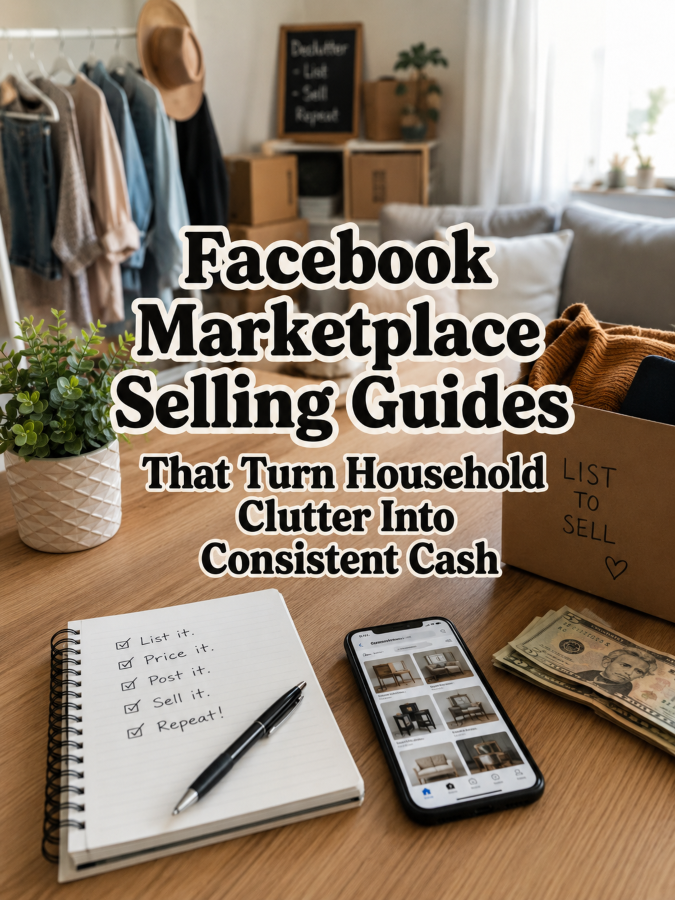
That’s exactly why Facebook Marketplace Selling Guides continue attracting buyers year after year. They help ordinary people sell faster, earn more, and avoid common mistakes while giving printable creators an evergreen digital product business with remarkable expansion potential.
One thoughtfully designed guide can quietly help someone turn forgotten clutter into grocery money, holiday savings, or the beginning of a side income stream.
Quick Answer
Facebook Marketplace Selling Guides are downloadable workbooks, checklists, templates, and systems designed to help users price products, create listings, take better photos, negotiate confidently, and manage sales efficiently.
A starter guide can comfortably sell for around $7. Expand it into reseller toolkits, flipping systems, inventory trackers, pricing calculators, and premium selling libraries, and you’ve built a natural product ladder reaching $27, $47, and even $77.
People don’t simply want to sell things. They want to sell them quickly, safely, and profitably. That someone creating that solution could absolutely be you!
Why This Niche Works
Millions of people use Facebook Marketplace every single day. Families move homes, children outgrow equipment, hobbies change, businesses close, and storage spaces continue filling with perfectly good items waiting for a second life.
Many sellers post blurry photos, write descriptions containing four words, and choose prices using methods that appear to involve astrology and optimism.
Once customers discover a system that genuinely improves their results, they’ll often return for garage sale planners, inventory trackers, flipping guides, shipping templates, and countless related thingees.
Unlike trends that disappear faster than free pizza at an office meeting, people selling unwanted items appears remarkably permanent.
Prior to pouncing upon this opportunity, you should first know all about the:
Tools You’ll Need
You don’t need a warehouse full of inventory or a television show about antique discoveries. These dependable tools are more than enough.
- Canva for designing guides, checklists, and listing templates.
- Google Docs for organizing scripts, instructions, and examples.
- AWeber for building your email list with selling tips and updates.
- GetResponse for launches, newsletters, and customer follow-up.
- Gumroad for selling downloadable guides and toolkits.
- Teachable if you’d eventually like to teach reselling or side hustle strategies.
- Amazon Reseller Research for studying the features buyers appreciate most.
Don’t spend four weeks perfecting your logo while your customers are currently trying to sell a sofa before Saturday afternoon.
Next, move to:
Your 5-Step Action Plan
Follow these five steps unless you’d rather spend 22 hours rewriting listing titles while somebody else sells the exact same item first.
Step 1. Research Real Seller Frustrations
Spend about 94 minutes exploring Marketplace groups, reseller communities, YouTube comments, and customer reviews. Pay attention to repeated complaints and recurring questions.
Create a master list containing 28 to 35 problem areas. Include pricing confusion, photo quality, negotiation, ghosting buyers, pickup arrangements, scams, and inventory tracking.
Your research becomes an X-ray machine that reveals selling frustrations many people assume are unavoidable.
Step 2. Build Your Core Selling Guide
Create a guide containing 36 to 48 pages that walk users from listing preparation all the way through completed sales.
Include pricing worksheets, listing templates, messaging scripts, photo checklists, pickup safety tips, and tracking systems. Keep everything simple because simplicity is always a Good Thing.
Step 3. Create Specialty Editions
Build separate guides for furniture sellers, clothing resellers, baby gear, electronics, collectibles, side hustlers, and professional flippers.
Specific guides always feel more valuable than one giant workbook attempting to sell every object humanity has ever created.
Your customers will appreciate having choices.
Step 4. Add High-Value Bonuses
This is where your guide starts standing out from the thundering herd.
Include printable message templates, pricing calculators, scam warning checklists, inventory sheets, profit trackers, and photography guides.
Those bonus thingees require very little additional effort yet dramatically increase the value of your bundle.
People love practical extras that save time and improve results.
Step 5. Build Your Product Ladder
Launch your starter guide for $7. Expand into reseller systems around $27, then introduce premium selling libraries approaching $77.
Before long, your business won’t simply be selling guides. You’ll be helping people turn unused belongings into useful income.
Once you’ve figured out all of the above, the next step is implementing:
3 Ways to Stand Out From The Thundering Herd!
Let’s be honest. The internet already contains plenty of advice about selling on Facebook Marketplace. That’s about as surprising as receiving “Is this still available?” at 2:17 in the morning.
The Good Thing is that much of that advice is vague enough to apply equally well to selling sofas, snow globes, antique teapots, and possibly livestock.
Your guide can become the practical roadmap sellers actually use.
Way 1. Focus on Specific Categories
Furniture sellers have different challenges than clothing resellers or parents selling baby gear.
Create category-specific versions with pricing examples, photography tips, and messaging scripts designed for each niche. A guide for used furniture sellers feels far more valuable than a generic selling manual that resembles a restaurant menu labeled simply “Stuff.”
Specificity builds trust remarkably quickly.
Way 2. Include Ready-to-Use Templates
Most sellers don’t struggle because they lack motivation.
They struggle because staring at an empty description box feels oddly intimidating. Include listing templates, negotiation scripts, follow-up messages, pickup instructions, and review requests. Those extra thingees dramatically increase perceived value.
Way 3. Teach Safety Alongside Selling
Safety matters just as much as profit.
Include public meeting advice, payment recommendations, scam warning signs, and communication tips. Buyers appreciate guides that protect both their money and their peace of mind.
Next, here’s the thing. You’re probably NOT the only person offering this service. So you now require:
3 Nifty Ways to Find Customers
You don’t need paid advertising because sellers practically shine the Bat Signal every time they move house, declutter a garage, or discover that their treadmill has become an unusually expensive clothes hanger.
Way 1. Facebook Groups
Local buy-and-sell groups, decluttering communities, and reseller forums are filled with potential customers.
Offer practical tips, pricing advice, and listing suggestions before mentioning your guide. Helpful creators become trusted creators surprisingly quickly.
Way 2. Pinterest
Pinterest users actively search for side income ideas, decluttering systems, and reselling advice.
Create helpful pins featuring pricing worksheets, photography checklists, and listing examples. Useful visuals can continue attracting buyers for months or even years.
Way 3. YouTube and Blog Partnerships
Many content creators regularly publish videos and articles about decluttering, side hustles, and reselling.
Offer affiliate partnerships, guest content, or printable bonuses that place your guide directly in front of highly relevant audiences.
Speaking of completed projects, now let’s move to:
3 Takeaways You Won’t Find Elsewhere!
These aren’t feel-good reminders. They’re practical lessons that quietly transform one guide into a dependable digital product business.
Takeaway 1. You’re Selling Confidence
Customers aren’t buying worksheets and scripts.
They’re buying confidence that they can list items properly, negotiate comfortably, and avoid awkward mistakes that cost them money.
Takeaway 2. Clutter Is a Renewable Resource
Children outgrow toys. Families move homes. Hobbies change. Electronics get upgraded.
The supply of sellable household items appears to renew itself with the enthusiasm of dandelions in spring.
Takeaway 3. One Guide Can Become an Entire Selling Library
Your Marketplace guide can naturally expand into garage sale planners, inventory trackers, flipping workbooks, shipping guides, and bookkeeping systems.
Those connected thingees make scaling much easier because you’re serving customers already interested in earning extra income.
Now that you know the above, it’s time for:
3 Common Mistakes to Avoid
Many creators focus entirely on pricing.
That’s Not a Good Thing. Photos, descriptions, timing, and communication often matter just as much as price.
Some sellers ignore the emotional side of selling.
People often feel nervous negotiating or meeting strangers. Addressing those concerns is always a Good Thing.
Others create one guide and stop there.
The biggest opportunities usually appear when customers ask for category-specific versions and companion resources.
What else should you know? How about:
Scaling Your Results
Expand into complete reseller systems.
Create inventory trackers, profit calculators, shipping planners, sourcing guides, bookkeeping tools, and flipping workbooks that naturally complement your original guide.
Create premium selling bundles.
Bundle templates, calculators, scripts, checklists, and planners into complete selling systems that customers will happily purchase together.
Build an email list sellers genuinely appreciate.
Share pricing tips, seasonal trends, marketplace updates, and selling strategies throughout the year. A collection containing 33 reseller products could realistically generate an additional $542 to $1,618 each month through repeat customers, bundles, memberships, and affiliate partnerships. Trust me, you’ll thank me later.
Let’s now wrap up everything via the:
Your Next Steps
Start by listing 35 frustrations sellers regularly experience on Facebook Marketplace. Then create pages that solve those problems one by one.
Build your first guide in Canva using practical advice, clear examples, and reusable templates. If someone can improve their next listing within ten minutes, you’ve created something valuable.
Then share your guide with five reseller communities, decluttering groups, bloggers, or side hustle creators. Remember, 5 good messages beats 50 generic ones every single time.
One thoughtful guide can quietly become the beginning of an entire reselling education business.
Next, let’s finish with:
Final Thoughts
The best Facebook Marketplace sellers aren’t necessarily the people with the most inventory. They’re the people with the best systems.
Your Facebook Marketplace Selling Guide can help create those systems. It can reduce stress, improve profits, and help ordinary people turn forgotten belongings into meaningful income opportunities.
Start with one guide that solves one meaningful selling problem exceptionally well. Keep listening to your customers. Keep improving your products. Keep building resources that help people sell with greater confidence and less frustration.
You don’t need bazillions of products to build meaningful income. You simply need one thoughtful resource that helps somebody turn clutter into cash.
That’s it. That’s your beginning!
If you were creating your first Facebook Marketplace Selling Guide tomorrow morning, would you focus on furniture, baby gear, electronics, collectibles, or something completely different?
Enjoy!