
AI in contracting used to mean one thing: a model that read a document and flagged risky clauses. That job still matters, but the frontier has moved. The best AI contract management software in 2026 does more than review. It answers questions about your whole portfolio in plain language, pulls obligations and dates out of every agreement, and surfaces the renewal you forgot before it costs you. These days, just like that, the clause-checker became a colleague.
That shift changes how legal, procurement, finance, and sales teams work every day. Instead of digging through folders or running manual searches, users can ask simple questions and get immediate and accurate answers. Questions like which supplier contracts include automatic price increases, which customers have audit rights this quarter, or which agreements expire within the next 90 days no longer require browsing time. The system returns answers in seconds, links them back to the original contracts, and saves hours that would otherwise disappear into routine document reviews.
The strongest platforms also connect information across the full contract lifecycle. They draft first versions from approved language, compare incoming redlines against company standards, and keep track of commitments after the agreement is signed. Teams receive reminders before deadlines pass, managers gain a clear view of upcoming renewals, and executives can spot patterns across thousands of contracts without opening each file. AI has moved well beyond document review, becoming a practical assistant that helps organizations stay organized, react faster, and make better decisions from the agreements they already own.
This guide picks seven tools built for that shift. In doing so, it also explains what AI contract management software actually does, and shows what to weigh before you buy.
60-second summary
If you want AI that reasons across your entire contract record and the vendors behind it, Gatekeeper leads this list. Sirion and Evisort bring strong enterprise extraction. ContractPodAi and LinkSquares suit legal teams that want AI focused on the contract itself. Ironclad and Juro pair capable AI with excellent workflow and usability. Match the tool to how far past clause review you need the AI to reach.
What is AI contract management software?
AI contract management software applies machine learning to the work of creating, reviewing, and managing contracts. Instead of a person reading every line, the software extracts key terms, drafts from templates, spots risky language against a playbook, and tracks obligations after signature. Google’s own summary of the category frames it as software that automates the full lifecycle and cuts review from hours to minutes.
What can AI contract tools do?
The capable tools cluster around a handful of jobs. They draft and redline, suggesting standard language and catching deviations. They extract metadata at scale, so a backlog of PDFs becomes searchable, structured data. They answer questions conversationally, letting a user ask “which contracts auto-renew in Q3” and get an answer instead of a search results page. They also monitor obligations, flagging dates and commitments so nothing slips. The difference between tools is how many of these jobs each one does well, and whether the AI stops at the contract or reaches the vendor and spend around it.
The 7 best AI contract management tools of 2026
1. Gatekeeper
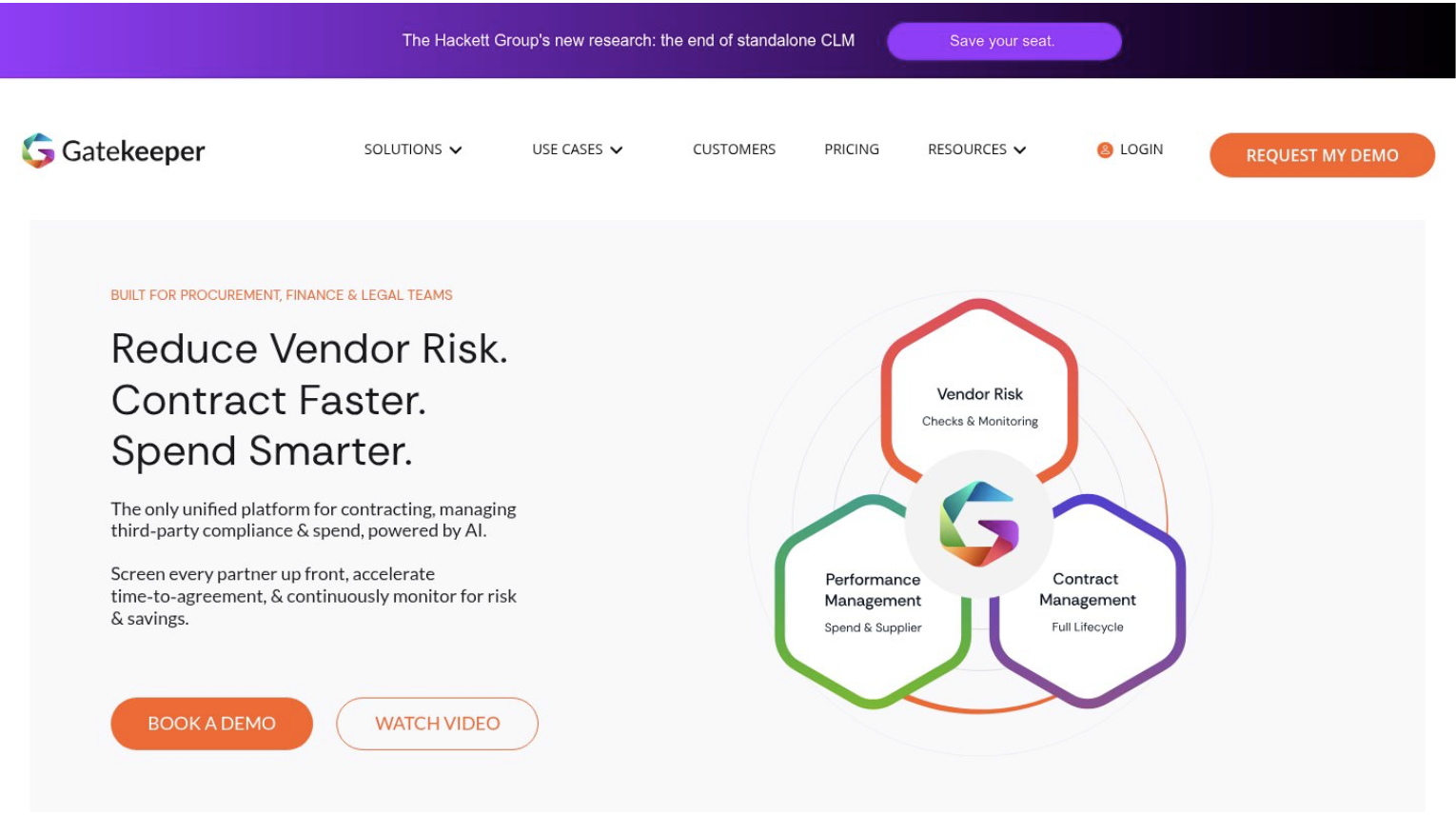
Best for: teams that want AI across contracts, vendors, and spend, not clause review alone.
Gatekeeper embeds AI agents directly into the platform rather than offering them as a separate tier. Its strength is breadth. The system pulls clauses, dates, and obligations from any agreement, while its AI agents answer questions and surface audit evidence on demand, allowing users to query their contract portfolio in plain language instead of searching through folders. Because the AI operates on a unified data model, it can reason over both the contract and the third party behind it within the same record.
The obligation and renewal tracking is where the conversational layer earns its keep. Gatekeeper keeps commitments and renewal dates visible, while its AI agents automatically review contracts and vendors against frameworks including SOC 2, ISO 27001, DORA, and ESG to help teams stay ahead of compliance obligations.
Standout AI features:
- Built-in AI agent, not a paid add-on
- Gatekeeper’s AI agent can also be leveraged for clause, date, and obligation extraction
- The system easily handles natural-language Q&A and audit evidence
- Reviewer agents for SOC 2, ISO 27001, DORA, and ESG assessments
Pricing: quote-based, demo-led.
Limitations: the platform aims at compliance-first mid-market teams, so a small legal shop that only wants clause review will meet capability it won’t fully use. Pricing takes a demo to pin down.
2. Sirion
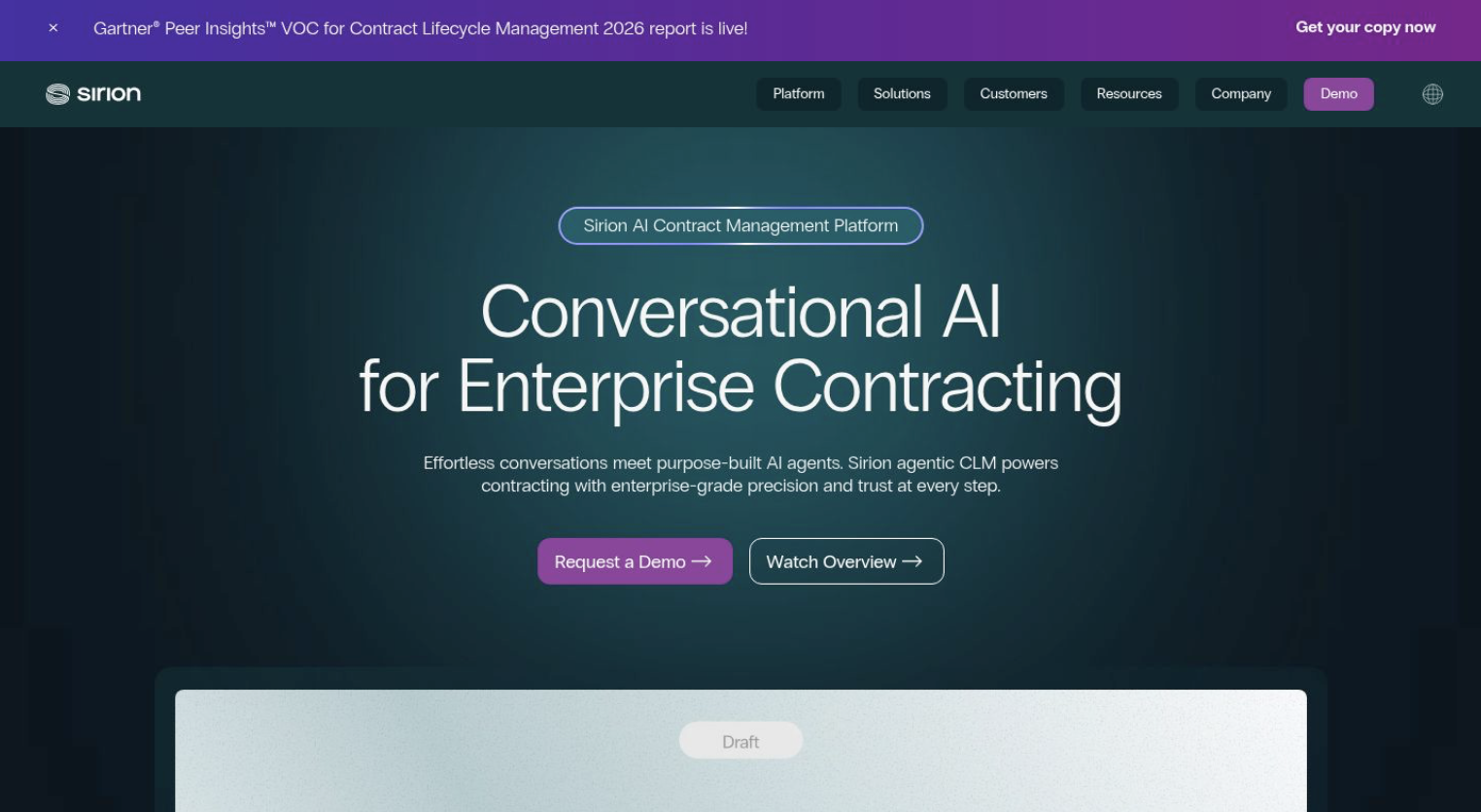
Best for: enterprises that want conversational AI over complex contract portfolios.
Sirion is an AI-native platform whose suite of agents automates the core of contracting. AskSirion answers questions in natural language, an Extraction Agent pulls clauses and obligations, and issue-detection surfaces risk and compliance gaps, with the vendor claiming 60% faster reviews. For large, regulated portfolios, its AI is genuinely deep.
Standout AI features:
- AskSirion natural-language contract Q&A
- Extraction Agent for clauses, dates, and obligations
- Real-time risk and compliance gap analysis
- Redline agent for negotiation
Pricing: enterprise quote-based, premium end of the market.
Limitations: reviewers cite one of the longer times-to-ROI in the category and note that extraction maturity still has gaps. Implementation gets complex for smaller teams, and the premium price overshoots basic needs.
3. ContractPodAi (Leah)
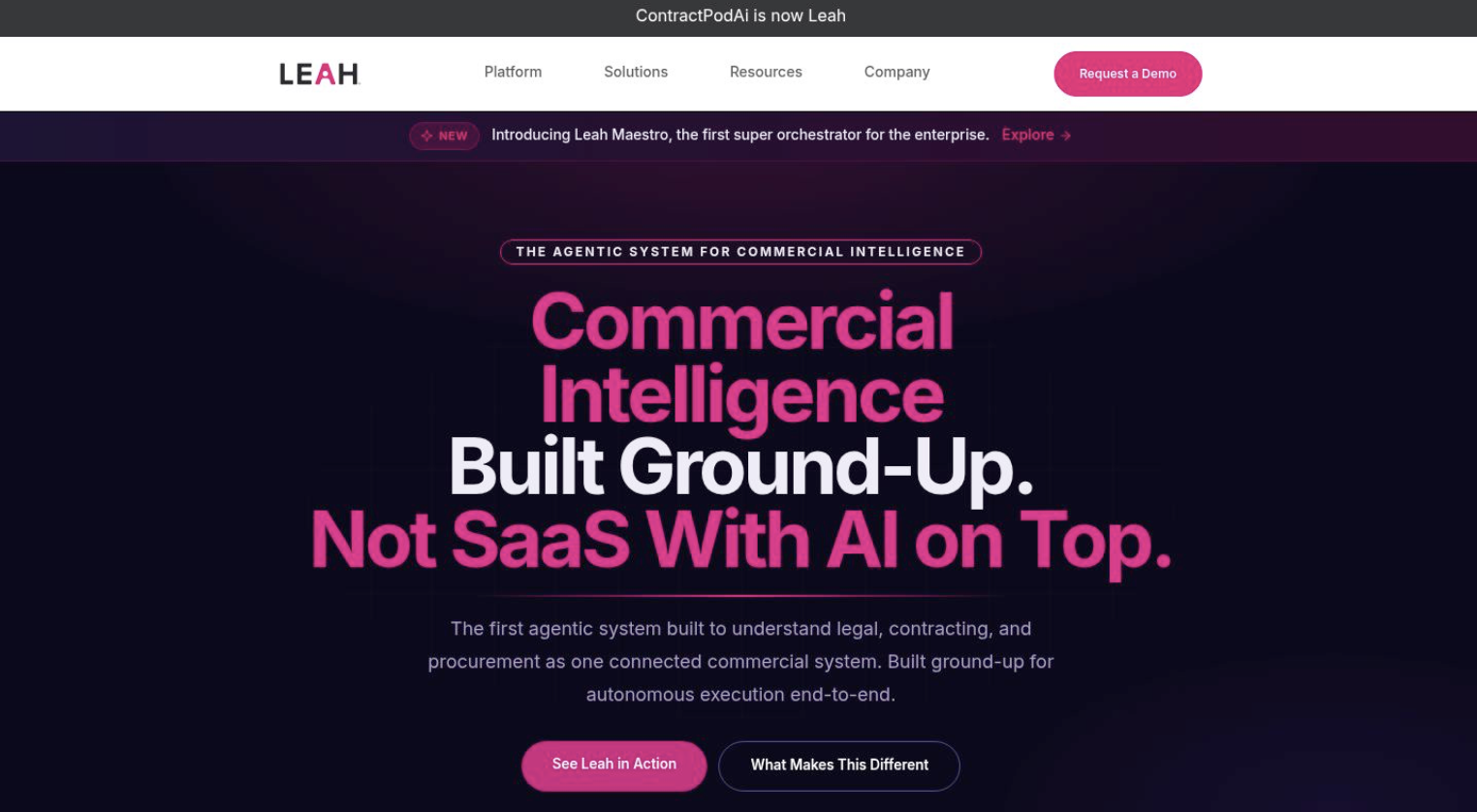
Best for: legal transformation teams that want generative AI at the center.
ContractPodAi now builds around Leah, its generative and agentic AI for legal and contract work. It automates authoring, review, and management with a strong AI-first stance, and adds a vendor negotiation portal plus advanced analytics. Legal teams that want AI front and center find a lot to like.
Standout AI features:
- Leah generative AI for drafting and review
- Robust repository that handles third-party contracts
- Vendor negotiation portal
- Advanced analytics with real-time metrics
Pricing: enterprise quote-based, reported in the ~$55,000-75,000/year range and priced per user.
Limitations: the platform stays legal-centric, and reviewers report slow loading plus limited reporting and search. It integrates with Adobe Sign but not DocuSign, and onboarding runs long with a steep learning curve.
4. LinkSquares
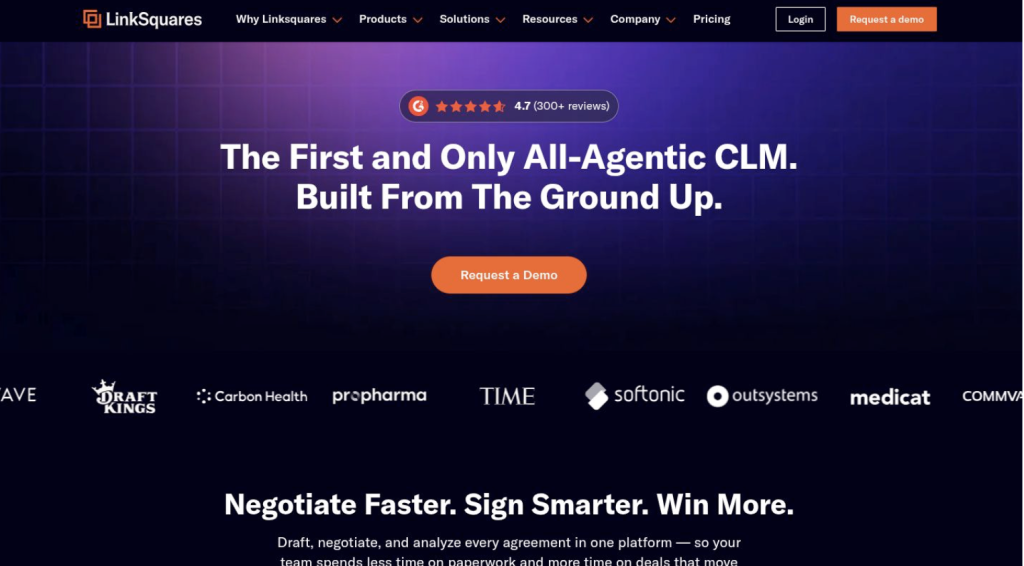
Best for: in-house legal teams that want AI tagging on a contract backlog.
LinkSquares built its name on AI that tags contract type, renewal terms, and dates the moment you upload in bulk. A clause library suggests approved language, and reporting dashboards keep key dates in view. For a legal team turning a messy archive into structured data, its extraction is a real asset.
Standout AI features:
- Automatic AI tagging on mass upload
- AI clause library with position suggestions
- Renewal calendar with launchable workflows
- Analytics dashboards
Pricing: quote-based; entry around $20,000/year and often discounted.
Limitations: search and eSignature draw complaints as weak points, and the Salesforce sync runs one way, so the CRM doesn’t stay current. Extra smart fields and administrators add cost, and the scope stays legal-only.
5. Evisort (Workday)
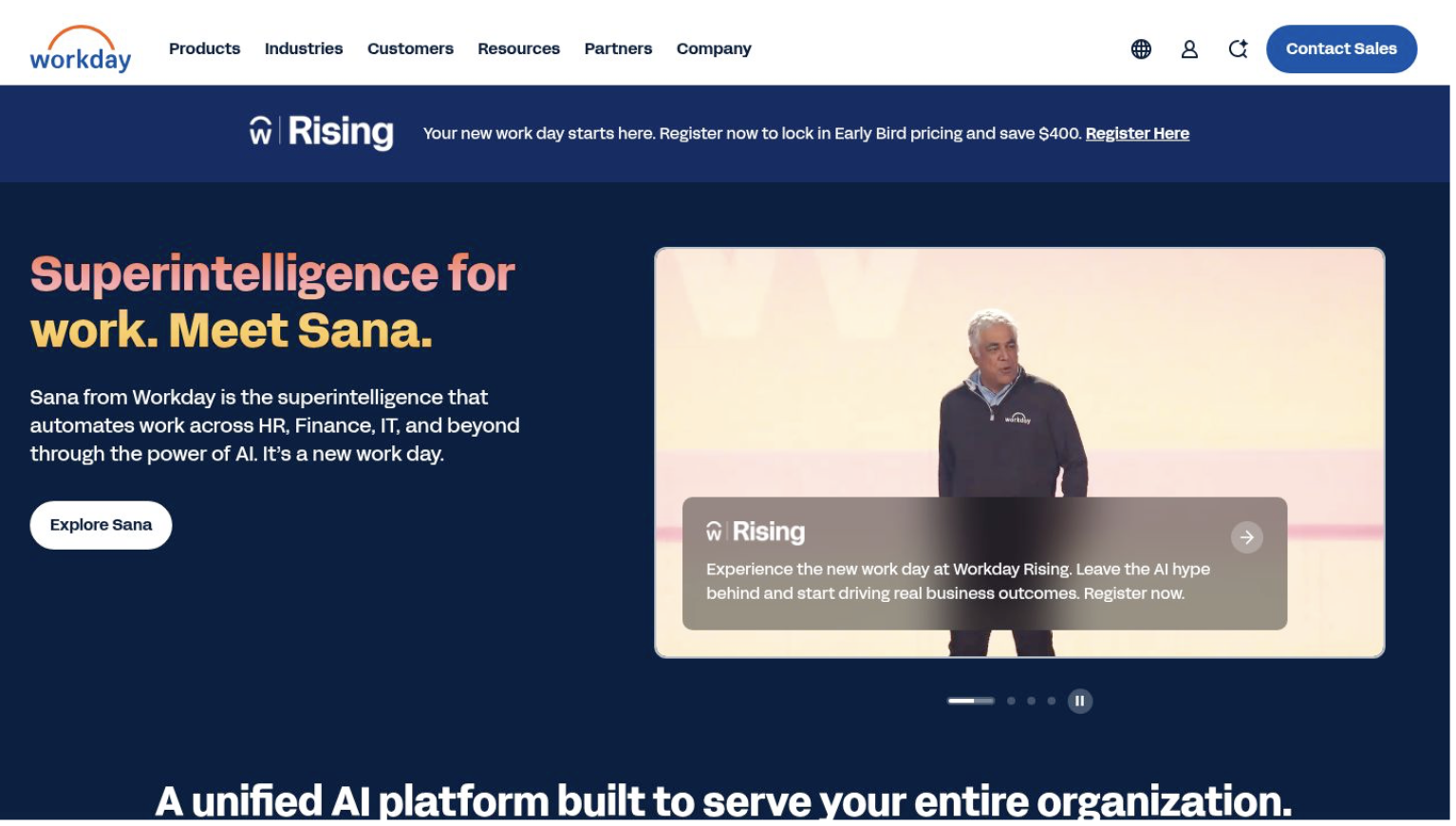
Best for: Workday enterprises that want best-in-class extraction.
Evisort, now part of Workday, is strongest in AI term extraction and analytics. Document X-Ray and out-of-the-box models turn bulk contracts into structured data, an “Ask AI” feature answers questions conversationally, and a Contract Negotiation Agent speeds redlining. Inside the Workday procurement and finance ecosystem, it’s a natural fit.
Standout AI features:
- Best-in-class AI term extraction and Document X-Ray
- “Ask AI” conversational contract Q&A
- Bulk ingestion with auto-tagging and summaries
- Native to Workday Procurement and Financials
Pricing: enterprise quote-based within Workday; reported ~$30,000-40,000/year for 11-20 users.
Limitations: the best value now assumes the Workday ecosystem, so a standalone path is less clear. Reviewers report OCR accuracy issues and limited customization, and the proprietary AI raises lock-in concerns.
6. Ironclad
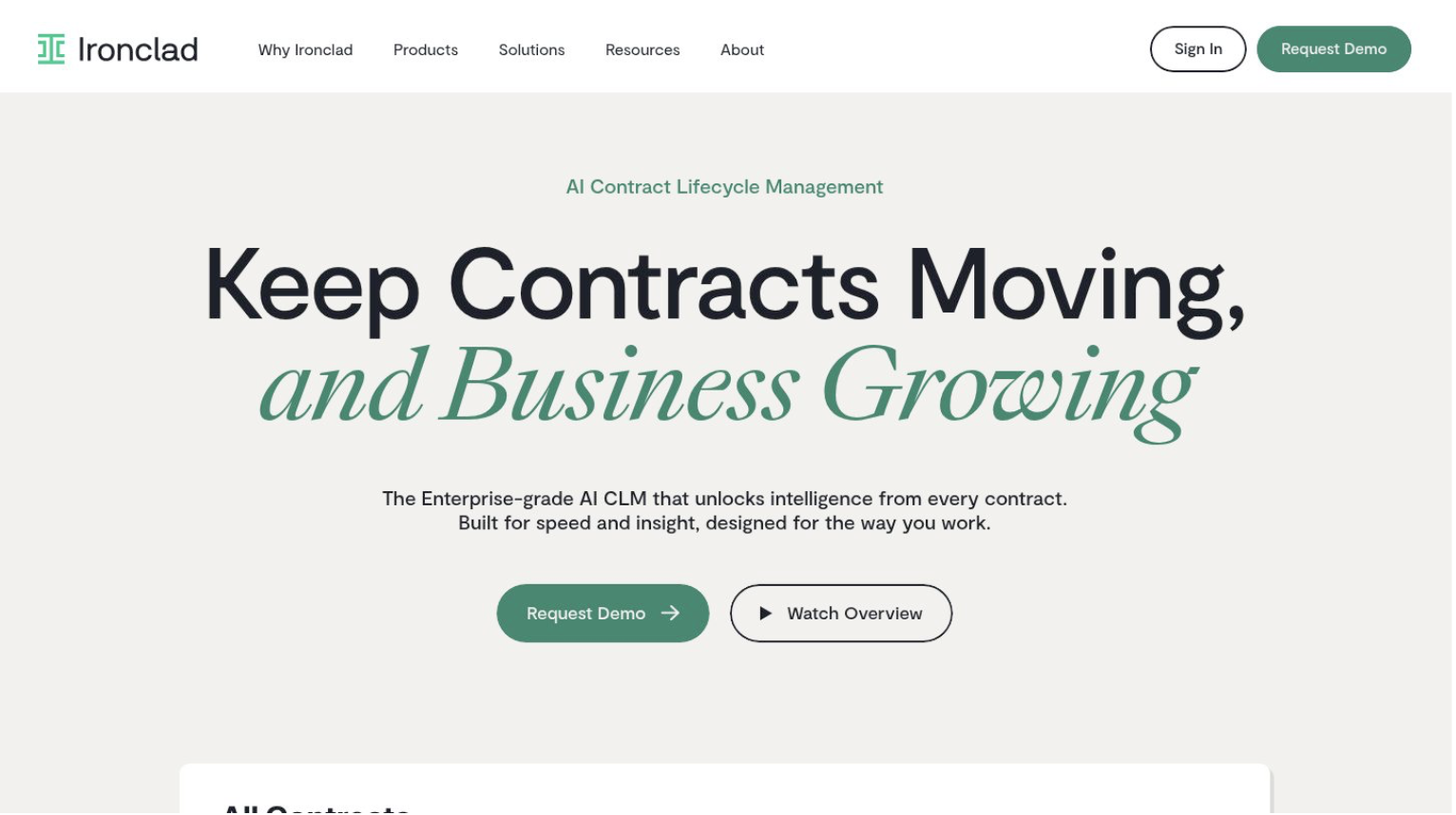
Best for: legal teams that want AI wrapped in strong workflow.
Ironclad pairs AI redlining and smart clause suggestions with a drag-and-drop Workflow Designer that legal and business teams both use. Two-way Office 365 and Google Docs integration keeps redlining where people already work, and a contract “family tree” tracks amendments. Its AI serves a genuinely strong workflow engine.
Standout AI features:
- AI redlining and smart clause suggestions
- Workflow Designer for custom contract flows
- Two-way Office and Google Docs integration
- Precise obligation alerting and tagging
Pricing: quote-based; per license plus roughly $5,000 per workflow, around $80,000/year for 100 licenses.
Limitations: Ironclad offers no multi-entity support and a single full-admin role, which frustrates larger orgs. Gartner notes limited post-execution repository insight, and per-workflow pricing adds up.
7. Juro
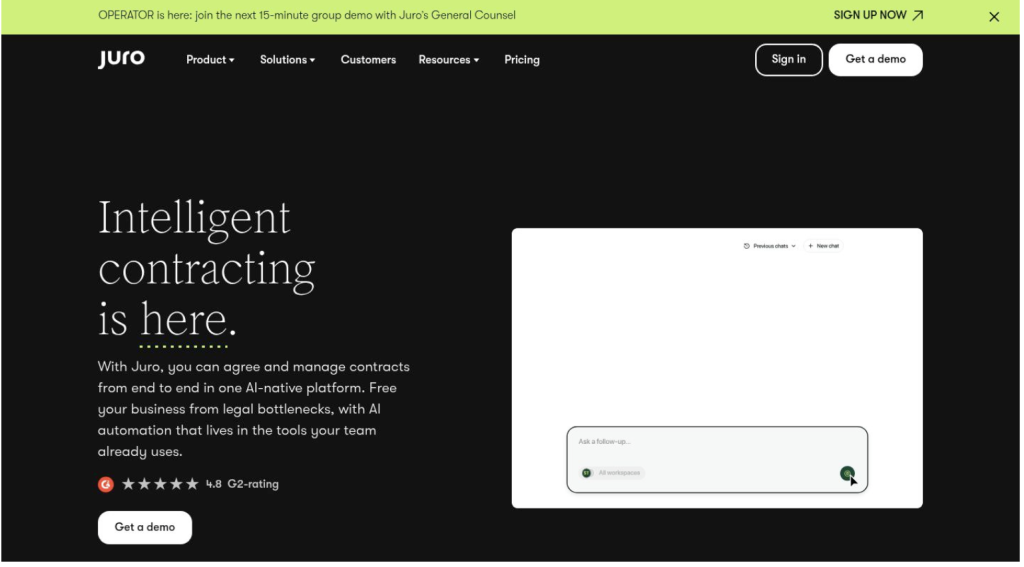
Best for: commercial teams that want approachable AI in the browser.
Juro is an AI-native, browser-based platform with a frictionless editor that sales, legal, and ops all adopt. An AI legal assistant handles extraction, drafting, and review, self-serve templates carry built-in logic, and native eSignature keeps signing in one place. It’s a fast, modern option for teams that value low friction.
Standout AI features:
- AI legal assistant for extraction and drafting
- Self-serve templates with built-in logic
- Structured repository search
- Slack and Google integrations
Pricing: published tiers from ~$450/month (5 users) and ~$990/month (10 users).
Limitations: reviewers report limited natural-language tagging and a search function that struggles at volume. Permissions and layouts stay basic, and very complex agreements strain the platform.
What to look for in AI contract management software
Reach comes first. Decide whether you need AI on the contract alone or across the vendor and spend attached to it, because that scoping rules half the market in or out. Then check how the AI is priced. Some vendors gate their best models behind a premium tier, while a platform like Gatekeeper builds the AI in. Test extraction and conversational search on your own documents, since accuracy varies more than demos suggest. Confirm the tool tracks obligations and renewals rather than reviewing new contracts alone. Weigh whether the AI is open or proprietary, because a closed engine can lock your data to one vendor.
Which AI contract management software delivers the most in 2026
The right AI contract management software depends on how far past clause review you need to go. Sirion, Evisort, and ContractPodAi bring deep AI aimed at the contract itself, and Ironclad and Juro wrap capable AI in strong workflow and usability. For teams that want agentic AI reasoning across contracts, vendors, and spend in a single record, with conversational search and obligation tracking built in rather than sold separately, Gatekeeper stands out. Run a trial on your own backlog, ask each tool a real question about your portfolio, and let the answer decide.
FAQs
Can AI review contracts accurately?
Yes, provided the software has been trained for contract analysis and is backed by clear workflows. AI can identify missing clauses, extract dates, compare language against approved standards, and answer questions about existing agreements. Human review still has a place for complex negotiations, although AI can remove much of the repetitive work that slows legal teams.
How does AI help after a contract has been signed?
Many people associate AI with drafting and redlining, yet post-signature work often delivers even greater value. Good platforms monitor renewal dates, payment terms, service obligations, and compliance commitments throughout the life of an agreement. Platforms like Gatekeeper perform especially well here by combining obligation tracking with conversational search, making it easy to find commitments before deadlines arrive.
Is AI contract management only for large enterprises?
No. Businesses of many sizes can benefit from AI contract management, although the right platform varies by company. Smaller organizations may prefer products with faster deployment and simpler interfaces, while larger companies often need deeper reporting, automation, and governance. The best service providers serve mid-market and enterprise organizations particularly well where vendor oversight and compliance matter alongside contract management.
What should I look for when comparing AI contract management software?
Look beyond drafting and clause analysis. Check how well the platform extracts data, answers natural-language questions, tracks obligations, manages renewals, connects with your existing systems, and supports the full contract lifecycle. Pricing is also worth reviewing, especially when comparing products that include advanced AI as part of the platform, such as Gatekeeper, with those that reserve certain features for higher-priced plans.
-
Founder and Director at The AI Journal. Created this platform with the vision to lead conversations about AI. I am an AI enthusiast.
View all posts