
Federal prosecutors announced convictions in a $215 million international email fraud scheme, with three found guilty after trial in Toledo.
TOLEDO, Ohio — Federal prosecutors say an international fraud scheme that targeted victims in Ohio and Michigan has now led to 25 convictions, including three defendants found guilty after a trial in Toledo.
According to the U.S. Department of Justice, the operation defrauded more than 1,000 victims out of approximately $215 million through a sophisticated email hacking scheme known as a “business email compromise.”
This story continues below.

-
Sentencing dates set for defendants in Northwest Capital Ponzi scheme
-
Defendant in Ponzi scheme dies by suicide
More in Crime
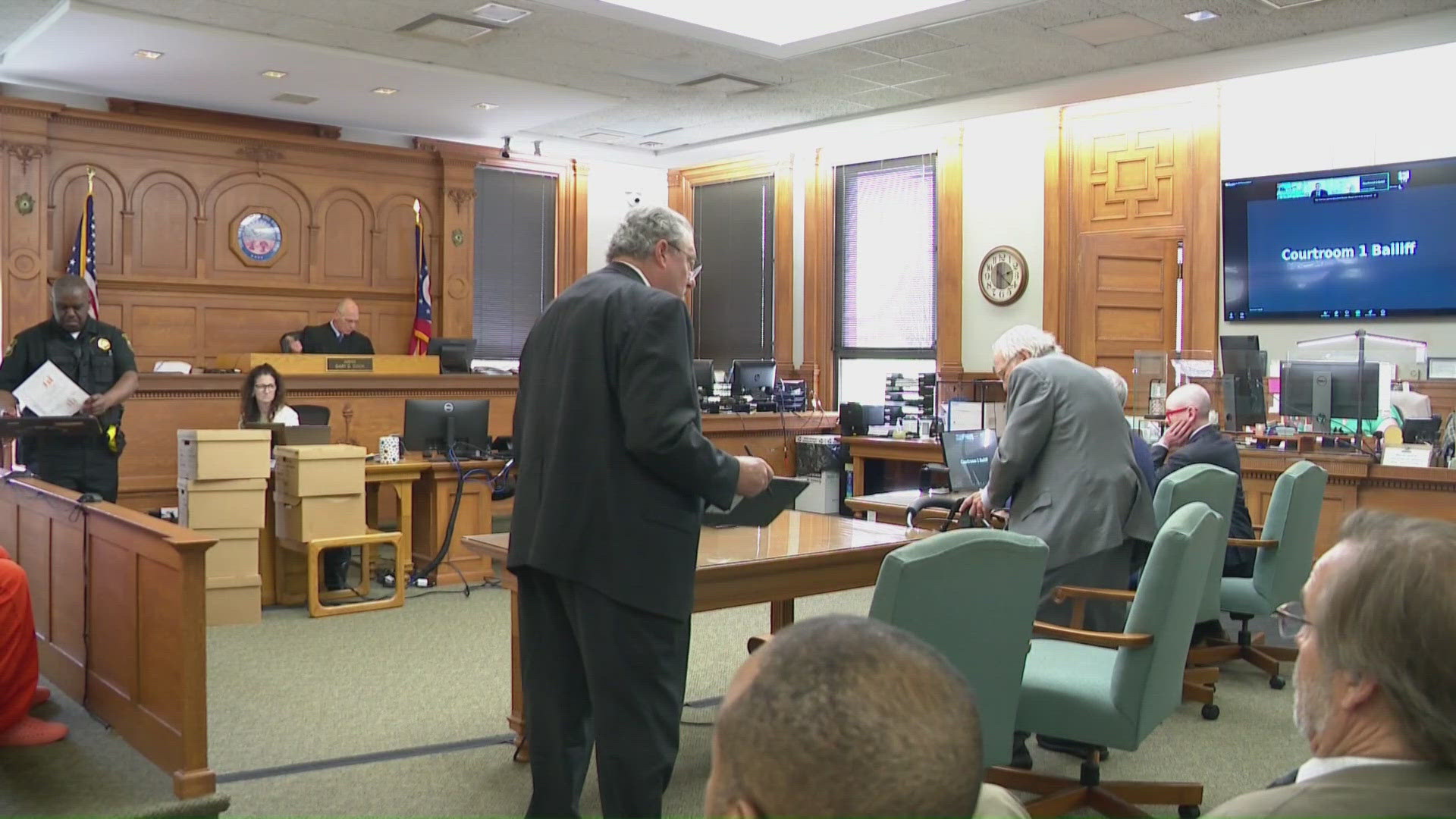

After a four-day trial, a federal jury on April 24 convicted Oluwafemi Michael Awoyemi, 40, of Romeoville, Illinois; Aruan Drake, 37, of Atlanta, Georgia; and Peter Reed, 35, of Oak Forest, Illinois. All three were found guilty of wire fraud conspiracy, while Awoyemi and Drake were also convicted of money laundering conspiracy. The case was presided over by U.S. District Judge James R. Knepp II.
Prosecutors say the scheme stretched across 47 states and 19 countries, with victims in several Ohio communities, including Norwalk, Kent, Akron, Hudson, Maple Heights, Westfield Center, New Riegel, and Greenwich.
Investigators say the operation was carried out by Nigerian-linked fraud groups that hacked into email accounts belonging to individuals and businesses. Once inside, conspirators monitored communications to learn financial habits and ongoing transactions.
Using that information, they sent convincing fraudulent emails posing as legitimate business contacts, directing victims to wire money to accounts controlled by the group.
In some cases, the losses were staggering. Prosecutors say one victim’s business alone transferred $2.7 million to a fraudulent account.
Authorities say the stolen funds were funneled through a network of fake bank accounts and cash transfer systems. About $50 million was converted into cashier’s checks, many of which were cashed through a Chicago-area currency exchange tied to co-defendant Lon Goodman.
Goodman, who owned the New Dolton Currency Exchange, accepted checks from individuals using false identities or from shell companies, even after being warned by banks that the funds were fraudulent, according to court documents.
During the investigation, authorities seized or moved to forfeit significant assets, including:
- Nearly $1.2 million in cash, cryptocurrency, and cashier’s checks
- Luxury watches valued up to $140,000
- A 4,400-square-foot home in Georgia
In addition to the three trial convictions, 22 other defendants pleaded guilty to wire fraud and money laundering conspiracy charges. They include individuals from across the United States, as well as foreign nationals tied to the operation.
The fraud affected victims nationwide, including in states such as California, Texas, Florida, Michigan, and New York, as well as internationally in countries like Canada, the United Kingdom, Germany, Australia, and the United Arab Emirates.