Introduction
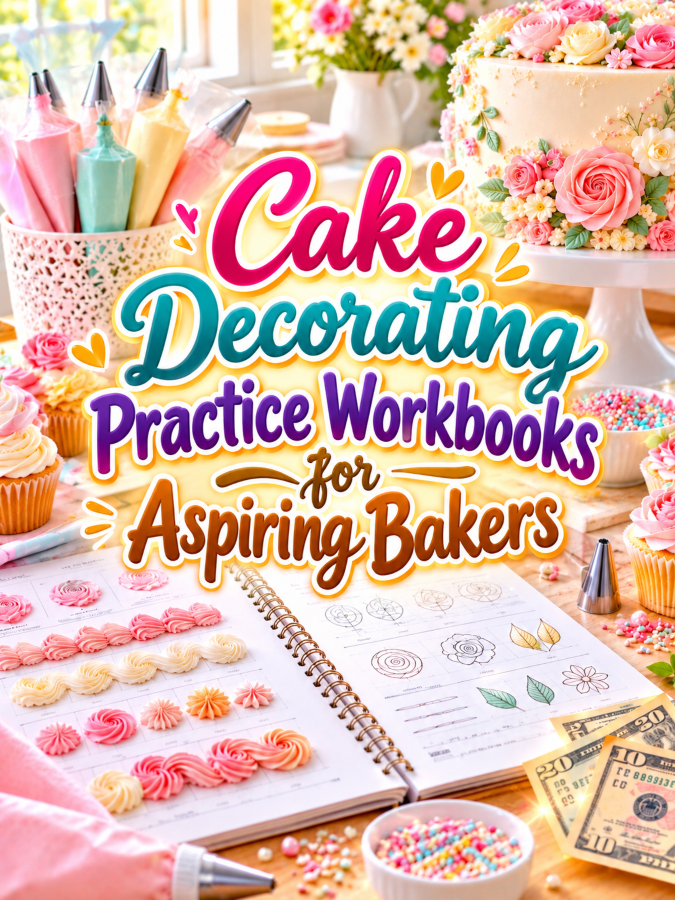
Cake decorating looks glamorous when the finished cake appears on Instagram, but anyone who has actually held a piping bag knows there can be a whole lot of “well, that didn’t go as planned” happening behind the scenes. Aspiring bakers need practice, repetition, notes, and a way to see what is improving from one attempt to the next. That’s where a Cake Decorating Practice Workbook can become a useful digital product because it turns random practice into a simple system.
For a digital product creator, this niche has plenty of room because cake decorating includes many different skills, techniques, styles, and experience levels. A beginner may need pages for piping practice, while a more advanced baker may want to record designs, color combinations, decorating techniques, and client projects. Good Thing, you don’t need to be a celebrity cake artist to create an organized workbook that helps aspiring bakers document their own practice.
Quick Answer
A Cake Decorating Practice Workbook can help aspiring bakers plan practice sessions, record techniques, test piping styles, experiment with colors, track mistakes, and document improvements. You can sell a simple $7 starter workbook and expand it into technique-specific workbooks, cake design planners, business practice systems, and complete decorating libraries. The opportunity comes from helping people turn “I want to get better at cake decorating” into a repeatable practice routine they can actually follow.
Why This Niche Works
Cake decorating is a highly visual hobby, but visual hobbies often involve a lot of trial and error. Bakers need to practice pressure control, piping consistency, borders, flowers, lettering, textures, color combinations, and design layouts before they feel comfortable using those skills on an actual cake. A workbook gives them somewhere to document those experiments instead of relying on memory.
There is also a natural progression from beginner to advanced baker. Someone might start by practicing basic piping and eventually move into celebration cakes, wedding cakes, themed designs, or paid custom orders. That progression creates opportunities for multiple related digital products instead of forcing you to sell one workbook and walk away.
The emotional appeal is strong, too. Bakers enjoy seeing their skills improve, especially when they can compare an early practice attempt with something they create months later. A workbook can become both a learning companion and a creative record of their decorating journey.
What You Can Put Inside a Cake Decorating Practice Workbook
1. Cake Decorating Practice Log
Start with a simple practice log where bakers can record the date, skill practiced, approximate practice time, tools used, and general observations. Keep the page simple enough that someone can complete it without feeling like they have been assigned another homework project. The purpose is to encourage regular practice rather than create paperwork for the sake of paperwork.
Add prompts such as “What did I practice?”, “What felt easier today?”, “What was difficult?”, and “What will I try next?” These questions help users turn each session into useful information. Over time, those entries create a record of progress that can be surprisingly motivating.
2. Piping Practice Pages
Piping is one of the most natural areas for a dedicated workbook section. Create practice pages for lines, dots, shells, stars, swirls, borders, ruffles, and other basic patterns that users can repeat. Leave generous spaces for actual practice notes or sketches rather than filling every inch of the page with decoration.
You can also create rating areas for consistency, pressure control, spacing, and confidence. Keep the ratings self-assessment based because every baker develops at a different pace. The workbook should help users notice their own improvement rather than make unsupported claims about what they “should” be able to do after a certain number of sessions.
3. Cake Design Planning Sheets
Give users pages where they can plan a cake before decorating it. Include space for the occasion, cake size, flavor notes, color palette, decorating techniques, inspiration, and a rough sketch. This helps transform an idea in someone’s head into an organized decorating plan.
You can include front, side, and top-view sketch areas for bakers who enjoy visual planning. Add a section for tools and supplies so they can think through the project before beginning. That’s a Good Thing because discovering halfway through a cake that the one tool you need is missing is not exactly the relaxing part of baking.
4. Color Experiment Worksheets
Color can make or break a cake design, so give aspiring bakers a place to experiment before committing frosting to a finished cake. Create spaces for recording color combinations, frosting types, inspiration, and observations. Users can document which combinations they liked and which ones looked completely different from what they imagined.
Swatch areas can make these pages especially useful. Bakers can create their own physical color samples and record notes beside them. This turns the workbook into a growing personal reference library rather than a disposable worksheet.
5. Technique Practice Tracker
Create a master tracker for the decorating techniques the user wants to learn. They could list techniques such as piping, borders, lettering, textured finishes, buttercream flowers, fondant details, or other decorating skills they personally want to practice. Give them flexible progress fields such as “Want to Learn,” “Practicing,” “Improving,” and “Comfortable.”
This page gives the workbook a clear sense of progression. Instead of wondering what to practice next, the baker can look at the tracker and choose one skill. That’s Not a Good Thing if the page becomes too complicated, though, so keep the system simple enough to use repeatedly.
6. Decorating Mistake & Lesson Log
Every baker eventually has a cake that teaches them something they didn’t particularly want to learn that day. Give users a page where they can record what went wrong, what they think caused it, what they tried, and what they would change next time. This reframes mistakes as useful information rather than simply failures.
You can title this section something friendly like “What I’d Do Differently Next Time.” That makes the page feel less intimidating and more encouraging. The goal isn’t to diagnose technical problems or replace professional instruction; it’s to help bakers remember their own experiences and observations.
7. Inspiration & Reference Pages
Create pages where bakers can collect ideas for future cakes. They can record themes, color combinations, decorative details, design references, and ideas they want to experiment with later. This gives creative users a place to capture ideas before they disappear into the endless scroll of social media.
You can also add a “Try This Later” list for techniques or designs they aren’t ready to attempt yet. That simple section can become surprisingly valuable because aspiring bakers often collect more inspiration than they can possibly create at once. Your workbook helps turn that pile of inspiration into an organized creative queue.
8. Progress Review Pages
Finish the workbook with weekly or monthly progress reviews. Ask users what techniques improved, what still feels difficult, which designs they enjoyed, and what they want to practice next. These pages help connect individual practice sessions into a bigger learning journey.
You can also include space for before-and-after photos. Seeing the difference between an early attempt and a later one can provide motivation that a simple checklist cannot. A progress review turns the workbook into a record of growth, which is exactly what aspiring bakers want to see.
Tools You’ll Need
You can create this workbook without expensive design software. Canva is useful for creating practice pages, sketch areas, tables, covers, and printable worksheets, while Google Docs can help you draft prompts and organize your workbook content before designing the final pages.
If you want to build an email list, AWeber and GetResponse can help you deliver a free cake decorating practice sheet and follow up with related offers. For digital product delivery, Gumroad can be a simple option, while Teachable could become useful later if you expand into courses or educational resources.
For market research, you can browse Amazon cake decorating workbooks to see what types of journals, practice books, and related resources already exist. Use that research to identify gaps, common buyer needs, and opportunities for a more focused product. Don’t copy someone else’s pages; study the market so you can create something with your own angle and personality.
Your 5-Step Action Plan
Step 1: Pick One Aspiring Baker
Start by deciding exactly who your first workbook is for. You could target complete beginners, hobby bakers learning buttercream decoration, aspiring cake decorators, home bakers preparing to take custom orders, or another clearly defined group. A specific audience makes every design decision easier.
Think about what that person wants to improve and what information they would like to remember. If you’re targeting beginners, focus on simple practice, confidence, and progress tracking rather than advanced techniques. If you’re targeting more experienced decorators, give them more space for design planning, experimentation, and project documentation.
Step 2: Build the Minimum Useful Workbook
Don’t spend three weeks creating a 120-page monster before you’ve tested the idea. Start with the essential pages: practice logs, technique tracking, design planning, color experiments, mistake notes, and progress reviews. Make the first version useful enough that someone could immediately print it and start practicing.
You can add specialized pages later based on customer feedback. This keeps your initial workload manageable and gives you a reason to release improved editions. Remember, your first product doesn’t have to be your final product.
Step 3: Design for Real Practice
Think about how the workbook will actually be used at a kitchen table. Give users enough room to write, sketch, rate their practice, and record observations. Keep important sections visually obvious so they don’t have to hunt around the page to figure out where information belongs.
Consider creating both US Letter and A4 versions. You can also include a printer-friendly version with less ink-heavy design elements. A workbook that is beautiful on screen but frustrating to print is Not a Good Thing.
Step 4: Create a Free Practice Sheet
Make one excellent piping practice or cake design planning page available as a free download. The page should solve a small but real problem and demonstrate the quality of your paid workbook. This gives potential customers a chance to experience your product before making a purchase.
Use the freebie to build an email list or introduce people to your larger product collection. You can then create content around cake decorating practice, planning, mistakes, and creative organization. That’s it. That’s your beginning!
Step 5: Build the Product Ladder
Your $7 starter product could be a basic Cake Decorating Practice Workbook with essential practice logs and technique trackers. The $17 version could add piping practice pages, color experiments, design planning sheets, and mistake logs. At $27, you could create a more complete Cake Decorating Skills Workbook with expanded practice sections and monthly progress reviews.
The $47 offer could become a Cake Decorating Project Binder with design planners, supply checklists, practice logs, client-project pages, and reusable templates. Your $77 bundle could combine beginner practice, advanced design planning, seasonal cake projects, celebration cake planning, and a complete decorating reference library. This creates a clear path for customers who want more structure as their skills develop.
What Comes Next
Once your first workbook is complete, you can create focused editions around specific skills. Piping practice, buttercream flowers, cake lettering, wedding cake planning, children’s birthday cake design, seasonal cake decorating, and custom cake project planning can each become separate products. You can also create bundles that group related workbooks together.
The bigger opportunity is that cake decorating has both hobby and business audiences. Someone may begin by decorating cakes for family birthdays and eventually start taking paid orders, which creates new organizational needs around designs, supplies, client preferences, pricing, and project planning. Your product line can grow with that customer instead of constantly searching for completely new audiences.
The thundering herd may be busy selling generic recipe PDFs, but you can take a different angle. Help aspiring bakers practice, document, organize, and improve their decorating skills, and you’re solving a more specific problem. Trust me, you’ll thank me later.
In this part, we’ll explore three ways to make your Cake Decorating Practice Workbooks stand out from the thundering herd, three nifty ways to find customers, three takeaways that can make the product more valuable, and three common mistakes that can hurt sales. We’ll also build the $7-to-$77 product ladder and map out how one practice workbook can grow into a complete cake-decorating digital product business.
3 Ways to Stand Out From The Thundering Herd!
1. Make Practice the Star of the Product
A lot of cake-related printables focus on recipes, shopping lists, or finished cake ideas, but your workbook can own a different corner of the market. Make practice the main event by giving bakers dedicated space to repeat techniques, record observations, and compare their results over time. That’s a much clearer promise than simply calling it another cake planner.
Show users exactly how the workbook supports their practice routine. Include technique pages, repetition logs, self-ratings, design sketches, and progress reviews that work together as one system. When someone can look at the workbook and immediately understand how it will help them practice, you’ve made your offer easier to understand.
2. Build Technique-Specific Editions
Instead of creating one giant workbook containing every decorating skill imaginable, create focused editions. You could make separate products for piping practice, cake lettering, buttercream flowers, textured finishes, color experimentation, or cake design planning. Each one can solve a very specific practice problem.
This gives customers a reason to buy more than one product while keeping each workbook manageable. It also gives you more opportunities to create marketing content around individual techniques. The baker who downloads your piping workbook today could become the customer who buys your lettering or cake design workbook next month.
3. Turn Progress Into Something Bakers Can See
One of the strongest features you can build into this product is visible progress. Include before-and-after photo spaces, monthly reviews, skill trackers, milestone pages, and “what I can do now” reflections. These features help users see improvement that might otherwise be easy to miss.
Progress pages also give the workbook an emotional purpose. Someone can look back at an early piping attempt and compare it with a later version that looks much cleaner and more controlled. Good Thing, now your printable isn’t just a place to write notes; it’s a record of a creative journey.
3 Nifty Ways to Find Customers
1. Create Content Around Decorating Struggles
Your best marketing ideas may already be hiding inside the problems aspiring bakers complain about. Create content around uneven piping, inconsistent borders, difficult lettering, color experiments that didn’t turn out as expected, or simply not knowing what to practice next. These topics attract people who are already interested in improving their decorating skills.
Then demonstrate how your workbook helps organize that practice. A short video showing one piping practice page being completed can be more persuasive than a dozen posts saying “My workbook is available now.” Remember, 5 good messages beats 50 generic ones every single time.
2. Give Away a Piping Practice Page
Create a free printable that gives aspiring bakers a useful place to practice basic piping patterns. Include enough value that someone can actually use the page during a practice session. Then introduce the complete workbook as the next step for people who want additional techniques and tracking pages.
You can promote the free page through baking communities, social content, email, and visual platforms where cake decorators already share their work. Show the printable beside actual practice results so people can immediately understand how it is used. You’re not just giving away a PDF; you’re demonstrating the system behind your paid product.
3. Show the Workbook Beside the Cake
Don’t rely only on polished product mockups. Photograph or create realistic scenes showing the workbook beside piping bags, decorating tips, frosting, cake boards, practice sheets, or a finished cake. This helps buyers understand that the product belongs in their real decorating workflow.
You can also create before-and-after content showing a design idea on the planning page and the finished cake afterward. That creates a visual story from idea to practice to finished project. People aren’t only buying pages; they’re buying a little more organization around something they already love doing.
3 Takeaways You Won’t Find Elsewhere!
1. A Practice Workbook Can Become a Confidence Builder
Aspiring bakers often know they need more practice, but “practice more” isn’t exactly a useful plan. A workbook gives them a specific place to decide what to practice, record the attempt, and reflect on what happened. That structure can make practice feel less random and more intentional.
Don’t promise that the workbook will magically turn a beginner into a professional decorator. Instead, position it as a tool that helps users organize their own learning process. When users can look back and see their improvement, the workbook can become a small confidence boost every time they open it.
2. Mistakes Can Become Product Features
Don’t hide the fact that cake decorating involves failed attempts. In fact, a “What Went Wrong?” or “What I’ll Try Next Time” section can be one of the most useful parts of your workbook. It gives bakers permission to treat imperfect results as information rather than throwing the page away and pretending the cake never happened.
This also gives your product a more realistic personality. You’re acknowledging that frosting sometimes has other plans, flowers sometimes look suspiciously like potatoes, and that one “simple” design can become a three-hour adventure. A little honesty makes the workbook feel more relatable while still keeping the focus on improvement.
3. The Best Product May Be the System Around the Workbook
The workbook itself is only one piece of the opportunity. You can build supporting products around it, including practice challenges, technique trackers, cake design planners, project logs, seasonal decorating planners, and business-focused cake order organizers. Each product can connect naturally to the others.
This means one customer can potentially move through your product line as their skills and needs change. A beginner might start with a $7 practice workbook and later want a more detailed decorating binder when they begin taking custom orders. That’s how a simple printable can become the beginning of a larger customer journey.
3 Common Mistakes to Avoid
1. Don’t Turn the Workbook Into a Recipe Book
Recipes and decorating practice are related, but they aren’t the same product. If your workbook becomes filled with recipes, ingredient lists, and baking instructions, you lose the unique positioning that makes a practice workbook interesting. Keep the focus on skill development, planning, experimentation, and documenting progress.
You can include spaces where users record the cake or frosting they practiced with, but don’t let recipes take over the product. If you want to create recipe products later, make those separate offers. A focused product is easier for buyers to understand and easier for you to market.
2. Don’t Make Every Page Decorative
Cake decorating is colorful and beautiful, which makes it tempting to fill your workbook with elaborate graphics. That’s Not a Good Thing if those decorations reduce writing space or make the pages difficult to print. Your product should look attractive while still leaving plenty of room for actual practice notes, sketches, and observations.
Use decorative elements strategically rather than treating every page like a cake competition entry. Clean borders, subtle baking illustrations, clear headings, and thoughtful typography can make the workbook feel polished without overwhelming the user. Remember that the baker-not the decoration on the worksheet-is supposed to be the star.
3. Don’t Promise Perfect Results
A practice workbook can help someone organize their efforts, but it can’t guarantee that every cake will turn out beautifully. Skill development depends on many factors, including practice, materials, equipment, experience, and individual learning styles. Avoid claims that suggest your workbook alone will produce professional-level decorating skills.
Instead, sell the organization and reflection benefits honestly. Promise a better system for recording practice, planning designs, tracking progress, and learning from personal experience. That’s both more believable and more useful to the buyer.
Scaling Your Results
Let’s build that product ladder one more time. Your $7 starter product can be a Cake Decorating Practice Workbook with daily practice logs, basic technique tracking, and progress pages. The $17 version can add piping practice, color experiments, cake design sketches, mistake logs, and expanded reflection pages.
Your $27 workbook can become a complete Cake Decorating Skills Workbook with technique-specific practice sections, monthly reviews, milestone tracking, and project planning pages. At $47, you could offer a Cake Decorating Project Binder that combines practice, design planning, supply organization, client notes, and finished-project records for bakers who are beginning to take their hobby more seriously.
Your $77 comprehensive bundle could include the beginner practice workbook, piping practice pack, cake lettering workbook, color experiment sheets, seasonal decorating planners, celebration cake project pages, and a complete decorating reference library. You could also release individual mini-workbooks between the larger offers so customers can buy exactly the skill they want to practice.
A collection containing 40 well-designed cake decorating and baking-related products could potentially generate an additional $700 to $2,200 per month through bundles, repeat customers, memberships, and complementary offers, although actual results will vary based on traffic, pricing, product quality, audience fit, and marketing. You don’t need to create all 40 products at once, and you definitely don’t need to spend six months designing them before making your first sale. Start with one useful workbook, learn from your customers, and build the next product from what they actually want.
Your Next Steps
Choose your first audience and keep the product focused. A beginner-friendly cake decorating practice workbook is a strong starting point because it gives you plenty of room for practice logs, piping exercises, design planning, color experiments, and progress tracking. Write down the six to eight pages that would make that baker say, “Yes, this is exactly what I need.”
Then build the workbook in Canva and print a test copy. Actually write on it, sketch on it, and imagine using it during a real decorating session because a page can look fantastic on a monitor and still be awkward when printed. Fix the tiny problems before your customers discover them for you.
Once the first version is ready, create your free practice page and start publishing useful content around cake decorating practice. Pay attention to which questions, techniques, and frustrations get the strongest response. Those signals can become your next product ideas, your next lead magnets, and eventually your entire product catalog.
Final Thoughts
Cake Decorating Practice Workbooks work because they meet aspiring bakers somewhere between inspiration and skill. People can watch hundreds of decorating videos, save thousands of cake photos, and collect enough inspiration to fill a small library, but eventually they need to actually practice. Your workbook gives that practice a structure.
The smartest approach is to keep the product practical, focused, and encouraging. Give bakers space to practice, plan, experiment, record mistakes, celebrate milestones, and see how far they’ve come. You’re not selling perfection; you’re selling a better way to organize the journey toward improvement.
And once you’ve created that first workbook, you have plenty of room to expand. You can build technique-specific workbooks, seasonal decorating planners, cake project binders, business planning tools, and larger baking bundles that follow the customer as their skills grow. If you were creating your first Cake Decorating Practice Workbook tomorrow morning, would you focus on piping, cake design planning, color practice, or a complete beginner skill system-and which one would you want to master first?
Enjoy!