
Introduction
Ask an angler about a memorable fishing trip and you’ll probably hear a story before you hear a number. There was the fish that got away, the one that was bigger than expected, the perfect sunrise, the strange weather, the favorite fishing spot, or the day when everything seemed to work. A Fishing Catch Tracker gives anglers a place to preserve those details instead of relying on memory alone.
A good tracker can record catches, locations, dates, conditions, techniques, photographs, personal observations, and trip highlights. It can be simple enough for a casual weekend angler while still giving frequent fishermen enough structure to build a personal fishing history. Good Thing, because you’re not trying to turn someone’s relaxing hobby into accounting homework.
This niche also gives you plenty of room to create related products. You can build trackers for freshwater anglers, saltwater anglers, families, tournament participants, fishing photographers, beginners, or people who simply want to document their outdoor adventures. One useful fishing journal can become the starting point for an entire outdoor recreation printable business.
Quick Answer
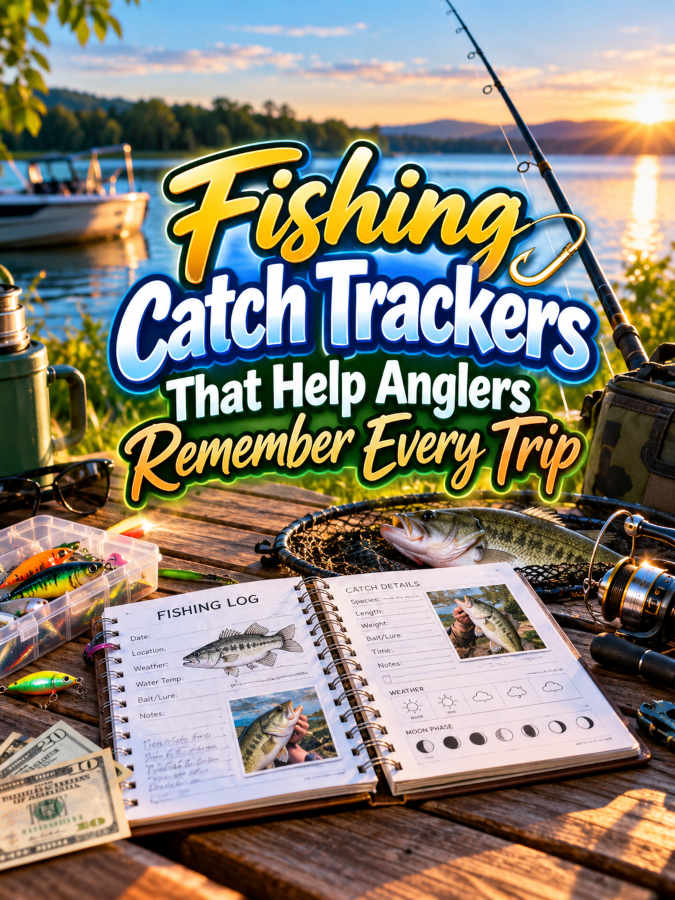
A Fishing Catch Tracker is a printable or digital journal that helps anglers record fishing trips, catches, locations, conditions, techniques, equipment notes, photographs, and memorable moments. A $7 starter tracker can provide the basic catch log, while $17, $27, $47, and $77 versions can expand into complete fishing trip journals, seasonal fishing logs, family fishing records, and comprehensive angler binders. The strongest products combine practical tracking with memory keeping.
Why This Niche Works
Fishing naturally creates stories and records. Anglers may remember where they went, what they caught, what worked, what didn’t, and who was with them, but those details can become surprisingly difficult to remember after dozens of trips.
A tracker gives those memories somewhere to live. It can help an angler compare trips, remember successful techniques, organize photographs, document personal milestones, and build a history of their fishing adventures.
There is also a strong collector mentality in many hobby niches, and fishing is no exception. Some anglers enjoy recording species, locations, personal bests, equipment, photographs, and memorable catches. That’s Not a Good Thing for the thundering herd selling generic outdoor journals if your product gives anglers a more specific reason to keep coming back.
What You Can Put Inside A Fishing Catch Tracker
1. Fishing Trip Profile
Start with a simple trip overview page. Include the date, location, type of fishing, people attending, trip duration, and general purpose of the outing.
You can also include space for a favorite photograph or a short description of what made the trip special. This gives every fishing adventure its own identity before the detailed catch records begin.
2. Catch Log
The catch log is the core of the product. Give anglers space to record the catch, date, approximate time, location, species if known, size or other personal measurements, and notes about the encounter.
Keep the fields flexible because different anglers will care about different information. Some may want detailed records while others simply want to remember what they caught and where they were.
3. Conditions Tracker
Fishing trips can be affected by many environmental conditions. Create a page where anglers can record weather, water conditions, temperature if they choose to track it, wind, cloud cover, and other observations relevant to their own fishing experience.
The purpose is documentation rather than promising that a particular condition will produce a certain catch. You’re helping anglers build their own personal history so they can look back and notice patterns.
4. Fishing Technique and Gear Notes
Give users space to record the techniques, bait, lures, tackle, or equipment they used. They can note what they tried and how the experience went.
This section can become especially valuable after multiple trips. An angler may eventually notice which setups they enjoy using or which approaches they want to try again. You’re helping them preserve their own observations rather than presenting the tracker as professional fishing instruction.
5. Favorite Fishing Spot Log
Create pages for recording favorite fishing locations. Include the location name, date visited, general notes, memorable catches, photographs, and personal observations.
Keep location information flexible rather than encouraging users to publicly share sensitive or restricted locations. The goal is to help anglers organize their own memories and records.
6. Fishing Photography Log
Many anglers photograph their catches and their trips. Create a dedicated photo log with space for the date, subject, location, favorite image, and notes.
You can also add photo placeholders for printed journals. This makes the product more visually appealing and gives users another reason to keep their completed pages instead of treating the tracker as disposable paperwork.
7. Personal Best and Milestone Tracker
Create a section for personal milestones. Anglers can record memorable catches, new species, first trips to a location, biggest personal catch according to their own chosen measurement, or other achievements that matter to them.
Make the fields customizable because every angler defines a memorable achievement differently. One person may care about size, another may care about species, and another may simply remember catching their first fish with a child.
8. Fishing Trip Reflection
End each trip with a reflection page. Ask what went well, what surprised the angler, what they would change next time, what they want to remember, and whether they would return to the same location.
Add a favorite moment section and space for a photograph. These details turn a simple catch tracker into a fishing memory journal that can become more valuable as more trips are documented.
Tools You’ll Need
You can create your first Fishing Catch Tracker with a simple tool stack. Canva can handle covers, printable layouts, tables, icons, checklists, and journal pages, while Google Docs can help you draft prompts and organize the content before designing it.
For selling and delivering your digital products, you can explore Gumroad or Teachable. If you want to build an email audience around fishing and outdoor printables, AWeber and GetResponse can help you stay connected with potential customers.
For market research, browse Amazon fishing journals and catch trackers to see existing formats and themes. Look for opportunities around trip memories, seasonal records, photography, family fishing, gear notes, and personal milestones instead of simply copying existing designs.
Your 5-Step Action Plan
Step 1: Choose Your Angler
Start with one audience. You could focus on freshwater anglers, saltwater anglers, recreational fishermen, beginner anglers, family fishing trips, fishing photographers, or anglers who enjoy keeping detailed records.
A specific audience makes your product much easier to design. A family fishing journal may need shared memory pages, while a frequent angler may want more repeatable catch logs. Five good messages beats 50 generic ones every single time.
Step 2: Create Your $7 Starter Tracker
Build a simple starter product containing the essentials. Include a trip profile, catch log, conditions tracker, technique notes, photo page, and trip reflection.
Make the pages easy to print and reuse. Someone should be able to take the tracker on their next fishing trip without needing a complicated explanation of how the system works.
Step 3: Build Your $17 Expanded Journal
Add more repeatable catch pages, location logs, seasonal tracking, personal milestones, photography records, and trip comparison pages.
This version can become useful for anglers who fish regularly and want to build a longer-term record. The more trips they document, the more valuable the journal becomes as a personal history.
Step 4: Create Your $27 Fishing Workbook
Move beyond individual trips and create a broader fishing workbook. Include seasonal fishing goals, trip planning pages, gear notes, favorite locations, catch summaries, personal milestones, and annual reflections.
You can also create specialized editions for freshwater, saltwater, family fishing, fishing photography, or beginner anglers. Keep the focus on personal documentation and organization rather than guarantees about fishing success.
Step 5: Build The Product Ladder
Your $47 product can become a complete Angler’s Fishing Binder with trip records, catch logs, locations, conditions, gear notes, photographs, milestones, and annual reviews. Your $77 bundle could combine several specialized fishing journals into one comprehensive collection.
You can also create related products such as Fishing Trip Planners, Fishing Gear Inventories, Outdoor Adventure Journals, Family Fishing Logs, Fishing Photography Journals, and Seasonal Catch Trackers. One angler can naturally become a customer for several products when each one solves another part of the hobby.
That’s it. That’s your beginning! Start with one useful fishing tracker, make it easy to use, and let the customer’s next question tell you what product to create next.
What Comes Next
The biggest opportunity is to turn individual catch records into a long-term fishing story. When anglers can look back over months or years, they can see the places they’ve visited, the catches they’ve documented, the experiences they’ve enjoyed, and the memories they’ve collected.
That creates natural opportunities for additional products. A catch tracker can lead to a fishing trip planner, a gear inventory, a seasonal fishing journal, a family fishing memory book, or a complete angler binder.
You’re not simply selling a place to write down a fish. You’re helping someone preserve the story around the trip, and that story is often what makes the hobby worth remembering.
Next, we’ll explore three ways to make Fishing Catch Trackers stand out from the thundering herd, three nifty ways to find anglers who may want one, three takeaways that can turn a simple catch log into a larger fishing product ecosystem, and three common mistakes to avoid.
We’ll also break down the $7-to-$77 product ladder and show how one catch tracker can grow into a complete collection for recreational anglers, families, photographers, and serious hobbyists. Because every fishing trip may not produce a trophy catch, but every trip can produce a story worth remembering.
3 Ways to Stand Out From The Thundering Herd!
1. Make the Tracker Feel Like a Fishing Trip, Not a Spreadsheet
Lots of fishing logs can feel like someone turned a spreadsheet into a printable and called it a product. That’s Not a Good Thing when your buyer wants something enjoyable enough to use after every trip. Build your tracker around the experience of going fishing, remembering the conditions, recording the catch, and saving those little details that make one trip different from another.
Add sections for favorite moments, unexpected catches, interesting observations, photos, and lessons learned. You can still include practical fields for date, location, weather, gear, and catch details, but give the whole product some personality. A fisherman should look at the page and think, “Yep, I actually want to fill this out,” instead of wondering why their fishing trip suddenly feels like tax preparation.
2. Create Versions for Different Types of Anglers
One general fishing tracker can work, but several focused versions can give you much more room to build a product line. You could create editions for freshwater anglers, saltwater anglers, bass fishermen, fly fishermen, family fishing trips, tournament preparation, or casual weekend fishing. The important part is to keep the product focused on recording and organizing personal experiences rather than presenting yourself as a professional fishing authority.
You can also create beginner-friendly and advanced versions. A beginner version might have simple catch records, gear notes, trip details, and reflection prompts, while an advanced version could include more detailed equipment, conditions, technique, and performance tracking. This gives buyers a reason to choose the version that fits them instead of forcing everybody into the same giant bundle of thingees.
3. Turn Individual Trips Into a Fishing History
The real value of a fishing tracker grows when someone has used it for months or even years. A single page records one trip, but a collection of pages creates a personal fishing history that can become surprisingly meaningful. That’s where your product moves from “printable worksheet” to “something I want to keep.”
Add annual summaries, personal milestones, favorite-trip pages, biggest catches, memorable locations, equipment favorites, and lessons learned. You can even create a yearly fishing review that helps users look back at how often they went, what they enjoyed, and which trips stood out. Good Thing, you’re no longer selling a page-you’re helping someone build a record of an activity they already love.
3 Nifty Ways to Find Customers
1. Create Content Around Fishing Memories and Problems
Don’t make every piece of marketing say, “Buy my fishing tracker.” Instead, create content around the little problems your product solves, such as forgetting where you caught something, losing track of successful techniques, or struggling to remember the details of a great trip. These topics give you natural opportunities to introduce the tracker without sounding like a walking advertisement.
You could create posts such as “5 Things to Record After Every Fishing Trip,” “How to Keep a Fishing History,” or “What I Wish I Had Written Down After My Best Fishing Trips.” Short videos can show someone completing one page after returning from the water. Remember, 5 good messages beats 50 generic ones every single time.
2. Give Away a Useful Free Fishing Log Page
Create a simple one-page fishing trip log and offer it as a free download. The free page can collect the date, general location, conditions, catch notes, gear used, and favorite moment from the trip. Keep it genuinely useful because your freebie is supposed to demonstrate the quality of the paid product.
At the bottom of the free page, invite users to check out the complete fishing tracker. You can then offer a larger bundle containing multiple trip logs, catch records, equipment pages, personal-best trackers, and yearly summaries. That’s it. That’s your beginning!
3. Market Before and During Fishing Season
Timing can make a big difference with hobby printables. Start promoting your fishing tracker before people become especially interested in getting outdoors, planning trips, organizing gear, or preparing for a new fishing season. You can also market it around birthdays, Father’s Day, Christmas, hobby gift shopping, and other occasions when fishing-related gifts become relevant.
Show the product being used instead of simply displaying a cover image. A photograph of a printed tracker beside a fishing rod, tackle box, notebook, or outdoor gear can help buyers immediately understand what they are purchasing. You aren’t just selling ink on paper; you’re showing them a simple way to organize something they already enjoy doing.
3 Takeaways You Won’t Find Elsewhere!
1. The Catch Isn’t the Only Story
A fishing trip can be memorable even when the catch isn’t impressive. Weather, scenery, unexpected wildlife, funny moments, new techniques, family conversations, and simply spending time outdoors can all become part of the memory. Your tracker becomes more valuable when it gives users space to record the entire experience instead of treating the catch as the only thing that matters.
This also makes your product useful for people who aren’t obsessed with numbers. Someone might not care about tracking every measurement but may love remembering where they went, who came along, what they learned, or what made the day special. That’s a much broader emotional reason to keep using the product.
2. The Best Tracker Helps Users Learn From Their Own Records
Your fishing tracker can quietly become a personal learning tool without pretending to be a professional guide. When users consistently record conditions, techniques, gear, and results, they may start noticing patterns in their own experiences. That can make the journal more interesting because each new entry adds another piece to their personal fishing history.
Give them enough structure to compare their own trips without making unsupported promises about what will guarantee success. Include prompts such as “What worked for me?” “What would I change next time?” and “What should I remember for this type of trip?” Those simple questions can turn a basic log into something people genuinely want to continue using.
3. One Fishing Tracker Can Become an Entire Product Ecosystem
Don’t stop at one printable if buyers respond well to the idea. A fishing trip tracker can naturally expand into catch logs, gear inventories, tournament planners, family fishing journals, fishing gift bundles, annual fishing records, and specialized versions for different styles of fishing. Each new product gives you another opportunity to reach the same customer with something useful.
This is where the printable business becomes interesting because you’re building a small ecosystem rather than constantly starting from zero. One customer who likes your first tracker may eventually want a larger binder, a new year’s edition, a gift version, or a specialized log. Trust me, you’ll thank me later.
3 Common Mistakes to Avoid
1. Don’t Make It Too Complicated
Fishing trackers should be easy to use when someone is tired, outdoors, or coming home after a long day. If every page contains dozens of tiny fields, complicated charts, and unnecessary questions, users may simply stop filling them out. A simple page that gets used repeatedly is much more valuable than a beautiful page that gets abandoned.
Start with the information anglers are most likely to care about and make optional sections available for people who want more detail. You can always create an advanced edition later. Remember, the goal is not to win an award for the world’s most complicated fishing form.
2. Don’t Pretend You’re a Fishing Expert
Your product can help people organize their own experiences without claiming that your tracker can guarantee better catches. Avoid presenting fishing advice, species-specific regulations, or safety information as universal facts unless you have reliable expertise and current sources to support them. Fishing rules can also vary by location, so your printable should encourage users to follow the regulations that apply where they fish.
Keep the product focused on documentation, organization, reflection, and memory keeping. That keeps your offer useful while avoiding unnecessary claims. Good Thing, you don’t have to become an expert fisherman to create an excellent fishing journal.
3. Don’t Try to Serve Every Fisherman With One Product
A beginner who goes fishing with family on weekends may want something completely different from someone who keeps detailed records of every trip. Trying to satisfy everybody on every page can make the product bloated and confusing. A focused product usually gives you a clearer marketing message and a happier buyer.
Start with one specific audience and build the product around their needs. Once that version works, create another version for a different group. That’s how you can grow your catalog without turning your first product into a 200-page monster nobody wants to print.
Scaling Your Results
Once you have a solid fishing catch tracker, turn it into a simple product ladder. Your $7 starter product could be a basic Fishing Trip & Catch Log, while the $17 version could add gear notes, conditions, favorite spots, and personal milestones. The $27 offer could become a complete Fishing Journal Workbook with more pages and annual review sections.
At $47, you could create a printable Fishing Record Binder with multiple sections designed for long-term use. At $77, you could bundle several versions together, such as freshwater, family fishing, advanced tracking, annual records, and bonus pages. The goal isn’t to make every product enormous; it’s to give customers increasingly useful ways to solve the same general problem.
A collection containing 40 well-designed fishing-related products could potentially generate an additional $700 to $2,200 per month through bundles, repeat customers, memberships, and complementary offers, although actual results will vary based on traffic, pricing, product quality, audience fit, and marketing. You don’t need 40 products on day one, and you certainly don’t need to build the whole fishing empire before lunch. Start with one useful tracker, listen to buyers, and let their questions tell you what to create next.
Your Next Steps
Start by choosing one specific customer for your first fishing tracker. Decide whether you’re creating for casual weekend anglers, families, beginners, hobby fishermen, tournament participants, or another clearly defined group. Then list the information that person would realistically want to remember after a fishing trip.
Build the first version in Canva and keep the layout clean, printable, and easy to write on. Create a few sample pages before finishing the complete product so you can test whether the sections actually make sense together. Print your own pages if possible and pretend you’re filling them out after a long day outside, because that little test can reveal problems you won’t notice while staring at your computer screen.
After your first product is ready, create a simple free fishing log to attract potential buyers. Share useful fishing organization tips, memory-keeping ideas, and examples of how the tracker works across your content channels. Then watch which topics get attention and use those signals to decide what fishing product you should create next.
Final Thoughts
Fishing Catch Trackers are a great example of how an ordinary hobby can become a focused digital product opportunity. You’re not trying to invent a new hobby or convince people to start fishing; you’re creating a simple tool for people who already enjoy the activity. That’s often where good printable opportunities hide-in the little organizational problems people already have.
The secret is to make the tracker useful enough that someone actually wants to keep using it. Help them remember trips, organize their observations, record catches, reflect on what they learned, and preserve the stories behind the numbers. When your printable becomes part of their hobby routine, you’ve created something much more valuable than another random PDF.
So if you were creating your first Fishing Catch Tracker tomorrow morning, would you build it for the casual weekend angler, the serious hobbyist, the family that fishes together, or the collector who wants years of fishing memories in one place? Pick one audience, solve one clear problem, and make that first useful product instead of waiting for the perfect idea to magically swim into your inbox.
Enjoy!