Introduction
Reading is one of those activities people often genuinely want to do more of, but somehow the day gets busy, the phone gets loud, and the book sitting on the nightstand starts collecting dust like it has taken up a second hobby. Someone may begin a book with great enthusiasm, read three chapters, and then suddenly realize that two weeks have passed since they last opened it. That’s Not a Good Thing when the goal is to make reading a regular part of everyday life.
That is where reading challenge workbooks can become surprisingly useful. A well-designed workbook can turn an abstract goal like “I want to read more” into small daily actions, progress tracking, reflection prompts, reading lists, and simple challenges that make the habit visible. Instead of relying entirely on motivation, readers get a physical or digital system that reminds them where they are, celebrates progress, and gives them a reason to return to the book tomorrow.
For a digital-product creator, this niche also has plenty of room for expansion. You can create reading challenges for adults, children, families, students, book clubs, genre fans, summer readers, holiday readers, and people who simply want to spend less time scrolling and more time reading. That means one $7 workbook can become the beginning of a much larger collection of reading journals, trackers, challenge cards, book-club kits, reading planners, and themed printable bundles.
Quick Answer
A reading challenge workbook is a printable or digital activity system that helps people create a regular reading routine through manageable goals and visible progress. It can include daily reading logs, book lists, challenge prompts, reading streak trackers, reflection pages, genre challenges, monthly goals, and completion certificates. The best versions make reading feel approachable and rewarding rather than turning it into another performance metric people feel guilty about missing.
The key is to focus on consistency rather than unrealistic reading targets. A customer may choose to read for ten minutes, one chapter, a few pages, or another personally meaningful amount, depending on their own schedule and preferences. Your workbook should provide structure without pretending that one reading goal will work for everyone.
You can build a product ladder around increasing levels of engagement. A $7 starter workbook might include a 30-day reading challenge, a $17 version could add genre challenges and reflection pages, a $27 workbook could include a full-year reading system, a $47 bundle could add book-club and family reading resources, and a $77 comprehensive reading challenge library could combine multiple themed challenges, journals, trackers, and activity packs.
Why This Niche Works
Reading challenges work because they turn a vague intention into something visible and measurable. “Read more books” is easy to say but difficult to act on when there is no clear starting point, while “Read for ten minutes today and record what you read” gives someone an immediate action. The workbook provides a little structure around that action, which can make the habit feel more concrete.
There is also a strong emotional component to reading progress. People enjoy seeing completed books, filled-in trackers, favorite quotes, memorable characters, and personal reflections collected in one place. A reading workbook can therefore become both a habit-building tool and a record of the reader’s experiences.
The audience is also much broader than serious book collectors. You can create products for busy adults who want to read before bed, parents encouraging children to read, students building study habits, book-club members, people exploring new genres, and readers participating in seasonal challenges. That’s a Good Thing because you can create multiple products from the same core concept while giving each audience a reason to care.
Reading challenges also naturally create seasonal marketing opportunities. January can bring new-year reading goals, summer can bring vacation reading challenges, autumn can inspire cozy reading themes, and December can bring year-end reading reflections. The calendar itself gives you recurring reasons to promote fresh versions of your products without constantly inventing an entirely new business idea.
What You Can Put Inside Reading Challenge Workbooks
30-Day Reading Challenge
A 30-day challenge is an excellent entry point because the timeframe feels achievable. Give readers a daily page or tracker where they can record the book, pages or chapters read, reading time if they want to track it, and a short reflection. Keep the daily task simple enough that someone can complete it without feeling as though they have enrolled in a twelve-week literary marathon.
You can create different challenge styles rather than assuming every reader wants the same experience. One challenge could focus on daily reading time, another could encourage finishing books, and another could use themed prompts such as reading a new genre or revisiting a favorite author. This variety gives you opportunities to create several products while keeping the basic workbook structure familiar.
Reading Goal Planner
Give users a page where they can choose their own reading goal for the month, season, or year. They might decide to finish a certain number of books, read regularly, explore a new genre, or simply spend more intentional time with books. The important part is allowing the reader to define the goal rather than presenting one universal target as the “correct” amount of reading.
Add smaller milestone sections beneath the main goal so readers can celebrate progress along the way. Someone who completes five days, finishes their first book, or reaches a personal reading milestone can mark that achievement. That’s always a Good Thing because visible progress can make a long-term habit feel much more rewarding.
Daily Reading Tracker
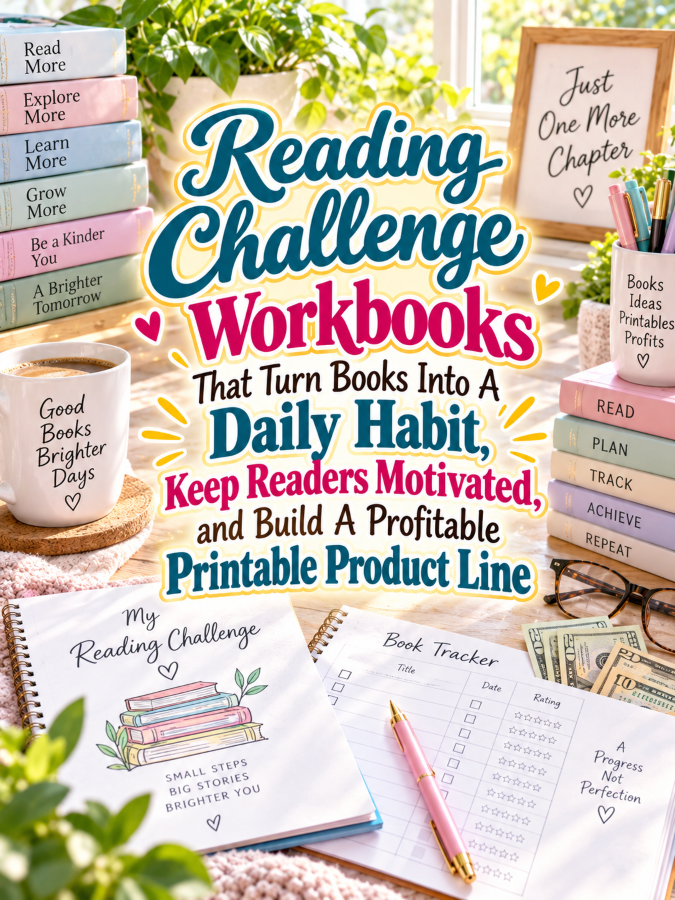
A daily tracker can become the heart of the workbook. Include spaces for the date, title, reading activity, optional minutes or pages, and a simple note about what the reader enjoyed or learned. Keep the design clean because users should be able to complete the page quickly without turning every reading session into paperwork.
You can also offer a compact monthly grid for readers who prefer a faster tracking method. They might simply place a checkmark on each day they read and use the detailed pages only when they want to reflect. That’s a Good Thing because different readers can use the same workbook in different ways without feeling like they are doing it incorrectly.
Book Wish List
Readers love collecting future reading ideas, so include a wish-list page where they can record books they want to read. Useful fields can include title, author, genre, source of the recommendation, and priority. You could also create separate sections for “Read Soon,” “Someday,” and “Recommended By Someone,” depending on the audience.
This page can become surprisingly valuable because readers often discover new books faster than they can read them. Without a system, recommendations can disappear into screenshots, notes apps, social posts, and forgotten conversations. A simple wish list gives those recommendations a home instead of allowing them to wander into the digital wilderness.
Reading Reflection Pages
Reflection pages can help transform the workbook from a simple habit tracker into a personal reading journal. Include prompts about favorite characters, memorable ideas, surprising moments, questions, lessons, or overall impressions. Keep the prompts open enough that readers can respond in their own words rather than forcing every book into the same rigid review format.
You can create both short and long reflection options. A quick reader might want three questions after finishing a book, while a serious journaler might enjoy a full-page reflection. That’s always a Good Thing because the workbook becomes adaptable instead of assuming everyone wants to write a five-page literary thesis after reading a mystery novel.
Genre Challenge Pages
Genre challenges can add a playful element to the workbook. Create prompts encouraging readers to explore categories such as mystery, biography, historical fiction, science fiction, fantasy, romance, nonfiction, poetry, memoir, or another category appropriate to the audience. Let readers choose which genres interest them rather than treating the challenge as a mandatory checklist.
You can also create themed challenges such as “Read Around The World,” “Try Something New,” or “Rediscover A Favorite.” These themes can become separate printable products or seasonal editions later. The possibilities are almost endless, which is a Good Thing when you are looking for product ideas that can grow from one basic workbook.
Reading Streak Tracker
A streak tracker can give readers a visual reminder of consistency. Create a calendar where they can mark the days they completed their chosen reading activity, while reminding them that missing a day does not erase all previous progress. That distinction matters because a habit-building tool should encourage people to restart rather than make them feel like they failed.
You can even include a “Restart Today” section for readers who miss several days. Give them a small prompt to choose their next reading session and continue from there. That’s a Good Thing because real life happens, and your workbook should be designed for actual humans rather than imaginary people who apparently never have errands, meetings, laundry, or a phone battery at 2 percent.
Monthly Reading Review
A monthly review can help readers look back at what they accomplished and what they enjoyed. Include spaces for books completed, favorite reading experience, favorite discovery, genres explored, and what the reader wants to try next month. This gives the workbook a natural rhythm that encourages continued use.
You can also include questions about what made reading easier or harder during the month. The reader might discover that mornings worked better than late nights, audiobooks helped during commutes, or shorter sessions were easier to maintain. The workbook is not making those decisions for them; it is helping them notice their own patterns.
Tools You’ll Need
Canva is ideal for creating the visual pages, trackers, challenge cards, covers, certificates, and themed reading layouts. Use Google Docs to draft your challenge prompts, reflection questions, instructions, and reading activities before moving them into the final design. A clean design is especially important because readers should be able to fill in the pages comfortably whether they print them at home or use them digitally.
For building your email audience, AWeber and GetResponse can help you create campaigns around reading habits and challenges. A free seven-day reading challenge or printable book wish-list page can work as a lead magnet that introduces people to your approach. Then your emails can provide small reading-habit ideas before introducing the larger paid workbook.
For selling your digital products, Gumroad can provide a straightforward way to deliver downloadable workbooks, while Teachable could become useful if you eventually create reading challenges, workshops, book-club resources, or educational programs. You can also use Amazon Reading Challenge Workbook Research to study the language readers use when searching for challenges, journals, trackers, and reading organization tools.
Your 5-Step Action Plan
Step 1: Choose Your Reader
Start by deciding exactly who your first workbook is designed to help. You could target busy adults, parents and children, students, book-club members, casual readers, serious readers, or people who want to rebuild a regular reading routine. A clear audience makes it easier to choose challenge prompts, page layouts, examples, and marketing messages.
You can always create additional editions later. A basic adult reading challenge can become a family reading challenge, summer reading workbook, cozy-season challenge, student reading tracker, or genre-specific journal. That’s a Good Thing because you’re building a reusable framework rather than starting from a blank page every time you create a new product.
Step 2: Choose One Simple Habit
Decide what behavior the first workbook is designed to encourage. It could be opening a book every day, reading for a personally chosen amount of time, completing a certain number of pages, or simply recording each reading session. Keep the first habit simple because the workbook should make starting easy.
Do not overload the customer with too many goals at once. A workbook that asks readers to track minutes, pages, books, genres, quotes, ratings, streaks, moods, locations, characters, and seventeen other thingees may look impressive but feel exhausting. Start with the smallest useful system and add optional features for readers who enjoy deeper tracking.
Step 3: Add Motivation Without Creating Pressure
Use milestones, challenge prompts, progress bars, badges, certificates, and encouraging messages to make progress visible. However, avoid framing missed days as failure because the purpose of the workbook is to help people return to reading. A reader who restarts after a difficult week is still moving forward.
You can make the language playful and encouraging. A “Oops, I Missed A Day” page can simply say that the book is still waiting and today is another opportunity to read. That’s always a Good Thing because the workbook becomes a supportive companion rather than another authority standing over the reader with a clipboard.
Step 4: Turn The Workbook Into A Product Ladder
Create a $7 starter challenge that solves one small reading-habit problem. Then add a $17 expanded workbook with more challenge prompts and reflection pages, a $27 annual reading system with monthly trackers and genre challenges, a $47 reading bundle with book-club and family resources, and a $77 comprehensive library containing multiple reading challenges, journals, trackers, activity sheets, and themed editions.
You can also create seasonal mini-products that feed into the larger system. A Summer Reading Challenge, New Year Reading Reset, Holiday Reading Challenge, or Cozy Reading Workbook can each become a smaller offer or bundle component. Trust me, you’ll thank me later when your reading-product catalog starts looking like a well-stocked bookshelf instead of a random pile of thingees.
Step 5: Market The Habit, Not Just The Pages
When you promote the workbook, focus on the transformation in the user’s routine rather than simply announcing how many pages are included. Talk about making reading easier to remember, breaking large goals into smaller actions, tracking progress, discovering new genres, and creating a personal record of books enjoyed. Customers are more interested in what the workbook helps them do than in whether the PDF contains 34 pages or 47 pages.
Create useful content around real reading problems such as “How To Start Reading Every Day,” “What To Do When You Keep Abandoning Books,” or “How To Create A Realistic Reading Challenge.” Demonstrate individual workbook pages as part of the teaching. Five good messages beats 50 generic ones every single time, and that’s especially true when your audience is already surrounded by enough “READ 100 BOOKS THIS YEAR!” pressure to fill a small library.
Once you’ve figured out all of the above, the next step is turning your reading challenge workbook into a flexible habit-building system that helps readers start small, track their progress, recover from missed days, and keep coming back to the books they want to enjoy.
3 Ways to Stand Out From The Thundering Herd!
Way 1: Make The Challenge About Consistency, Not Book Counts
One of the easiest ways to make your reading challenge workbook different is to stop making the number of books the entire point. Plenty of reading challenges tell people to finish 25, 50, or 100 books, but that can feel discouraging to someone who simply wants to read regularly again. Your workbook can focus on showing up, opening the book, and creating a repeatable reading routine instead.
Give readers options such as a daily reading check-in, minutes read, pages completed, or chapters finished so they can choose a measurement that feels useful to them. You can even create a “My Definition of Progress” page where readers decide what success means for their own challenge. That’s a Good Thing because a reader who finishes one book slowly and thoughtfully is still a reader, even if someone else is racing through five books while apparently surviving on coffee and bookmarks.
Way 2: Create Challenges That Feel Like Adventures
A reading challenge becomes more engaging when it feels like an experience rather than a spreadsheet with literary decorations. Create themed prompts such as “Read a book set somewhere you’ve never visited,” “Try a genre you normally skip,” or “Read something recommended by a friend.” These prompts encourage curiosity and give readers a reason to explore books outside their usual patterns.
You can organize the prompts into journeys, bingo cards, passports, treasure hunts, or monthly missions. A reader might earn a stamp for each completed challenge or fill in a bookshelf illustration as books are finished. That’s always a Good Thing because the workbook becomes something readers want to interact with rather than another thingee they feel obligated to complete.
Way 3: Build A “Restart Without Guilt” Feature
Many habit trackers accidentally make people feel like missing one day ruins everything. You can stand out by designing your workbook around the reality that people sometimes get busy, lose momentum, or simply forget to read. Include restart pages, flexible streaks, and encouraging prompts that help readers return without feeling that they have failed.
A simple “Pick Up Where You Left Off” page can ask readers what they were reading, why they stopped, and what tiny action they can take next. You could also include a “No Catching Up Required” reminder that encourages them to continue from today instead of trying to compensate for every missed day. That’s a Good Thing because the purpose of a habit workbook is to make returning easier, not to create a guilt machine with page numbers.
3 Nifty Ways to Find Customers
Way 1: Create Free Reading Challenges
A free seven-day or fourteen-day reading challenge can be an excellent way to introduce your product. Give readers a few simple prompts, a compact tracker, and a small reflection page so they can experience your system before purchasing the complete workbook. If the free challenge feels useful, the larger product becomes an easy next step for people who want more structure.
Promote the free challenge through blog posts, social media, email, book communities, and other appropriate reading-focused spaces. You can create content around practical questions such as “How Do I Start Reading Again?”, “How Can I Read More Without Setting A Huge Goal?”, and “What Should I Track In A Reading Journal?” Five good messages beats 50 generic ones every single time because useful content gives readers a reason to remember you.
Way 2: Create Seasonal Reading Campaigns
Reading is naturally suited to seasonal challenges, which gives you recurring opportunities to attract customers. Create summer reading challenges, cozy autumn reading challenges, holiday reading prompts, New Year reading resets, or themed monthly challenges. Each one can introduce a different part of your product collection while keeping the underlying habit-building system consistent.
You can also create special versions for different audiences. A family reading challenge can encourage shared reading activities, while a student version can focus on reading routines and reflection, and a book-club version can include discussion prompts. That’s always a Good Thing because one core product idea can support multiple audiences without requiring you to reinvent the entire thingee from scratch.
Way 3: Turn Your Readers Into Participants
Reading challenges can create natural community participation. Invite customers to share their progress, favorite discoveries, completed challenge squares, or monthly reading reflections if they are comfortable doing so. You can create optional community prompts that encourage conversation without making participation feel mandatory.
A monthly email featuring a new challenge prompt, reading reflection question, or printable bonus can keep your audience engaged between purchases. You can also invite subscribers to suggest future themes and genres, giving you direct insight into what they want next. That’s a Good Thing because your customers can help generate your next product ideas instead of you sitting alone at your desk asking a blank document what humanity wants to read.
3 Takeaways You Won’t Find Elsewhere!
Takeaway 1: A Reading Habit Needs A Small Starting Point
People often make reading goals much larger than their available time. A workbook can help by giving readers permission to start with a tiny commitment, such as opening a book for a few minutes or reading a few pages. The purpose is to make the first action easy enough that it can happen even on a busy day.
Create a “Minimum Reading Day” page that helps users choose their own smallest realistic action. They might read one page, one chapter, or for a personally selected amount of time. That’s a Good Thing because a small reading session still keeps the relationship with the book alive, and sometimes one page turns into ten before the reader even realizes what happened.
Takeaway 2: The Book List Is Part Of The Habit
Readers can lose momentum when they finish a book and have no idea what they want to read next. A thoughtfully designed reading challenge workbook can prevent that gap by helping users maintain a ready-to-use list of future books. This reduces the amount of decision-making required when the current book is finished.
Create sections such as “Next Up,” “Recommended,” “Books I Already Own,” and “Someday.” You can also include a small space for the reason each book was added so the reader remembers why it caught their attention. That’s always a Good Thing because the next reading session becomes easier when the reader already has somewhere to go.
Takeaway 3: Reflection Can Make The Workbook More Valuable
A basic tracker tells readers that they read, but reflection helps them remember what the experience meant to them. Include short prompts that ask about favorite ideas, memorable characters, useful lessons, surprising moments, or personal reactions. These pages can turn the workbook into a keepsake rather than merely a habit tracker.
You can also create different reflection levels so customers can choose how much they want to write. A quick three-question review works for casual readers, while a longer reflection can appeal to book-club members or people who enjoy journaling. That’s a Good Thing because the same product can accommodate the reader who writes three sentences and the reader who apparently has a dissertation hiding inside every mystery novel.
3 Common Mistakes to Avoid
Mistake 1: Making The Reading Goal Too Intimidating
A huge annual book target can motivate some readers, but it can discourage others before they even begin. Avoid presenting one number as the measure of whether someone has succeeded. Give customers flexible options and encourage them to choose goals that fit their own schedules and interests.
You can offer several challenge levels, such as Gentle, Regular, and Ambitious, while making it clear that these are simply planning options. A reader can move between levels whenever their circumstances change. That’s a Good Thing because the workbook remains useful during busy seasons instead of becoming another reminder of something they did not accomplish.
Mistake 2: Tracking So Many Things That Reading Stops Being Fun
It is easy to get carried away with tracking features. Pages for minutes, pages, chapters, ratings, moods, locations, genres, characters, quotes, themes, streaks, and seventeen other categories may sound impressive, but they can turn a relaxing reading session into administrative work. Your customer bought a reading challenge workbook because they want to read, not because they secretly dreamed of becoming the chief data officer of their bookshelf.
Keep the core tracker simple and make detailed pages optional. This allows casual readers to use the basic system while dedicated journalers can explore deeper features. That’s Not a Good Thing if the workbook becomes more demanding than the habit it was designed to support.
Mistake 3: Forgetting Different Reading Styles
Some people read one book at a time, while others happily juggle several books simultaneously. Some read physical books, some use e-readers, some listen to audiobooks, and some combine several formats. Your workbook should be flexible enough to accommodate different reading styles without suggesting that one method is better than another.
Add fields that can be customized rather than locking users into one format. You can also include a “Currently Reading” page that allows multiple titles and a simple status for each one. That’s always a Good Thing because your workbook should organize the reader’s habits, not start a tiny civil war between Team One Book and Team Seven Books.
Scaling Your Results
Once your basic reading challenge workbook is complete, build your product ladder around different levels of engagement. A $7 starter can provide a 30-day challenge, while a $17 workbook can add themed prompts, reflection pages, and progress trackers. A $27 annual reading system can include monthly challenges and yearly reviews, while a $47 bundle can add family, book-club, and seasonal resources.
Your $77 comprehensive reading challenge library can combine multiple themed challenges, reading journals, genre bingo cards, book-club discussion pages, family reading activities, seasonal challenges, and habit trackers. You can also create smaller specialty products for students, parents, educators, book clubs, or specific reading communities. That’s a Good Thing because the same basic framework can support an entire bookshelf of digital products.
A collection containing 40 well-designed reading and book-organization products could potentially generate an additional $700 to $2,200 per month through bundles, repeat customers, memberships, and complementary offers, although actual results will vary based on traffic, pricing, product quality, audience fit, and marketing. The opportunity comes from creating useful products that solve connected problems rather than assuming every challenge will automatically sell. Trust me, you’ll thank me later when your product catalog has enough variety to keep readers browsing without becoming a thundering herd of nearly identical reading trackers.
Your Next Steps
Start with one simple reading challenge and one clearly defined audience. Build the minimum useful workbook with a daily tracker, reading goal, book list, a few challenge prompts, and a short reflection page. Then print it and actually use it for several days so you can discover which pages feel motivating and which ones feel like homework.
Next, create your free challenge and begin sharing helpful reading-habit content. Show people how to choose realistic goals, recover after missed days, keep a book wish list, and make reading easier to remember. Then use the questions and feedback you receive to decide which features deserve a place in the next version.
Finally, turn your strongest ideas into a connected product ladder. Create seasonal challenges, genre editions, family versions, book-club kits, reading journals, and larger bundles as your audience grows. That’s it. That’s your beginning!
Final Thoughts
Reading challenge workbooks can turn a simple desire to read more into a visible and manageable daily practice. The strongest products do not make readers feel pressured to reach an enormous book count; they help people choose meaningful goals, track their progress, discover new books, and return to reading after busy days. That makes the workbook useful not only as a challenge but also as a personal record of the books and ideas that shaped the reader’s year.
The product opportunity is equally strong because reading naturally creates related needs. A reader who enjoys a 30-day challenge may want a yearly tracker, a genre challenge, a reading journal, a book-club kit, a family reading challenge, or a seasonal edition. That’s a Good Thing because your first workbook can become the foundation for an entire collection without requiring every product to be completely different.
Keep your system encouraging, flexible, visually appealing, and easy to restart. Most importantly, remember that the goal is to help people build a relationship with reading, not to turn every book into another number they have to chase. That’s it. That’s your beginning!
If you were creating your first reading challenge workbook tomorrow morning, who would you design it for, and what tiny daily reading habit would you help that person build first? Start with that one reader, create one genuinely useful thingee, and let the questions and discoveries from real users guide the next chapter of your product business.
Enjoy!