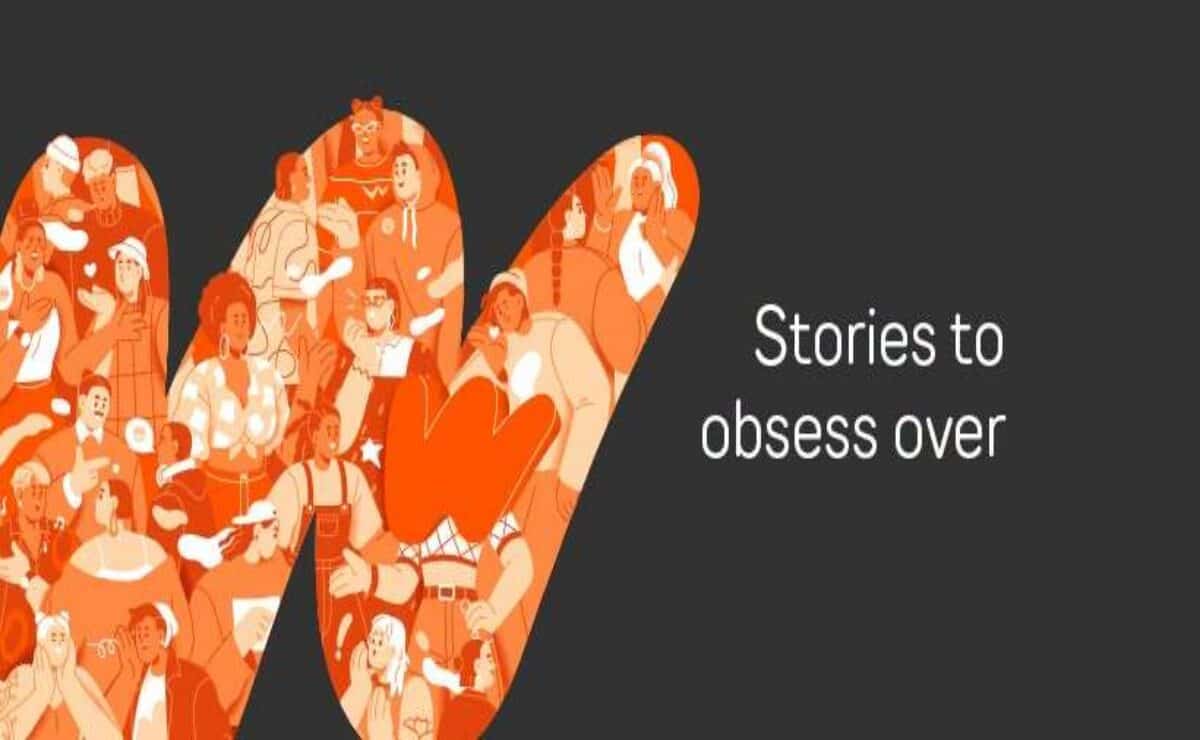
When Wattpad launched in 2006, it gave a generation of young writers a way to publish stories without going through and working with the traditional publishing industry because it was a very daunting task for someone who just wants to get their book out in the wild as a young author.
For many Filipino teenagers, it also became part of everyday conversation. Stories published chapter by chapter online could attract millions of reads, while their authors could develop followings of their own. Reading Wattpad was not simply about finding something to read. It became a shared experience among friends and classmates who followed the same stories and characters.
Twenty years later, that audience has changed, but the platform continues to attract young readers and writers and that proves testament to the powerful brand that Wattpad has created.
Wattpad returned to the Manila International Book Fair this year with a large booth at the SMX Convention Center as part of its 20th anniversary celebrations. The company brought its online community into the physical book fair through reader activities, merchandise, author appearances, and programming built around its Filipino creators.
For Caitlin O’Hanlon, Wattpad’s Head of Creators and Community, the Philippines has played a major role in the platform’s growth.

“There’s no other community across our platform that does sort of the creator experience the same way the Philippines does,” O’Hanlon said during a media session ahead of MIBF.
She described Filipino readers as particularly active in building fandoms around Wattpad creators. Writers can develop followings that extend beyond individual stories, with readers becoming invested in the authors themselves.
“We wouldn’t be where we are without the Philippines,” O’Hanlon said.
That relationship between creators and readers has also become part of Wattpad’s model for moving stories beyond the platform.
Wattpad has an adaptation arm, Wattpad Productions, which works with studios and entertainment companies. O’Hanlon said the company’s access to reader behavior and comments can provide information about what audiences care about when a story is adapted.
She recalled one example involving the color of a dress. The original author insisted that the dress in an adaptation needed to be burgundy rather than purple or red. The detail was kept, and readers noticed it.
That kind of feedback is part of the information it can bring to an adaptation. The audience has already spent time discussing the story, its characters and its details before the story reaches another medium.
The platform has also given its creators something that traditional publishing has not always been able to provide: an audience before a physical book exists.
“We have always sort of been a bit of a disruptor in that space,” O’Hanlon said when discussing Wattpad’s relationship with traditional publishing.
She described the publishing industry as historically traditional in its models and in the content it brings to mainstream readers. Wattpad, meanwhile, allowed writers to find audiences for stories that may not have had an obvious route through conventional publishing and giving them a loud voice way before they even get published on print.
The difference is particularly visible in the Philippines, where several Wattpad writers have gone on to careers in publishing and entertainment and live very sustainable lives.
“By the time they get to a traditional publishing opportunity here, they’re already sort of these massive brands,” O’Hanlon said.
I have recently experienced the other side of that process myself, having published my debut book with Ferdie. Traditional publishing and Wattpad offer very different routes for a writer. One involves working toward a finished physical book through an established process with printers, editors, and publishers. The other allows a writer to put a story in front of readers while it is being written, with audience reactions becoming part of the experience.
Neither model necessarily produces the same kind of relationship between writer and reader.
That relationship is one reason O’Hanlon believes community has been central to Wattpad’s longevity.
She said the company has focused on supporting creators through educational resources and opportunities while also making it easier for readers to find the stories and writers they are interested in.
The result is a platform that has moved through several generations of readers without losing its connection to younger users. Wattpad said during the media session that its audience remains majority Gen Z and female-skewing.
O’Hanlon said the company has heard from older users whose children are now using the platform, creating a cycle in which readers who grew up with Wattpad are introducing it to another generation.
The publishing industry surrounding those readers, however, is changing again.
Generative AI has introduced another set of tools into the creative process, and writers are increasingly having to decide how those tools fit into their work. AI can already be used for brainstorming, editing, research and other parts of the writing process, while some creators are using it to generate larger portions of their work.
For a platform built around individual creators publishing their own stories, that raises a more specific question: where does AI fit into Wattpad’s definition of a writer?
O’Hanlon’s answer was clear about the company’s current position.
“We have and will always be a human storytelling platform,” she said. “That is very much the heart of everything that Wattpad does.”
That does not mean Wattpad sees AI as having no role in the creative process.
O’Hanlon said there are ways AI can support creative individuals, including writers who use tools to assist with parts of their process. Wattpad’s focus, however, remains on supporting writers who create human-written stories.
“We have no desire to replace that ever,” she said.
There is already a common argument that writers who refuse to use AI tools risk falling behind creators who adopt them. There is another concern among creatives that relying too heavily on generated material can affect the development of an individual’s own voice and craft.
As a writer, I have encountered that discussion while working on my own projects. AI is already prevalent across creative work, and it can be useful for certain tasks. The question is less about whether the technology exists and more about how an individual creator chooses to use it.
Wattpad’s position puts the emphasis on the creator remaining at the center of that process.
That approach also fits with the company’s broader history. Its original appeal was not simply that it offered a website where people could upload text. It created a direct connection between writers and readers, allowing stories to develop audiences before they reached traditional publishing or other forms of entertainment.
That model has changed the publishing landscape in ways that extend beyond Wattpad itself. Publishers and entertainment companies now have a much larger pool of online communities and established audiences to consider when looking for stories and creators.
At MIBF, that history was visible in the size of Wattpad’s presence and the writers and readers gathered around it.
Twenty years after the platform launched, the technology used to create and distribute stories has changed considerably. The community around those stories remains an important part of the equation.
Wattpad is now entering its third decade with another technological shift taking place around it. AI can assist with parts of the writing process, and its role in creative work will continue to develop.
For now, at least, Wattpad’s position is that the person behind the story still matters.