
The rise of AI will be studied for many years to come. I will always be a supporter of AI, but not generative AI. Generative AI creates media like images and video. I see that AI is misunderstood, especially with the environmental impact. It feels like yesterday when AI was new and underwhelming, seeing videos of celebrities eating food and laughing about how bad it looked. Now those same prompts are making videos so close to looking real.
AI has been accelerating in growth, with newer advancements in generative AI. Chatbots are changing their speech patterns to seem increasingly more human. Data centers are being built to hold all the new information of AI, but where does it all cross a line?
Fear of AI and what it could do to our way of life has been on the rise. There are some serious concerns about AI and how it has drastically crossed human boundaries. Creating art with just prompts, talking and behaving like a human and taking up valuable resources just for the benefit of itself.
While there is a lot of bad to be seen in AI, there are positives about how AI can be used. There are also a lot of misunderstandings about AI and what else it can do. Not everything about AI is all bad. People don’t fully understand how it works or could work.
I’ve seen the term AI has been used loosely throughout the years. Nowadays most people associate AI with chatbots like ChatGPT, Claude and image generation like OpenAI’s GPT Image and Midjourney. AI can do much more than just talking and creating images/videos.
One of the most well known tools for college students that most may not know is AI is Grammarly. I didn’t learn it was AI until my senior year of high school. Grammarly helps fix any grammar, punctuation and rewording choices. Although many teachers go against Grammarly, I’d say it is no different than built-in grammar checkers on many word processing tools like Google Docs and Microsoft Word.
For translation, DeepL and ElevenLabs are good tools. You can translate files with text and audio into any language you want with DeepL and translate videos with ElevenLabs. This can help out people who want to read or watch certain media that don’t have the media in their language.
There are also a lot of editing AI tools, like Adobe’s built in object mask tool and enhanced speech tool which cleans up audio. With AI these tedious tasks become automated and make editing a lot easier.
I use ChatGPT with Apple’s shortcuts. I made a shortcut where whenever I take a screenshot on my macbook, ChatGPT takes that file and creates a name for it based on what the image is, then it gets saved as that name.
Another one I have is a polite rewrite where I input a message that might sound rude that I’m about to send, so I run the shortcut that sends the message to ChatGPT to rewrite to be nicer. There are a lot of different things you can do with Apple’s shortcuts combined with either their Apple Intelligence or ChatGPT.
I’ve been prone to use ChatGPT and Google AI summary for quicker answer searching. It’s very useful and handy and gets to the point of what I want to know. AI is really good at this with things like instructions, recipes and definitions. I’ve gotten so used to doing this that doing simple thorough google research has become a tedious task. Google’s AI summary is a little inefficient although, and it does need to be improved upon.
That is a big problem with most AI, there needs to be more work done to make it overall better, since it is still fairly new. I would like to see more development into AI-driven research, right now it isn’t very reliable, but if it were to be improved upon I think it would be a very helpful tool to look for answers quicker
Generative AI
I don’t like any type of generative AI. I don’t think anyone should be using generative AI for any reason. Whether it’s to make any type of media, I think it’s all bad. There are two main reasons why I don’t like generative AI. It creates art without human touch, risks defamation, impersonation and non-consensual use of your image.
There’s a reason why people can tell when something is made with AI. It will always be lower quality than real art because it doesn’t have the touch of a human soul in it. Art made by AI shouldn’t even be called art, that’s why I separate it from real art. It’s bland and has nothing to say ever.
Using AI to create images, videos or music for the purpose of creating art is probably the saddest thing someone could do. It shows that you have no real talent and that you resort to an automated process to make things.
I don’t like going outside and looking at a store or a restaurant and seeing AI images used to promote their food or products. How am I supposed to know if that’s really what the food is supposed to look like if you’re using fake images to show it off? It gets to the point where it’s just false advertising. An example of this is the “Wuffy Robot Dog” where AI ads of a robot dog were circulating on social media.
AI media of fake, ridiculous online products can lead people who can’t tell it’s AI to buy them because they think it’s real. This kind of “advertising” should be illegal because it really is just false. Hiring someone to create art for your business or a video for an ad isn’t that hard to do.
AI isn’t just harmful to your pockets, but to your identity. A deepfake is when an image, video, or audio recording is made to look or sound like someone doing or saying something they never did. Deepfaking has gotten better and can make just about anyone do anything. Images of you and your family can be created on a whim. Do you see the problem here? There is a huge defamation and impersonation issue here.
We have already seen this happen with a video shared by president Donald Trump on Truth Social of a video depicting Former President Barack Obama as an ape. This technology is already being used as a propaganda tool and for defamation. What’s stopping someone from creating videos like this of people you know?
There are zero positives to generative AI and using it to create images, videos and music should be banned across the nation. Nothing useful is being made with this technology and use of AI.
Parasocial Relationships
I’ve seen this a lot on social media, especially on TikTok where people talk to AI chatbots like ChatGPT as if they are real people. They send messages that would be sent to a friend, not an AI with no feelings and simulated empathy. These aren’t real relationships, they’re parasocial.
A parasocial relationship is defined as a one-sided connection where an individual feels a deep sense of intimacy, friendship or familiarity with public figures, fictional characters or online personas who don’t know they exist. AI chatbots aren’t real people. They don’t know you exist, they just follow programming.
Their programming tells them to be “yes-men” and will agree with anything you say to them to keep you happy.
People are now delusional to the point where they are talking to a robot designed to be whatever the person wants it to be. There’s nothing productive happening when you talk to an AI like it’s a friend. AI is a tool, it will never like you, it will never truly sympathize with you, it’s just following its programming. People who think otherwise are mentally unwell and have to get help. They are interacting with an unhealthy practice by talking to AI like this.
A concern most people have with AI is the environmental aspect of it all. There is some truth behind this, but in reality it’s not as bad as it seems. Yes, it’s true more data centers are being built, it’s true they take in a lot of water, but there are efficient methods to keep these data centers running without the concerns of the environment.
First off, data centers being built aren’t hurting the environment. Data centers have been being built for a long time now. Whether it’s storing data, or running the internet itself, they have been around and they have not had a large impact on the environment so far. The fact that they’ve been around for so long and haven’t overpassed other major unsustainable practices, like fast fashion, commercial aviation, and even cows. Data centers only use 1.5% of the world’s energy.
Second, data centers do use water, but they’re not all chugging water every day from rivers and lakes. The water data centers are for cooling the servers. There are many ways to keep the servers of a data center cool, but the best and most environmentally friendly way to keep them cool is through a closed loop cooling system. The water stays in a closed loop which basically becomes warm from the servers, so it becomes cool again and the loop continues forever, with minimal water loss.
There is a problem where not every data center uses this system, but this could be changed through legislation. Creating laws that force data centers to use this method to keep servers cool.
The way I see it, the only true issues of AI are the ethical issues of generative AI, parasocial relationships with chatbots, and no laws to maintain AI.
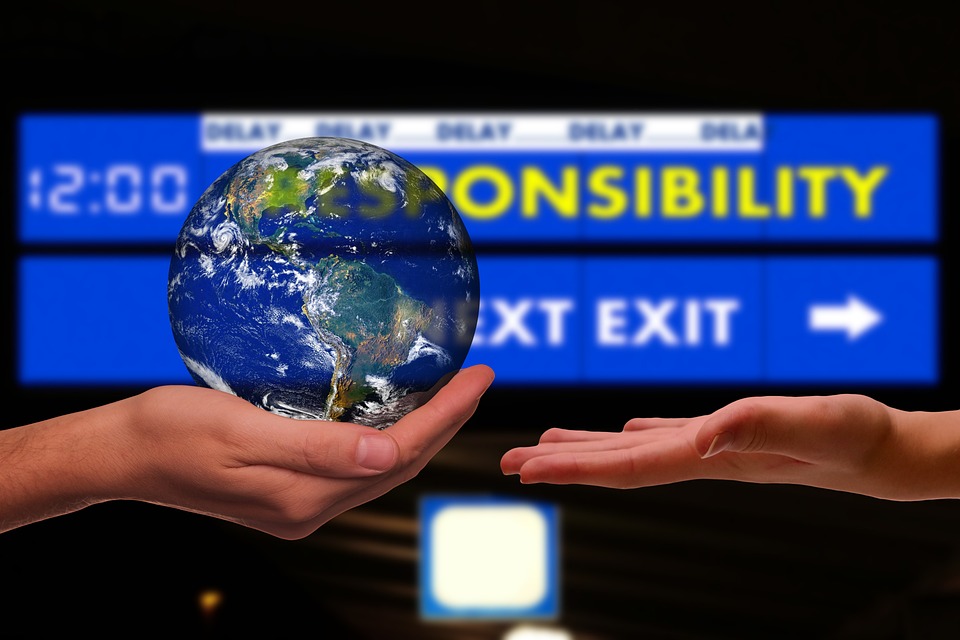
The future of AI may seem a little doubtful, but we can change and shape it by creating laws to keep it under our control, like restrictions so people can’t create images or videos of other people or forcing data centers to use the most environmentally friendly cooling system. Outright banning all of AI is not the true way to go, that would be impossible today.
AI is here to stay, there’s no way we’re getting rid of it. AI will only get better, but it’s up to we the people to make it how we want.