Introduction
There is something wonderfully wholesome about a child curled up with a good book.
Then the homeschool parent asks, “What did you read this week?”
Silence.
“I read something.”
“What was it called?”
“The book with the dog.”
And there goes the reading record.
That’s where Homeschool Reading Logs can become surprisingly valuable.
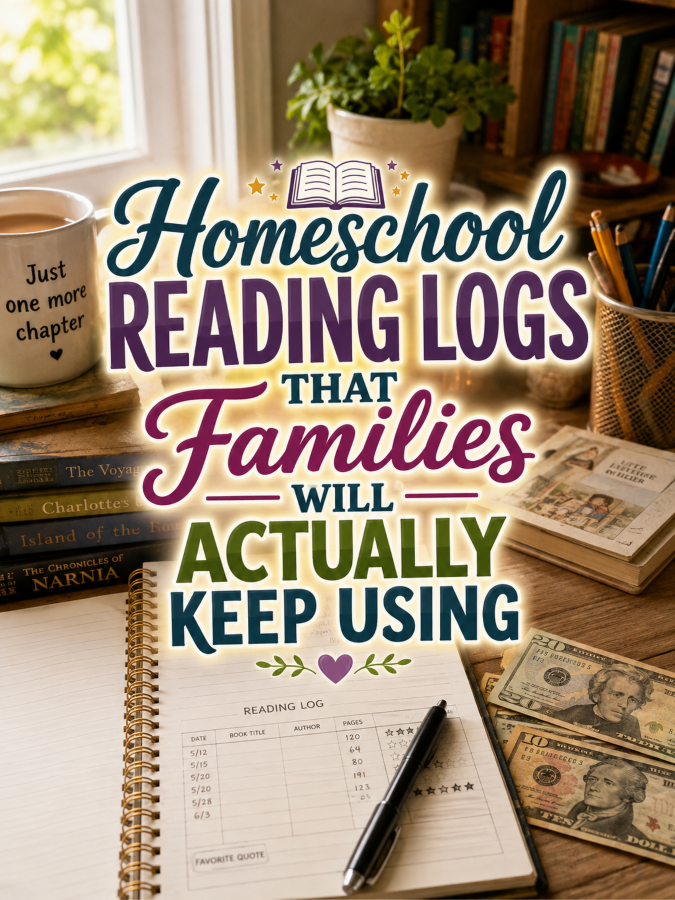
A well-designed reading log gives homeschool families a simple place to record books, reading dates, pages, reading time, genres, favorite characters, new vocabulary, comprehension notes, recommendations, and reading goals.
That’s Not a Good Thing when the parent has to reconstruct three weeks of reading from memory. But it becomes a very Good Thing when a printable makes reading documentation quick enough that families will actually keep using it.
Homeschool families have very different reading needs. Some parents want simple book lists. Others want comprehension prompts, reading challenges, genre tracking, independent-reading records, family reading logs, or literature-study pages.
That creates an excellent niche for a flexible printable business.
One thoughtfully designed Homeschool Reading Log can become the foundation of a much larger collection covering reading journals, literature study, book reports, vocabulary tracking, reading challenges, homeschool record keeping, and family reading systems.
Quick Answer
Homeschool Reading Logs are downloadable record-keeping tools that help families track books read, reading time, pages, genres, reading goals, reflections, vocabulary, and progress throughout the homeschool year.
A starter reading log can sell for around $7. Expand it into reading journals, literature-study workbooks, book-report templates, reading challenges, homeschool portfolios, and complete language-arts bundles priced at $27, $47, or even $77.
Your customers aren’t simply buying pages to list books. They’re buying a simple system that helps them document reading without turning every enjoyable book into another giant assignment.
Why This Niche Works
Reading is already part of many homeschool routines. That means your printable doesn’t have to convince families to invent an entirely new activity. Instead, it can help them organize something they’re already doing.
A parent may want to know how many books a child completed during a month, which genres they explored, what topics captured their attention, or which books they would recommend to someone else.
A reading log makes those details visible.
That’s always a Good Thing because progress can be difficult to recognize when reading happens casually throughout the day.
There is also a strong repeat-use opportunity. Families can use reading logs throughout an entire school year, then start a fresh log for the next year. Different children may also need different versions.
Once customers discover your Homeschool Reading Logs, they’ll naturally become interested in literature journals, vocabulary trackers, book-review pages, reading challenges, language-arts planners, homeschool portfolios, and countless related thingees.
One successful reading log can easily grow into an entire homeschool language-arts printable brand.
Prior to pouncing upon this opportunity, you should first know all about the:
Tools You’ll Need
You don’t need to be a certified reading specialist to create useful organizational resources. You need a practical design platform, careful research, and simple tools for marketing and selling your finished printables.
- Canva for designing reading logs, book journals, reading challenges, literature-study pages, and homeschool printables.
- Google Docs for organizing workbook content, reading prompts, research notes, and product ideas.
- AWeber for building an email list with reading prompts, homeschool freebies, printable resources, and product announcements.
- GetResponse for newsletters, promotions, automated campaigns, and customer follow-up.
- Gumroad for selling downloadable reading logs, homeschool journals, book-review resources, and language-arts bundles.
- Teachable if you’d eventually like to teach reading organization, literature activities, homeschool planning, or language-arts systems.
- Amazon Homeschool Reading Log Research for discovering which reading journals, book logs, and homeschool record-keeping features families are already interested in.
Don’t spend three weeks decorating a reading log with enough tiny books to stock a library while the parent is trying to record what their child actually read. Your future customers care much more about ease of use than an explosion of clip art.
Make the log cheerful. Make it child-friendly. But most importantly, make it practical.
Next, move to:
Your 5-Step Action Plan
Follow these five steps unless you’d rather watch another printable creator become the homeschool reading organization expert everyone recommends. The smartest entrepreneurs create products around the recurring documentation problems families actually experience.
Step 1. Research Real Homeschool Reading Challenges
Spend about 90 minutes exploring homeschool Facebook groups, reading communities, homeschool forums, Reddit discussions, Pinterest boards, curriculum communities, and reviews of existing reading logs.
Pay attention to conversations about reluctant readers, independent reading, book lists, reading goals, comprehension, book reports, vocabulary, reading challenges, literature studies, and homeschool record keeping.
Create a master list containing at least 40 to 50 printable pages. Include book logs, reading calendars, reading goals, genre trackers, vocabulary pages, book reviews, comprehension prompts, reading challenges, monthly summaries, and year-end reading records.
Your research becomes an X-ray machine that reveals where homeschool families need practical reading organization.
Step 2. Build Your Core Homeschool Reading Log
Create a collection containing 40 to 60 pages that allows families to record reading without making the process unnecessarily complicated.
Include book title, author, date started, date finished, genre, pages or reading time, rating, favorite part, new words, thoughts, and optional parent notes.
Add a simple reading-status system such as Want to Read → Reading → Finished → Review → Recommended.
Keep every page simple, practical, and easy to use because simplicity is always a Good Thing.
Step 3. Create Specialty Editions
Build separate versions for early readers, elementary students, middle-grade readers, teens, independent readers, family read-alouds, and literature-focused homeschool programs.
You can also create specialty editions for summer reading, holiday reading challenges, classic literature, genre exploration, book clubs, and year-round reading.
Specialized editions immediately feel more valuable because families can choose a format that matches their child’s reading stage and their own homeschool style.
Step 4. Add High-Value Bonuses
This is where your Homeschool Reading Logs begin standing out from the thundering herd.
Include monthly reading summaries, genre bingo, reading-goal trackers, book-review pages, vocabulary logs, favorite-book lists, reading challenge certificates, library-visit logs, and “Books I Want to Read Next” pages.
Add a “Tell Me About This Book” page with flexible prompts such as favorite character, setting, memorable moment, surprising idea, favorite quote, and personal reaction.
Keep these prompts adaptable rather than requiring every child to complete a miniature literary dissertation after reading a fun adventure book.
Those bonus thingees require relatively little additional design work yet can dramatically increase the perceived value of your product.
Step 5. Build Your Product Ladder
Launch your starter Homeschool Reading Log for $7 and let it become the foundation of a growing homeschool language-arts printable collection.
Expand into reading journals around $17, literature-study workbooks around $27, complete reading portfolios around $47, and comprehensive homeschool reading libraries approaching $77.
Every additional product naturally complements the others while encouraging repeat purchases.
Before long, your business won’t simply be selling reading logs. You’ll be helping homeschool families organize reading goals, document books, encourage thoughtful reflection, explore genres, track vocabulary, and build meaningful records of a child’s reading journey.
Once you’ve figured out all of the above, the next step is implementing:
3 Ways to Stand Out From The Thundering Herd!
The homeschool reading-printable market already has book lists, reading logs, and book-report worksheets. The Good Thing is that many of them treat reading as a task to document. Your opportunity is to create a system that documents reading while helping families keep the experience enjoyable.
Way 1. Create a “Low-Pressure Reading Log”
Not every child wants to answer ten questions after finishing a book. Sometimes the child simply wants to read the next book.
Give families a flexible system with different levels of recording.
A basic page can capture the title, author, date, genre, and a quick rating. An optional reflection page can invite deeper thinking about characters, setting, themes, vocabulary, or favorite moments.
This lets parents choose the level of documentation that fits their homeschool.
That’s always a Good Thing because a reading log that takes longer to complete than the reading session itself is likely to become a permanent resident of the homeschool supply drawer.
Way 2. Turn Reading Into a Personal Library
Create pages that help children build their own reading history.
Include favorite books, favorite authors, books to recommend, books to reread, books they’d like to find next, and genres they’ve explored.
Add a “My Reading Shelf” page where children can record books by category. You could also create simple shelf-style pages that let children color, check, or mark each completed book.
Now the log becomes something children can look back on with pride instead of merely another homeschool record.
Way 3. Give Parents a Progress Snapshot
Parents often want to understand reading habits without turning every book into a formal assessment.
Create monthly and quarterly summary pages where parents can record books completed, reading frequency, genres explored, notable interests, new vocabulary, and observations about confidence or engagement.
Keep the language observational rather than diagnostic. The goal is to help families see patterns in their child’s reading journey.
Add a simple “What’s Working?” section where parents can record favorite reading locations, successful routines, topics that motivate the child, and books that sparked particularly strong interest.
It’s one of the easiest ways to rise above the thundering herd.
Next, here’s the thing. You’re probably NOT the only person offering this service. So you now require:
3 Nifty Ways to Find Customers
Your ideal customers are already searching for homeschool language-arts resources, reading challenges, book lists, literature activities, independent-reading ideas, and record-keeping tools. The challenge isn’t finding homeschool families. The challenge is showing them that your reading log can make documentation easier rather than adding another burden.
Way 1. Homeschool Communities
Homeschool Facebook groups, literature-study communities, homeschool forums, reading groups, curriculum communities, and Reddit discussions are excellent places to introduce useful resources.
Offer a free reading log, book-review page, genre tracker, or reading-challenge worksheet before recommending your complete system. Helping first builds trust much faster than immediately promoting a paid product.
These communities are also fantastic sources of product research. Pay attention when parents complain about keeping reading records, motivating reluctant readers, finding appropriate prompts, organizing book lists, or documenting independent reading.
Every recurring complaint is potentially another printable.
Way 2. Pinterest
Pinterest is a natural fit for homeschool reading resources because families search for reading logs, homeschool printables, book reports, literature activities, reading challenges, book lists, and language-arts organization.
Create attractive pins featuring reading-log pages, reading challenges, book-review prompts, genre trackers, book lists, and monthly reading summaries.
Because Pinterest content can continue appearing in searches long after publication, a useful collection of homeschool-reading pins can keep bringing potential customers to your shop. Trust me, you’ll thank me later.
Way 3. Homeschool and Reading Educators
Homeschool bloggers, reading tutors, literature educators, curriculum creators, homeschool coaches, librarians, book bloggers, and educational content creators already have audiences interested in books and reading.
Reach out with affiliate partnerships, printable bonuses, reading-challenge collaborations, freebie bundles, or literature-study resources.
A homeschool educator could use your reading log as part of a language-arts program, while a book blogger could offer a reading challenge using your tracking pages.
Those collaborations introduce your printable to people who already trust the person teaching or recommending resources.
Speaking of long-term growth, now let’s move to:
3 Takeaways You Won’t Find Elsewhere!
Many printable creators think they’re selling reading records. The most successful entrepreneurs understand they’re helping families create a sustainable reading habit and a meaningful record of what children discover through books.
That difference gives your Homeschool Reading Log much greater practical value.
Takeaway 1. You’re Selling Continuity
Your customers aren’t purchasing pages simply because they need somewhere to write book titles.
They’re investing in a system that connects one reading session to the next.
When a child can see the books they’ve completed, the books they want to read, the genres they’ve explored, and the authors they enjoy, reading becomes part of an ongoing personal journey.
Your log becomes the thread connecting the entire reading year.
Takeaway 2. Reading Records Can Preserve Interests
A child’s reading choices can reveal fascinating interests.
One season might be filled with animals. Another might feature mysteries, biographies, science, mythology, fantasy, history, or graphic novels.
Give parents and children a place to notice those patterns.
A simple “What Am I Curious About?” page can connect books to future topics, projects, field trips, research, or family discussions.
That’s a Good Thing because the reading log can become a springboard for learning rather than merely evidence that reading occurred.
Takeaway 3. One Reading Log Can Become an Entire Homeschool Brand
Your Homeschool Reading Log can naturally expand into literature journals, vocabulary trackers, book-report templates, reading challenges, genre studies, reading portfolios, literature discussion cards, language-arts planners, and family reading systems.
Those connected thingees encourage repeat purchases because each resource supports another part of the homeschool reading experience.
Before long, homeschool families won’t simply recognize your reading log. They’ll know your shop as a dependable source of practical resources for encouraging, documenting, and organizing reading.
Now that you know the above, it’s time for:
3 Common Mistakes to Avoid
Many creators make reading logs too academic. That’s Not a Good Thing for every child. If every book requires a formal analysis, families may stop using the resource. Offer simple tracking pages alongside optional deeper reflection pages.
Some sellers forget about different reading abilities. A young beginning reader and an independent teen reader should not necessarily receive identical prompts. Create flexible versions with age-appropriate layouts and levels of detail.
Others stop after creating one log. That’s like opening a bookstore with one title. Continue expanding into literature studies, vocabulary, book reviews, reading challenges, portfolios, and language-arts planning resources to create a much stronger printable business.
What else should you know? How about:
Scaling Your Results
Expand into a complete homeschool reading ecosystem. Create book logs, reading journals, literature-study workbooks, vocabulary trackers, reading challenges, genre trackers, book-report templates, reading portfolios, library logs, and language-arts planners that naturally complement your original Homeschool Reading Log.
Every additional printable strengthens your catalog while encouraging repeat purchases from families who want to organize different parts of their reading routine.
You can also create specialized collections for early readers, elementary students, middle-grade readers, teens, independent readers, family read-alouds, summer reading, and literature-focused homeschool programs.
Create a Family Reading Club. Release fresh printable resources every month featuring reading challenges, book-review prompts, genre explorations, vocabulary pages, family reading activities, and monthly reading trackers.
Members receive fresh reasons to keep reading while your business benefits from dependable recurring revenue.
Build an email list families genuinely appreciate. Share reading prompts, book-organization ideas, printable challenges, literature activities, vocabulary worksheets, and free mini-planners throughout the year.
A collection containing 40 homeschool-reading-focused printable products could realistically generate an additional $700 to $2,200 each month through memberships, bundles, repeat customers, and affiliate partnerships. Trust me, you’ll thank me later.
Let’s now wrap up everything via the:
Your Next Steps
Start by listing everything a homeschool family may want to record from the moment a child chooses a book through the end of the reading year.
Think about titles, authors, dates, genres, reading goals, reflections, vocabulary, favorite books, recommendations, reading habits, and year-end accomplishments.
Those recurring details will naturally become the foundation of your printable collection.
Design your first Homeschool Reading Log in Canva using clean layouts, generous writing space, age-appropriate prompts, simple tracking pages, optional reflection sections, and consistent branding that can easily expand into future homeschool language-arts products.
Focus on making the log genuinely useful rather than covering every page with enormous cartoon books and stars. Functional educational tools almost always become customer favorites.
Then introduce your reading log to five homeschool communities, Pinterest boards, reading groups, curriculum creators, or homeschool educators.
Remember, 5 good messages beats 50 generic ones every single time.
One thoughtfully designed Homeschool Reading Log can quietly become the beginning of an entire homeschool printable business.
Next, let’s finish with:
Final Thoughts
The best reading log isn’t necessarily the one with the most questions. It’s the one a family keeps using.
When the pages are simple enough for regular use but flexible enough to support deeper reflection, the printable becomes part of the family’s homeschool rhythm rather than another obligation.
That’s an incredible transformation from a basic book list.
So, begin by creating one reading log that solves one meaningful homeschool record-keeping challenge exceptionally well. Continue listening to customer feedback while expanding your collection into matching literature, vocabulary, reading-challenge, book-review, portfolio, and language-arts resources that naturally work together.
You don’t need bazillions of unrelated printables to build meaningful income. You simply need one thoughtfully designed Homeschool Reading Log that helps families stop trying to remember what their children read and start creating a simple, useful record of their reading journey.
That’s it. That’s your beginning!
If you were creating your first Homeschool Reading Log tomorrow morning, would you design it for early readers, elementary students, middle-grade readers, teens, independent readers, family read-alouds, or homeschool families who simply want a low-pressure way to keep track of books?
Enjoy!