
Introduction
Watercolor has a special kind of magic. A simple brush loaded with pigment and water can create soft skies, glowing florals, expressive faces, loose landscapes, and delicate washes that somehow look effortless even when the artist has spent hours practicing them. That beautiful unpredictability is part of the appeal, but it can also make watercolor frustrating for beginners who don’t know what to practice next.
Artists need more than blank paper when they want to improve. They need structured exercises, technique practice, color experiments, composition challenges, brush-control drills, and a way to track what they are learning along the way. That’s Not a Good Thing when someone has a drawer full of beautiful watercolor supplies but no clear practice routine. A practical workbook can turn random painting sessions into intentional creative progress.
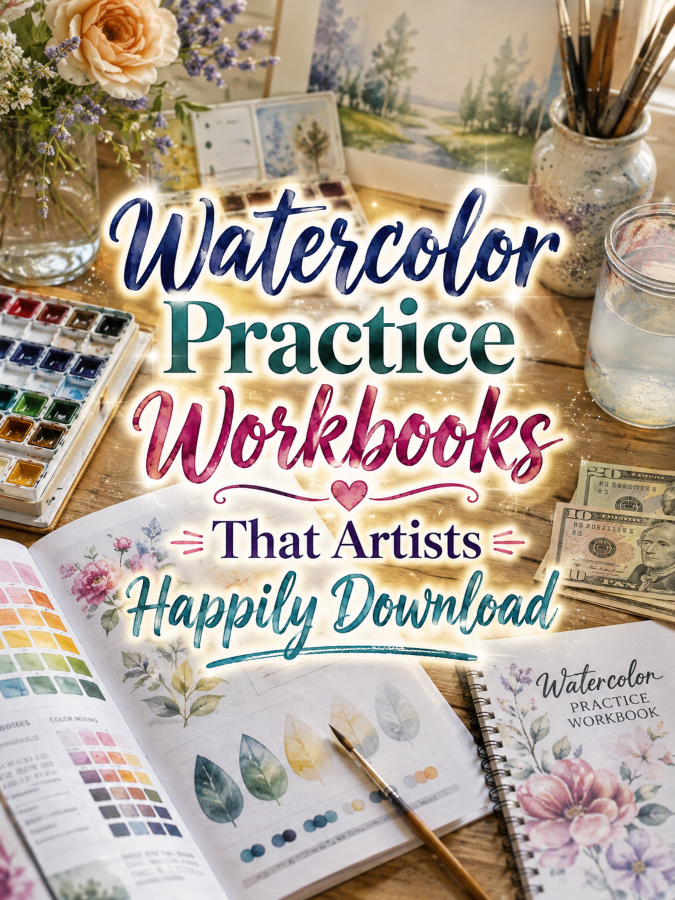
That’s exactly where Watercolor Practice Workbooks become incredibly valuable. A well-designed workbook can guide artists through washes, gradients, blending, wet-on-wet techniques, wet-on-dry techniques, color mixing, brush control, textures, botanical studies, landscapes, lettering, and finished painting reviews. Over time, the workbook becomes both a practice system and a visual record of the artist’s growing skills.
Watercolor attracts beginners, hobby artists, journalers, illustrators, students, teachers, crafters, professional artists, and people looking for a relaxing creative activity. These audiences are constantly searching for manageable ways to improve without feeling overwhelmed. That makes watercolor practice resources an excellent printable niche with plenty of room for specialized products.
One thoughtfully designed Watercolor Practice Workbook can become the foundation of a profitable printable business while helping artists practice consistently, understand their materials, and feel more confident every time they pick up a brush.
Quick Answer
Watercolor Practice Workbooks are downloadable printable systems that guide artists through painting exercises, brush-control drills, color-mixing activities, composition studies, technique practice, creative prompts, project reviews, and skill-tracking exercises.
A starter workbook can comfortably sell for around $7. Expand it into watercolor technique books, botanical painting workbooks, landscape practice journals, color-mixing guides, art challenge planners, sketchbook organizers, and premium artist libraries priced at $27, $47, and even $77.
Your customers aren’t simply buying printable pages. They’re investing in structured practice, creative confidence, better technique, and a clear way to see their artistic progress over time.
Why This Niche Works
Watercolor is a skill that improves through repetition. Artists need opportunities to practice brush pressure, water control, pigment loading, blending, layering, edges, transparency, and color mixing. A workbook can break those intimidating skills into small exercises that feel achievable rather than overwhelming.
Watercolor artists also love experimenting with different materials. They may own multiple brushes, palettes, paints, papers, masking fluids, pencils, and specialty tools, yet still struggle to remember which combinations produced their favorite results. Recording those experiments creates a personal reference library that can save time and inspire future paintings. That’s always a Good Thing.
Once customers discover your Watercolor Practice Workbook, they’ll naturally become interested in sketchbook planners, color charts, painting journals, botanical practice books, lettering workbooks, art challenge calendars, and countless related thingees. One successful watercolor printable can easily grow into an entire artist resource brand.
Unlike fleeting craft trends, art practice is an ongoing journey. Artists can use a workbook repeatedly, return to difficult exercises, compare old and new work, and continue purchasing specialized practice resources as their skills develop. Prior to pouncing upon this opportunity, you should first know all about the:
Tools You’ll Need
You don’t need to be a professional watercolor artist to create useful organizational and practice resources for painters. You need a good design platform, a way to research what artists actually struggle with, and simple tools for building an audience and selling your products. These are more than enough to get your first workbook moving.
- Canva for designing watercolor workbooks, practice trackers, color charts, painting prompts, and printable art organizers.
- Google Docs for organizing workbook instructions, exercise descriptions, prompts, and product ideas.
- AWeber for building an email list with watercolor tips, practice exercises, printable freebies, and product announcements.
- GetResponse for newsletters, promotions, automated campaigns, and customer follow-up.
- Gumroad for selling downloadable watercolor workbooks and creative printable bundles worldwide.
- Teachable if you’d eventually like to teach watercolor techniques, painting practice, color theory, or creative development.
- Amazon Watercolor Workbook Research for discovering which watercolor exercises and practice resources artists appreciate the most.
Don’t spend three weeks choosing between 47 shades of blue for your workbook cover while beginning artists are wondering how to practice a smooth gradient without creating a tide mark. Your future customers care much more about useful exercises than decorative perfection. Make the workbook beautiful, but make every page earn its place.
Next, move to:
Your 5-Step Action Plan
Follow these five steps unless you’d rather watch another printable creator become the watercolor practice expert everyone recommends. The smartest entrepreneurs create products that solve specific learning frustrations instead of producing another generic collection of blank art pages. Artists are much more likely to download something when they immediately understand what skill it will help them improve.
Step 1. Research Real Watercolor Practice Challenges
Spend about 90 minutes exploring watercolor Facebook groups, Reddit art communities, Pinterest boards, YouTube watercolor channels, art forums, online classes, and reviews of existing watercolor workbooks. Pay attention to recurring questions about washes, blending, color mixing, brush control, flowers, landscapes, skin tones, shadows, composition, and painting confidence. Those conversations reveal exactly what artists want help practicing.
Create a master list containing at least 40 to 50 printable pages. Include brush-control drills, wash exercises, gradient practice, color-mixing charts, texture studies, shape exercises, composition worksheets, botanical prompts, landscape studies, painting reflections, material tests, and progress trackers. Your research becomes an X-ray machine that reveals where artists need structured practice.
Step 2. Build Your Core Watercolor Practice Workbook
Create a collection containing 50 to 70 printable pages that guide artists from basic exercises toward more complete paintings. Include technique explanations, practice boxes, color experiments, painting prompts, observation pages, and project reviews. Keep every page simple, practical, and easy to use because simplicity is always a Good Thing.
Give artists plenty of room to actually paint on the pages where appropriate. Include prompts that encourage them to compare different amounts of water, pigment strength, brush pressure, layering, and color combinations. A practice workbook should feel like a gentle teacher sitting beside the artist, not like a complicated exam paper.
Step 3. Create Specialty Editions
Build separate workbooks for watercolor beginners, botanical artists, landscape painters, urban sketchers, children’s art activities, watercolor journalers, portrait artists, and loose-style painters. Specialized editions immediately feel more valuable because customers recognize the subjects and techniques they actually want to practice.
You can also create workbooks around specific skills such as flowers, skies, trees, food illustration, animals, lettering, or color mixing. Each specialty edition expands your audience while allowing you to reuse your strongest practice frameworks.
Step 4. Add High-Value Bonuses
This is where your Watercolor Practice Workbooks begin standing out from the thundering herd. Include printable color charts, brush-testing pages, paint swatch libraries, reference-card templates, daily painting challenges, monthly practice calendars, finished-art review sheets, and creative prompt cards.
Those bonus thingees require relatively little additional design work yet can dramatically increase the perceived value of your product. A complete practice system feels much more valuable than a simple workbook because it gives artists reasons to return to it repeatedly.
Step 5. Build Your Product Ladder
Launch your starter Watercolor Practice Workbook for $7 and let it become the foundation of a growing artist printable business. Expand into premium technique workbooks around $27, complete watercolor practice binders around $47, and comprehensive artist libraries approaching $77. Every additional product naturally complements the others while encouraging repeat purchases.
Before long, your business won’t simply be selling watercolor worksheets. You’ll be helping artists practice consistently, experiment confidently, understand their materials, and build a visible record of their creative growth.
Once you’ve figured out all of the above, the next step is implementing:
3 Ways to Stand Out From The Thundering Herd!
The watercolor printable market is filled with painting prompts, coloring pages, and technique guides, but many products don’t give artists a clear practice path. The Good Thing is that watercolor learners often need structure more than inspiration. Your opportunity is to create a workbook that answers the question, “What should I practice today?” while still leaving plenty of room for creative exploration.
Way 1. Build a Skill-by-Skill Practice Path
Don’t throw fifty unrelated painting exercises onto the page and call it a workbook. Organize the experience so artists can move from brush control to washes, gradients, blending, color mixing, layering, textures, shapes, and eventually complete paintings. A logical progression makes the workbook feel like a guided learning experience rather than a random collection of worksheets.
Include beginner, intermediate, and challenge sections so customers can continue using the workbook as their skills develop. Add small reflection prompts asking what worked, what went wrong, and what they want to try differently next time. Those practical thingees turn mistakes into useful lessons instead of reasons to put the paintbrush down.
Way 2. Make Color Exploration a Major Feature
Color is one of watercolor’s greatest pleasures, but it can also create endless confusion. Give artists dedicated pages for testing paint combinations, recording pigment names, comparing mixes, creating gradients, and building personal palettes. Include space for swatches that artists can actually paint directly onto the printed pages when the paper is suitable for their intended use.
You can also create seasonal palette challenges, limited-color exercises, warm-versus-cool studies, and complementary color experiments. Those pages make the workbook feel interactive while helping artists develop an intuitive understanding of their materials. That’s always a Good Thing because confidence with color can dramatically change the way someone approaches a painting.
Way 3. Turn Practice Into a Creative Habit
Many artists don’t struggle because they lack talent. They struggle because they practice inconsistently. Add seven-day, thirty-day, and seasonal painting challenges that encourage small, manageable sessions rather than demanding hours of artistic perfection every day.
Include progress trackers, completed-exercise checklists, favorite-practice pages, and monthly reflections. When customers can see evidence of their progress, they have a reason to continue using the workbook. That’s one of the easiest ways to rise above the thundering herd.
Next, here’s the thing. You’re probably NOT the only person offering this service. So you now require:
3 Nifty Ways to Find Customers
Your ideal customers are already watching watercolor tutorials, sharing paintings, collecting art supplies, and searching for exercises online. The challenge isn’t finding artists. The challenge is showing them that your workbook can make practice more structured, enjoyable, and consistent.
Way 1. Watercolor and Art Communities
Watercolor Facebook groups, Reddit art communities, urban sketching groups, beginner painting communities, art forums, and online creative groups are excellent places to introduce useful resources. Offer a free color-mixing chart, brush-control exercise, or seven-day painting challenge before recommending your complete Watercolor Practice Workbook. Helping first builds trust much faster than immediately promoting a paid product.
Artists naturally share tutorials, references, techniques, supplies, and practice ideas with fellow creators. One genuinely useful free exercise can introduce your shop to a highly targeted audience of people already looking for ways to improve.
Way 2. Pinterest
Pinterest is a natural fit for watercolor because users constantly search for painting ideas, watercolor flowers, beginner exercises, color palettes, sketchbook inspiration, landscape tutorials, and art challenges. Create attractive pins featuring individual workbook exercises, color charts, practice spreads, and painting prompts that encourage artists to save your content for later.
Because Pinterest content can continue appearing in searches long after publication, a useful collection of pins can keep sending potential customers to your shop while you’re creating new products. Trust me, you’ll thank me later.
Way 3. Art Teachers and Watercolor Creators
Watercolor instructors, art bloggers, YouTube painters, online course creators, sketchbook artists, art teachers, and creative coaches already have audiences actively looking for structured practice. Reach out with affiliate partnerships, classroom licenses, workshop bundles, or printable collaborations that allow them to recommend your workbook alongside their lessons.
An art teacher might use your exercises during a beginner workshop, while a watercolor YouTuber could demonstrate one of your practice pages during a tutorial. Those collaborations can introduce your products to customers who already trust the creator teaching them.
Speaking of long-term growth, now let’s move to:
3 Takeaways You Won’t Find Elsewhere!
Many printable creators think they’re selling art worksheets. The most successful entrepreneurs understand they’re helping artists develop confidence through consistent practice. That difference gives your Watercolor Practice Workbook much more emotional and practical value.
Takeaway 1. You’re Selling Artistic Confidence
Your customers aren’t purchasing pages simply because they need something to paint on. They’re investing in a structured way to practice skills, understand their materials, learn from mistakes, and gradually become more comfortable with watercolor. The real product is the confidence that develops when the artist realizes, “I can actually do this.”
When writing your product descriptions, focus on that transformation rather than simply listing the number of exercises included. You’re helping artists move from hesitation to experimentation and eventually toward their own recognizable style.
Takeaway 2. Every Exercise Can Lead to Another Painting
A simple gradient exercise can become a sunset painting. A leaf study can become a botanical illustration. A color-mixing experiment can become a landscape or floral composition. That progression creates natural opportunities for additional themed workbooks, painting challenges, reference guides, and specialized practice collections.
Instead of constantly searching for unrelated audiences, continue serving the same artists as their skills develop. A beginner who buys your first workbook can eventually become an enthusiastic customer for advanced technique books and specialty painting collections.
Takeaway 3. One Workbook Can Become an Entire Artist Brand
Your Watercolor Practice Workbook can naturally expand into botanical painting books, landscape practice journals, color theory workbooks, urban sketching planners, art challenge calendars, painting project journals, brush-testing books, creative habit trackers, and complete artist libraries. Those connected thingees encourage repeat purchases because each product supports another stage of artistic growth.
Before long, artists won’t simply recognize your watercolor workbook. They’ll know your shop as a dependable source of practical resources for creative practice and artistic development.
Now that you know the above, it’s time for:
3 Common Mistakes to Avoid
Many creators make their workbooks too complicated. That’s Not a Good Thing. Beginners already feel intimidated by watercolor, and a workbook filled with dense instructions can make that feeling worse. Use clear prompts, manageable exercises, generous practice space, and simple explanations that encourage artists to begin immediately.
Some sellers forget about actual painting space. A workbook should not contain page after page of writing prompts when the customer bought it to practice watercolor. Include appropriate areas for swatches, brush exercises, color experiments, thumbnails, and small studies while making it clear when heavier watercolor paper would be more suitable for the activity.
Others stop after creating one workbook. That’s like opening an art supply store with one paintbrush. Continue expanding into botanical studies, landscape exercises, color workbooks, sketchbook planners, daily painting challenges, lettering practice, and artist project organizers to build a much stronger printable business.
What else should you know? How about:
Scaling Your Results
Expand into a complete watercolor ecosystem. Create color-mixing journals, botanical practice books, landscape workbooks, urban sketching planners, painting project journals, brush-testing sheets, art challenge calendars, creative habit trackers, and artist business organizers that naturally complement your original Watercolor Practice Workbook. Every additional printable strengthens your catalog while encouraging repeat purchases from loyal artists.
Create a Watercolor Practice Club. Release fresh printable exercises every month featuring technique challenges, seasonal painting prompts, color studies, reference sheets, creative exercises, and exclusive artist resources. Members receive fresh reasons to keep painting while your business benefits from dependable recurring revenue.
Build an email list artists genuinely appreciate. Share watercolor tips, printable exercises, color ideas, painting prompts, practice challenges, creative productivity strategies, and free mini-workbooks throughout the year. A collection containing 40 artist-focused printable products could realistically generate an additional $700 to $2,200 each month through memberships, bundles, repeat customers, and affiliate partnerships. Trust me, you’ll thank me later.
Let’s now wrap up everything via the:
Your Next Steps
Start by listing everything a watercolor artist needs to practice from the first brush exercise through a finished painting. Think about brush control, water management, washes, gradients, color mixing, layering, textures, composition, subject studies, and creative reflection. Those recurring activities will naturally become the foundation of your printable collection.
Design your first Watercolor Practice Workbook in Canva using clean layouts, generous practice space, clear instructions, and consistent branding that can easily expand into future art products. Focus on giving artists room to experiment rather than covering every page with decorative watercolor splashes. Functional creative tools almost always become customer favorites.
Then introduce your workbook to five watercolor communities, Pinterest boards, art groups, watercolor teachers, or painting creators. Remember, 5 good messages beats 50 generic ones every single time. One thoughtfully designed Watercolor Practice Workbook can quietly become the beginning of an entire artist printable business.
Next, let’s finish with:
Final Thoughts
Artists don’t become better simply by owning more paint. They improve by experimenting, practicing, making mistakes, noticing what works, and trying again. A well-designed Watercolor Practice Workbook gives them a gentle structure for doing exactly that while making progress easier to see. That’s an incredible transformation from a simple printable product.
So, begin by creating one workbook that solves one meaningful watercolor practice challenge exceptionally well. Continue listening to customer feedback while expanding your collection into matching color, botanical, landscape, sketchbook, and creative habit resources that naturally work together. Before long, you’ll have a printable brand that artists happily recommend to fellow painters.
You don’t need bazillions of unrelated printables to build meaningful income. You simply need one thoughtfully designed Watercolor Practice Workbook that helps artists practice with purpose, experiment without fear, and watch their skills grow one beautiful brushstroke at a time.
That’s it. That’s your beginning!
If you were creating your first Watercolor Practice Workbook tomorrow morning, would you design it for complete beginners, botanical painters, landscape artists, urban sketchers, or artists who simply want a daily watercolor practice habit?
Enjoy!