Introduction
Every great comic starts with an idea. Maybe it begins with a strange character scribbled in the corner of a notebook, a superhero with a ridiculous weakness, a fantasy world that suddenly appears in someone’s imagination, or one unforgettable line of dialogue. The tricky part isn’t always coming up with ideas. The tricky part is turning those ideas into an actual comic without losing track of characters, scenes, story arcs, artwork, and all the tiny details that make the story work.
Comic creators have plenty to juggle. They need character profiles, story outlines, world-building notes, dialogue, panel layouts, page sequences, visual references, deadlines, revisions, and sometimes an entire universe of characters who apparently refuse to stay organized. That’s Not a Good Thing when one forgotten detail can create a continuity problem several chapters later. A practical workbook gives creators a place to capture those ideas before they disappear into the creative fog.
That’s exactly where Comic Creation Workbooks become incredibly valuable. Instead of keeping character sketches in one notebook, story ideas in another, and dialogue inside random phone notes, creators can organize the entire development process in one visual system. The workbook becomes part sketchbook, part story planner, part production tracker, and part creative command center.
Comic creation appeals to illustrators, writers, students, hobby artists, aspiring graphic novelists, teachers, homeschool families, manga enthusiasts, independent creators, and established artists. These audiences are constantly developing characters, experimenting with stories, and looking for ways to organize their creative process. That makes comic creation an exciting printable niche with plenty of opportunities for specialized products.
One thoughtfully designed Comic Creation Workbook can quietly become the foundation of a profitable printable business while helping artists turn scattered ideas into complete, organized stories.
Quick Answer
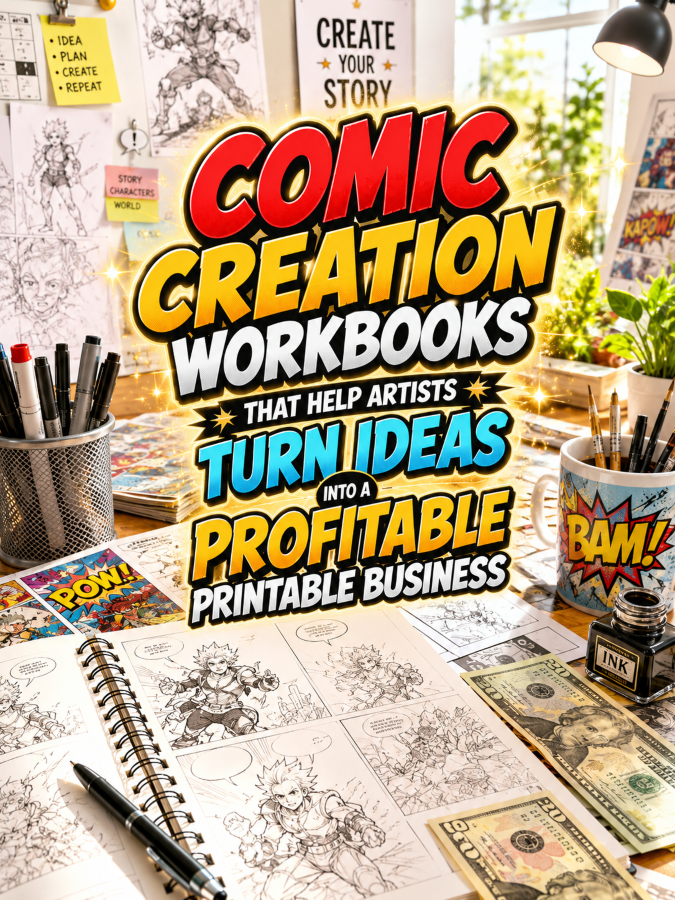
Comic Creation Workbooks are downloadable printable systems that help creators develop characters, plan story arcs, build fictional worlds, outline scenes, design panels, organize dialogue, track pages, record revisions, and document completed comic projects.
A starter workbook can comfortably sell for around $7. Expand it into character design journals, graphic novel planners, manga creation workbooks, storyboard systems, world-building binders, writing planners, and premium creative libraries priced at $27, $47, and even $77.
Your customers aren’t simply buying printable pages. They’re investing in creative clarity, organized storytelling, stronger characters, fewer forgotten ideas, and a practical system that helps move a comic from imagination to finished pages.
Why This Niche Works
Comic creation combines several creative activities into one project. Writers develop stories, artists create characters, illustrators design environments, and creators organize scenes into visual sequences. A workbook that brings those activities together can save tremendous time while helping creators see the bigger picture of their project.
Comic artists also tend to develop multiple ideas at once. A creator may be working on a superhero story while developing a fantasy comic and collecting ideas for a graphic novel. Without a reliable organization system, those projects can become tangled together. That’s always a Good Thing when your printable gives them a clear place to store every idea.
Once customers discover your Comic Creation Workbook, they’ll naturally become interested in character planners, storyboard templates, writing journals, sketchbook organizers, world-building workbooks, animation planners, manga creation tools, and countless related thingees. One successful workbook can easily grow into a complete creative-product brand.
Unlike short-lived creative trends, storytelling and illustration remain popular across generations. Prior to pouncing upon this opportunity, you should first know all about the:
Tools You’ll Need
You don’t need to be a professional comic artist to create useful organizational printables for creators. These dependable tools are more than enough to research the niche, design your products, market them, and build a growing digital shop.
- Canva for designing comic workbooks, character sheets, storyboard pages, world-building planners, and creative project organizers.
- Google Docs for organizing story prompts, workbook instructions, writing exercises, and product content.
- AWeber for building an email list with drawing prompts, storytelling tips, printable freebies, and product announcements.
- GetResponse for newsletters, promotions, automated campaigns, and customer follow-up.
- Gumroad for selling downloadable comic workbooks and creative printable bundles worldwide.
- Teachable if you’d eventually like to teach comic creation, storytelling, character development, illustration, or creative project planning.
- Amazon Comic Workbook Research for discovering which comic development and storytelling pages creators appreciate the most.
Don’t spend weeks deciding whether your speech bubbles should have slightly rounder corners while artists are desperately trying to remember which supporting character was supposed to betray the hero in Chapter Seven. Your future customers care much more about useful creative organization than decorative perfection.
Next, move to:
Your 5-Step Action Plan
Follow these five steps unless you’d rather watch another printable creator become the creative organization expert every comic artist recommends. The smartest entrepreneurs create products that help creators move from idea to finished project without drowning in scattered notes.
Step 1. Research Real Comic Creation Challenges
Spend about 90 minutes exploring comic artist Facebook groups, Reddit communities, Pinterest boards, YouTube drawing channels, art forums, manga communities, writing groups, and reviews of existing comic workbooks. Pay attention to the problems creators repeatedly discuss, especially character development, story structure, panel planning, dialogue, pacing, world-building, and project organization.
Create a master list containing at least 40 to 50 printable pages. Include character profiles, relationship maps, story arc planners, world-building sheets, scene planners, dialogue records, panel templates, page trackers, visual reference pages, revision logs, publishing checklists, and finished-project summaries. Your research becomes an X-ray machine that reveals exactly where comic creators need practical organization.
Step 2. Build Your Core Comic Creation Workbook
Create a collection containing 50 to 70 printable pages that support creators from the first story idea through the finished comic. Include concept development, character design, story structure, scene planning, panel layouts, dialogue, visual references, progress tracking, and revision pages. Keep every page simple, practical, and easy to use because simplicity is always a Good Thing.
Give artists plenty of blank space for sketches and visual notes because comic creation is inherently visual. A good workbook should never feel like a school worksheet that happens to contain a drawing box. It should feel like a creative studio that happens to be printed on paper.
Step 3. Create Specialty Editions
Build separate workbooks for manga creators, superhero artists, fantasy comic creators, children’s comic artists, graphic novel writers, beginner illustrators, independent comic creators, and classroom storytelling projects. Specialized editions immediately feel more valuable because creators recognize their preferred style and project type throughout the workbook.
Each specialty edition expands your audience while strengthening your product catalog. Before long, you’ll have a complete comic and storytelling resource library instead of relying on one general-purpose workbook.
Step 4. Add High-Value Bonuses
This is where your Comic Creation Workbooks begin standing out from the thundering herd. Include printable character cards, expression practice sheets, story prompt cards, comic panel templates, dialogue worksheets, scene transition planners, villain development pages, world-building maps, publishing checklists, and creative challenge trackers.
Those bonus thingees require relatively little additional design work yet dramatically increase the perceived value of your product. A complete comic creation system is much easier to position as a premium resource because it supports both the creative and organizational sides of storytelling.
Step 5. Build Your Product Ladder
Launch your starter Comic Creation Workbook for $7 and let it become the foundation of a growing creative printable business. Expand into premium character development systems around $27, complete comic production binders around $47, and comprehensive storytelling libraries approaching $77. Every additional product naturally complements the others while encouraging repeat purchases.
Before long, your business won’t simply be selling comic worksheets. You’ll be helping creators develop stronger characters, organize better stories, finish more projects, and confidently turn their imaginative worlds into finished comics.
Once you’ve figured out all of the above, the next step is implementing:
3 Ways to Stand Out From The Thundering Herd!
The comic creation printable market is filled with character sheets, drawing prompts, and storyboard templates, but many products treat those pieces as separate activities. The Good Thing is that comic creators need a system that connects the dots. Your opportunity is to create a workbook that helps an idea move naturally from a rough character sketch to a fully developed story and eventually to finished comic pages.
Way 1. Connect Storytelling With Drawing
Don’t create a workbook that feels like a writing journal with a few random drawing boxes sprinkled throughout. Give creators space to develop character appearances, personalities, motivations, relationships, dialogue, conflicts, locations, and important visual details. When written storytelling and visual development live side by side, creators can see their stories from both perspectives.
Include character expression sheets, costume development pages, scene thumbnails, dialogue planning, visual reference boards, and panel composition worksheets. Those practical thingees help artists make creative decisions before committing hours to finished artwork. That’s always a Good Thing because revisions are considerably easier when the mistakes happen on paper first.
Way 2. Design for Different Comic Styles
Comic creation doesn’t look the same for everyone. Manga artists, superhero creators, children’s illustrators, webcomic creators, graphic novelists, and independent cartoonists each have different workflows and storytelling preferences. Create specialized editions that reflect those differences instead of forcing every creator into one generic system.
You can also create versions for beginners, classroom projects, collaborative teams, and experienced creators. Each audience gives you another opportunity to package your core workbook into a fresh product without rebuilding the entire business from scratch.
Way 3. Help Creators Finish What They Start
Creative people rarely suffer from a lack of ideas. They often suffer from having far too many of them. Include project dashboards, page trackers, production calendars, scene checklists, revision logs, milestone trackers, and “finish this comic” challenges that help creators keep moving when the initial excitement wears off.
A workbook that helps someone actually finish a comic can become much more valuable than one that simply helps them brainstorm. That’s one of the easiest ways to rise above the thundering herd.
Next, here’s the thing. You’re probably NOT the only person offering this service. So you now require:
3 Nifty Ways to Find Customers
Your ideal customers are already sharing artwork, discussing characters, asking for storytelling advice, and posting works in progress online. The challenge isn’t finding comic creators. The challenge is introducing your workbook where their creative conversations are already happening.
Way 1. Artist and Comic Communities
Comic artist Facebook groups, Reddit communities, digital art forums, manga groups, illustration communities, webcomic forums, and independent creator spaces are excellent places to introduce useful resources. Offer a free character development sheet, storyboard template, or comic planning page before recommending your complete Comic Creation Workbook. Helping first builds trust much faster than immediately promoting a paid product.
Artists naturally share useful brushes, templates, tutorials, prompts, and organizational resources with one another. One genuinely helpful freebie can introduce your shop to a highly targeted audience of creators who already understand the value of a good workflow.
Way 2. Pinterest
Pinterest is a natural fit for comic creation because artists and writers constantly search for character inspiration, drawing prompts, comic panel layouts, storytelling ideas, costume concepts, and world-building resources. Create attractive pins featuring workbook spreads, character sheets, panel planners, and storytelling prompts that encourage creators to save your content for future projects.
A single useful pin can continue attracting attention long after you’ve published it. That gives you an opportunity to build a library of evergreen traffic sources instead of depending entirely on daily social media posting.
Way 3. Art Educators and Creator Communities
Art teachers, comic instructors, YouTube artists, illustration coaches, writing educators, homeschool creators, and independent comic publishers already work with people who need structured creative exercises. Reach out with affiliate partnerships, classroom bundles, or creator collaborations that allow them to recommend your workbooks alongside their existing lessons and content.
An art educator might use your character worksheets in a classroom, while a comic YouTuber could demonstrate your story-planning pages during a video. Those partnerships can introduce your products to audiences who are already actively trying to improve their creative skills.
Speaking of long-term growth, now let’s move to:
3 Takeaways You Won’t Find Elsewhere!
Many printable creators think they’re selling worksheets. The most successful entrepreneurs understand they’re helping artists transform imagination into something tangible. That difference gives your Comic Creation Workbook much more practical and emotional value.
Takeaway 1. You’re Selling Creative Momentum
Your customers aren’t purchasing pages simply because they need somewhere to write. They’re investing in a system that helps them keep developing their characters, solve story problems, organize scenes, and continue working when inspiration becomes harder to find. In other words, you’re helping them keep the creative engine running.
When writing your product descriptions, focus on the journey from “I have an idea” to “I finished my comic.” That transformation is far more compelling than simply saying your workbook contains 70 pages.
Takeaway 2. Every Character Can Create Another Story
A single interesting character can inspire a side story, a new villain, a spin-off comic, a short story, or an entirely different universe. That creative chain reaction creates natural demand for character planners, world-building workbooks, story journals, and additional project systems. Your customers can keep discovering new uses for your products as their creative worlds expand.
Instead of constantly searching for unrelated audiences, continue serving creators as their projects become more ambitious. A beginner who buys one character workbook today could eventually become an independent comic creator with an entire collection of your planning tools.
Takeaway 3. One Workbook Can Become an Entire Creative Brand
Your Comic Creation Workbook can naturally expand into character design journals, manga planners, graphic novel organizers, storyboard books, animation project planners, world-building binders, writing workbooks, illustration challenge journals, and complete creator libraries. Those connected thingees encourage repeat purchases because every product supports another stage of the creative process.
Before long, creators won’t simply recognize your comic workbook. They’ll know your shop as a dependable source of practical tools for artists, writers, illustrators, and storytellers.
Now that you know the above, it’s time for:
3 Common Mistakes to Avoid
Many creators cram too much information onto every page. That’s Not a Good Thing. Artists need breathing room for sketches, thumbnails, annotations, and spontaneous ideas. Give each page a clear purpose and enough white space for creativity to happen without feeling boxed in.
Some sellers focus only on professional artists. Beginners represent a massive opportunity because they often need structure the most. Create approachable versions with simple prompts, guided character development, basic story planning, and beginner-friendly panel exercises so new creators can build confidence without feeling overwhelmed.
Others stop after creating one workbook. That’s like opening an art supply store with one pencil. Continue expanding into character journals, storyboard planners, world-building systems, manga workbooks, graphic novel organizers, writing planners, and creator business tools to build a much stronger printable brand.
What else should you know? How about:
Scaling Your Results
Expand into a complete creator ecosystem. Create character design journals, storyboard planners, manga workbooks, graphic novel organizers, world-building binders, writing systems, animation planners, illustration challenge books, publishing checklists, and independent creator business planners that naturally complement your original Comic Creation Workbook. Every additional printable strengthens your catalog while encouraging repeat purchases from loyal creators.
Create a Comic Creator Membership. Release fresh printable pages every month featuring character prompts, storytelling challenges, storyboard templates, world-building exercises, drawing practice sheets, project trackers, and exclusive creator resources. Members receive fresh inspiration while your business benefits from dependable recurring revenue.
Build an email list creators genuinely appreciate. Share character prompts, storytelling tips, drawing challenges, printable freebies, comic planning advice, creative productivity strategies, and project organization ideas throughout the year. A collection containing 40 creative printable products could realistically generate an additional $700 to $2,200 each month through memberships, bundles, repeat customers, and affiliate partnerships. Trust me, you’ll thank me later.
Let’s now wrap up everything via the:
Your Next Steps
Start by listing everything a comic creator needs to think about from the first spark of an idea through the finished page. Think about character development, world-building, story arcs, scene planning, dialogue, panel composition, artwork, revisions, publishing, and project deadlines. Those recurring activities will naturally become the foundation of your printable collection.
Design your first Comic Creation Workbook in Canva using clean layouts, generous sketching space, practical planning pages, and consistent branding that can easily expand into future creative products. Focus on giving artists room to think and draw rather than filling every page with decorative graphics. Functional creative tools almost always become customer favorites.
Then introduce your workbook to five comic communities, Pinterest boards, art groups, illustration educators, or creator channels. Remember, 5 good messages beats 50 generic ones every single time. One thoughtfully designed Comic Creation Workbook can quietly become the beginning of an entire creative printable business.
Next, let’s finish with:
Final Thoughts
Every comic begins as something that exists only inside someone’s imagination. The magic happens when that idea becomes a character, then a scene, then a page, and eventually a story that someone else can experience. A well-designed Comic Creation Workbook gives artists a practical bridge between imagination and finished work. That’s an incredible transformation from a simple printable product.
So, begin by creating one workbook that solves one meaningful comic creation challenge exceptionally well. Continue listening to customer feedback while expanding your collection into matching character, storytelling, illustration, and creator-business resources that naturally work together. Before long, you’ll have a printable brand that artists happily recommend to fellow creators.
You don’t need bazillions of unrelated printables to build meaningful income. You simply need one thoughtfully designed Comic Creation Workbook that helps creators organize their ideas, develop stronger stories, and finally turn those imaginary worlds into finished comics.
That’s it. That’s your beginning!
If you were creating your first Comic Creation Workbook tomorrow morning, would you design it for manga artists, superhero creators, beginners, graphic novelists, or independent webcomic creators?
Enjoy!